
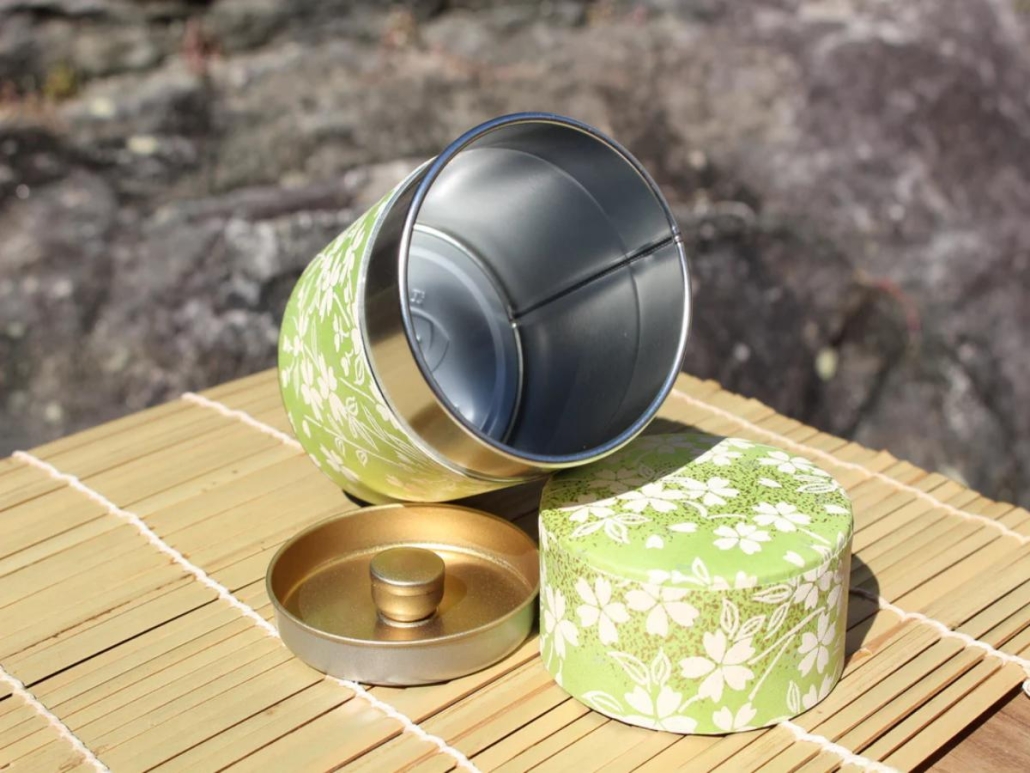
100g Matte Green Tea Tins: A Cost-Effective Packaging Solution for Green Tea
For green tea, freshness and aroma determine the user experience, and tin can packaging plays a crucial role in preserving them. A well-designed tin can is more than just a container; it protects delicate tea leaves from light, moisture, and oxygen. 100g matte green tea tins are ideal for green tea brands seeking value, practicality, and premium shelf appeal. The matte finish exudes quality, and the durable, high-quality tinplate construction, combined with a sealed design, effectively locks in aroma, providing consumers with a consistently high-quality tea-drinking experience at an economical price.
Why do 100g matte green tea tins enhance appeal?
First impressions are crucial for consumers, and a matte finish significantly enhances the product’s perceived quality. The matte surface improves tactile feel, reduces fingerprints, and allows consumers to perceive the product’s high quality the moment they touch it.
From a manufacturing perspective, matte varnishes and soft-touch coatings are compatible with various printing processes—spot UV coating, embossing, and subtle metallic sheen—without appearing gaudy. Therefore, you can maintain a clear visual hierarchy: a matte green base, a low-gloss logo, and subtle gold accents create a sophisticated, high-end feel. Furthermore, a matte finish better conceals minor surface imperfections than a high-gloss finish, helping to maintain a consistent appearance in mass production. On the other hand, the matte finish does not compromise the can’s internal barrier properties; its external aesthetics are fully compatible with the lid’s sealing strategy. Thus, you gain a marketing advantage without sacrificing protective performance.
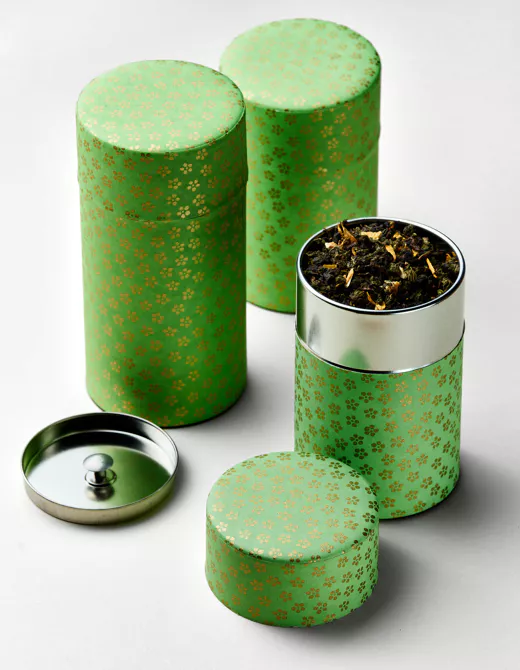
The 100g matte green tea tins use premium materials and construction to ensure safe tea storage.
The choice of materials determines the structural integrity and barrier properties of the tea tin. Our 100g tea tins are typically made of high-quality tinplate, a material that is formable, printable, and recyclable. Tinplate also effectively blocks light and mechanical damage.
Structurally, Tsing utilizes seamless drawn blanks to reduce potential weak points and create a clean inner surface that facilitates coating. On the other hand, for specific sizes or small-batch production, seamed blanks may be more cost-effective but require rigorous inspection to ensure they are free of microchannels that could affect their integrity over time. For aroma-sensitive teas, we recommend using seamless blanks or high-quality seamed green tea tins with proven seam integrity.
The inner coating is crucial. Because tea is highly sensitive to metallic tastes or oxidation, we use food-grade coatings formulated to maintain the tea’s aroma neutrality. These coatings isolate the tea from metal, preventing flavor alteration. If your tea tins have high-fat flavorings (such as certain flavored teas), specify an oil-resistant coating. Finally, manufacturers can make the lid of the 100g matte green tea tin with an inner polyethylene layer or a press-fit inner lid; some models also offer an optional aluminum foil heat seal to ensure freshness at the time of sale.
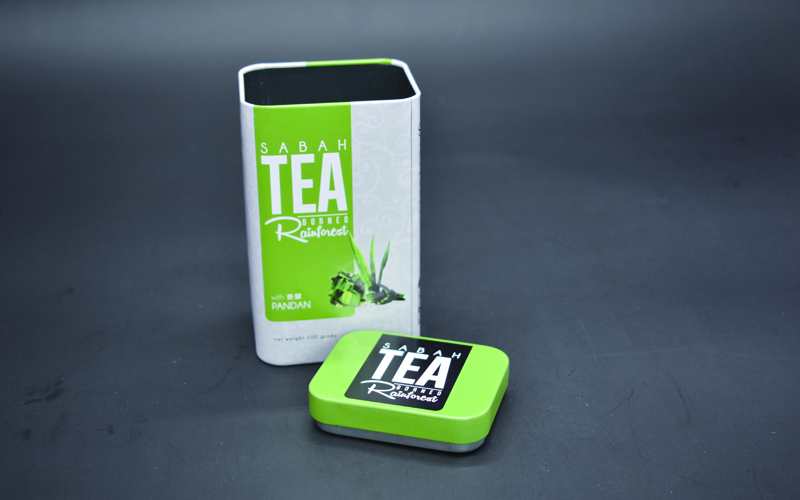
Better Preservation of Aroma and Freshness
For tea packaging, airtightness is the most important functional attribute. Oxygen and moisture accelerate the loss of green tea aroma and oxidation; therefore, a high-quality 100g tea tin must restrict airflow and provide an effective barrier. At Tsing, we employ a multi-layered sealing strategy to ensure tea stays fresh for extended periods.
First, we design a tightly fitting lid interface to reduce direct air exchange effectively. Second, we typically add a press-fit inner lid or polyethylene inner lid, forming an additional sealing barrier. This small inner lid compresses to the can opening, reducing the volume of free air and thus slowing odor exchange. We can also design passive oxygen control solutions if needed: by lowering the can top space and recommending inert gas flushing during filling, brands can significantly reduce residual oxygen in the can. For many specialty and commercial tea producers, combining a precisely fitted lid, an internal press-fit seal, and foil sealing during packaging creates a cost-effective and highly airtight solution.
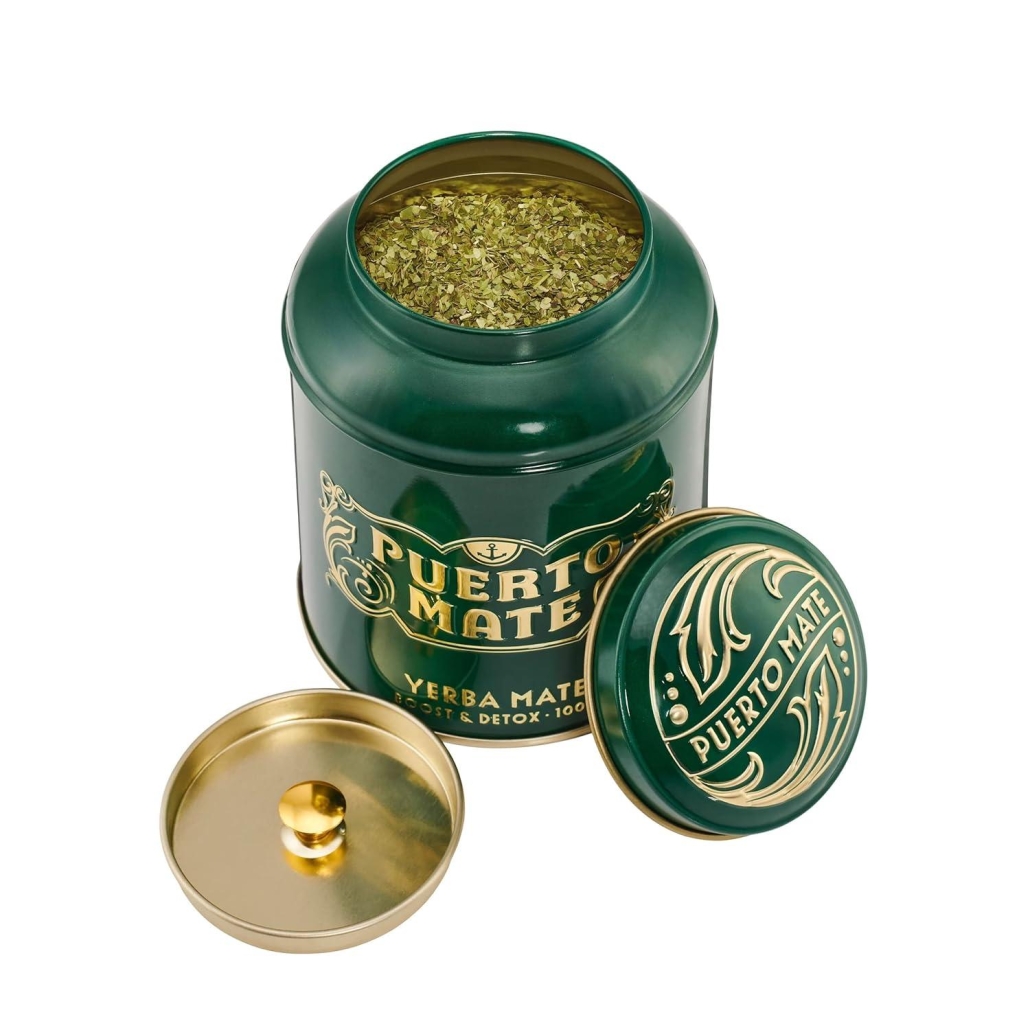
Size, Fill Weight, and Practical Specifications for Loose Tea
The bulk density of loose green tea varies greatly: whole leaves take up more space per gram than broken leaves or tea leaves. Therefore, choosing a 100g tea tin means striking a balance between aesthetic proportions and practical capacity.
To determine the appropriate packaging size, first measure the bulk density of the tea you want to package. For example, the bulk density of whole-leaf green tea is approximately 0.12–0.20 g/cm³, meaning 100 g of tea will occupy 500–830 cm³ of space. Once you provide us with the target weight per can, we can calculate the internal volume of the tea and recommend the appropriate can diameter and height to ensure the desired net fill weight is achieved, with sufficient top clearance to prevent the tea from being crushed and to maintain ample space within the can for the full release of aroma. Typical sizes for 100g tea tins in retail packaging are quite practical: common round tin sizes are 60–80 mm in diameter and 60–100 mm in height, but slimmer, taller canisters help stand out on the shelf.
Durable, High-End Green Tea Packaging
100g matte green tea tins are made of high-quality tinplate with a food-grade internal coating. The lid fits precisely and can be optionally equipped with aluminum foil or an inner seal to ensure airtight storage, thus preserving the aroma and flavor of the green tea. The matte finish adds visual appeal and tactile sophistication, enhancing brand recognition while remaining affordable and suitable for everyday use. Through proper sizing, testing, and customization, the 100g tea canister not only protects the product but also elevates the overall consumer experience.
 Facebook
 Twitter
 Linkedin
