
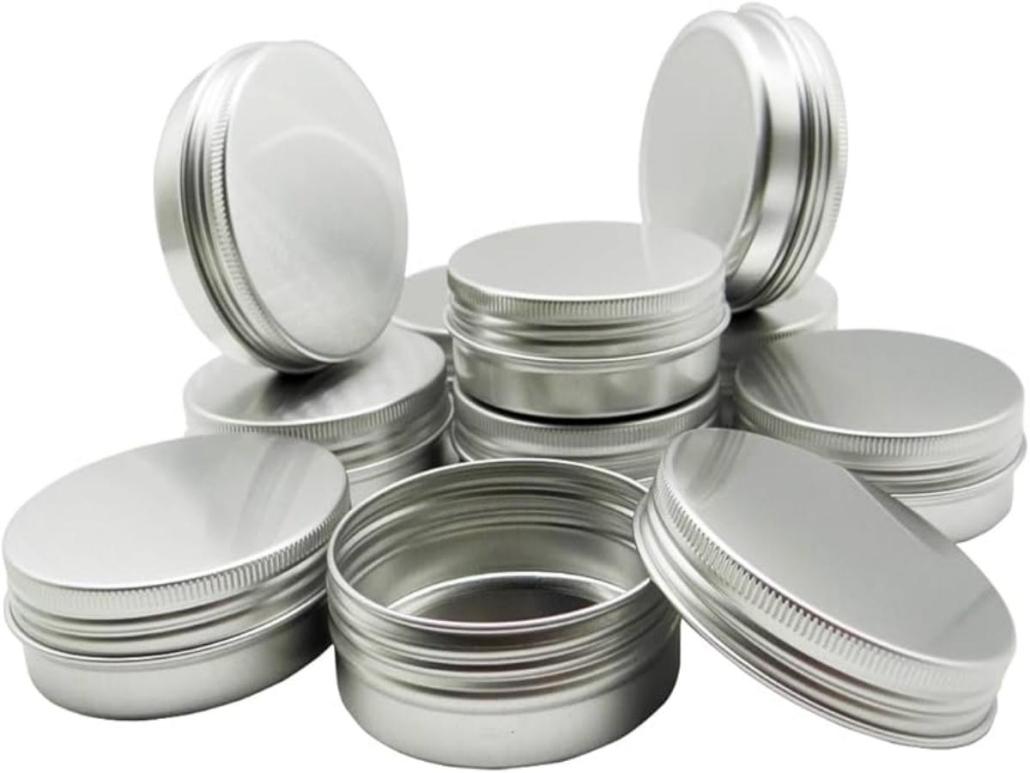
2 oz cosmetic tin containers: Leak-Proof Design for 2oz Liquid/Gel Cosmetics
A slight metal container holding lip gloss, eye gel, or a concentrated serum will never leak, even when casually tossed into a handbag. This reliability is the result of carefully selected materials, precision manufacturing, and a meticulously designed sealing system. At Tsing, we design and manufacture 2 oz cosmetic tins that are both aesthetically pleasing and highly functional. Many brands encounter leakage problems when choosing 2 oz cosmetic tin containers for liquid or gel cosmetics. Therefore, we will explain Tsing’s various options for sealing gaskets (PVC, silicone, and EPE liners) and their advantages and disadvantages, as well as how our seamless drawing and necking/crimping processes reduce the risk of leakage.
2 oz Cosmetic Tin Containers Materials, Surface Treatments, and Compatibility
Choosing the right base material and surface treatment is fundamental to ensuring leak-proof performance. Our 2 oz cosmetic tin containers are made from high-quality tinplate, which offers excellent formability, printability, and recyclability. More importantly, tinplate can be coated with internal protective lacquers and barrier coatings, separating the metal from the cosmetic formulation. These coatings prevent corrosion and avoid reactions between the formulation and the metal surface, which is crucial for oily or solvent-based products.
For liquid and gel cosmetics, we use solvent-resistant, food-grade, or cosmetic-grade internal coatings. These coatings ensure the structural integrity of the container and maintain product purity throughout its shelf life. External finishes include matte, gloss, soft-touch, and metallic finishes to enhance brand aesthetics and consumer appeal. You can also add full-coverage offset printing, UV coating, or 3D embossing to highlight a premium positioning.
Sealing Gasket Technology in 2 oz cosmetic tin containers
The primary leak-proof barrier in our 2 oz cosmetic tin container is the sealing gasket system inside the lid. We commonly use three sealing solutions: PVC gaskets, silicone rings, and EPE (expanded polyethylene) liners, each of which is injected or inserted into the lid during assembly. Here are the differences between them and their respective applications:
PVC Gaskets: PVC gaskets are economical and easy to mold, providing a reliable compressible seal. They are suitable for a variety of water-based and oil-based formulations, but require validation for long-term contact with solvents or strong fragrances. If you need to balance budget and performance, PVC gaskets are a good option.
Silicone Rings: Silicone offers excellent temperature resistance, good elasticity, and chemical inertness. Silicone gaskets maintain good compression set resistance, ensuring a tight seal even with repeated opening and closing. For acid-sensitive or solvent-rich cosmetic formulations, medical-grade or food-grade silicone is often the safest choice.
EPE Liners: This foam liner provides cushioning and absorbs slight dimensional differences between the lid and the container. EPE is lightweight and inexpensive, and particularly suitable for thicker products where slight deformation is beneficial. However, EPE is not as chemically resistant as high-grade silicone.
At Tsing, we directly inject or embed these sealing elements into the lids during the manufacturing process, precisely aligning them with the container opening. This integrated design prevents the seal from shifting during handling and improves the consistency of sealing performance in high-volume production.
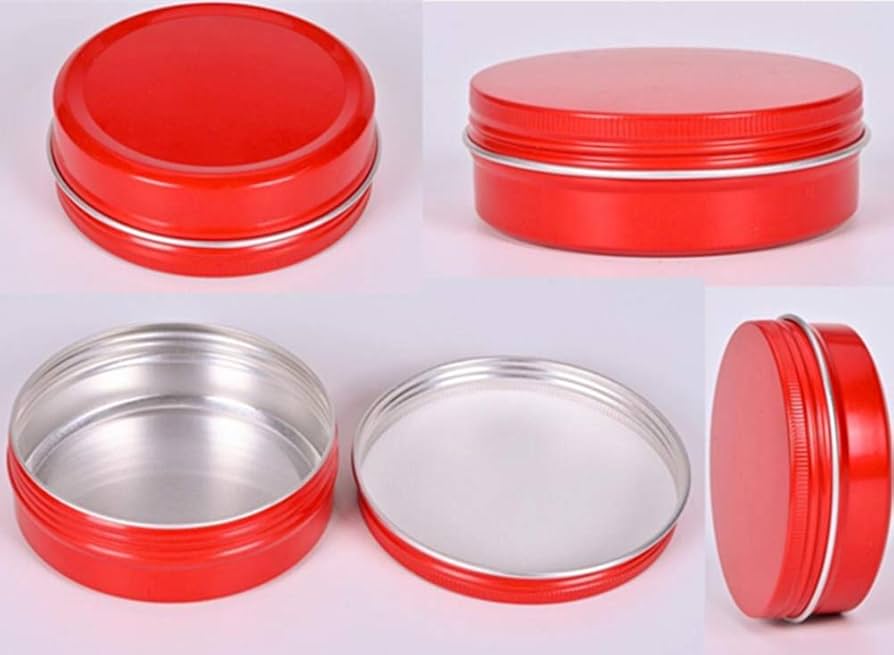
How the Seamless Drawing Process Eliminates Side Leaks?
One of the most effective ways to prevent liquid cosmetic leakage is to eliminate structural weaknesses, especially at side seams. Our 2 oz cosmetic tins are manufactured using a seamless drawing process. The seamless drawing process involves the controlled forming of a flat tinplate blank in a single continuous operation to create the container body, eliminating the need for welding or brazing vertical seams.
This process creates a uniform and continuous container wall with several leak-proof advantages:
No Seam Channels: Welded or brazed seams can create micro-cracks or capillary channels, leading to product leakage over time, especially with low-viscosity liquids. A seamless body eliminates this leakage pathway.
Improved Structural Integrity: The seamless wall evenly distributes stress, reducing the risk of bending or deformation that could compromise the lid seal during transportation or use. Improved Surface Finish: The seamless drawing process allows for a consistent internal coating and easier inspection, ensuring the protective lacquer is continuous and defect-free.
The seamless process is particularly advantageous for liquid and gel-based cosmetics. It physically eliminates standard failure modes and integrates perfectly with internal sealing rings and crimped neck closures.
Neck Reduction and Crimping Process Enhances Sealing
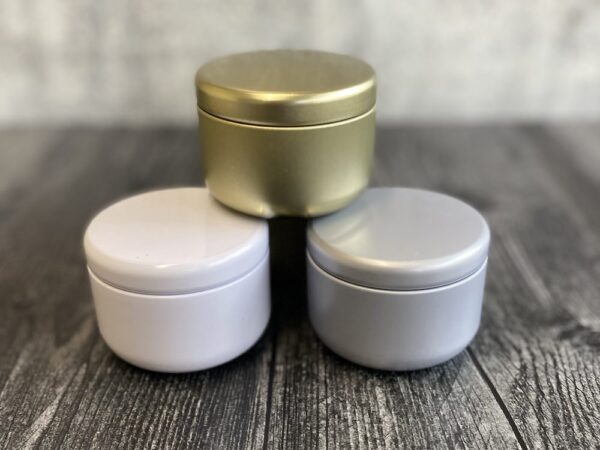
In addition to sealing gaskets and seamless cans, the geometry of the mechanical closure plays a crucial role in leak-proof performance. Therefore, Tsing employs a controlled neck reduction and crimping process to finish the opening of its 2 oz cosmetic tins. The neck-reduction process slightly constricts the can opening inward, while the crimping process ensures a tight fit between the lid and the can body.
How does this process improve sealing performance?
Increased Friction and Compression: By reducing the inner diameter of the bottle opening, the neck reduction forces the cap and sealing ring into tighter compression, increasing contact pressure and improving effective sealing.
Reliable Lid Positioning: The crimping process secures the lid on a predictable plane, preventing it from tilting or lifting to one side. A perfectly fitting lid avoids point loading, thus preventing the creation of micro-gaps.
Tamper-Evident and Aesthetic Advantages: Proper crimping results in a clean, uniform visual appearance while also enhancing tamper-evidence—two significant advantages for consumer products.
Our neck reduction process uses continuous, calibrated die sets to ensure repeatable reduction rates and consistent edge profiles. Combined with internal sealing gaskets and seamless can bodies, the neck reduction and crimping process creates a multi-layered protection system that significantly reduces the likelihood of leaks from the sides or lid of the cosmetic tin.
Greater Design Freedom and Sustainability
While technical performance is essential, design and commercial factors also influence the final choice. Our 2 oz cosmetic tin cans offer flexible customization options: full-color printing, embossing, debossing, varnishing, and special surface treatments to make brands stand out. However, design choices impact cost. Simple two- or three-color offset printing is economical and suitable for large-volume production, while full-wrap UV processes may be more appropriate for high-end limited editions. Sustainability is another important consideration for customers. Tinplate is highly recyclable, contributing to the development of a circular economy; choosing recyclable inner coatings and avoiding mixed-material linings whenever possible simplifies the recycling process for consumers. For brands seeking a low environmental impact, silicone gaskets can be considered alongside designs that encourage reuse.
Delivering Better Leak-Proof Design
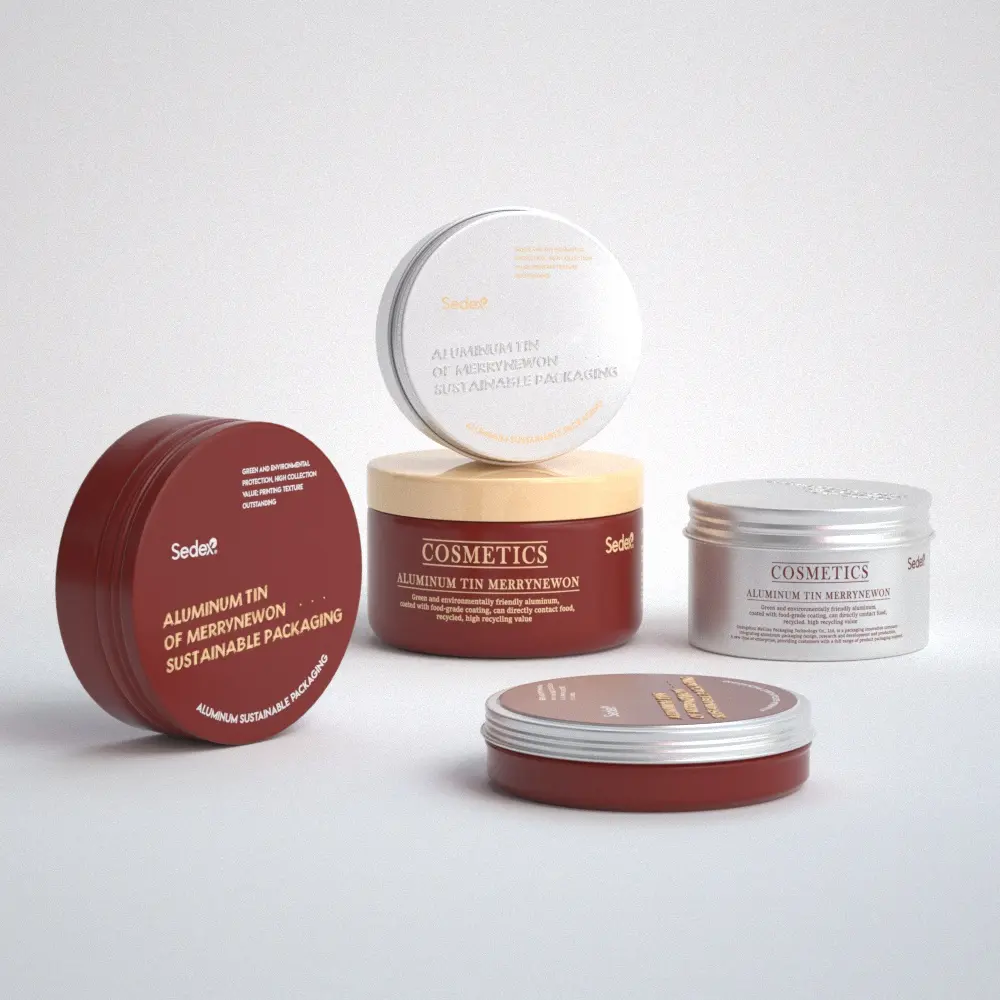
Choosing a tinplate container for liquid/gel cosmetics is not just about selecting an aesthetically pleasing metal package; it’s also about understanding how the structure, materials, and sealing technology work together to prevent leaks. Tsing’s approach incorporates a seamless drawing process to eliminate side seams, enhances lid fit through precise necking and crimping, and carefully selects sealing gaskets such as PVC, silicone rings, or EPE liners, resulting in a reliable multi-layer, leak-proof design.
 Facebook
 Twitter
 Linkedin
