
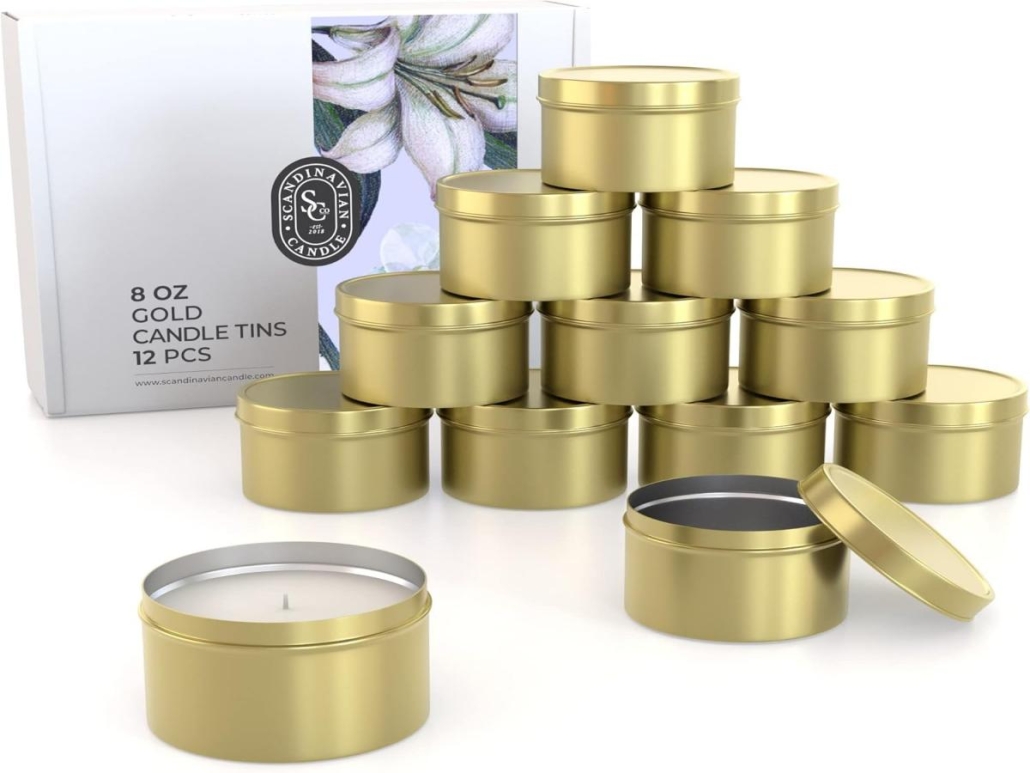
Candle Tins Wholesale: Comparing Stamped vs. Rolled Tin Construction
A survey of American candle brands revealed that many listed tin can quality as the most frequent customer complaint, primarily stemming from two main tin can manufacturing processes: stamping and rolling. For candle tin can wholesalers, the choice between these two processes is not merely a technical detail; it directly impacts product durability, brand consistency, and customer satisfaction. This guide explains the key differences between stamped and rolled candle tin cans, why stamping is superior to rolling in wholesale applications, and how Tsing’s precision stamping process produces reliable, high-quality candle tins wholesale.
Candle Tins Wholesale: Stamping vs. Rolling – What’s the Definition?
Before delving into the comparison, let’s clarify the meaning of “stamping” and “rolling” in candle tin wholesale. Both use food-grade tinplate, but their forming methods are drastically different, affecting every aspect of candle tin performance:
Stamped Candle Tins: The stamping process uses a hydraulic press and custom CNC machining dies to cut and form a single sheet of tinplate in one or two steps. Taking a standard 8-ounce candle jar as an example, the first die stamps the tinplate into a seamless cylinder with a closed bottom, and then a second die forms the rim. The entire process involves no welding, no seams, and no manual shaping—it’s all precisely machine-formed.
Rolled Candle Tins: Rolling begins with a flat sheet of tinplate, which is rolled into a cylinder by hand or semi-automatic machine. Overlapping edges are welded together to form a seam, and then a separate base is attached. This method relies more on manual labor and has more potential points of failure.
Tsing’s production facility best illustrates this: our stamping line can produce 500 candle tins of consistent quality per hour. In contrast, the rolling line can produce only 200 per hour, with a higher defect rate.
Stamped tins offer better durability for candle tins wholesale.
Durability is paramount for candle tins. They need to withstand wax temperatures of 180-200°F (approximately 82-93°C) while also enduring the bumps and jolts of shipping. Here’s a comparison of the durability of stamped and rolled-edge tin cans:
The seamless, one-piece construction of stamped tin cans eliminates the most significant weaknesses of rolled tin cans: welded seams and glued bottoms. Tsing makes its stamped tin cans from 0.23 mm-thick tinplate, which makes them less prone to dents during transport. Our 2023 data shows a breakage rate of only 1.2% for stamped tin cans, compared to 15% for rolled tin cans. The seamless bottom also prevents wax leakage; we test each stamped tin can with 2 ounces of hot wax, and the failure rate is only 0.01%. Rolled-edge tin cans, on the other hand, are prone to cracking at welded seams when heated or subjected to impact. Glued bases often detach after one or two uses, causing wax to drip onto furniture. For candle tin wholesalers, durability directly translates to fewer returns and higher customer satisfaction.
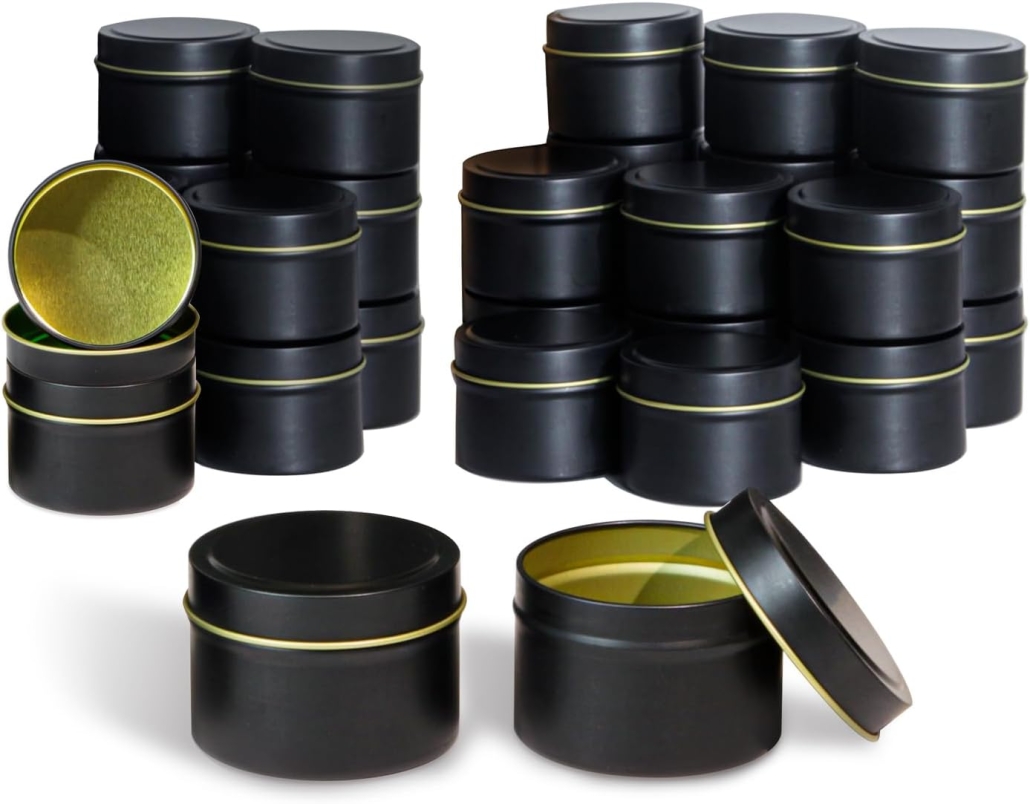
Stamping gives your brand a more upscale image.
Wholesale candle tin buyers highly value product consistency. If your candle tins vary in height, diameter, or edge shape, your labels will be crooked, your shelves will look cluttered, and retailers will question your professionalism. Therefore, stamped candle tins take center stage. During the stamping process, Tsing controls its CNC dies to ±0.1 mm, ensuring each 8-ounce stamped tin can measures exactly 70 mm in height and 65 mm in width, with smooth, flat edges. This consistency ensures perfect label alignment and neatly stacked cans on shelves. We conduct 100% dimensional checks on all tins before shipment, achieving a 99.9% pass rate. Rolling and welding inevitably lead to dimensional variations. A batch of “8-ounce” rolled tins may be between 68-72 mm high, and the rim may be wavy or uneven. Whether a retailer orders 100 or 10,000, Tsing’s embossed tins present a consistent, high-end image.
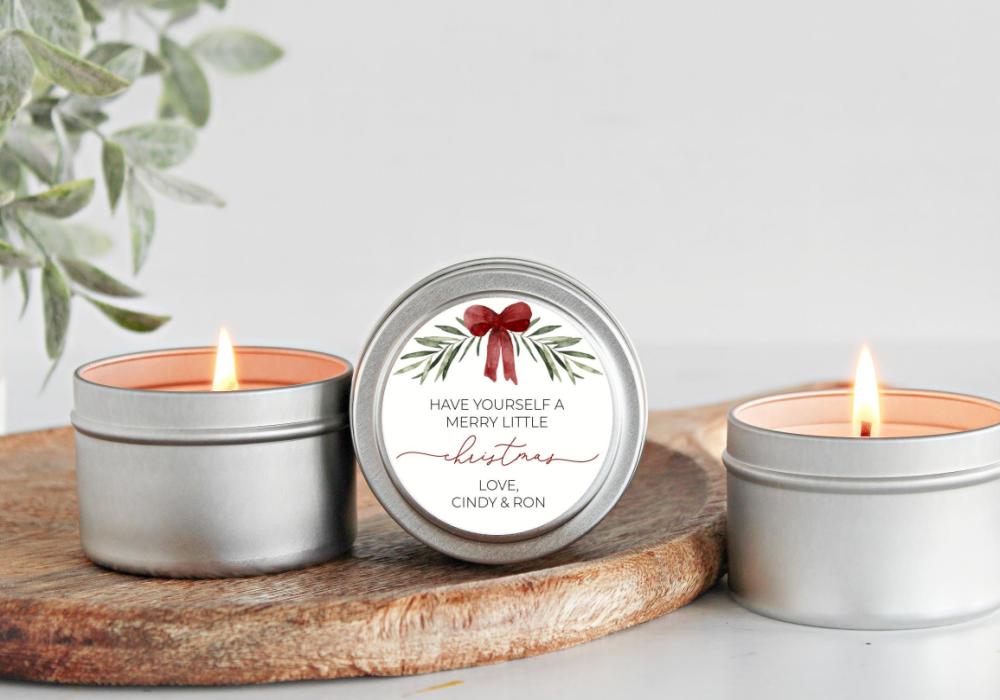
Enhance Your Brand Image with Customization Services
Candle tins wholesale are more than just containers; they’re a branding tool. Whether you need embossed logos, vibrant designs, or unique shapes, stamping makes it easier and more durable. The smooth, seamless surface of stamped tin cans supports printing, embossing, and gravure better than rolled tin cans. Tsing’s stamping dies can directly emboss logos on the side of the can, eliminating extra steps and the worry that the design will fade. We use food-grade inks that adhere firmly to the can surface, are scratch- and fade-resistant, and are safe for food contact. We can even offer custom-shaped stamped tin cans, something rolled tin cans can’t match.
Rolled tin cans often have raised seams at welded joints, which affect printing quality and cause uneven embossing. Most rolled tin can suppliers only offer basic printing services, and designs often detach at the seams. Custom-shaped tin cans are rarer and more expensive because they require specialized rolling equipment. For candle tin can wholesalers, customization is key to standing out from the competition.
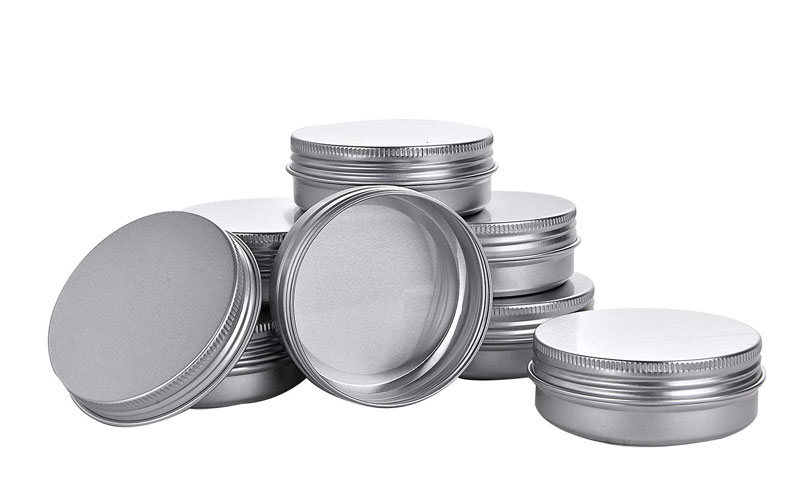
Ensuring Every Tin Can Meets the Highest Standards
Tsing’s stamped candle tins not only outperform rolled tins, but our production process also ensures that every tin meets the highest standards. We source food-grade tin-plated steel sheets from ISO-certified factories and apply a thick tin coating to prevent rust and ensure compatibility with candles. Precision stamping is employed; our hydraulic presses use CNC molds with an accuracy of ±0.05mm to ensure batch-to-batch consistency and prevent deviations caused by wear. Furthermore, each batch of tins undergoes five checks: dimensional measurement, seam inspection, leak testing, surface smoothness, and printing/embossing quality. Our stamping process reduces waste by 40% compared to rolling, and all our tins are 100% recyclable, meeting the sustainability requirements of modern retailers.
For candle tin wholesalers, stamping is the optimal choice.
For wholesalers, the key factors in choosing between stamped and rolled candle tins are: durability, consistency, flexibility in brand promotion, and cost-effectiveness. Rolled candle tins may seem cheaper at first glance, but they are prone to leaks, returns, and ultimately, losses. Stamped candle tins, especially Tsing’s precision-stamped products, offer reliable quality, earning the trust of retail partners and making your candles the preferred choice for customers.
 Facebook
 Twitter
 Linkedin
