

Custom-Printed Mint Tins with Hinged Lids: Brand Logos for Promotional Giveaways.
When potential customers reach for mints during promotional events in various shopping malls, the packaging often leaves the first and most lasting impression. Small, exquisite, and well-crafted hinged-lid mint tins do more than hold the product; they are brand keepsakes and touchpoints that accompany customers in their daily lives. Therefore, I will tell you everything that Tsing includes when providing custom-printed hinged-lid mint tins as promotional gifts: materials, decoration processes (including our 3D embossing, micro-engraving, and Pantone color matching), structural precision to address sticker application issues, food contact material compliance, and more.
Why Hinged Mint Tins are an Ideal Choice for Promotional Gifts
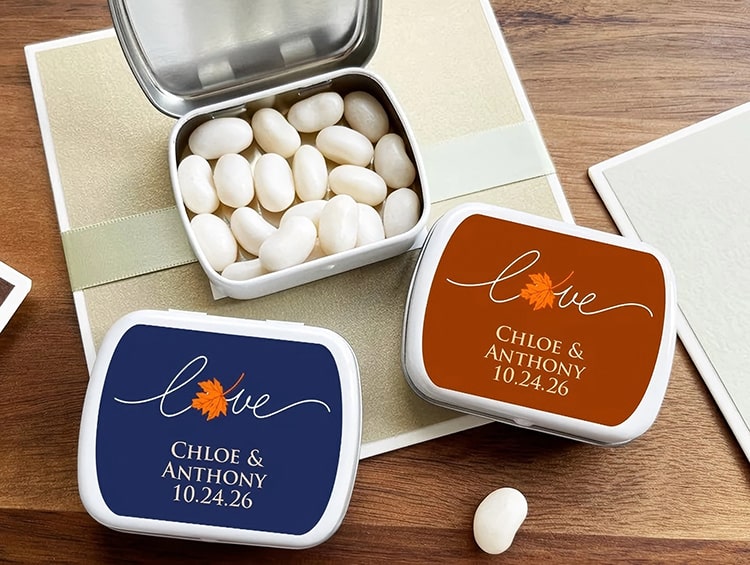
The hinged lid provides a premium tactile experience: a crisp, satisfying click when opening and closing, secure and reliable, not easily lost, and easy to operate with one hand, making it ideal for pocket-sized gifts. From a brand promotion perspective, hinged tins offer two large flat surfaces for displaying brand logos and designs: the lid and the base. Our designers can use one surface for eye-catching graphics and the other for product labeling.
From a practical standpoint, hinged mint tins are durable and reusable. Recipients will keep and reuse them—for example, to store pills, badges, or small trinkets—giving your brand logo repeated exposure. Compared to disposable packaging, well-made hinged-lid mint tins extend brand presence in consumers’ minds and enhance brand value.
Mint Tins Materials, Internal Coatings, and Food Contact Compliance
We primarily use high-quality tinplate for our mint tins because of its formability, printability, and recyclability. Tinplate is strong and durable, suitable for the hinge mechanism, and maintains clear patterns after embossing or printing. If you require lightweight or special needs, aluminum is also an option, although its decorative and forming characteristics differ.
Food contact safety involves two related decisions: internal coating and regulatory compliance. Many mint formulations contain flavorings and acidic substances that can react with or accelerate corrosion of bare metal. To prevent flavor transfer and ensure shelf life, Tsing applies food-grade varnish or polymer barrier coatings to the inside walls of the tins. These varnishes comply with FDA and EU food contact requirements; compliance documents can be provided upon request. For products with high oil content, we use varnishes that have been tested and certified for specific compatibility.
3D Embossing, Micro-Engraving, and Pantone Spot Color Printing
Decoration is key to making your mint tins reflect your unique brand personality. At Tsing, we offer a range of surface treatment techniques that meet high-craftsmanship standards, combining them to achieve a striking, precise brand image.
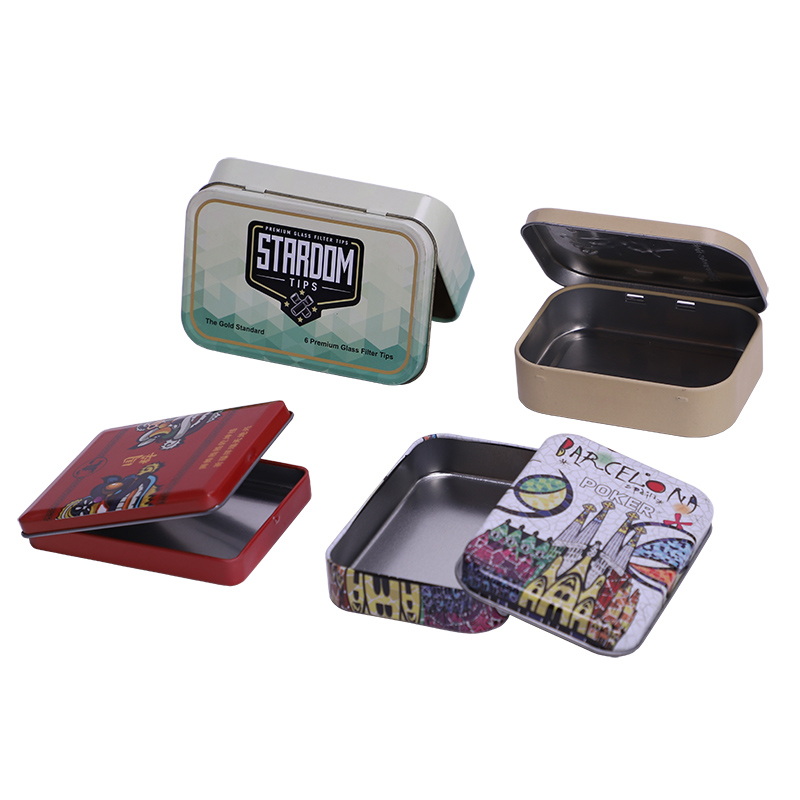
3D Embossing: Embossing adds texture and depth by raising design elements from the metal surface, creating a tactile impact that immediately catches the consumer’s eye. For brand identification, we can emboss logos, seals, or patterned backgrounds. Embossing can be applied to the lid, base, or both; multi-layer embossing creates a striking, premium effect.
Micro-Engraving: For extremely fine details such as miniature text, intricate patterns, or serial numbers, we use micro-engraving technology. This can be milling-based tool machining or laser-assisted engraving to achieve extremely high precision. Micro-engraving combined with localized surface treatments such as hot stamping can create sophisticated anti-counterfeiting features or collector’s editions.
Spot Color Printing and Pantone Matching: We also offer Pantone spot-color printing to ensure your brand colors remain consistent across batches and print runs. The Pantone Matching System (PMS) spot color printing delivers predictable, repeatable brand colors. At Tsing, we conduct color proofing and review Pantone color swatches before production. We also offer spectrophotometer testing services and can provide color certification reports for applications requiring the highest color accuracy.
Addressing Uneven Bottoms and Sticker Application Issues
A common packaging problem is uneven tin bottoms, which make sticker application difficult and give the display a less professional look on the shelf. Based on our production experience, the root causes are inconsistent molds, forming stress, and mold design flaws. At Tsing, our automated manufacturing processes and engineering controls effectively address this issue, ensuring consistent base flatness and precise hinge alignment.
Mold Design: Our molds feature compensation zones and precise male-female clearances to minimize springback and deformation during forming. Mold tolerances are verified through first-article inspection and optimized for specific tin can diameters and thicknesses.
Process Control: During stamping and forming, we control the blank holder pressure, drawing depth, and annealing cycles. Segmented forming prevents excessive work hardening and ensures the base remains consistently flat. We utilize Statistical Process Control (SPC) on critical dimensions (base flatness, lid fit, and hinge torque) to identify deviations before mass production.
Post-Forming Processes: For surfaces intended for labeling, we ensure a smooth, tool-mark-free base. If you plan to secondary-label, we can conduct pre-labeling tests to verify sticker adhesion and flatness.
Production Process, Tooling, Minimum Order Quantity, Lead Time, and Cost Considerations
In addition to providing reliable custom mint tin services, we will also inform you about our overall production flow, tooling, minimum order quantities, and lead times to help you better understand our process.
Tooling and Manufacturing: Custom tin cans require tooling – stamping dies, embossing dies, and printing plates. Tooling costs depend on size, complexity, and additional processes such as micro-engraving or hot stamping. We will provide a tooling quote in advance and can store the molds for subsequent orders according to mutually agreed terms.
Minimum Order Quantity (MOQ): Our minimum order quantity is 3000 pieces, while multi-color spot printing, embossing, and hot stamping processes require higher MOQs due to higher plate-making and setup costs.
Lead Time: The lead time for most custom products is approximately 6 weeks, from design confirmation to shipment. For complex projects involving 3D embossing, multi-color matching, or new molds, the lead time may extend to 10-12 weeks. Cost Optimization: To help you balance cost and impact, please consider the following aspects: Choose one or two high-impact decorative processes (e.g., Pantone color printing + embossed logo) instead of using multiple complex effects on both the lid and base; standardize the dimensions of different product lines to allow for mold reuse; and consolidate production batches of different SKUs to achieve corresponding pricing targets.
Delivering Product Packaging with Higher Craftsmanship and More Precise Structure
Custom-printed hinged-lid mint tins are more than just simple containers; they are also a functional, durable, and visually impactful brand promotion tool. For Tsing, a successful mint tin project begins with the right structural design and material selection. High-quality tinplate, food-grade inner coating, and precisely designed hinged lids ensure product safety, ease of use, and a superior tactile experience. Equally important is manufacturing precision: by addressing common issues such as uneven tin box bottoms, Tsing ensures reliable label application and consistent product appearance in large-scale production.
 Facebook
 Twitter
 Linkedin
