
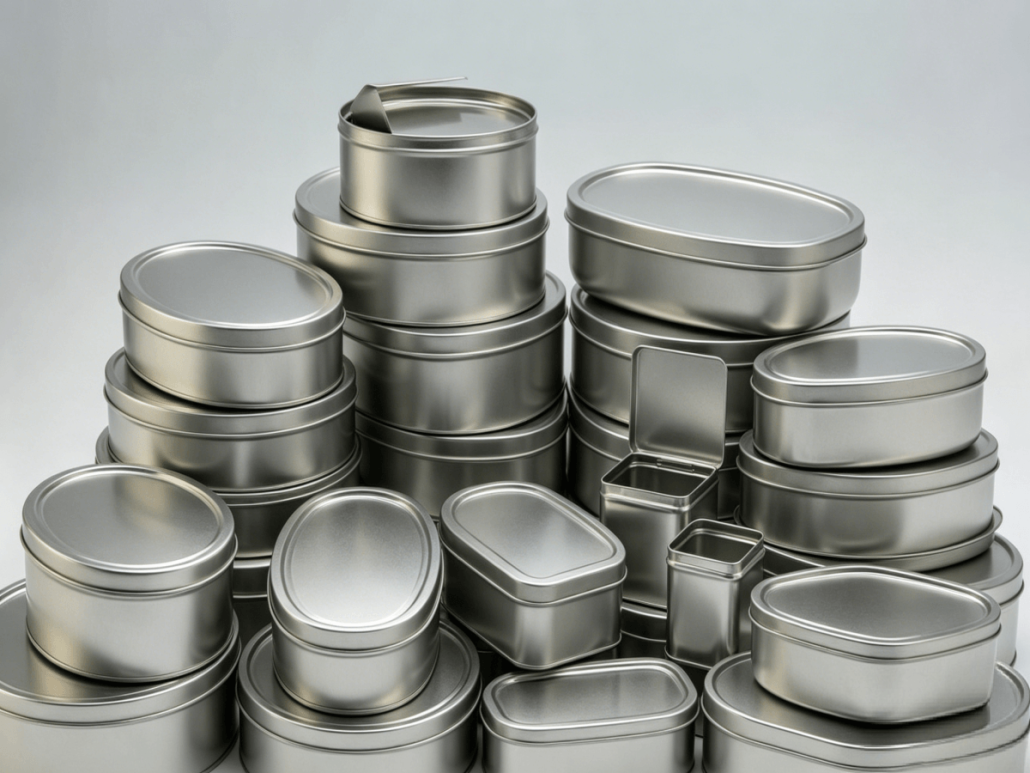
How thick should tinplate material be to provide optimal strength for metal tins?
While a metal tin may appear high-end at first glance, if the body dents easily or the lid deforms readily, consumers will quickly perceive the product’s value as significantly diminished. Consequently, the thickness of a metal tin is a critical parameter. When manufacturing metal tins, our primary material is tinplate; under standard production processes, a thickness range of 0.23 mm to 0.30 mm typically provides the necessary structural integrity. If the material is too thin, the tin body becomes prone to deformation; conversely, if it is too thick, the forming process becomes more difficult and costly, and manufacturing efficiency may be compromised for certain design specifications.
The Impact of Tinplate Thickness on Structural Integrity
The primary material used for metal tins is tinplate. It offers a unique combination of rigidity, excellent formability, superior print compatibility, and good corrosion resistance. Furthermore, it accommodates a wide variety of surface finishes—ranging from matte and glossy to embossed textures and specialized coatings. Across a wide range of product categories, tinplate strikes an optimal balance between aesthetic appeal and functional performance.
Key impacts include:
- Structural Integrity: Preventing dents and deformation.
- Sealing Performance: Ensuring the lid maintains a tight, secure fit over time.
- Shelf Appeal: Preserving a premium image within retail environments.
- Transport Durability: Minimizing damage during logistics and shipping.
Thickness is paramount because it directly influences the metal’s performance during stamping, forming, shipping, and daily use. Thinner tinplate tins are less expensive to produce. Still, they are also more susceptible to issues such as dents, lid deformation, and body warping. Selecting the appropriate thickness endows the tinplate with sufficient rigidity to maintain its shape while simultaneously enabling manufacturers to precisely form the lid, body, and base components.
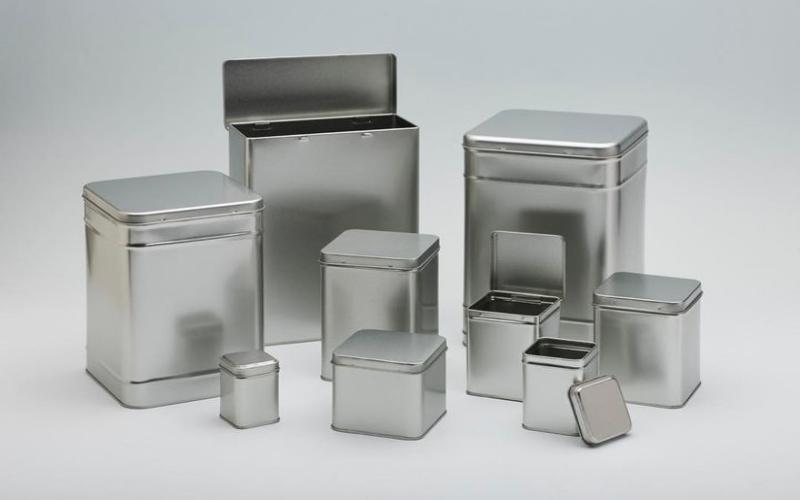
Balancing Strength, Formability, and Cost in Metal Tins
The ideal thickness represents a precise equilibrium between strength, formability, and cost. Thicker materials may convey a greater sense of sturdiness. Still, they also increase raw material consumption and complicate the forming process. Conversely, thinner sheets may reduce production costs but may compromise packaging strength.
This consideration is particularly critical for custom metal tins, where the final form may incorporate complex features such as deep drawing, embossing, specialized lid mechanisms, or intricate decorative details. The more complex the structure, the more critical it becomes to precisely match the material thickness with the forming process. We must also evaluate costs; while slightly thicker packaging materials may increase expenses, they can also reduce claims for product damage. In the realm of high-end packaging, these advantages often outweigh minor differences in material pricing.
| Thickness | Strength Level | Best For | Limitations |
|---|---|---|---|
| 0.20–0.22 mm | Low | Lightweight, small tins | Prone to dents |
| 0.23–0.25 mm | Medium | Small to medium metal tins | Limited for heavy products |
| 0.26–0.28 mm | High | Most custom metal tins | Slightly higher cost |
| 0.29–0.30 mm | Very High | Large or premium metal tin cans | Harder to form complex shapes |
Optimal Strength: Thicknesses Between 0.23 mm and 0.30 mm
In our standard manufacturing operations, the most commonly used and practical thickness range for tin-plated steel, the material used for metal tins, ranges from 0.23 mm to 0.30 mm. Within this range, the material delivers robust structural integrity without adding unnecessary weight or complicating the forming process. At a thickness of around 0.23 mm, the material remains suitable for crafting compact tins and lightweight packaging. Conversely, tinplate at approximately 0.30 mm offers superior rigidity, greater resistance to denting, and a more substantial, premium feel. This makes it particularly well-suited for larger tins and high-end merchandise.
This specific thickness range is applicable across a wide variety of product categories because the resulting metal tins are sufficiently sturdy for retail environments, yet not so heavy or rigid as to hinder stamping, curling, or assembly operations. Deviating beyond this range introduces new challenges: material that is too thin may compromise durability, while material that is too thick can increase the complexity and cost of the forming process.
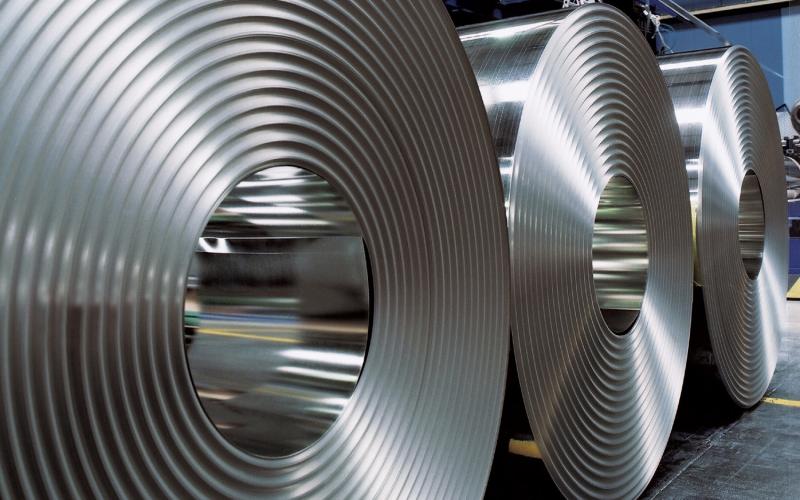
Selecting Metal Tin Thickness Based on Product Type
Different products impose distinct requirements on their packaging; consequently, the packaging thickness should be selected to align with these specific needs.
- Tea / Coffee / Powders: Medium thickness (0.25–0.28 mm)
- Candles / Cosmetics: Medium thickness, robust structural integrity
- Stationery / Wine: Thicker gauge (0.28–0.30 mm)
A small candle tin, for instance, may not require the same level of structural robustness as a large coffee canister or a heavy-duty storage container. Similarly, food tins destined for stacked shipping or long-term storage may benefit from thicker walls. We determine the appropriate thickness specifications based on the intended application, the client’s branding objectives, and the anticipated usage conditions. This approach is the most reliable way to ensure our custom metal tins perform exceptionally well across a diverse range of product categories.
The Impact of Custom Metal Tins Thickness on Design
When ordering custom metal tins, designs often call for embossing, unique shapes, vibrant printing, or distinctive lid structures. A design that appears simple in a sketch may, in actual production, require more robust structural support. Using a thicker tinplate can enhance the performance of high-end design elements. It allows for sharper definition of embossed logos, improves resistance to bending at corners, and lends the packaging a more substantial, premium feel. However, if the packaging shape is overly intricate, excessively thick tinplate can make it difficult to accurately form certain fine details. The same applies to lids and closures: while a simple sliding lid might work well with thin-gauge metal, more structurally complex designs—such as hinged or curled-edge lids require thicker materials to ensure a secure seal. When the can’s structure and material thickness are perfectly balanced, the packaging opens smoothly, closes securely, and retains its shape throughout its use.
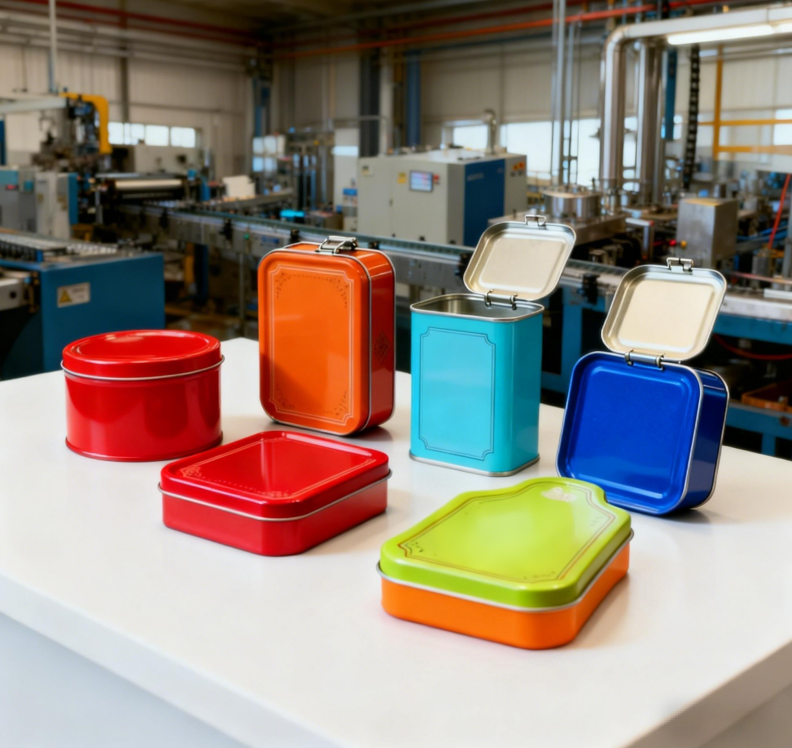
0.23–0.30 mm: The Optimal Material Thickness
In standard manufacturing processes, tinplate with a thickness of 0.23-0.30 mm is the most reliable and widely used. This specific thickness range strikes an excellent balance between durability, formability, and cost efficiency. Many metal tins across categories such as food, tea, candles, cosmetics, and general storage utilize this thickness range. We use this range as our starting point, then make adjustments based on the product’s dimensions, closure type, shipping logistics, and specific branding requirements—all to produce custom metal tins for our clients that are both premium in appearance and highly durable.
 Facebook
 Twitter
 Linkedin