
How to Design Airtight Coffee Tins That Work for Ground and Whole Bean Products?
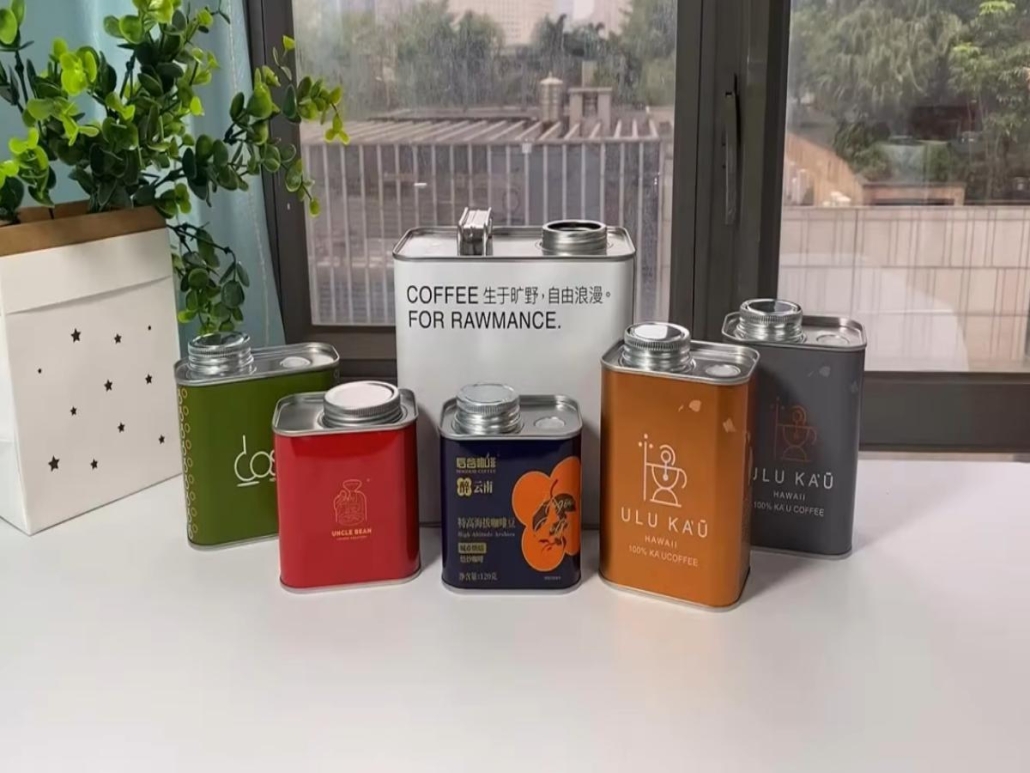
Many coffee shops receive customer complaints about “spoiled coffee” and “bland taste,” often due to poorly airtight coffee tins. This also suggests that roasters struggle to find a suitable tin can design for both ground coffee and coffee beans. To better address this issue, Tsing has designed airtight coffee tins that can hold both ground coffee and beans. This design meets the requirement for maintaining a tight seal on the ground coffee while controlling gas release from the beans, without compromising freshness, ease of use, or brand image.
Why Airtight Coffee Tins Must Be Suitable for Two Varied Coffee Products
To design an effective airtight coffee tin suitable for both ground coffee and beans, it’s essential to understand the effects of air and gases on each product. Their effects are almost opposed, and your coffee container must be able to accommodate both:
Ground Coffee: Once ground, coffee grounds increase their surface area exposed to oxygen by up to 60 times. In a poorly sealed container, oxidation can ruin the coffee’s flavor within 3-7 days, turning a bright, fruity coffee into a dull one. Ground coffee should be stored in an airtight container to prevent air from entering and thus preventing flavor loss.
Coffee beans: Freshly roasted whole coffee beans release carbon dioxide within 3-7 days after roasting. If these gases seal inside a container, they continue to increase the internal pressure, causing the container to expand, the lid to deform, and even the seal to rupture. Therefore, you should store coffee beans in a well-sealed container that lets carbon dioxide escape while blocking oxygen from entering
So how do you design a tin can that can completely seal ground coffee powder while also “selectively sealing” coffee beans? What solution can Tsing offer? A hybrid design using a one-way venting valve and a high-quality sealing ring—achieving both.

The lid design of airtight coffee tins is a key factor in determining their dual-purpose nature
The lid is the core component of any airtight coffee tin, and for a coffee can serving two purposes, it must possess two indispensable characteristics: a robust sealing ring and a one-way venting valve. Here’s our design approach:
Sealing Ring: We select food-grade compression sealing materials to avoid inferior foam. Use food-grade silicone or EVA foam sealing rings, which form a tight seal when the lid is closed. Tsing’s sealing rings are 3mm thick with beveled edges, ensuring even pressure against the rim and providing 100% oxygen blocking when closed. For ground coffee, this seal prevents air from entering for 3-4 weeks; for coffee beans, it locks in flavor, while the valve handles the gases.
One-Way Exhaust Valve: For coffee beans, a valve that allows carbon dioxide to escape while preventing air from entering is crucial, but it’s harmless for ground coffee. The valve is placed on top of the lid to prevent coffee grounds from clogging it. Tsing uses a dual-filter valve to prevent fine coffee grounds from seeping in, ensuring it works for both coffee beans and ground coffee.
Furthermore, we design it to be easy to close and less prone to accidental opening. Tsing’s rotating lid features a textured edge and produces a “click” sound when fully sealed, ensuring the user knows the tin is securely closed.

A Can Design Balancing Freshness, Protection, and Ease of Use
Our designs ensure not only freshness but also ease of use for both ground and bean coffee. Therefore, we use opaque, light-blocking materials. Tinplate is the material we use for our custom coffee tins. It’s 100% opaque, blocking both UV and visible light. We also consider different batch sizes; bean buyers typically purchase in larger quantities, while ground coffee buyers prefer smaller packages to prevent spoilage. Tsing’s 4oz, 8oz, 12oz, and 16oz coffee tins all use the same airtight lid, ensuring brand consistency.
In terms of shape, round tins are easier to open and scoop, making them ideal for storing ground coffee. Meanwhile, square tins save space and are perfect for bulk coffee beans. Tsing offers both shapes, and the smooth inner walls keep coffee powder from sticking in the corners, thus avoiding waste and preventing spoilage. Additionally, the sturdy tinplate body effectively prevents dents, ensuring a tight seal.

Material Selection for Enhanced Sealing and Flavor
The materials used to seal coffee tins directly impact the freshness of the coffee. For dual-purpose designs, we prioritize materials that block air, light, and odors and do not react with the coffee. Tinplate is the ideal material for coffee cans. It is 100% recyclable, durable, and impermeable to water and air. Unlike plastic, it does not absorb coffee odors or leach chemicals. Tsing uses food-grade tinplated steel sheet, passivated to prevent rust and ensure safe direct contact with coffee.
Additionally, we incorporate a food-grade liner. For extra protection, we use a BPA-free, food-grade epoxy resin liner. Tsing’s liner thickness is moderate, ensuring the can’s seal is maintained while effectively preventing direct metal-to-coffee contact, crucial for preserving the delicate flavor of coffee grounds and beans. During the printing process, Tsing leaves the can edges exposed and polishes them to a smooth surface, maximizing the contact area of the sealing ring.
Tips for Brand Customization Without Sacrificing Sealing Security
Brand identity is crucial for coffee tins—but you can’t sacrifice sealing security for a logo. We print on the can body, not the lid, using food-grade ink to ensure it won’t peel or flake off even with frequent use. Alternatively, we emboss (raise) your logo or design on the can, adding a touch of sophistication without compromising the seal. Tsing achieves embossing depths up to 1 mm, creating a tactile brand experience without affecting the seal. We also recommend choosing fresh color options, such as darker colors (black, navy, forest green), which absorb less light than lighter colors, providing extra protection. Tsing’s custom color options allow you to build your brand identity while keeping your coffee fresh.
Delivering Designs Focused on Freshness, Versatility, and Brand Image
Designing airtight coffee tins for ground coffee and coffee beans is crucial to three core principles: a lid with a high-quality sealing ring and one-way valve, an opaque and durable tin can body, and customization that does not compromise sealing security. When designing our coffee containers, we strike a balance between scientific principles (preserving freshness) and practicality (ease of use and brand promotion). Whether you’re a small-batch roaster or a large chain coffee shop, a dual-purpose airtight coffee tin can help reduce your purchasing costs and ensure every customer enjoys the best-tasting coffee every time.
 Facebook
 Twitter
 Linkedin
