

How to make metal pencil case look more premium: 3D embossing and high-definition embossing
More and more premium stationery brands are demanding higher levels of craftsmanship for the metal pencil case. A well-designed, high-quality metal pencil case can enhance the perceived value of the product, encourage reuse, and transform simple school supplies into collectibles. At Tsing, we use advanced surface treatment processes such as 3D embossing, high-definition embossing, and micro-engraving to transform ordinary tin cans into high-end metal pencil case packaging. Therefore, in this guide, we will discuss which design choices can create the strongest sense of luxury and how to balance aesthetics and manufacturability.
Why is high-quality surface treatment necessary for a metal pencil case?
High-end packaging provides excellent visual contrast, tactile texture, and weight experience, all of which convey quality information before the user even opens the product. For metal pencil cases, buyers typically evaluate the following: surface finish (glossy, matte, metallic), decoration clarity (transparent logos, accurate colors), tactile details (embossed patterns, textured engraving), and structural quality (seam treatment, hinge robustness, assembly, and surface finish).
Combining sophisticated decoration techniques (3D and high-definition embossing) with high-quality coatings and meticulous molds can achieve three results: increased shelf appeal, enhanced gift value, and strengthened brand image, thereby encouraging repeat engagement.
From the perspective of high-end stationery brands, high-quality surface treatment processes can also help them stand out in a highly competitive category. For example, printing a simple gold foil logo on an embossed lid can significantly increase price elasticity and open up the gift market.

Core Embossing Techniques for Metal Pencil Case: 3D Embossing and High-Definition Embossing
Embossing is key to elevating the tactile quality of a product. Therefore, many customers ask about the differences between 3D and high-definition embossing, and which method should be chosen for pencil tin cases.
3D Embossing:
3D embossing utilizes multi-layered molds to create a highly three-dimensional relief effect on the metal surface. The result is a 3D contour; logos, icons, or patterns will protrude from the background by several millimeters. Manufacturing Process: Requires precise male and female molds (tooling), usually processed on CNC machines and sometimes requiring post-processing via electrical discharge machining or polishing. Multi-stage stamping or progressive dies can achieve consistent depth.
Visual and Tactile Effects: Strong shadows and highlights, striking tactile feel – ideal for creating logos, badges, or iconic design patterns on pencil tin case lids.
Best Use Cases: High-end gift tins, limited edition products, and co-branded promotional campaigns where immediate tactile recognition is crucial.
High-Definition Embossing:
High-definition embossing achieves excellent relief effects and sharp edge details. It can reproduce complex patterns, small text, or photographic textures with high fidelity. While the depth is shallower, the resolution is higher.
Manufacturing Process: Uses precision micromachining, laser engraving, or photoetching to create microrelief features. High-precision molds typically require finer stamping control and high-precision tooling.
Visual and Tactile Effects: Wonderful surface texture, subtle tactile feedback; a more refined appearance, better suited for patterns, micro-textures, and anti-counterfeiting markings.
Best Uses: Designer pencil cases, collectible series, and security features to prevent counterfeiting.
If you want a striking, high-end visual effect, use 3D embossing – for example, a large brand logo or medal-like emblem on a pencil tin case. Alternatively, if your design relies on detail (tiny patterns, miniature text, reproducing photographic textures), or if anti-counterfeiting is a primary concern, use high-definition embossing.
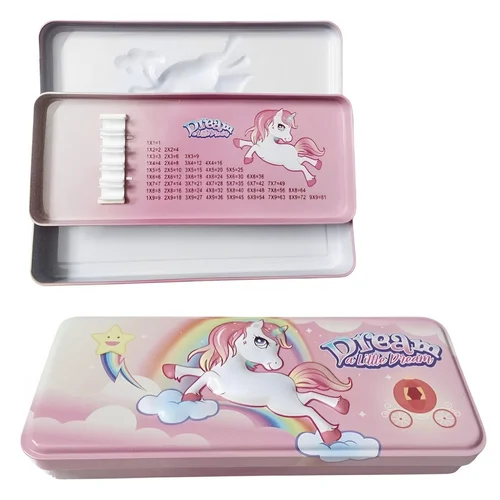
Micro-Engraving and Anti-Counterfeiting Technology
Micro-engraving enhances both security and the sophistication of the product. For high-end pencil cases, micro-engraving adds subtle textures and fine lines that are difficult to replicate.
Micro-Engraving Technology Options:
Laser Micro-Engraving: Uses focused laser energy to ablate micron-sized layers of metal from the surface. It can engrave fine lines, QR codes, serial numbers, and near-photographic details on tinplate. Laser engraving also supports serialization for limited production runs. CNC Micro-milling: High-precision mechanical engraving allows for deeper, more controlled textures; suitable for molds used in high-precision embossing.
Photochemical Etching (PCHE): Produces wonderful, repeatable patterns, often used for security features or watermark effects.
Security and Brand Protection:
Use micro-engraving techniques to create hidden or visible anti-counterfeiting features (e.g., serial numbers, micro-text only visible with a magnifying glass). These features effectively deter counterfeiters and aid in the traceability of limited-edition metal pencil cases. Combine micro-engraving with overt features (holographic foil, hot stamping) to increase protection while maintaining aesthetics.
Embossing Placement and Combining Different Processes
A successful metal pencil case design lies in balancing focus, negative space, and layering. Here’s a practical checklist for designing high-end metal pencil cases from Tsing:
Focal Point Placement:
The center of the lid is crucial. Place your primary 3D embossed logo or pattern in the center of the lid for maximum visual impact. Secondary decorations can be placed on the sides or bottom. The main body can feature patterns or serial numbers created using high-definition embossing or micro-engraving.
Layering and Contrast:
Utilize embossing + hot stamping: Combine 3D embossed logos with selective hot stamping to highlight raised areas. Hot stamping instantly elevates the product’s luxurious feel. Or embossing + soft-touch varnish: Apply a matte soft-touch varnish to embossed or debossed areas to increase tactile contrast and provide a premium feel. Alternatively, use embossing + spot UV: Apply spot UV to printed patterns, creating glossy highlights around the subtle embossing (suitable for fine details on the pencil case).
Interaction of Color and Metal:
Metal finishes complement embossing techniques, enhancing light and shadow contrast. For metal pencil cases, consider offset-printing a background on the metal and embossing a metallic logo to create a striking tactile contrast.
How to Reliably Produce High-Quality Products
Translating a design into a reliably produced, high-end pencil case requires meticulous manufacturing engineering and quality control. We use high-quality steel molds machined on CNC machines and often employ electrical discharge machining (EDM) for fine finishing of critical contours. For high-definition embossing, the molds must achieve micron-level precision, sometimes requiring polishing with diamond tools to obtain sharp edges. For 3D embossing, Tsing can use multi-stroke continuous presses or compound presses to form the metal without causing wrinkling or cracking. We regularly inspect and repolish the molds to maintain surface finish during high-volume production; spare molds are prepared for critical patterns.
Before producing samples, we first create die-cutting lines, vector graphics, and model renderings. For tactile review, small batches of prototypes are made so that relevant personnel can feel the embossing depth and verify the dimensions, hinge function, and coating appearance. Then, printing and production parameters are adjusted, and forming pressure is regulated to prevent cracking or tearing of the tinplate. Food-grade or corrosion-resistant varnishes are used to protect exposed metal and printed patterns. For frequently used pencil cases, we apply a durable, wear-resistant topcoat. Soft-touch varnish is applied to selected areas to create contrast with the metal-embossed areas. The quality team implements statistical process control for embossing depth, registration accuracy, and coating thickness. They establish acceptance criteria and sampling plans to ensure consistent quality across batches of pencil cases.
Making Pencil Tin Cases Look More High-End
Through the clever use of 3D embossing, high-definition embossing, and micro-engraving techniques, metal pencil cases can be transformed from ordinary commodities into high-end collectibles. These techniques give the pencil cases a rich tactile feel, visual depth, and anti-counterfeiting features, thereby increasing their value and enabling higher pricing.
Choose 3D embossing to create striking, three-dimensional logos and tactile experiences. Use high-definition embossing technology to showcase complex patterns, delicate textures, and background details. Add micro-engraving for security, serialization, and ultra-fine textures. Employ multi-layer finishes to enhance contrast and tactile feel, allowing customers to experience the difference.
 Facebook
 Twitter
 Linkedin
