
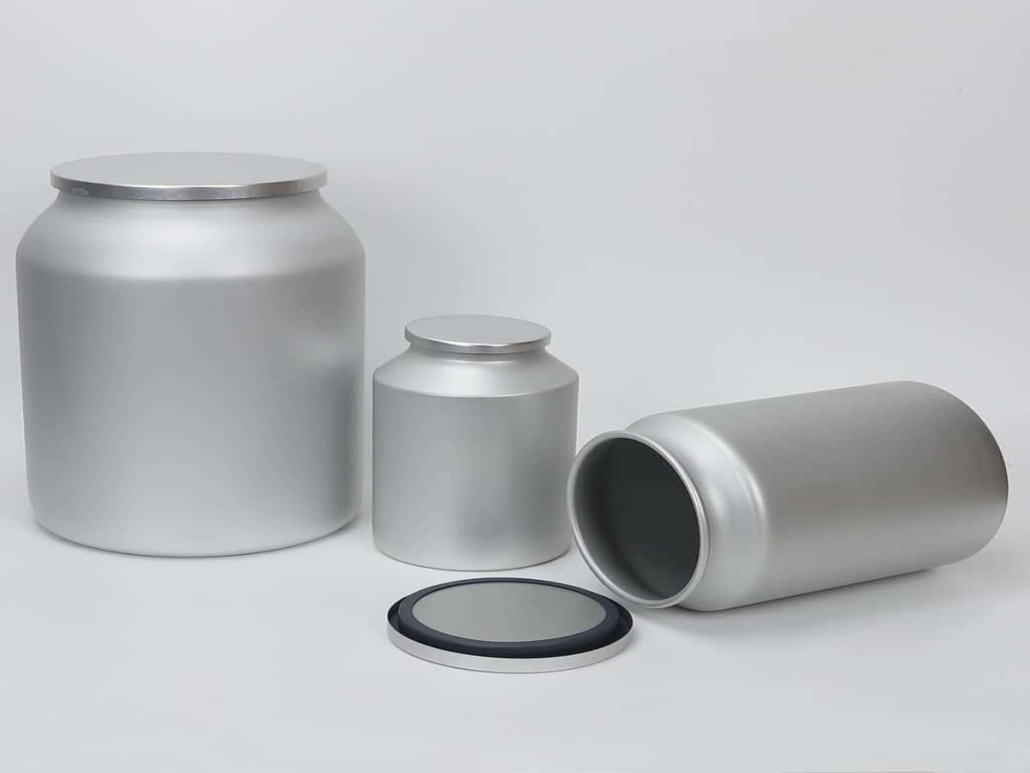
Seamless metal tins for capsules: Airtight Seal Preserves Capsule Potency for 24+ Months
For manufacturers and brand owners of pharmaceuticals, nutraceuticals, and high-end dietary supplements, airtight capsule packaging is not only an ideal outcome but also a competitive advantage. Packaging does more than contain the product: it maintains product stability, prevents contamination, and protects brand reputation. Seamless metal tins for capsules excel in this regard. These containers feature a one-piece, seamless body, eliminating leaks at the seams. Combined with carefully designed seals and liners, they achieve superior airtightness, helping capsules maintain their potency for up to 24 months or longer.
Seamless Metal Tins for Capsules: The Importance of One-Piece Construction for Airtightness
Welded, seam metal tins have inherently weak seams. Even advanced welding techniques can produce tiny gaps, allowing oxygen/moisture ingress. Moisture can damage hydrophilic capsules, leading to clumping and reduced bioavailability. Seamless metal capsule containers, made via a one-piece extrusion process, have no seams and block 99.9% of moisture, eliminating the need for unreliable seam coatings. The thinner metal at the seams of seamed tins allows UV light to damage photosensitive ingredients. Seamless metal capsule tins, with an ASTM-compliant wall thickness of 0.25-0.3 mm, completely block UV light, reducing photodegradation by 98%.
Ordinary seam tin cans are made from welded or interlocking metal sheets, which inherently produce weak seams. Even advanced welding techniques can produce tiny gaps, allowing oxygen and moisture ingress and accelerating degradation. Seamless metal tins for capsules, using a seamless drawing process, completely block oxygen for up to 36 months.
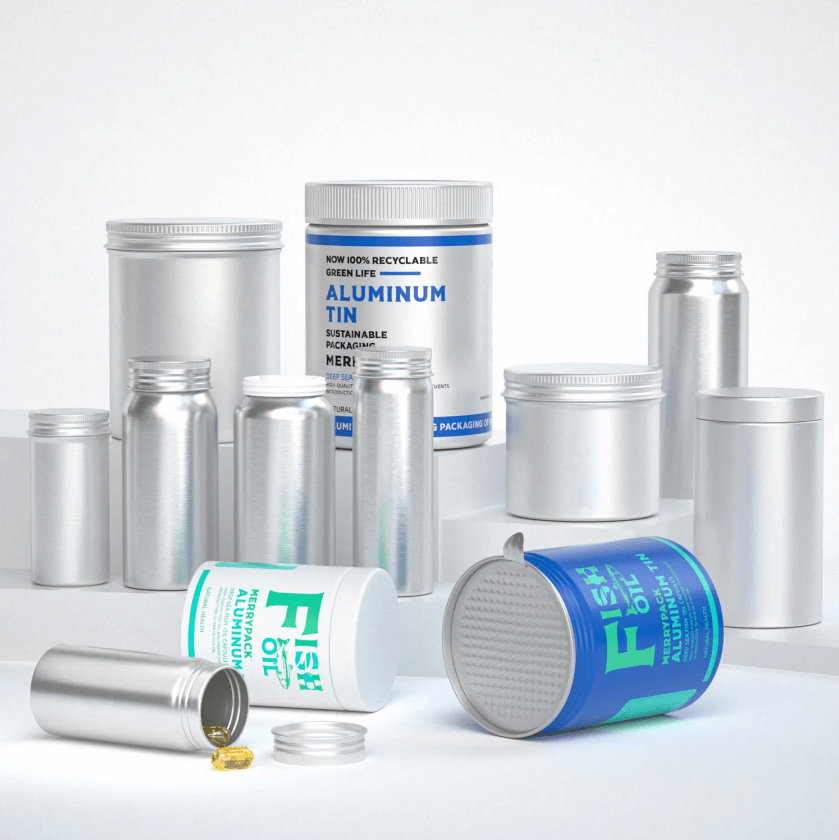
Seamless Metal Tins for Capsules: Materials and Inner Coatings
The choice of material determines the mechanical properties and chemical compatibility of the capsule tin. Two primary metals are commonly used for capsule tins: tinplate and aluminum. They each have advantages and disadvantages in terms of weight, corrosion resistance, and decorative properties.
Tinplate: Ideal for full-surface lithography and direct printing, with good formability and suitability for deep drawing. It is cost-effective and widely used in consumer product packaging. However, tinplate requires an internal food-grade or pharmaceutical-grade coating to prevent interaction between the metal and the product.
Aluminum: Aluminum is naturally corrosion-resistant and lightweight, making it highly attractive when coatings are not required or when brands seek a premium feel. Additionally, aluminum can be anodized or brushed to enhance product aesthetics. Deep-drawn aluminum requires adjustments to molds and processes, but the final product is seamless and durable.
Internal Coating Strategies:
Epoxy Phenolic Lacquers: Common and cost-effective, suitable for various vitamins and dry capsules. They provide corrosion protection and effectively block aroma diffusion.
Polyester or Polyurethane Coatings: Offer improved abrasion and solvent resistance, suitable for corrosive formulations.
PFA/PTFE: Fluoropolymers offer excellent chemical inertness for highly reactive formulations or those requiring sterilization cycles. While more expensive, they minimize extractables and migration risks.
Multilayer Barrier and Metallized Coatings: For oxygen-sensitive capsules, multilayer approaches, including metallized films, can further reduce oxygen permeability.
To choose the appropriate coating, you first need to determine the product’s chemical composition. Does the capsule contain oily substances? Are the active ingredients hygroscopic or volatile? We will then conduct migration and extractables testing on candidate coatings to confirm chemical compatibility.
Seamless Metal Tins for Capsules: Sealing Systems and Methods to Lock in Freshness
A seamless tin body is only part of the airtightness equation. The design of the lid, the way the lid connects to the body, and the presence of additional seals also determine the integrity of the headspace and the barrier performance in practical use.
Standard sealing methods and their sealing characteristics used by Tsing:
Crimped or Necked-down Seals: Necking down the can opening creates mechanical interference, increasing friction and thus improving the seal. Crimped seals enhance the can’s sturdiness, facilitating transportation and stacking.
Inner Plugs or Auxiliary Lids: A nested inner plug beneath the outer lid provides an additional barrier, reducing headspace exchange and locking in aromas. For capsule tins, plastic inner plugs made of pharmaceutical-grade PP or PE are very common and effective.
Injection Overmolded Gaskets: Integrating the gasket into the lid through overmolding ensures consistent positioning and compression, improving repeatability on high-speed filling lines.
Sizing, Customization, and Regulatory Compliance
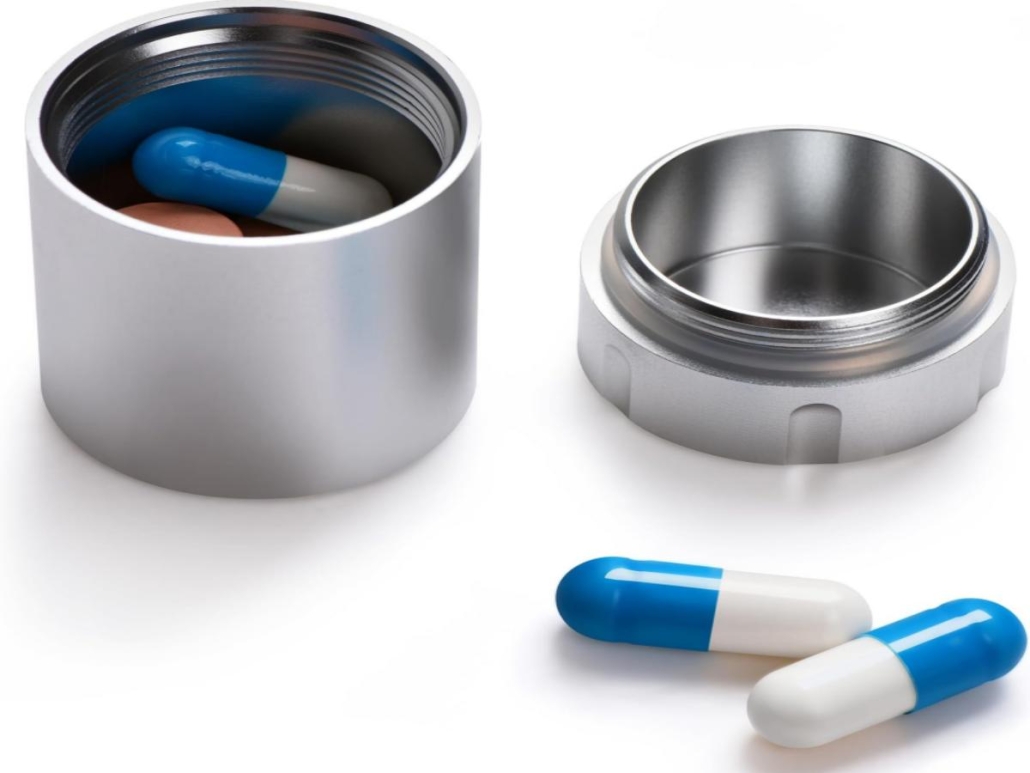
Tsing’s seamless metal tin for capsules offers size flexibility, customization, and global regulatory compliance. Our size range is from 1 oz to 16 oz (50-500 capsules). The popular 4-ounce container holds 120-150 size 00 capsules. The minimum order quantity (MOQ) for custom sizes is 5,000 units; the MOQ for standard sizes is 3,000 units.
Customization options for seamless metal capsule tins include printing, embossing, and labeling. We use offset printing technology with food-grade inks that adhere securely to the container surface without gaps; embossing is limited to non-sealing areas to maintain the lid’s sealing performance. For brands seeking enhanced visibility, we offer matte or gloss finishes that are fade- and scratch-resistant, with an added UV coating for added durability.
For pharmaceutical and nutraceutical brands, regulatory compliance is essential. Therefore, these capsule tins meet global standards. We provide a Certificate of Compliance (CoC) with every order, certifying that the product meets USP Class VI, FDA 21 CFR Part 175, and ASEAN NPRA requirements. Our capsule tins also comply with ASTM specifications for permeation testing and leak resistance, supporting stability studies required for shelf-life approval.
Real-World Performance and Case Studies
Tsing’s customer results demonstrate that seamless metal tins effectively preserve capsule potency for over 24 months.
A US probiotic brand reduced strain activity loss by 35% by switching to 4-ounce vacuum-sealed seamless metal tins. After 24 months, strain activity remained as high as 89%, resulting in a 22% reduction in production costs. Another Southeast Asian herbal medicine brand successfully met the NPRA’s 24-month shelf-life requirement using our epoxy-coated seamless metal cans. Curcumin potency remained at 94%, enabling the brand to successfully expand into three new markets.
These cases demonstrate that seamless metal cans are a key packaging choice for brands that prioritize potency, compliance, and cost-effectiveness. Data and specifications are only part of the story; actual performance is key to validating the value of seamless metal cans.
Delivering Superior Capsule Packaging with Excellent Sealing
For applications where long-term potency, brand reputation, and consumer trust are paramount, seamless metal tins for capsules offer a beautiful and practical solution. The one-piece construction eliminates potential failure modes at seams. Tsing’s carefully selected materials and high-performance inner coating prevent chemical reactions during manufacturing. The meticulously designed seal—including the neck, inner plug, and optional induction seal—provides the mechanical airtightness needed, ensuring capsule potency for 24 months or longer.
 Facebook
 Twitter
 Linkedin
