
Slide Lid Mint Tins vs. Flip-Top Mint Tins: Sealing, Convenience & Spill-Proof Test
The design of the can lid directly impacts product integrity and consumer experience. Many manufacturers initially focus only on decoration and size, neglecting the mechanical effects of the lid structure. The true performance differences become apparent when the packaged product enters the sales environment. Flip-top and Slide lid mint tins may appear similar in size and material, but their engineering design philosophies are fundamentally different. These differences affect seal stability, ease of use, and durability after repeated opening and closing.
Structural Design of Flip-Top and Slide Lid Mint tins
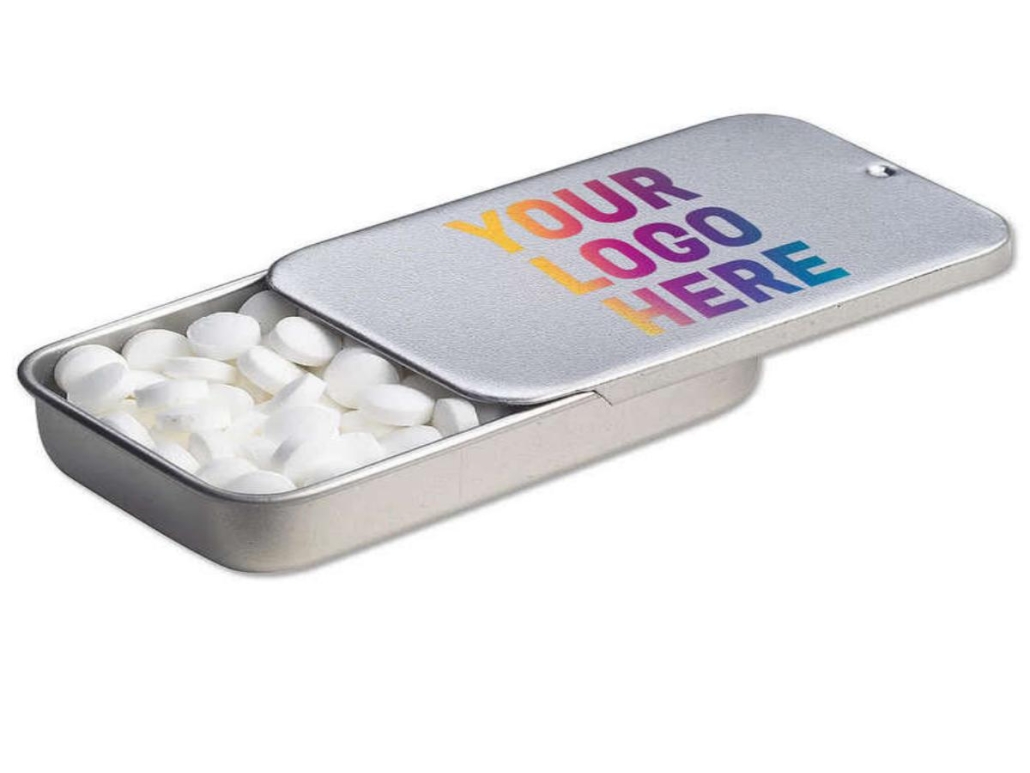
Slide lid mint tins utilise a guide-rail sliding mechanism. The lid slides horizontally along precision-formed side grooves that control its movement and maintain alignment. The absence of a rotating hinge system results in uniform stress distribution throughout the tin. This structural simplicity reduces mechanical fatigue and eliminates hinge pin wear.
In contrast, flip-top mint tins use a pivot hinge structure. The lid rotates around a fixed axis, and repeated opening and closing cause stress concentration at the hinge joint. Over time, this area becomes a major wear point. From a manufacturing perspective, sliding mechanisms require tighter dimensional tolerances during forming and stamping. However, they also reduce assembly steps, eliminating the need for secondary hinge installation, thus improving structural consistency in mass production.
Sealing Performance of Slide Lid Mint tins
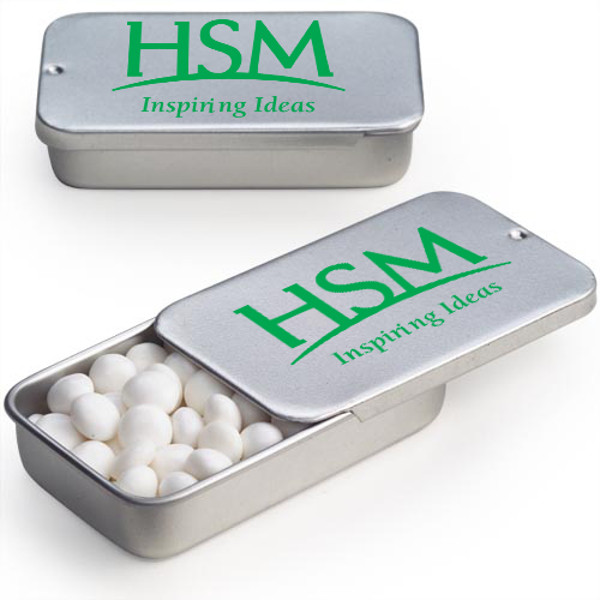
Sealing performance determines whether a mint tin can effectively protect its contents during transportation and daily use. Sliding-lid mint tins use a passive sealing design: the lid overlaps the tin’s edge and is guided by friction rails to achieve a secure seal. This frictional resistance prevents accidental sliding due to vibration or minor impacts.
Flip-top mint tins rely on the snap-fit mechanism’s fastening force to maintain a seal. Initially, this sealing system is reliable. However, repeated opening and closing can gradually reduce the snap-fit’s tightening force. Additionally, environmental factors such as temperature fluctuations and metal elasticity can affect long-term seal strength. This difference is particularly important for brands that prioritise reliability, especially in travel retail or export markets.
User Experience Brought by Slide Lid Mint Tins
User interaction has a significant impact on repeat purchase behaviour. Slide lid mint tins allow consumers to control how much candy is dispensed. The partially sliding lid allows users to adjust the flow rate, reducing over-pouring. Flip-top mint tins offer convenient one-handed access, especially suitable for frequent use. However, because the lid can be fully opened, the mints are more likely to spill if the tin is tilted or shaken. From a tactile perspective, sliding lids provide a smoother, more precise interactive experience. Flip-top systems, on the other hand, offer a familiar and casual feel, making them more suitable for mainstream retail positioning.
Surface Finishing and Brand Compatibility
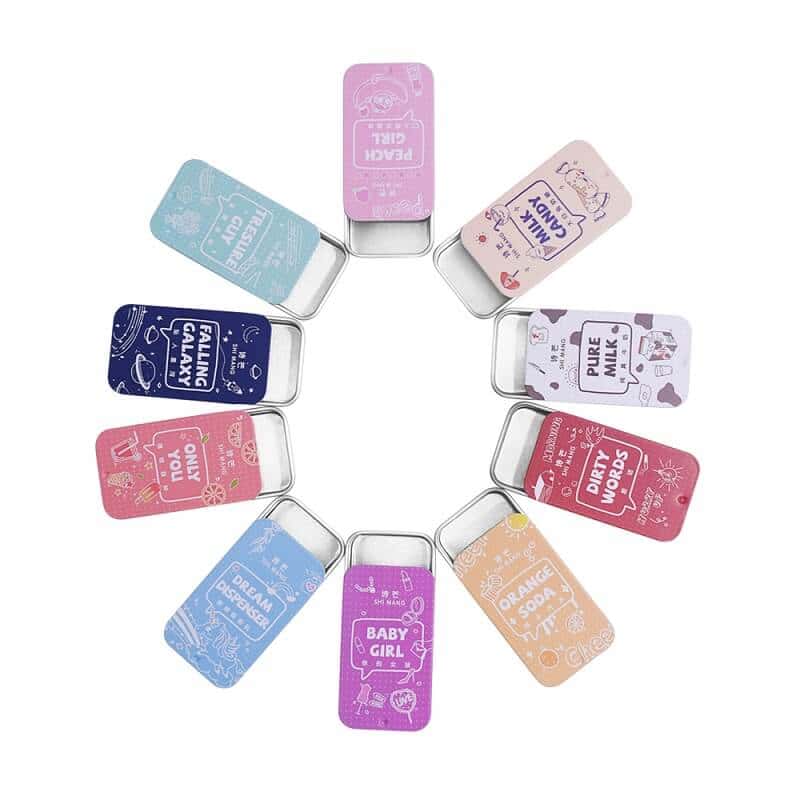
Slide lid mint tins feature a smooth, seamless lid surface, ideal for a variety of high-end decorative techniques, including embossing, debossing, high-resolution offset printing, matte or glossy varnish finishes, and minimalist brand designs. The absence of a hinge protrusion allows for design continuity on the tin surface, which is especially important for high-end or avant-garde brands.
The hinge line of flip-top mint tins slightly limits decorative flexibility. While decoration can still be fully achieved, some embossing layouts may require repositioning. If a brand heavily relies on visual presentation, a sliding lid design typically offers greater design freedom and a more sophisticated aesthetic.
Durability and Sustainability Considerations
Durability extends beyond leak-proof performance. The stress distribution in a slide lid mint tin is along the linear guideways, rather than concentrated at the hinge. This reduces localised fatigue and improves long-term mechanical stability. In repeated opening and closing cycles, sliding structures generally exhibit a more even wear pattern. From a sustainability perspective, both packaging forms use recyclable tinplate. However, sliding lid packaging has fewer mechanical parts, simplifying the material recycling process. Furthermore, its robust structure facilitates reuse, extending the product’s lifespan and making it more than just a one-time purchase.
The Right Lid Design
The difference between sliding lid and flip-top mint tins is not merely about appearance but a decision that directly impacts product protection, consumer experience, and brand positioning. While flip-top designs are convenient and quick, sliding lid mint tins offer significant advantages in terms of seal stability, controlled dispensing, structural durability, and a premium look. For brands operating in retail environments or export markets, shock resistance and long-term reliability are paramount, making these differences commercially significant rather than merely aesthetic.
 Facebook
 Twitter
 Linkedin
