
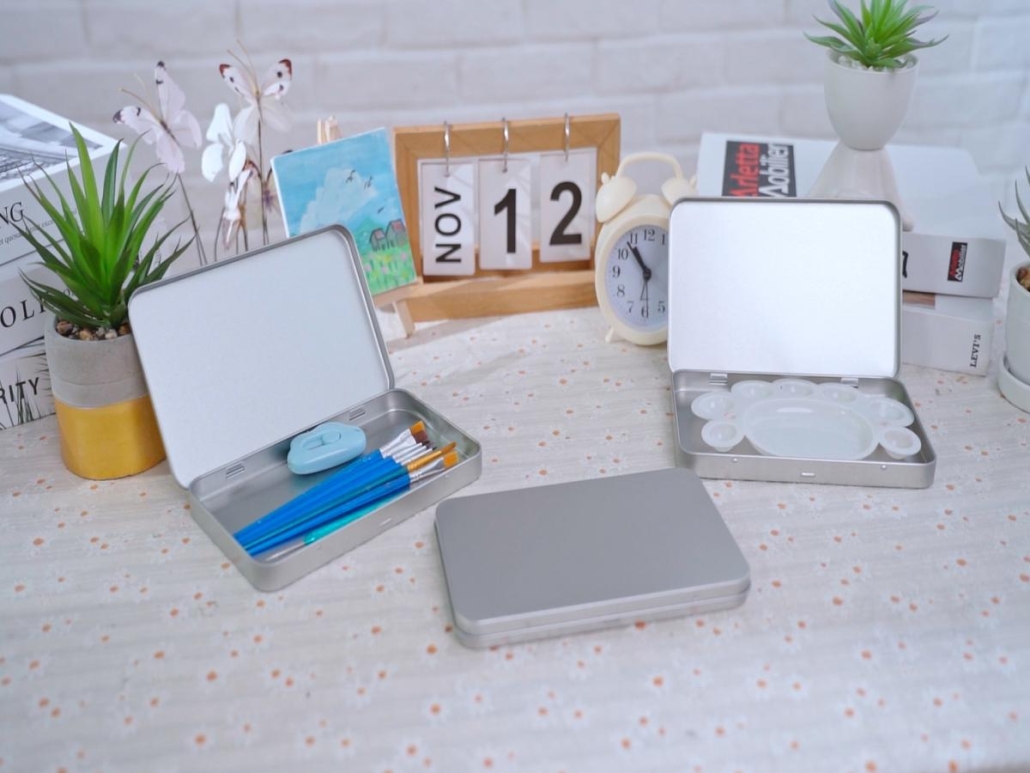
Solve Stationery Tin Lid Loss: Secure Built-In Hinged Lid Stationery Tins
Once the lid of a metal stationery tin is inadvertently lost, the product immediately appears unreliable in the eyes of consumers and users, and its practical utility is severely compromised. Although this may sound like a trivial matter, a missing lid does indeed cause genuine inconvenience for users. Furthermore, it imposes hidden costs on the brand—including customer complaints, return processing, and even a decline in repurchase rates. Yet, these very customers typically seek stationery packaging that embodies two key elements: aesthetic appeal and practical functionality. One of the most effective ways to address missing lids is to adopt “hinged lid stationery tins” with a built-in hinge mechanism. This design ensures the lid remains securely attached to the tin’s body at all times, safeguarding the product’s usability and enhancing the overall user experience.
Why Are Traditional Stationery Tins Prone to Lid Detachment?
Traditional stationery tins employ a detachable lid; consequently, during repeated daily use, it is almost inevitable that the lid will eventually separate from the box. When carried in a schoolbag, the lid is highly susceptible to being lost. Once lost, the stationery box forfeits its reliable storage function, leading to a decline in its actual usage. From a brand’s perspective, a missing lid triggers a cascade of subsequent issues. It diminishes the consumer’s perception of the product’s quality, increases the risk of stationery spilling out, and casts a negative shadow over the customer experience. Over time, this can lead to higher product return rates and significant erosion of brand trust.
In real-world usage scenarios, this problem becomes even more pronounced. Students frequently need to open and close their stationery tins during class—particularly in fast-paced or distraction-filled environments. These minor annoyances can accumulate into a larger perceived problem, leading consumers to associate the product with inconvenience or unreliability. This, in turn, directly impacts brand loyalty and future purchasing decisions.
How Do Hinged-Lid Stationery Tins Solve This Problem?
Stationery tins with hinged lids address this issue at a fundamental structural level by permanently affixing the lid to the box body. This built-in hinge design ensures the lid remains securely attached throughout the product’s lifecycle, eliminating the risk of loss. Furthermore, the hinged structure significantly enhances user convenience. Users can effortlessly open and close the box without handling separate, loose components. This not only boosts the product’s functional utility but also delivers a smoother, more satisfying overall user experience. For brands, this translates into enhanced product reliability and a more professional brand image.
Beyond mere convenience, a hinged mechanism offers a level of stability and consistency that detachable lids cannot match. The user experience remains consistent every single time the product is used. Furthermore, this integrated design minimizes the risk of damage during handling; even when subjected to movement or external pressure, the lid remains perfectly aligned with the container body.

Production Processes and Design for Hinged Stationery Tins
The structural integrity of a hinge depends fundamentally on the materials used in its construction. At TSING, we use tinplate to manufacture our hinged stationery tins—a material known for its high rigidity, excellent formability, and consistent performance. Additionally, we carefully assess the appropriate tinplate thickness based on the intended application of the stationery tin. For lightweight pencil cases, a medium-gauge tinplate is typically sufficient. However, for larger tins intended for gift sets or premium stationery collections, a thicker tinplate gauge may be required. The key lies in striking a balance: the packaging must be robust enough to maintain its structural integrity while remaining easy to manufacture and easy for consumers to open.
In terms of production, TSING employs precision stamping and forming processes to ensure the flawless alignment of the body, lid, and hinge components. Regarding surface finishes, we apply protective coatings—both internally and externally—to shield the metal from abrasion, scratches, and corrosion. At TSING, we ensure that these decorative finishes reinforce the tin’s structural integrity without compromising its strength. This approach ensures that our tins remain durable over time, consistently retaining both their aesthetic appeal and their functional utility.
Design Features That Enhance Usability and Security
One of the primary reasons consumers favor hinged lid stationery tins is the added convenience they bring to daily use. With the lid permanently attached to the body, users can open the tin with a single hand, allowing them to access their contents and resume their work seamlessly.
A thoughtfully designed hinge also enhances security. Detachable lids are prone to clutter, to easily getting lost inside a bag, or to falling onto the floor. A fixed, hinged lid eliminates these risks. For brands targeting children, students, or gift-buyers, these seemingly minor design details can have a profound impact on building consumer trust. Furthermore,
We also pay close attention to the tactile experience of opening the tin. A superior hinge design should operate smoothly—neither too loose nor too stiff—to ensure a satisfying and effortless user experience. If the hinge is too loose, the lid might snap open abruptly, giving the product a cheap feel; conversely, if it is too tight, it becomes inconvenient to use. Therefore, our designs ensure a balance: providing just enough resistance to feel secure without causing any inconvenience to the user. This balanced design is one of the primary reasons why the hinged lid stationery tins produced by TSING are generally more popular in the stationery market than those with detachable lids.
Customization Options for Various Brands
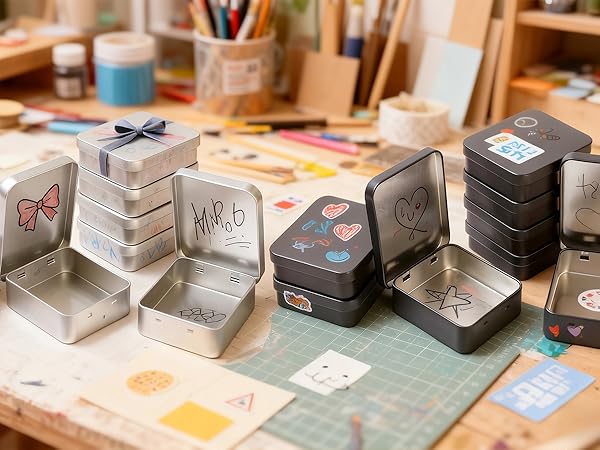
Customization is a common feature in stationery packaging. Many buyers seek more than just storage functionality; they want products that reflect individuality and showcase their brand image. Hinged lid stationery tins perfectly meet these demands, as their structure offers a clean surface ideal for decoration while remaining sturdy and practical.
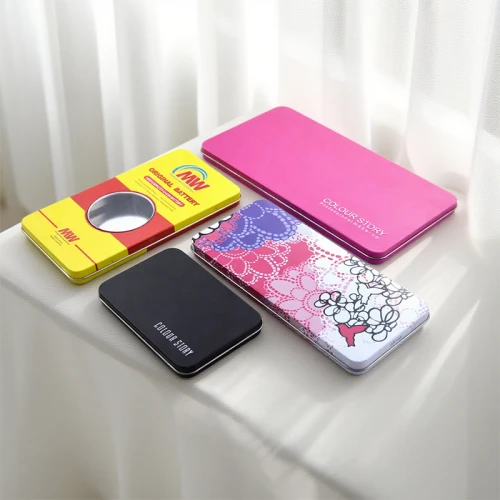
At TSING, we offer a wide range of customization options for our tin stationery cases, including full-color printing, spot-color branding, embossing, debossing, matte finishes, gloss coatings, and soft-touch textures. The hinged structure integrates seamlessly with all these techniques, allowing brand identities to stand out with greater prominence and consistency.
For clients designing gift sets, customization is even more critical. The tin case—whether holding colored pencils, markers, erasers, or sketching tools—should be an integral part of the gift experience. We also assist brands in adapting their design patterns to the hinged structure; designers can create fluid patterns that flow continuously across the entire surface, or craft harmonious visual effects that bridge the gap between the lid and the body of the case. Compared to designs with detachable lids, this approach offers brands greater flexibility. It eliminates the risk of the lid getting lost or appearing visually disconnected from the main packaging.
Enhancing the User Experience
Hinged lid stationery tins effectively resolve the common problem of lost lids while significantly enhancing usability, durability, and brand perception. By integrating the lid directly into the case structure, these stationery tins provide a reliable, user-friendly packaging solution well-suited to various practical settings, such as schools. From a manufacturing perspective, the combination of high-quality tinplate, precision engineering, and rigorous quality control ensures that our custom hinged tin cases can withstand the rigors of repeated use. At the same time, its powerful customization potential enables brands to elevate their visual identity and create a more engaging visual experience.
 Facebook
 Twitter
 Linkedin
