
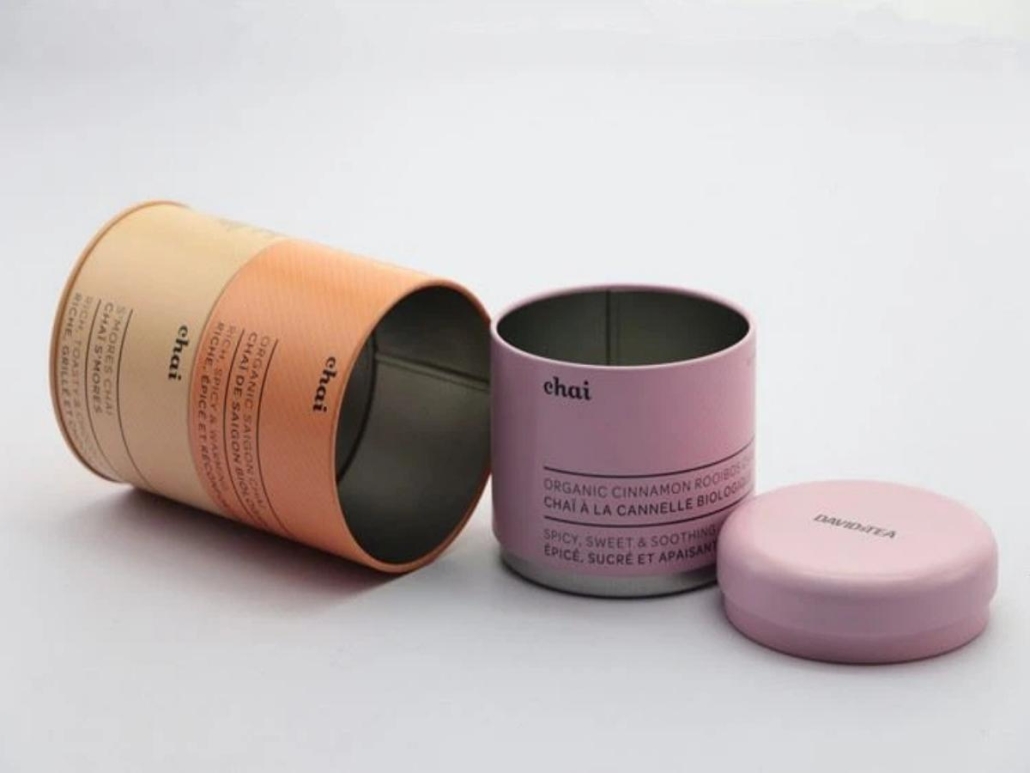
What are the most common custom requirements for stackable tea tins?
For brands seeking an organized, aesthetically pleasing, and practical tea storage solution, stackable tea tins are a suitable packaging choice. Beyond simply holding tea, these canisters must ensure freshness, maintain structural integrity during stacking, and support a premium brand image. As a custom tin can manufacturer, we frequently receive inquiries from clients highlighting key requirements when ordering stackable tea tins. These requirements typically focus on material selection, wall thickness, inner coating, lid shape, sealing system, anti-slip and stacking performance, printing, surface treatment, and production logistics. Understanding these customization priorities allows us to design stackable tea canisters that meet both retail display functionality and aesthetic consumer requirements.
Material Selection, Wall Thickness, and Interior Coating for Stackable Tea Tins
As a custom tin can manufacturer with extensive manufacturing experience, we primarily use tinplate (tin-coated steel) for a stackable tea tin due to its ease of forming, excellent print finish, and recyclability. For customers with premium or sensitive blends of tea, we often use aluminum or tinplate reinforced with an internal coating. Typical custom requirements include:
1. Wall Thickness: Many buyers specify a wall thickness of 0.22-0.30 mm for cylindrical tins. Thicker wall thicknesses (0.26-0.30 mm) increase stacking rigidity and reduce denting during handling. Thinner wall thicknesses, on the other hand, reduce material costs and improve nail-seaming suturing. Designers recommend thicker walls for square or deep tins to prevent expansion under load.
2. Inner Coating: Food-grade epoxy phenolic or polyester lacquers are most in demand. These linings prevent the metal from reacting with the tea, preserving the tea flavor and allowing for safe storage of damp tea. Some customers request a low-odor inner coating for delicate teas to prevent any off-flavor.
Material choice directly impacts stackability, as the metal’s rigidity and dent resistance determine how many tea tins can be safely stacked. A tin with a 0.28 mm thickness and a reinforced lid rim can typically support 6-8 identical stacks of product under retail conditions without visible deformation.
Dimensional Design and Lid Shape of Stackable Tea Tins
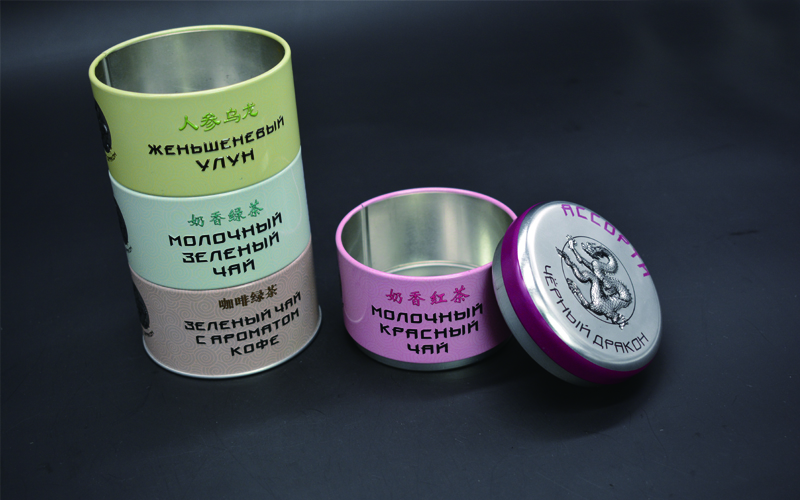
Stackability is a geometrical issue. The fit of the lid and base, the tolerance band between them, and the lip/interlocking details determine stability. Customers often request particular stacking behaviors, and we provide recommendations and balance these trade-offs.
1. Interlocking vs. Shelf Stacking: There are two primary stacking strategies. Interlocking stacking utilizes minor grooves and matching bosses to lock the upper jar into the lower lid securely. This approach is suitable for applications requiring higher vertical stability. Shelf stacking uses flat lids with anti-slip features, relying on friction and design to maintain alignment. This approach offers a more premium look and convenient access. Tea manufacturers seeking a high-end, flush-top design often opt for concealed anti-slip pads rather than overt interlocking stacking.
2. Tolerance Control: For stackable designs, we typically maintain a ±0.15mm tolerance on the critical lid base diameter, which usually requires a higher MOQ. However, this results in a better tactile fit and repeatable stacking during production.
3. Lid Geometry Options: Common lid shapes include snap-on, pull-off, and screw-on lids. For the stackable tea tin, snap-on pull-off lids with shallow recesses are the most popular because they provide quick access while also supporting stacking.
All of these geometry choices influence production tooling and stamping specifications. Therefore, we conduct prototype testing to confirm the lid’s tactile fit and stacking stability before finalizing the tooling.
Sealing Options, Freshness Management, and Liners
Tea is sensitive to light, oxygen, and moisture. When customers request stackable tea tins, one of their primary concerns is how to maintain product freshness while ensuring easy access and stacking. Common customization requests include:
1. Aluminum Foil Inner Lid vs. Snap-On Liner: Many brands require a removable aluminum foil inside the tin to provide tamper-evident protection and additional protection. We typically use this foil in conjunction with a removable EPE foam liner or snap-on food-grade polyethylene liner to create a secure inner cavity beneath the lid. This combination effectively controls freshness and maintains stackability.
2. Lid with Gasket: For premium or long-life tea tins, a silicone or EPDM gasket can be integrated into the lid (groove) to provide an airtight seal.
3. Liner Material and Food Contact: Liners for food contact must comply with FDA/EU standards. We typically use lacquered tin liners or snap-on PE/PET liners. For milder flavors, a neutral PET liner is recommended to prevent the spread of odors.
Customer-Required Printing, Surface Treatment, and Finishes
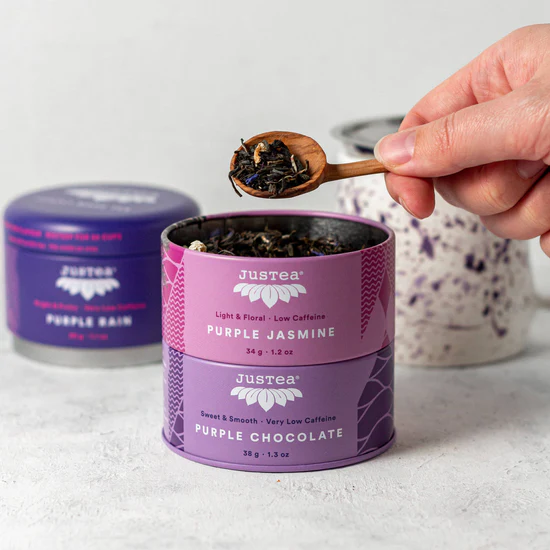
Branding drives numerous customization requests. Many customers want their tea tins to stand out on the shelf, so printing and finishing options are often the most prominent specifications.
1. Printing Method: Offset printing is the primary printing method for custom tin cans, capable of producing fine details, gradient effects, and spot color precision. We often combine UV varnishing or hot stamping with lithographic printing to achieve metallic effects.
2. Surface Finish: Common surface finishes for stackable tea tins include glossy, satin, matte, soft-touch coatings, embossed or debossed areas, and spot varnishing. Many luxury brands require a spot glossy finish over matte regions to highlight the brand logo while maintaining a high-end matte appearance.
Embossed/Debossed: Embossing enhances the tactile feel but also increases mold complexity. For stackable tins, manufacturers often use light embossing on the lid, while deeper embossing affects the lid’s flatness and compromises stacking stability.
From a manufacturing engineering perspective, the choice of surface finish and printing influences the production sequence: varnish and lacquer layers alter the friction surface, potentially aiding or hindering stacking stability. Experts typically recommend a final curing/conditioning step to ensure the coating reaches full hardness before stacking and shipping.
Production, Testing, Sustainability
Practical manufacturing considerations drive many of the final customization decisions. The following are the most common production and logistics requirements our clients ask us to meet:
1. MOQ and Lead Time: The typical minimum order quantity for fully custom printed stackable tin cans is 3,000 or more per SKU, depending on the complexity of the design. Lead times vary.
2. Stacking Testing and Quality Control: We perform stacking load testing according to brand specifications, typically including drop testing from a specified height, moisture exposure testing for paint and lining adhesion, and accelerated shelf life testing.
3. Sustainability: The raw material in stackable tea tins is tinplate, which is highly recyclable; specifying low-VOC inks and quantifying recycled content in the secondary paperboard are standard requirements. We provide environmental declarations to help brands meet retailers’ sustainability standards.
Delivering Satisfactory Tea Tin Designs for Every Customer
Custom-designed stackable tea tins must strike a balance between material strength, dimensional accuracy, airtightness, and visual appeal to provide a reliable and aesthetically pleasing storage solution. We select materials such as tinplate, employ food-grade inner coatings, and optimize the lid geometry and stacking design to ensure the canisters remain safe and stable even after repeated use. Meanwhile, advanced printing and surface treatment technologies enhance brand image and ensure the canisters’ stacking performance, while rigorous testing processes ensure durability and quality.





 Facebook
 Twitter
 Linkedin
