
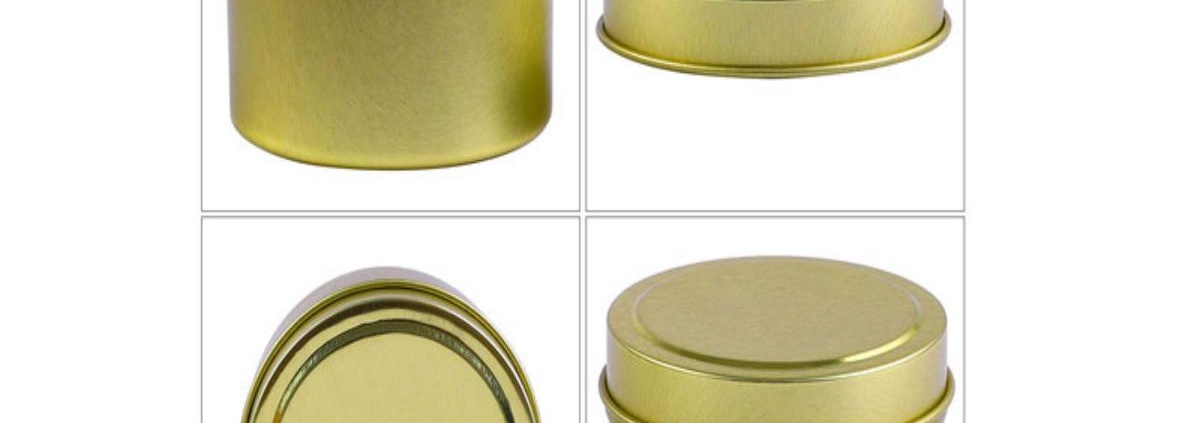
The best lid for 4 oz candle tins: rolled-edge flat lid
For small candle tins, choosing the right lid is crucial. Through years of production, testing thousands of candle tins, and gathering customer feedback, TSING has arrived at a simple conclusion: for 4-ounce candle tins, a rolled-edge flat lid paired with a seamless drawn tin body offers the best balance of sealing performance, production efficiency, cost-effectiveness, and user experience. TSING will explain why the rolled-edge flat lid is superior to other lid types, such as screw-on or hinged lids for 4 oz candle tins, how the rolled edge physically enhances sealing and lid stability, and why combining this lid with seamless drawing, precise neck/edge processing, and an optional internal sealing ring creates a highly leak-proof candle tin.
Why are 4 oz candle tins with rolled-edge flat lids better?
When choosing a lid type for a 4 oz candle tin, users typically consider three main options: rolled-edge flat lids, screw-on lids, and hinged lids. Each lid type has its advantages and disadvantages, but for small candle tins, the rolled-edge flat lid is superior in both functionality and commercial viability.
Screw-on lids utilize threads to seal the tin body. While screw-on lids convey a premium feel and provide mechanical locking, they also increase complexity and cost: precision thread machining requires more tooling and inspection, and small diameter threads are less tolerant of dimensional variations.
Hinged lids reduce the number of loose parts and are easy to re-close, but they are prone to mechanical weakness at the hinge point and typically require more metal and heavier molds. The hinge connection is also difficult to seal completely: the hinge gap can cause fragrance leakage, and repeated hinge movement can loosen the connection.
The rolled-edge flat lid has a simple structure: the lid edge is mechanically rolled to form a smooth, rounded flange that snaps onto the tin body. This geometry creates a wide contact surface and uniform radial compression force, resulting in predictable friction fit and airtightness. For 4 oz candle tins, the advantages include: lower mold costs compared to threaded lids; less prone to damage during handling; and excellent lid flatness for easy printing/decoration. With strict tolerances, proper edge profiles, and precise container surface treatment, the rolled-edge flat lid provides optimal overall performance for small candle tins.

Design Details and Sealing Principles of the 4 oz Candle Tin with Rolled-Edge Flat Lid
First, the rolled edge. The outer edge of the lid is rolled into a smooth, continuous band. This rolling process increases the lid’s rotational inertia, prevents edge deformation, and helps maintain the flatness of its top surface. The radius and thickness of the rolled edge determine how it deforms when pressed onto the rim of the tin. A suitable rolled edge shape allows even pressure distribution and provides circumferential friction along the candle tin’s outer edge.
Second, the lid’s hardness is crucial. A flat lid with appropriate hardness can transfer uniform pressure to the flange. If the lid is too thin, it is prone to deformation and bending, leading to uneven contact. If the lid is too thick, it increases production costs and may make it more difficult for consumers to open. For 4 oz candle tins, TSING selects the appropriate wall thickness and flange thickness.
Third, radial compression and contact area. The rolled edge forms an annular contact surface with a larger contact area than that of sharp, thin edges. This circumferential compression reduces micro-gaps, prevents the escape of volatile organic compounds, and avoids the formation of capillary channels, preventing molten wax from seeping out. This ultimately creates a reliable and repeatable friction-fit seal that maintains its sealing performance during transportation and short-term storage.

Seamless Drawing, Necking, and Rolling
The performance of the candle tin lid depends not only on the lid itself but also on the container body. At TSING, we combine a rolled-edge flat lid with a seamless drawn container body and a controlled necking/rolling process to create a robust, leak-proof design for 4 oz candle tins.
Seamless Drawing: The seamless container body is formed from a single sheet of sheet metal through a controlled deep-drawing process. The resulting container has no vertical seams, eliminating common leakage paths and improving the roundness and continuity of the inner coating. For candle tins, the absence of seams reduces weak points where wax or fragrance might leak and prevents an uneven fit between the lid and the container due to mechanical deformation.
Neck Reduction and Crimping: After stretch forming, operators finish the can opening by performing neck reduction and, if necessary, crimping to create a clean edge profile. Neck reduction constricts the opening inward, so the crimped lid must be slightly compressed to fit; this controlled interference fit increases friction and improves sealing. The crimping process fixes the edge geometry, ensuring the lid sits flat and doesn’t tilt.
If you choose a crimped flat lid for your 4 oz candle tin, be sure to select a seamless drawn can body and a precise neck reduction/crimping process for airtight performance.
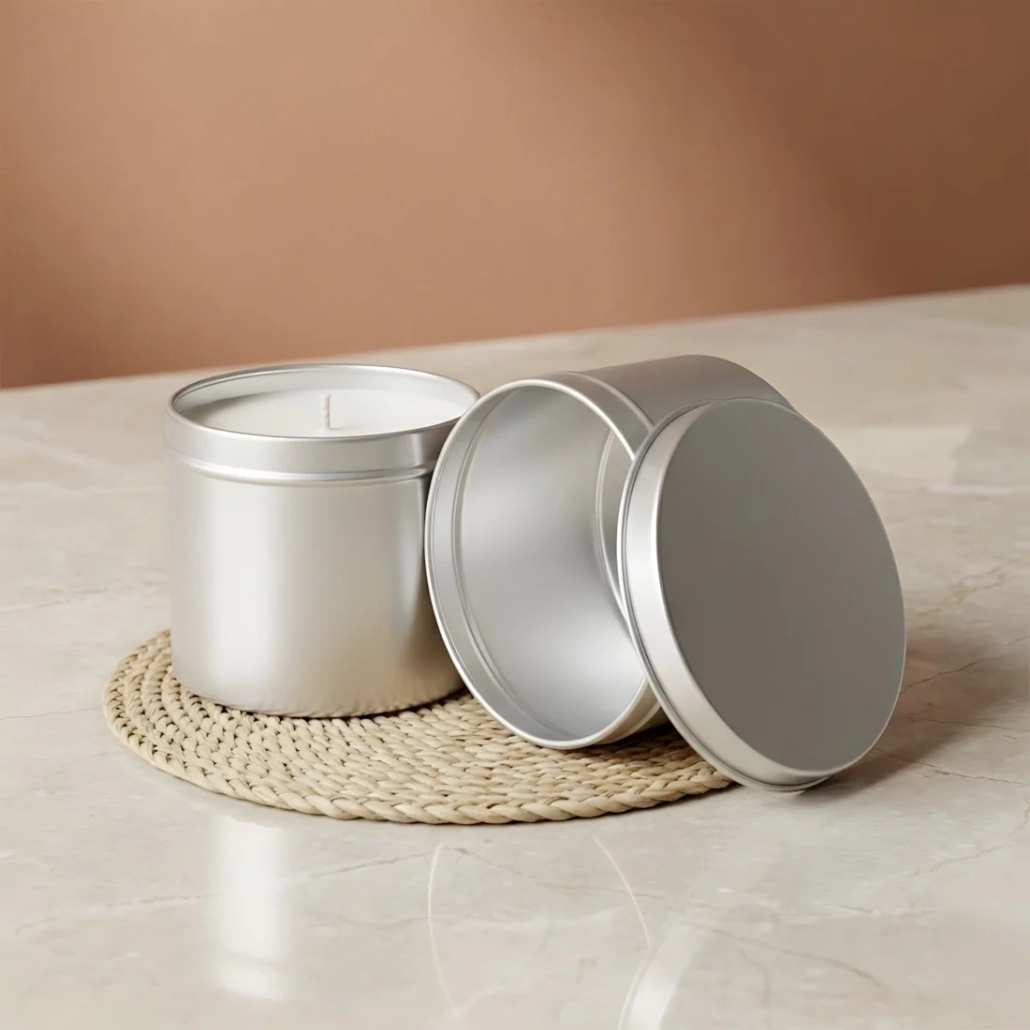
Enhanced Sealing, Materials, and Maintaining Long-Lasting Fragrance
While a crimped flat lid and seamless drawn can body are the foundation for leak-proof performance, specific product needs, especially for highly fragranced or long-shelf-life candles, often require additional sealing measures.
Inner Press-Fit Lid: A small polyethylene or plastic inner cup nested inside the can opening reduces headspace and creates a second barrier. It’s inexpensive and easy to use. For many scented candles, combining a crimped lid with an inner press-fit lid significantly reduces fragrance diffusion during storage.
Foil Tear-Off Seal: A layer of foil is heat-sealed to the filled can, providing sealing protection and tamper evidence. Use this packaging when long-distance shipping, high temperatures, or extended storage will affect fragrance longevity. Consumers must tear off the foil before first use.
Sealing Ring: For special products that require near-perfect sealing without foil, a thin silicone or elastomer sealing ring can be installed in the lid’s groove. Choose a material that can withstand occasional high temperatures and verify its compatibility with the fragrance oils.
Coatings and Varnishes: Internal coatings protect the tinplate from corrosion and prevent metallic taste from affecting the fragrance. For candles, a heat-resistant internal coating should be used to withstand high-temperature pouring and the corrosive effects of fragrance oils.
More Advantages in Cost and Aesthetics
Cost, aesthetics, sustainability, and user experience are all crucial for 4 oz candle tin packaging. A crimped flat lid excels in these areas. Cost and Tooling: The tooling cost for crimped flat lids is typically lower than for threaded lids, and the material cost is also lower than for complex hinged assemblies. For the standard 4 oz size, the unit cost advantage is significant at medium to high production volumes. Furthermore, crimped lids support efficient, high-speed capping machines, resulting in faster assembly speeds and lower labor costs.
Decoration and Branding: The flat top surface of crimped lids is ideal for printing, pad printing, or labeling. The smooth surface ensures even ink adhesion and enhances the effectiveness of special surface treatments (such as spot UV coating, metallic foil, or embossing).
Sustainability: Tinplate is highly recyclable and durable, encouraging reuse – consumers often repurpose candle tins for storage. Crimped flat lids are simple metal components that recyclers can easily collect and recycle together with the tin body.
Crimped Flat Lids are the Best Choice for Candle Tins
Choosing the right lid is crucial for the performance, safety, and appearance of 4-ounce candle tins. When paired with seamless drawn tin bodies, crimped flat lids offer distinct advantages over screw-on and hinged lids. This lid structure ensures a good seal, stronger friction, and reduces the risk of leakage during filling, cooling, storage, and transportation. Simultaneously, its simple geometry facilitates efficient mass production, stable stacking, and presents a clean, high-end look on retail shelves.
 Facebook
 Twitter
 Linkedin