
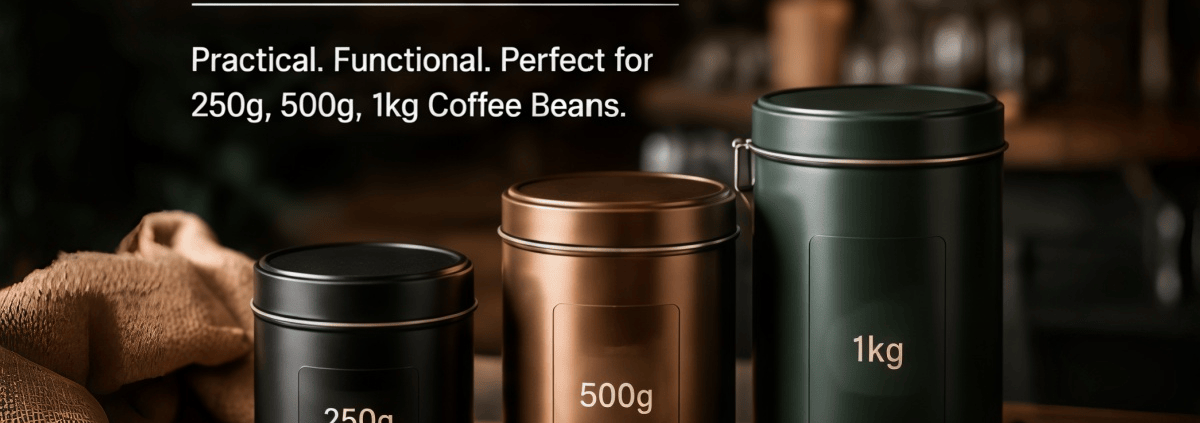
How to Choose the Right Coffee Tin Size for 250g, 500g or 1kg Coffee Beans?
When selecting a custom coffee tin for the Coffee brand, Tsing focuses primarily on practical needs rather than on aesthetic appeal alone. The appropriate size depends on the weight of the coffee beans, the roast level, how often the product is opened, and the sales channels. We’ll explain how to choose the right can size for 250g, 500g, and 1kg packages, and provide practical size specifications for your reference.
Size Reference for 250g, 500g, and 1kg Coffee Tin
For common coffee bean packaging specifications, we have listed some practical size ranges. The table below provides a useful reference for selecting coffee tins sizes:
| Coffee Bean Weight | Recommended Coffee Tin Internal Size | Typical Coffee Tin Use |
|---|---|---|
| 250g | 90–100 mm diameter × 120–140 mm height, or equivalent rectangular format | Retail, gifting, specialty coffee |
| 500g | 110–125 mm diameter × 145–170 mm height, or equivalent rectangular format | Café use, regular home consumption |
| 1kg | 130–160 mm diameter × 180–240 mm height, or larger rectangular format | Bulk use, wholesale, roastery storage |
These dimensions are for reference only and are not standard sizes. For example, a coffee tin designed to hold 250 g of coffee may be shorter and wider, while one for 1kg may be taller and designed for easy stacking. We select the appropriate coffee tins size based on the weight of the coffee beans, the intended use of the packaging, and end-user preferences.
Coffee Tin Sizes Must Match the Intended Use
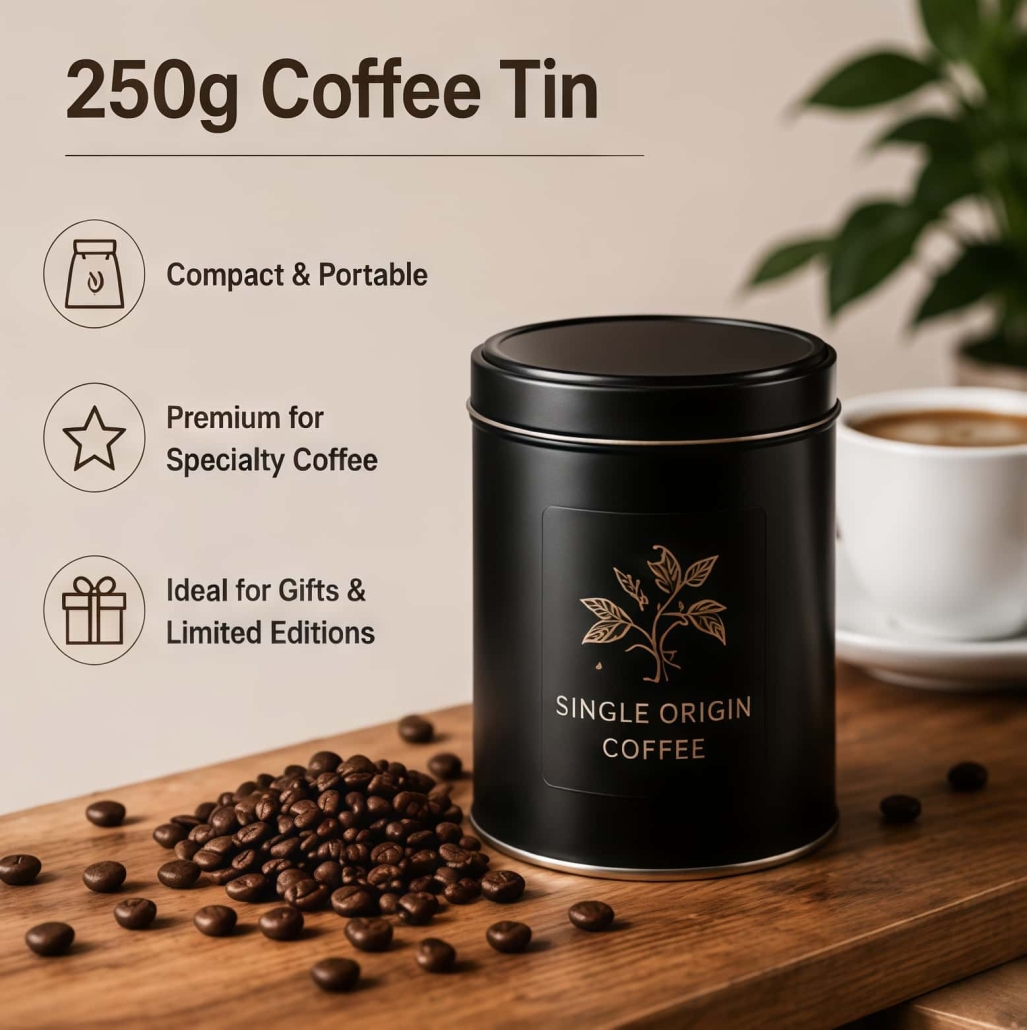
The 250g coffee tin is one of the most versatile sizes in the coffee market. It is both compact and portable—ideal for retail shelves—and sophisticated enough for specialty coffee brands. This size works especially well for single-origin coffees, limited-edition blends, and premium gift packaging. It provides brands with ample surface area for labeling and decoration without making the product appear bulky.
For most 250g coffee bean products, a can with an inner diameter of approximately 90–100 millimeters and a height of approximately 120–140 millimeters is ideal. In many cases, this tin can size effectively balances coffee freshness and visual appeal. The packaging is both substantial and elegant, while remaining easy to carry. This size is also ideal for customers who want to try a product before purchasing a larger package. As a result, 250g coffee tins are the most common choice for specialty coffee shops and roasters. Because the quantity is moderate, the packaging can focus more on visual appeal without sacrificing storage capacity.
500g Coffee Tins Suitable for Both Home and Café Use
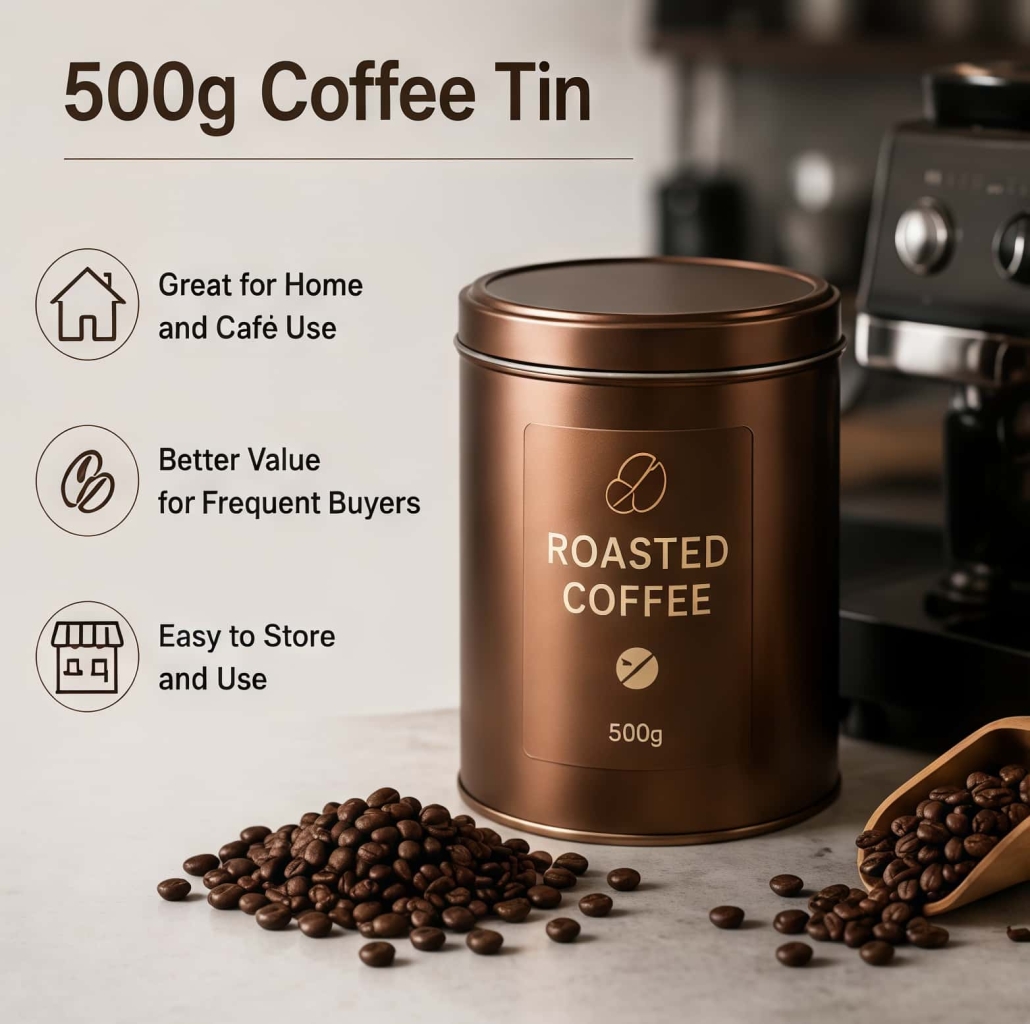
The 500g coffee tin serves different purposes. With its larger capacity and greater cost-effectiveness, it is better suited for customers who purchase coffee frequently or for use in settings such as cafés. This size not only meets users’ practical consumption needs but also facilitates storage at home or in retail locations.
For 500g of coffee beans, a round coffee tin should be approximately 110–125 millimeters in diameter and 145–170 millimeters in height, or a rectangular can of similar dimensions. These dimensions ensure the can has sufficient space to hold the coffee beans without overpacking them or leaving unnecessary air gaps. Additionally, the can should be easy to open and close, and convenient to place on a countertop or shelf.
1kg Coffee Tins Designed for Bulk and Wholesale
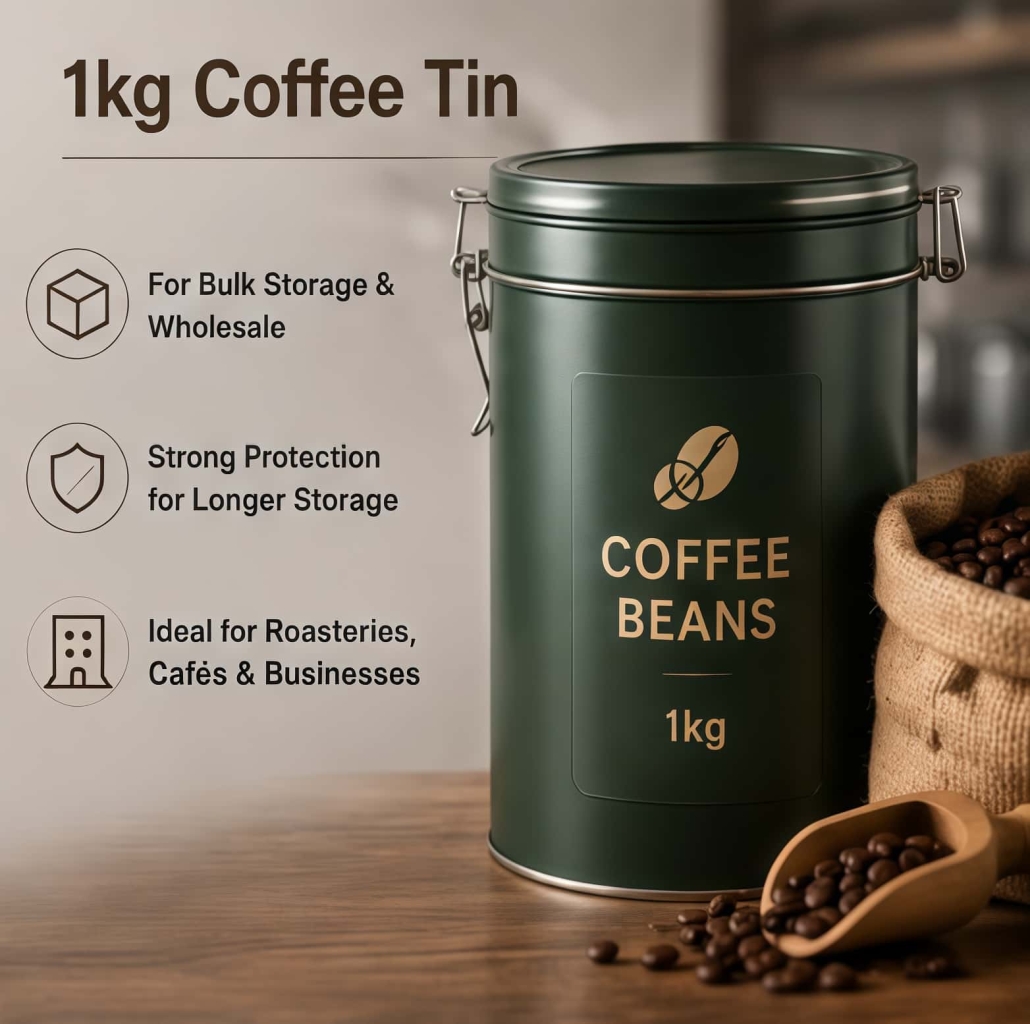
1kg coffee tins are typically used for bulk storage, supply to roasteries, wholesale distribution, or use by large families. This packaging format prioritizes functionality and efficiency over compact retail display. The packaging must accommodate a larger volume while remaining sturdy enough to protect the coffee beans over the long term.
The dimensions of a 1kg coffee tin typically range from 130–160 mm in diameter by 180–240 mm in height. However, specific measurements depend on the customer’s requirements for the can’s shape and sealing method. This type of coffee tin works especially well for customers who buy coffee beans in bulk and need packaging that looks professional while supporting large-volume storage. In many cases, large coffee shops, food service businesses, or brands use 1kg coffee tins to meet the demands of high-volume applications.
How to Choose Between 250g, 500g and 1kg Sizes?
The appropriate coffee tin can capacity depends on the product and market. For premium coffee, gift-wrapped coffee, or products sold in specialty stores, 250g is usually the best choice. If the product is intended for daily home use or café-level consumption, 500 grams usually offers the best balance. Finally, if the product is intended for bulk storage, wholesale, or commercial use, 1 kilogram is typically the most practical capacity.
When customers ask us for advice, we pose these three questions:
How long will it take to use up these beans?
Which is more important: portability or storage capacity?
Should the coffee tin’s design concept be high-end, practical, or industrial-style?
Once the answers to these questions are clear, finding the right coffee tin is usually much easier.
Simple Size Comparison Chart
| Bean Weight | Recommended Tin Size | Best Use Case |
|---|---|---|
| 250g | 90–100 mm Ø × 120–140 mm H | Retail, gifting, specialty coffee |
| 500g | 110–125 mm Ø × 145–170 mm H | Home use, café use, regular sales |
| 1kg | 130–160 mm Ø × 180–240 mm H | Bulk, wholesale, storage |
This chart provides a practical reference guide. You should still determine the final size based on the specific coffee bean variety and the shape of the coffee tin you choose. The reference sizes we provide help ensure that the coffee beans fit comfortably inside the can while balancing packaging quality and practicality.


 Facebook
 Twitter
 Linkedin