

What sizes are available for food tins custom-tailored for cookies, candies, and chocolates?
In the realm of food packaging, a food tin that is too large may result in excessive empty space, while one that is too small risks damaging the product or diminishing its perceived value. For food tins containing items such as cookies, candies, and chocolates, the dimensions must be tailored to the product itself while simultaneously conveying the brand’s message. A properly sized food tin ensures that the contents remain securely in place, minimizing internal shifting. This helps prevent issues such as breakage—a common concern for snacks like chocolates, cookies, and soft candies and ensures that the product arrives in optimal condition, presenting a more enticing appearance.
The Importance of Size Selection in Food Tins Packaging
In confectionery packaging, the food tin influences the product’s freshness, ease of use, and consumer perception. A tin that is too large may leave excessive empty space, whereas one that is too small risks damaging the product. For items like cookies, candies, and chocolates, the packaging needs to match the product perfectly. From a branding perspective, size also serves as a reflection of the product’s market positioning. Smaller tins typically evoke a sense of luxury or suggest suitability as a gift. In comparison, larger tins tend to convey practicality or suitability for family consumption. Consequently, the choice of size can effectively define the specific target demographic for a given food tin product.
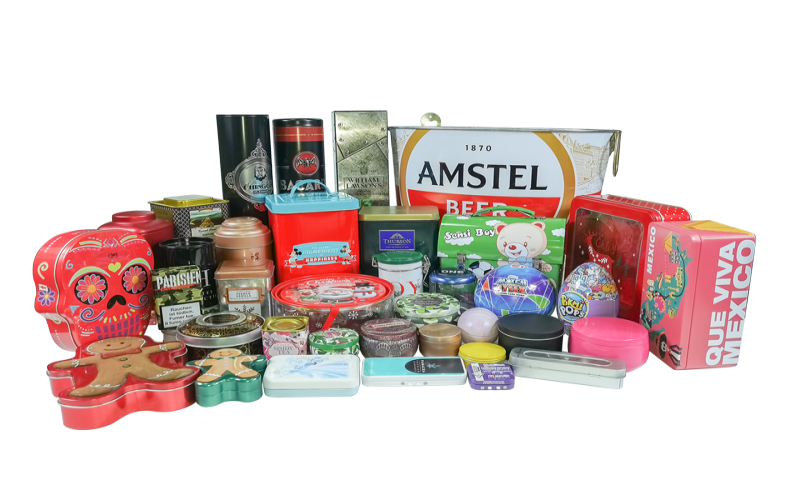
Food Tins Specifications: From Single Servings to Family Packs
Due to their irregular shapes and fragile textures, various types of cookies, chocolates, and candies present unique requirements when it comes to custom food tin packaging. In many common packaging scenarios, the standard “round” dimension has become an industry benchmark, as this shape maximizes the efficiency of stacking and arranging round cookies.
In the North American and European markets, the most frequently requested dimensions for food tins include:
| Standard Industry Size | Diameter (inches/mm) | Height (inches/mm) | Capacity (Estimated) |
| Small | 6 11/16″ (170mm) | 1 13/16″ (46mm) | 12–16 Standard Cookies |
| Medium | 7 3/16″ (182mm) | 2 5/8″ (67mm) | 20–24 Cookies (Double Layer) |
| Large | 8 1/8″ (206mm) | 3″ (76mm) | 30–36 Cookies (Family Size) |
| Extra Large | 9 7/8″ (250mm) | 3 1/2″ (89mm) | Bulk / Seasonal Assortments |
For brands prioritizing aesthetic appeal, the “hinged lid” design—typically featured on rectangular food tins is a highly popular choice, particularly for premium shortbreads and artisanal wafer cookies. The specifications for these rectangular tins typically range from 180mm x 120mm to larger dimensions such as 260mm x 200mm. Brands can simply select a standard diameter and create variations within the product line by adjusting only the height. By fine-tuning the tin body’s “cutting” process, we can easily streamline this workflow, enabling the creation of a cohesive, multi-tiered tin series without incurring the additional costs associated with developing entirely new base molds.
Design and Portability of Candy and Mint Tins
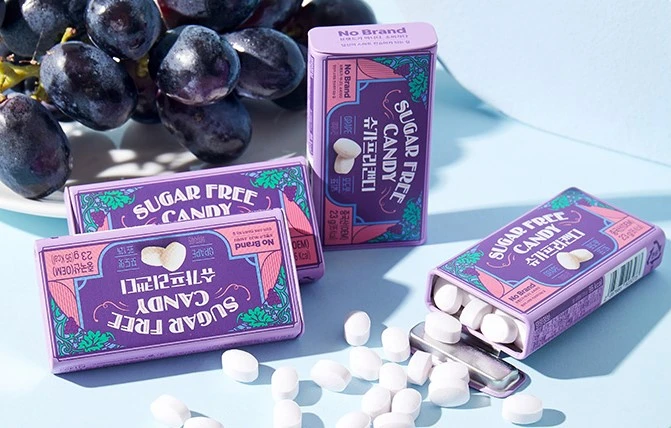
When a product consists of potent mints or delicate hard candies, its packaging must be both convenient to carry and sufficiently robust. The design of such candy tins often heavily favors a seamless structure—eliminating side seams to create a smooth, sleek surface finish.
Key dimensional trends for small food tins include:
- Slide-Lid Tins: Typically measuring 80mm x 50mm x 15mm, these represent the “gold standard” for packaged mints; their sliding closure mechanism offers a satisfying tactile feel and an audible “click.”
- Hinged Rectangular Tins: With a standard size of 95mm x 60mm x 21mm, this dimension is ideally suited for placement within retail checkout display areas.
- Snap-Lid Round Tins: Small circular tins—ranging from 45mm to 65mm in diameter with a height of just 15mm—are frequently selected for packaging premium throat lozenges or “pill-shaped” candies.
In the realm of custom food tin packaging, portability is a primary concern for users. Even a mere 5mm increase in a tin’s thickness can make it feel bulky when placed in a pocket. This factor may negatively impact the product’s repurchase rate.
Specialty Shapes for Chocolate Tins
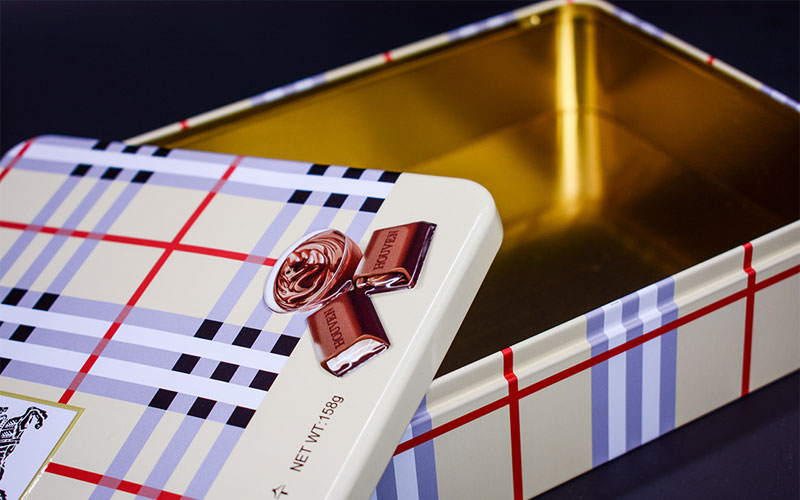
Given that chocolate is a temperature-sensitive confection typically high in fat content, the design of its tin packaging must incorporate sufficient internal clearance to accommodate a plastic tray or a translucent glassine paper liner. These internal inserts typically require a 3 to 5-millimeter buffer zone around the inner perimeter of the tin to prevent friction, thereby ensuring that the chocolate’s surface luster and structural integrity remain perfectly intact.
For luxury-filled chocolates and truffles, the lids of the packaging tins often feature “deep-drawn” or “embossed” finishes, creating a highly three-dimensional visual effect. Common size specifications include:
- Square Tins: Measuring 150mm x 150mm x 40mm, this is the standard specification for packaging 16-piece chocolate assortments.
- Heart-Shaped Tins: Particularly popular within the Valentine’s Day market, these come in a variety of sizes ranging from small (100mm wide) to large (220mm wide).
- Large, Shallow Rectangular Tins: Measuring approximately 250mm x 180mm x 30mm, these are frequently utilized as single-layer display tins for food products.
When designing and manufacturing these types of food tins, we pay special attention to the structural integrity of the container body. Specifically for chocolate products, we often opt for stepped-lid or flush-fit lid designs to create a seamless, premium gift-box aesthetic.
Customizing Food Tins Sizes Based on Specific Product Weight and Dimensions
Not all confectionery brands should rely solely on standard sizes. In many instances, custom food tins are the preferred choice, as they can be tailored precisely to a product’s specific requirements. If a brand features cookies with unique weights, a diverse assortment of chocolates, or specific promotional packaging formats, custom-sized tins will yield the most effective results.
Custom sizing becomes essential when a product possesses a unique shape or density. For instance, fragile cookies may require greater headspace or a wider tin profile. Assorted candies might necessitate a shallower container with a larger surface area. Chocolate gift boxes may require packaging equipped with dividers or inserts. In all these cases, you can fully customize food tins to fit the specific contents. We assist our clients in designing the optimal tin dimensions by taking into account the product’s actual physical size, packaging objectives, and retail expectations.
Appropriate Sizing Defines Product Positioning
The dimensions of a food tin directly influence product protection, brand perception, and overall market positioning. As we have outlined, ranging from standard compact sizes—such as 80mm x 50mm x 15mm—to larger formats like 150mm x 150mm x 40mm, each size serves a distinct commercial purpose. The key lies in aligning the container’s capacity with the product’s specific characteristics and consumer demands. We work closely with our clients to determine the ideal food tin dimensions by carefully balancing the product’s physical attributes, packaging goals, and retail market expectations.
 Facebook
 Twitter
 Linkedin