

Complete Guide to Choosing Personalized Black Tins: Shape, Lid & Food-Grade Safety for Brand Packaging
When a customer is browsing the shelves, your product stands alongside dozens of competitors, but one thing makes it stand out: a matte black tin can adorned with a subtle gold brand logo. This small, sophisticated package tells a story—one of luxury, understated elegance, and trust. Choosing the right custom black tin can for your brand is more than just selecting a color and shape. It’s a product decision that impacts shelf appeal and product safety. Therefore, this guide will help you make informed decisions. You’ll receive a step-by-step framework for selecting materials, finishes, lid systems, and compliance pathways. You’ll learn about the differences in personalized black tins for food, candles, cosmetics, and gift packaging.
Materials and Finishes for Personalized Black Tins
The right substrate and finishing process affect print quality, scratch resistance, weight, cost, and recyclability.
Substrates and Specifications:
Tinplate is the industry standard material for most black cans. It’s strong, durable, easy to form, and offers excellent printability. Common wall thicknesses range from 0.18 mm to 0.30 mm. For everyday consumer product cans, a thickness of 0.20 to 0.23 mm is common. Thicker walls offer better resistance to dents but increase cost and shipping weight.
Aluminum is lightweight and corrosion-resistant, making it a good choice if weight is a primary consideration. However, aluminum’s forming properties differ from those of other materials, and its surface texture may not be suitable for printing.
Black Finishes and Their Effects:
Matte Black (Soft Touch): Very popular in high-end cosmetics and candle tins due to its luxurious feel. The soft-touch coating feels velvety smooth but requires a protective topcoat for enhanced durability.
Satin or Eggshell Black: Less delicate than soft touch; hides fingerprints and smudges well.
Gloss Black: High visual depth and shine; more prone to fingerprints and scratches.
Pearlescent or Metallic Black: Adds a subtle shimmer—suitable for limited editions. Textured Finishes: Hammered or brushed textures can conceal minor wear and add visual interest.
How do the shape and size of personalized black tins affect functionality?
The geometric shape of personalized black tins directly impacts filling efficiency, insulation performance, stackability, and visual balance. Shape selection also affects mold costs and lead times.
Common Shapes and Their Uses:
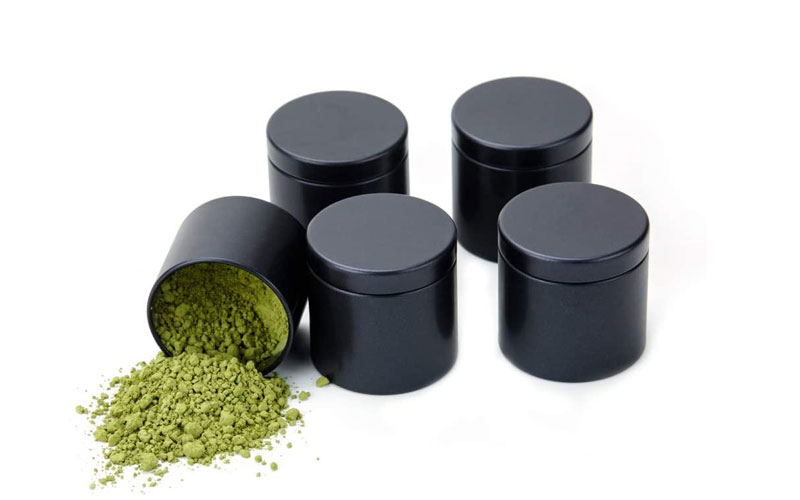
Round tin cans are classic and highly efficient to produce, ideal for single-wick candles, mints, and cosmetics like lip balm. They are easy to stack and generally offer the best mold economics.
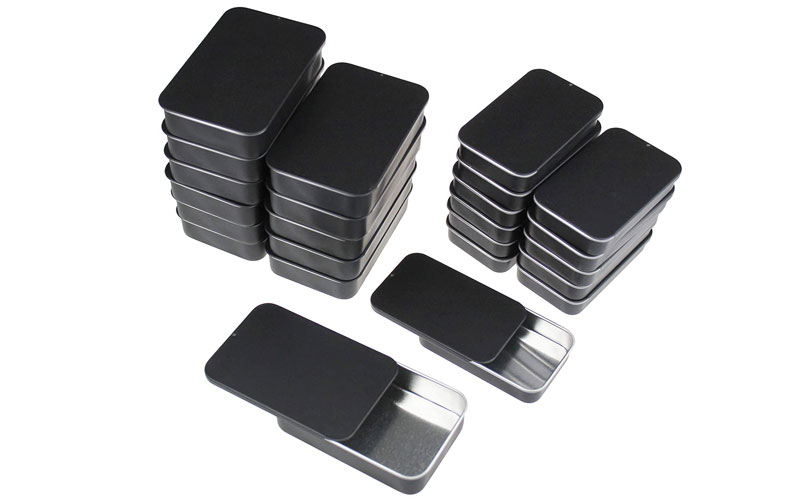
Square/rectangular tin boxes have a high-end appearance and maximize shelf space utilization. These shapes are ideal for gift sets, cookie tins, or cosmetic sets, but require more careful consideration of corner radii to avoid grease accumulation or stress points.
Tall, narrow tin cans are suitable for tapered or specialty candles and create a striking shelf display, but may be less stable during transportation.
In terms of the manufacturability of custom black tins, the ratio of can height to diameter affects the can’s rigidity and resistance to denting. Taller black tin cans require thicker walls or internal reinforcement to increase stability. Additionally, the lid clearance and gasket design determine the lid’s fit and sealing quality. A loose lid can lead to fragrance loss, while a tight lid is difficult to open; both situations negatively impact the consumer experience.
Choosing a Lid that Protects Aroma, Ensures Safety, and Facilitates Handling
The lid is the interface between the product and the consumer. For personalized black tins, the lid choice affects aroma retention, tamper-evident features, and the unboxing experience.
Main Lid Types:
Press-on (snap-on) lids: Economical and easy to open. Best suited for candles and dry goods. Tolerances must be tightly controlled to avoid looseness.
Friction-fit lids with liners or gaskets: Adding silicone or foam liners improves sealing. Suitable for strongly scented items and some cosmetics.
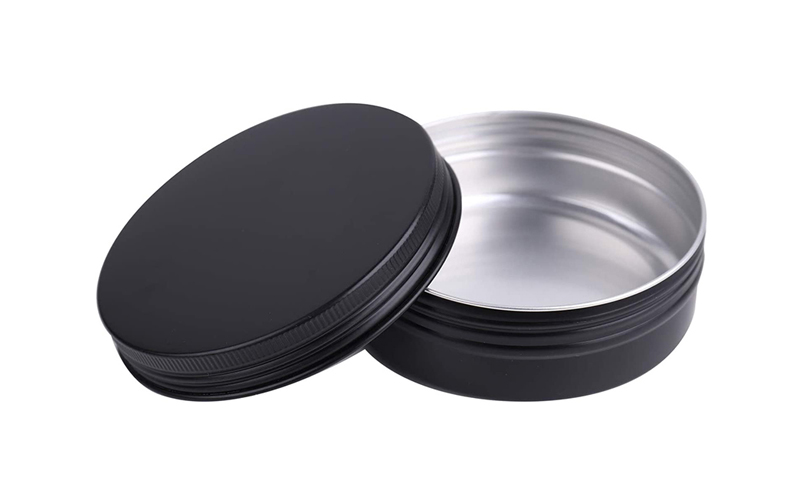
Threaded lids: Offer superior sealing. While more complex to manufacture, they are ideal for products that require strong barriers and resealability. Hinged Lid: Creates a premium unboxing experience for gift sets; requires additional tools and hinge assembly.
Double-Layer Lid System: An outer decorative lid combined with an inner seal (aluminum foil or plastic) for tamper evidence and extra barrier protection.
Sealing Materials and Food Safety:
Silicone Gasket: Food-grade (FDA-compliant) silicone gaskets offer excellent aroma retention and durability. Please specify the hardness and compression-set requirements.
Foam Liner: Economical yet durable, resistant to damage from repeated opening.
In practical selection, for black tin cans used to hold fragrances or perishable items, prioritize systems with sealing gaskets or induction seals. For frequently opened candles, a balance between sealing and ease of opening is necessary.
Food-Grade Safety and Regulatory Requirements: Coatings, Testing, and Compliance
If your customized black tins will contain food—such as tea, spices, or cookies—food-grade safety standards are mandatory. Similarly, cosmetics and lip care products require certified materials.
Internal Coatings and Their Function:
Epoxy Phenolic Coatings: Widely used for food contact; they offer good barrier properties, but some products require migration testing.
Polyester Lacquers: Offer higher chemical resistance.
Polyurethane and Fluoropolymer Coatings: Offer higher chemical resistance for candles rich in essential oils or heavy oil cosmetics, but at a higher cost.
Regulatory standards to meet include:
US FDA (21 CFR): Internal coatings for food contact must comply with FDA food contact regulations. Request a declaration of conformity from your supplier.
European Regulations: EU Regulation No. 10/2011 covers plastic materials and articles; for metal cans, verify compliance with relevant EU food contact directives and national regulations.
RoHS / REACH: Ensure inks and coatings are free of restricted substances.
ISO and HACCP Considerations: For large-scale food production lines, confirm HACCP compatibility and traceability.
Decoration, Branding, and Printing: Creating a Unique Visual Impact
The black surface is aesthetically pleasing but unforgiving of any imperfections. To ensure a consistent brand image across different production batches, strict control over the decoration process and prototyping is essential. For printing effects, offset printing is best suited for high-quality CMYK printing and fine details on cylindrical tin cans. UV digital printing is ideal for small batch printing and variable data. Hot stamping is ideal for adding metallic luster (gold or rose gold) to black surfaces, creating a striking contrast. Embossing/debossing adds a luxurious tactile feel and interacts elegantly with a matte black finish.
Additionally, we adjust our processes for different application scenarios. For frequently handled items, we apply a scratch-resistant topcoat. For gift sets and direct-to-consumer shipping, we test for abrasion resistance, stacking wear, and fingerprint visibility during production.
Packaging that both protects the product and enhances brand image
Custom black tins are not simply a packaging choice, but a systematic decision that integrates multiple elements. From material thickness and black surface treatment to can shape proportions and structural strength, from lid sealing performance to food-grade inner coatings and regulatory compliance, and to the impact of printing and decoration processes on brand recognition, every detail directly affects product safety, consumer experience, and brand credibility. Only by fully understanding the needs of different application scenarios and balancing functionality, aesthetics, and compliance can we create personalized black tins that possess a high-end feel and withstand the test of time and the market.
 Facebook
 Twitter
 Linkedin