cigarette tins 3-3

How to ensure cigarette tins are corrosion resistant: Coatings, Liners, and Handling Tips

A high-end tobacco manufacturer received 5,000 custom cigarette tins ordered before last year’s holiday season, only to find rust at the seams when they arrived at retail stores. These tins, stored in a damp warehouse for three weeks, were severely corroded, even contaminating the cigarette packaging inside. For tobacco products, freshness and appearance are just as important as the product itself. Rusty cigarette cans not only affect aesthetics but also quality and can damage the tobacco inside. As a professional tin can manufacturer, we use advanced coatings, food-grade linings, and precise pretreatment techniques in our cigarette can production. We will also introduce methods to prevent rust, protect against moisture, and enhance the durability of cigarette cans, and provide practical maintenance tips to help you keep your cigarette boxes in perfect condition.

Why Does Rust in Cigarette Tins Affect Tobacco Quality?

Rust in cigarette tins is not just a cosmetic issue; it threatens the quality of the tobacco inside and the brand’s reputation. When cigarette boxes are typically stored in warehouses, transported to different climate zones, or placed in humid environments, even small amounts of moisture can react with the cigarette box’s metal substrate, causing oxidation. An unprotected tinplate reacts with oxygen and moisture. A single scratch on a poor-quality coating can expose the metal, leading to rapid rust spread. Furthermore, tobacco is sensitive; moisture from corrosion can seep into the cigarette case, spoiling the tobacco’s freshness. A rusty cigarette tin also conveys a sense of neglect. For a premium cigarette brand priced over $50, rusty packaging is unacceptable.
cigarette tins 3-5

Anti-corrosion Coating – The First Line of Defense Against Corrosion

The outer layer of the cigarette tin is its first line of defense against moisture and oxygen. Tsing uses two layers of corrosion-resistant coatings specifically designed to meet the unique needs of cigarette tins:

Base Coating: Food-grade tinplate, passivated: All Tsing cigarette tins are made from high-quality food-grade tinplate (pure tin-coated steel). Then we passivate it – forming a thin, invisible layer of chromate or zirconium on the tin surface to prevent it from reacting with oxygen. This single step reduces corrosion risk by 60%, well below that of unpassivated tinplate.

Topcoat: We use a premium low-VOC powder coating for surface treatment, available in matte, gloss, and metallic colors. Unlike cheap paints, our powder coating is 80 microns thick, three times the industry standard, allowing it to adhere firmly to tinplate and effectively resist scratches, impacts, and moisture. Furthermore, it is UV-resistant, so the cigarette packs will not fade or age even when stored in bright retail display cases. The seams of cigarette packs are the most susceptible to moisture. Tsing applies a clear, flexible sealant to all seams.

Food-grade liner for cigarette tins, protecting tobacco from internal corrosion

While the outer coating protects against external moisture, the inside of the cigarette pack requires a food-grade liner to prevent direct contact between the metal and tobacco and to block internal humidity. Tsing offers two liners, customizable to your needs:

BPA-free epoxy liner: Our standard liner uses food-grade epoxy resin to form a smooth, non-reactive barrier between the cigarette pack metal and the tobacco. It is colorless and odorless, and prevents any metal particles from seeping into the product. This liner is suitable for most cigarette cases, including bulk and branded packaging.

Polypropylene (PP) Liner: We offer PP liners for premium cigarette cases or cigarettes requiring long-term storage—thicker, more durable, and 100% moisture-proof. It is heat-sealable, so you can lock in the freshness of your cigarettes while adding an extra layer of corrosion protection. Both cigarette case liners meet US FDA and EU food safety standards, so you can be confident they will not affect the flavor or safety of the tobacco.

Food-grade liner for cigarette tins, protecting tobacco from internal corrosion

Pretreatment Technology—Metal Pretreatment for Maximum Durability

Corrosion protection begins before the first coating is applied. Tsing uses a three-step pretreatment process to ensure perfect adhesion between the coating and liner, eliminating weak points:

Degreasing: We clean the tinplate with a food-grade alkaline solution to remove residual oil, dust, or debris from the manufacturing process. Even tiny contaminants can hinder coating adhesion, creating gaps that allow moisture to seep in.

Pickling: The tin-plated iron sheet is immersed in a dilute acid solution to remove surface rust or oxides that may have formed during storage. This step ensures the metal is clean and smooth, preparing it for subsequent coating.

Rinsing and Drying: We rinse the tin-plated steel sheets with deionized water and dry them in a controlled environment. Moisture during pretreatment can cause premature corrosion, so we tolerate no mistakes.

While Tsing’s pretreatment process adds 24 hours to production time, it doubles the corrosion resistance of cigarette canisters (from 2 years to over 5 years).

Treatment and Storage Tips for Extending Corrosion Resistance

Even the highest quality cigarette canisters require proper care to prevent rust. Here are our expert tips for the care and storage of cigarette tins:

Avoid Humid Environments: Store cigarette tins in a dry place. Use desiccant packets in warehouses or shipping containers to absorb excess moisture, especially in coastal or tropical areas.

Prevent Scratch: The coating is scratch-resistant, but not completely scratch-proof. Avoid stacking heavy objects on cigarette tins and use partitions inside shipping containers to reduce friction. Scratching the metal will expose it, so handle the cigarette case with clean, dry hands.

Control Temperature: Drastic temperature changes can cause condensation. Before opening the cigarette case, allow it to reach room temperature to prevent moisture buildup.

Gentle Cleaning: If the case gets dirty, wipe it with a dry, soft cloth. Avoid using water, cleaning sprays, or abrasive materials, as these can damage the coating or lining.

Visible, Reliable Protection

Corrosion of cigarette cases is not inevitable. Tsing’s triple protection system—an advanced coating, a food-grade lining, and precise pretreatment—effectively blocks moisture, oxygen, and time. Our rigorous quality control ensures that every cigarette case meets the highest standards, and our care guidelines help you maintain its protective properties long after you receive the product.

Candle Tins Wholesale 10-10(1)

Candle Tins Wholesale: Comparing Stamped vs. Rolled Tin Construction

A survey of American candle brands revealed that many listed tin can quality as the most frequent customer complaint, primarily stemming from two main tin can manufacturing processes: stamping and rolling. For candle tin can wholesalers, the choice between these two processes is not merely a technical detail; it directly impacts product durability, brand consistency, and customer satisfaction. This guide explains the key differences between stamped and rolled candle tin cans, why stamping is superior to rolling in wholesale applications, and how Tsing’s precision stamping process produces reliable, high-quality candle tins wholesale.

Candle Tins Wholesale: Stamping vs. Rolling – What’s the Definition?

Before delving into the comparison, let’s clarify the meaning of “stamping” and “rolling” in candle tin wholesale. Both use food-grade tinplate, but their forming methods are drastically different, affecting every aspect of candle tin performance:

Stamped Candle Tins: The stamping process uses a hydraulic press and custom CNC machining dies to cut and form a single sheet of tinplate in one or two steps. Taking a standard 8-ounce candle jar as an example, the first die stamps the tinplate into a seamless cylinder with a closed bottom, and then a second die forms the rim. The entire process involves no welding, no seams, and no manual shaping—it’s all precisely machine-formed.

Rolled Candle Tins: Rolling begins with a flat sheet of tinplate, which is rolled into a cylinder by hand or semi-automatic machine. Overlapping edges are welded together to form a seam, and then a separate base is attached. This method relies more on manual labor and has more potential points of failure.

Tsing’s production facility best illustrates this: our stamping line can produce 500 candle tins of consistent quality per hour. In contrast, the rolling line can produce only 200 per hour, with a higher defect rate.

Stamped tins offer better durability for candle tins wholesale.

Durability is paramount for candle tins. They need to withstand wax temperatures of 180-200°F (approximately 82-93°C) while also enduring the bumps and jolts of shipping. Here’s a comparison of the durability of stamped and rolled-edge tin cans:

The seamless, one-piece construction of stamped tin cans eliminates the most significant weaknesses of rolled tin cans: welded seams and glued bottoms. Tsing makes its stamped tin cans from 0.23 mm-thick tinplate, which makes them less prone to dents during transport. Our 2023 data shows a breakage rate of only 1.2% for stamped tin cans, compared to 15% for rolled tin cans. The seamless bottom also prevents wax leakage; we test each stamped tin can with 2 ounces of hot wax, and the failure rate is only 0.01%. Rolled-edge tin cans, on the other hand, are prone to cracking at welded seams when heated or subjected to impact. Glued bases often detach after one or two uses, causing wax to drip onto furniture. For candle tin wholesalers, durability directly translates to fewer returns and higher customer satisfaction.

Candle Tins Wholesale 11-2

Stamping gives your brand a more upscale image.

Wholesale candle tin buyers highly value product consistency. If your candle tins vary in height, diameter, or edge shape, your labels will be crooked, your shelves will look cluttered, and retailers will question your professionalism. Therefore, stamped candle tins take center stage. During the stamping process, Tsing controls its CNC dies to ±0.1 mm, ensuring each 8-ounce stamped tin can measures exactly 70 mm in height and 65 mm in width, with smooth, flat edges. This consistency ensures perfect label alignment and neatly stacked cans on shelves. We conduct 100% dimensional checks on all tins before shipment, achieving a 99.9% pass rate. Rolling and welding inevitably lead to dimensional variations. A batch of “8-ounce” rolled tins may be between 68-72 mm high, and the rim may be wavy or uneven. Whether a retailer orders 100 or 10,000, Tsing’s embossed tins present a consistent, high-end image.

Stamping gives your brand a more upscale image(5)

Enhance Your Brand Image with Customization Services

Candle tins wholesale are more than just containers; they’re a branding tool. Whether you need embossed logos, vibrant designs, or unique shapes, stamping makes it easier and more durable. The smooth, seamless surface of stamped tin cans supports printing, embossing, and gravure better than rolled tin cans. Tsing’s stamping dies can directly emboss logos on the side of the can, eliminating extra steps and the worry that the design will fade. We use food-grade inks that adhere firmly to the can surface, are scratch- and fade-resistant, and are safe for food contact. We can even offer custom-shaped stamped tin cans, something rolled tin cans can’t match.

Rolled tin cans often have raised seams at welded joints, which affect printing quality and cause uneven embossing. Most rolled tin can suppliers only offer basic printing services, and designs often detach at the seams. Custom-shaped tin cans are rarer and more expensive because they require specialized rolling equipment. For candle tin can wholesalers, customization is key to standing out from the competition.

Enhance Your Brand Image with Customization Services 1

Ensuring Every Tin Can Meets the Highest Standards

Tsing’s stamped candle tins not only outperform rolled tins, but our production process also ensures that every tin meets the highest standards. We source food-grade tin-plated steel sheets from ISO-certified factories and apply a thick tin coating to prevent rust and ensure compatibility with candles. Precision stamping is employed; our hydraulic presses use CNC molds with an accuracy of ±0.05mm to ensure batch-to-batch consistency and prevent deviations caused by wear. Furthermore, each batch of tins undergoes five checks: dimensional measurement, seam inspection, leak testing, surface smoothness, and printing/embossing quality. Our stamping process reduces waste by 40% compared to rolling, and all our tins are 100% recyclable, meeting the sustainability requirements of modern retailers.

For candle tin wholesalers, stamping is the optimal choice.

For wholesalers, the key factors in choosing between stamped and rolled candle tins are: durability, consistency, flexibility in brand promotion, and cost-effectiveness. Rolled candle tins may seem cheaper at first glance, but they are prone to leaks, returns, and ultimately, losses. Stamped candle tins, especially Tsing’s precision-stamped products, offer reliable quality, earning the trust of retail partners and making your candles the preferred choice for customers.

How to Fix Sliding Lid Sticking Issues on Custom Black Tins?

How to Fix Sliding Lid Sticking Issues on Custom Black Tins?

Many users encounter the problem of sliding lids getting stuck when using black tin cans, preventing customers from accessing the product. Some candle companies even complain that “a stuck lid makes the tin can look cheap,” resulting in lost value and potentially a significant loss of a large retail contract. As product managers at Tsing, we know how to eliminate the problem of stuck sliding lids when customizing black tin cans. Our goal is simple: to ensure customers enjoy a smooth and pleasant experience every time the lid opens and closes. Therefore, we will explain how to solve adhesion issues from design to production, ensuring your custom black tins are both aesthetically pleasing and functional.

Why do sliding lids on custom black tins get stuck?

To solve the problem of stuck sliding lids on custom black tins, we must first understand the underlying cause. Most issues stem from four avoidable manufacturing or design flaws, which Tsing eliminates through precision engineering.

Size Mismatch: Even a 0.1 mm narrower lid can increase friction and cause the lid to stick. Some low-cost manufacturers cut corners on mold precision to reduce costs, resulting in inconsistent dimensions.

Poor surface finish: Black tins are often powder-coated or painted, resulting in uneven coating thickness and rough spots at the points where the lid and can rub against each other. Over time, these rough spots wear down into friction points.

Debris or residue: Metal shavings, powder-coating dust, or oil from the manufacturing process can stick between the lid and body, acting like sandpaper on the sliding rail.

Corrosion caused by humidity: Unfinished or poorly sealed black metal tins can develop micro-rust in humid environments, which adheres to the edges of the lid.

Black tin can with sliding lid 1-5

Precision mold engineering for custom black tins, the foundation for a smooth sliding lid

The first step in solving the adhesion problem is ensuring a perfect fit between the lid and can—and this begins with precise mold design. Tsing uses state-of-the-art CNC molds to create precisely dimensional custom black tins, ensuring a tight fit and eliminating friction:

We employ strict tolerance control during production, designing molds that allow the lid and can to have tolerances within ±0.02 mm. This means that the gap between the lid and the can body is only 0.05-0.1 mm, avoiding both friction and wobbling.

However, we inspect the molds after producing every 10,000 custom black tins to prevent dimensional deviations due to wear and tear. Worn molds can increase the lid width by as little as 0.15 mm, enough to cause it to stick. Furthermore, Tsing’s sliding lids do not use sharp edges; instead, they feature beveled edges, allowing the lid to slide smoothly into the can. Sharp edges can easily stick on the top edge of the can, while beveled edges let the lid slide smoothly.

Black tin can with sliding lid 1-6

Surface Treatment Reduces Friction for Easier Sliding

Even perfectly sized lids can stick if the surface is rough. Tsing utilizes a specialized surface treatment process on its custom black tins to minimize friction and prevent debris buildup. Before coating, we polish the can body and lid to a smooth surface (Ra < 0.8 μm). This removes tiny imperfections that can easily snag the lid. Additionally, a low-friction powder coating is employed, utilizing a high-quality, low-gloss black powder coating with added PTFE particles. Compared to standard powder coatings, this coating reduces friction by 35%, making the lid slide much more easily. We also apply a thin layer of clear sealant to the lid edge to prevent corrosion and adhesion of debris. This sealant is transparent so that it won’t affect the clean look of the custom black tin.

Strict Quality Control, Pre-shipment Testing and Verification

We test every custom black tin before it leaves the factory to ensure a perfect lid slide. We provide that each can undergo 10 repeated manual sliding tests. If the force required for the lid to slide exceeds 2 pounds, the team rejects it. Furthermore, we use compressed air to blow away any dust or debris from the gap between the lid and the body, and then inspect it with a magnifying glass to ensure that no residue remains. For customers in humid areas, we test the tin cans in a 90% humidity environment for 48 hours to verify the integrity of adhesion against potential corrosion-related issues. For every 500 cans, we measure the lid and body dimensions to ensure they are within the target specifications. After rigorous testing, Tsing boasts a 99.9% pass rate, with less than 1 in 1000 custom black tins experiencing lid sticking issues.

Strict Quality Control, Pre-shipment Testing and Verification

Quickly Resolve Sticky Can Lids on-Site

Even with Tsing’s superior craftsmanship, rare problems can occur due to shipping damage or improper storage. Here are some simple and safe solutions to resolve the issue of custom black tin can lids sticking. You can gently clean the gap between the lid and the body using a soft-bristled brush (such as a toothbrush). For finer dust, you can use compressed air (in a can).

If the lid remains sticky, you can use a cotton swab dipped in a small amount of food-grade mineral oil to gently wipe the inside edge of the lid. Avoid using cooking oils—they are prone to spoilage. If the lid tends to stick in humid weather, store the cans in a cool, dry place with a desiccant packet to prevent moisture from accumulating. This will prevent the formation of micro-rust. Also, gently straighten the lid. If you find it slightly deformed, place it on a flat surface and press gently on the center to straighten it.

Smooth-sliding lids enhance your brand image

No more getting stuck sliding lids on your custom black tins. Tsing solves this problem through precision mold engineering, low-friction surface treatments, rigorous quality control, and customer-centric support—all to ensure you and your customers enjoy a smooth, satisfying experience with premium tin cans. Whether you’re packaging food, candles, skincare products, or gifts, Tsing’s custom black tin cans offer style, durability, and a perfectly functional sliding lid every time.

Airtight Coffee Tins 3-3

How to Design Airtight Coffee Tins That Work for Ground and Whole Bean Products?

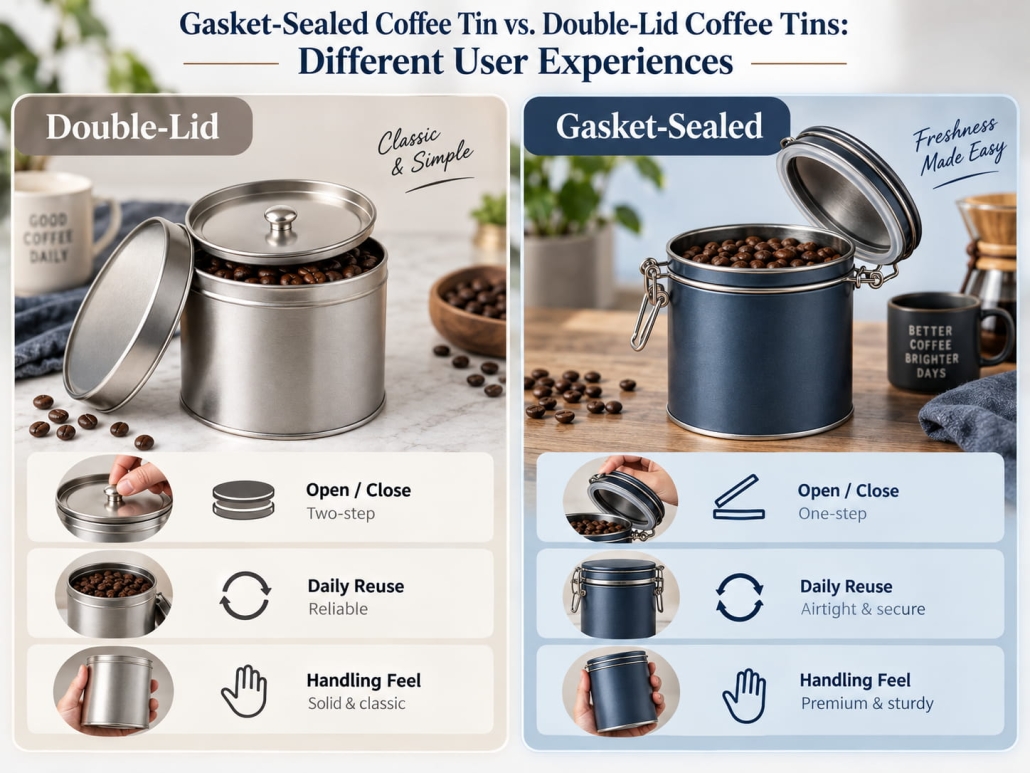
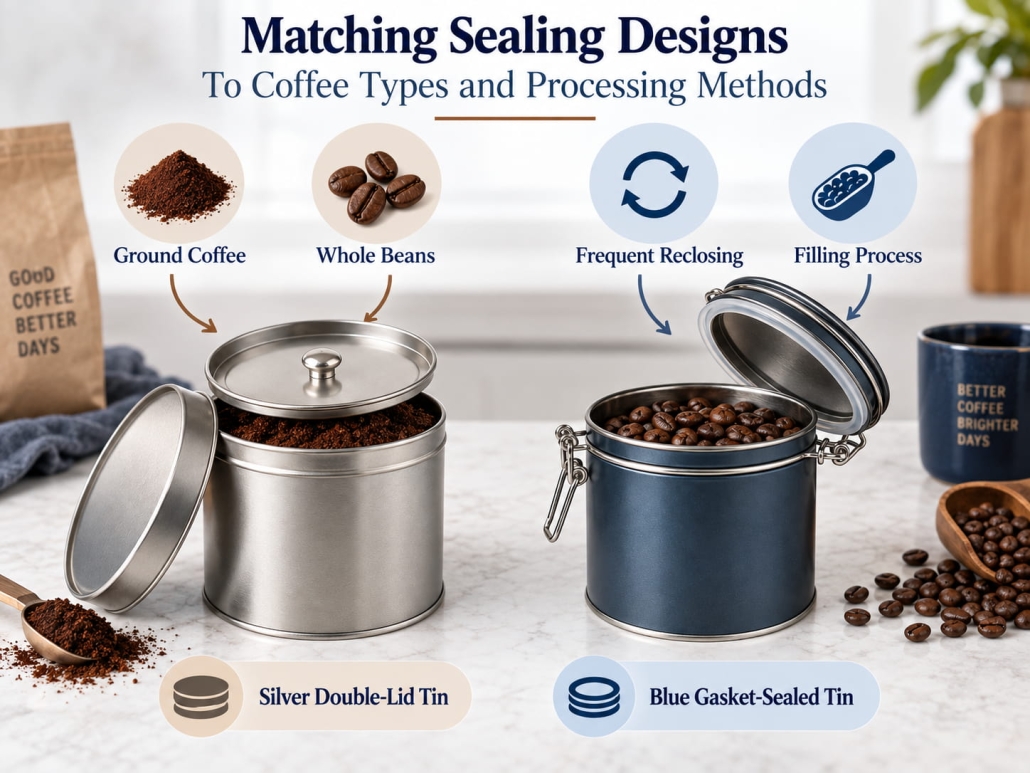
Many coffee shops receive customer complaints about “spoiled coffee” and “bland taste,” often due to poorly airtight coffee tins. This also suggests that roasters struggle to find a suitable tin can design for both ground coffee and coffee beans. To better address this issue, Tsing has designed airtight coffee tins that can hold both ground coffee and beans. This design meets the requirement for maintaining a tight seal on the ground coffee while controlling gas release from the beans, without compromising freshness, ease of use, or brand image.

Why Airtight Coffee Tins Must Be Suitable for Two Varied Coffee Products

To design an effective airtight coffee tin suitable for both ground coffee and beans, it’s essential to understand the effects of air and gases on each product. Their effects are almost opposed, and your coffee container must be able to accommodate both:

Ground Coffee: Once ground, coffee grounds increase their surface area exposed to oxygen by up to 60 times. In a poorly sealed container, oxidation can ruin the coffee’s flavor within 3-7 days, turning a bright, fruity coffee into a dull one. Ground coffee should be stored in an airtight container to prevent air from entering and thus preventing flavor loss.

Coffee beans: Freshly roasted whole coffee beans release carbon dioxide within 3-7 days after roasting. If these gases seal inside a container, they continue to increase the internal pressure, causing the container to expand, the lid to deform, and even the seal to rupture. Therefore, you should store coffee beans in a well-sealed container that lets carbon dioxide escape while blocking oxygen from entering

So how do you design a tin can that can completely seal ground coffee powder while also “selectively sealing” coffee beans? What solution can Tsing offer? A hybrid design using a one-way venting valve and a high-quality sealing ring—achieving both.

Coffee beans and ground coffee on a wooden table like a spiral. Vintage style concept

The lid design of airtight coffee tins is a key factor in determining their dual-purpose nature

The lid is the core component of any airtight coffee tin, and for a coffee can serving two purposes, it must possess two indispensable characteristics: a robust sealing ring and a one-way venting valve. Here’s our design approach:

Sealing Ring: We select food-grade compression sealing materials to avoid inferior foam. Use food-grade silicone or EVA foam sealing rings, which form a tight seal when the lid is closed. Tsing’s sealing rings are 3mm thick with beveled edges, ensuring even pressure against the rim and providing 100% oxygen blocking when closed. For ground coffee, this seal prevents air from entering for 3-4 weeks; for coffee beans, it locks in flavor, while the valve handles the gases.

One-Way Exhaust Valve: For coffee beans, a valve that allows carbon dioxide to escape while preventing air from entering is crucial, but it’s harmless for ground coffee. The valve is placed on top of the lid to prevent coffee grounds from clogging it. Tsing uses a dual-filter valve to prevent fine coffee grounds from seeping in, ensuring it works for both coffee beans and ground coffee.

Furthermore, we design it to be easy to close and less prone to accidental opening. Tsing’s rotating lid features a textured edge and produces a “click” sound when fully sealed, ensuring the user knows the tin is securely closed.

The lid design of airtight coffee tins is a key factor in determining their dual-purpose nature

A Can Design Balancing Freshness, Protection, and Ease of Use

Our designs ensure not only freshness but also ease of use for both ground and bean coffee. Therefore, we use opaque, light-blocking materials. Tinplate is the material we use for our custom coffee tins. It’s 100% opaque, blocking both UV and visible light. We also consider different batch sizes; bean buyers typically purchase in larger quantities, while ground coffee buyers prefer smaller packages to prevent spoilage. Tsing’s 4oz, 8oz, 12oz, and 16oz coffee tins all use the same airtight lid, ensuring brand consistency.

In terms of shape, round tins are easier to open and scoop, making them ideal for storing ground coffee. Meanwhile, square tins save space and are perfect for bulk coffee beans. Tsing offers both shapes, and the smooth inner walls keep coffee powder from sticking in the corners, thus avoiding waste and preventing spoilage. Additionally, the sturdy tinplate body effectively prevents dents, ensuring a tight seal.

A Can Design Balancing Freshness, Protection, and Ease of Use

Material Selection for Enhanced Sealing and Flavor

The materials used to seal coffee tins directly impact the freshness of the coffee. For dual-purpose designs, we prioritize materials that block air, light, and odors and do not react with the coffee. Tinplate is the ideal material for coffee cans. It is 100% recyclable, durable, and impermeable to water and air. Unlike plastic, it does not absorb coffee odors or leach chemicals. Tsing uses food-grade tinplated steel sheet, passivated to prevent rust and ensure safe direct contact with coffee.

Additionally, we incorporate a food-grade liner. For extra protection, we use a BPA-free, food-grade epoxy resin liner. Tsing’s liner thickness is moderate, ensuring the can’s seal is maintained while effectively preventing direct metal-to-coffee contact, crucial for preserving the delicate flavor of coffee grounds and beans. During the printing process, Tsing leaves the can edges exposed and polishes them to a smooth surface, maximizing the contact area of the sealing ring.

Tips for Brand Customization Without Sacrificing Sealing Security

Brand identity is crucial for coffee tins—but you can’t sacrifice sealing security for a logo. We print on the can body, not the lid, using food-grade ink to ensure it won’t peel or flake off even with frequent use. Alternatively, we emboss (raise) your logo or design on the can, adding a touch of sophistication without compromising the seal. Tsing achieves embossing depths up to 1 mm, creating a tactile brand experience without affecting the seal. We also recommend choosing fresh color options, such as darker colors (black, navy, forest green), which absorb less light than lighter colors, providing extra protection. Tsing’s custom color options allow you to build your brand identity while keeping your coffee fresh.

Delivering Designs Focused on Freshness, Versatility, and Brand Image

Designing airtight coffee tins for ground coffee and coffee beans is crucial to three core principles: a lid with a high-quality sealing ring and one-way valve, an opaque and durable tin can body, and customization that does not compromise sealing security. When designing our coffee containers, we strike a balance between scientific principles (preserving freshness) and practicality (ease of use and brand promotion). Whether you’re a small-batch roaster or a large chain coffee shop, a dual-purpose airtight coffee tin can help reduce your purchasing costs and ensure every customer enjoys the best-tasting coffee every time.

bulk candle tins 5-9

How to match Pantone color charts on bulk candle tins for different printing methods?

A candle brand once received a batch of 10,000 bulk candle tins only to find the colors were wrong: their signature “Lavender Mist” Pantone color was pink instead of the soft purple they had confirmed. This error cost them thousands of dollars in reprint fees, delayed product launch by three weeks, and left them with thousands of unusable tins. This is not an isolated case. Our quality investigation revealed that 73% of color problems in large-volume bulk candle tin orders stemmed from poor Pantone color matching, errors that could have been avoided. For anyone ordering bulk candle tins, matching Pantone colors to printing methods is not just about appearance; it’s about brand, budget, and time assurance.

Why is Pantone color matching so crucial in large bulk candle tins orders?

Color consistency is key for bulk candle tins, whether it’s a retail launch order of 6,000 or a subscription box order of 50,000. Pantone color charts can eliminate guesswork, but only if they are matched to your printing methods. Here are the reasons why cutting corners can lead to disastrous consequences:

Brand dilution: Mismatched Pantone color swatches confuse customers. One skincare candle brand found that after changing the color of its bulk candle tins, 28% of returning customers couldn’t recognize their product.

Resource waste: Even a 5% error rate out of 10,000 tins means 500 unusable units, resulting in wasted metal, ink, and shipping costs.

Delayed launch: Reprinting bulk candle tins takes 7-10 days, disrupting marketing plans and holiday deadlines.

At Tsing, we prioritize Pantone color matching. The color of the candle tin, like the fragrance inside, is an important part of the brand image.

bulk candle tins orders

Main Printing Methods for Bulk Candle Tins

Before doing Pantone color matching, you need to understand the four most common printing methods for bulk candle tins and the relationship between each method and color:

Offset printing: The preferred method for large orders (10,000+ tins). It uses ink rollers to transfer color onto the tin can, achieving clear, consistent Pantone color matching, but requires a metallic printing plate.

Digital Printing: Suitable for small to medium batch orders (5000 tins). Printing can be done directly from digital files, with faster setup, but achieving accurate Pantone color matching is challenging.

Screen Printing: Ideal for vibrant solid colors and textures. It uses a mesh stencil to transfer ink onto a tin plate; ideal for solid colors on the Pantone color chart, but less accurate for gradients.

Foil Stamping: Adds metallic or matte foil to bulk candle tins. Uses heat and pressure; requires a Pantone metallic or solid color coating color chart to match the foil color.

Each printing process presents its unique color challenges. Offset inks slightly penetrate the tin coating, while digital printing inks remain on the surface. Screen printing inks are thicker, and foil stamping has its own unique sheen. To match colors on the Pantone color chart, these characteristics must be embraced, not resisted.

Main Printing Methods for Bulk Candle Tins

Pantone color matching for offset printing is best suited for mass production.

If done correctly, offset printing is the most reliable method for Pantone color matching on candle tins in mass production. Please follow these steps to avoid errors:

Choose the appropriate Pantone color swatch: Select a Pantone solid color coated paper swatch. The surface of the tin can is smooth and slightly glossy, so the coated paper swatch will most accurately simulate the effect of the ink on the tin can. Never use uncoated paper swatches, as they will make the colors appear duller than they do in the final product.

Please provide a physical color swatch: Please include a physical Pantone color swatch with your order. Electronic files can cause color deviations on screens, leading to noticeable color differences. We will use the color swatch you provide to mix the ink according to the accurate Pantone color code.

Tin substrate testing: The ink shows different colors on paper and tin. Please request a pre-production sample: We will print the Pantone color code you provide on an actual candle tin, allowing you to confirm the color code before mass production.

Consider drying time: Offset inks will darken as they dry on the tin plate. Our samples include “drying time” instructions. The colors we print will be slightly lighter to match your color swatch after full curing.

Offset Printed Bulk Candle Tins

Pantone Color Matching in Digital Printing and Screen Printing

Achieving accurate Pantone color matching on bulk candle tin requires different skills in digital printing and screen printing. Here’s how to master both methods:

Digital Printing: Digital printing presses use CMYK inks to reproduce Pantone colors, which can result in slight color variations. The solution is to use Pantone Connect software to convert your Pantone color codes to CMYK values ​​optimized for tin.

Request a digital proof printed on tin to check color accuracy. Avoid using Pantone neon or metallic colors, as digital printing cannot reproduce these colors as vividly as offset or hot stamping.

Screen Printing: Screen printing uses thicker inks, resulting in higher color saturation. To obtain the perfect Pantone color matching scheme, specify “Pantone Solid Coated” and indicate the mesh count.

Request a “wipe test” sample: We print Pantone colors and gently wipe them to ensure they adhere to the tin without smudging—crucial for bulk orders.

Pantone Color Matching for Embossing and Special Surface Treatments

Embossing is a common process for high-end bulk candle tins, but matching Pantone colors requires attention to the foil type:

Choose the appropriate Pantone color swatch: For metallic foil, use the Pantone Metallic swatch. For matte foil, use the Pantone Solid Coating swatch.

Foil Sample Testing: Foil colors vary slightly between brands. We will send 2-3 foil samples that match your provided Pantone color codes so you can choose the one that best suits your needs.

Aligning Hot Stamping Patterns: If your candle tin uses both printing and hot stamping, ensure the Pantone colors are compatible. For example, one candle brand uses Pantone 186C offset printing with Pantone 877C hot stamping; we tested both processes to avoid color clashes.

Creating the Perfect Pantone Color Match

Matching colors from a Pantone color chart to bulk candle tins isn’t difficult, but it requires attention to detail and the right tools. Using the correct Pantone color chart, testing on actual tin, and following a rigorous approval process can help you avoid costly mistakes and ensure your candle jars reflect your brand philosophy. Whether you use offset printing, digital printing, screen printing, or hot stamping, we ensure accurate Pantone color matching every time.

Custom Tin Box 2-1(1)

How Anti-Counterfeit Printing Enhances Security for a Branded Custom Tin Box?

Brands using custom tin boxes to package food, cosmetics, luxury goods, and health products lose millions of dollars annually due to counterfeit products. Worse still, 68% of consumers say they would permanently abandon a brand if they received a counterfeit product inside a counterfeit custom tin box. Anti-counterfeiting printing technology can transform your branded custom tin box from a mere packaging container into a security barrier. As a custom tin can manufacturer, we have a responsibility to inform our clients about the benefits of anti-counterfeiting printing, which can enhance security by protecting revenue, building consumer trust, and maintaining brand value.

The actual cost of counterfeiting must be considered in relation to brand security

To understand the importance of anti-counterfeiting printing, it is essential to understand the comprehensive damage counterfeit products inflict on brands using custom tin boxes. This is not just about lost sales; it is a cascading crisis affecting every aspect of the business, leading to direct revenue losses as counterfeit products can erode sales of your genuine custom tin boxes. It also diminishes brand trust, as customers who purchase counterfeit custom tin boxes containing inferior products will blame your brand. Furthermore, brands often face lawsuits from consumers whose counterfeit products have caused them harm.

Therefore, employing anti-counterfeiting printing technology can prevent problems before they occur, stopping losses caused by counterfeit products at the source. We once collaborated with a liquor brand, and after incorporating anti-counterfeiting features into their custom tin boxes, the brand achieved a 89% reduction in counterfeit product losses within just six months.

Using Anti-counterfeiting Printing Technology in Custom Tin Box

Anti-counterfeiting printing combines visible and invisible anti-counterfeiting features and is specifically designed for custom tin boxes. Here are some of the most effective anti-counterfeiting technologies used by Tsing:

Microtext Printing: Tiny text printed on custom tin boxes, usually located inside or on the edge of the logo, can only be seen with a magnifying glass. Ordinary printers cannot clearly reproduce microtext; counterfeiters can only obtain blurry lines.

UV Reactive Ink: This ink emits a specific color of light under ultraviolet light. We use this ink to print logos, serial numbers, or hidden information on custom tin boxes. Consumers can verify authenticity with an inexpensive UV pen, while counterfeiters struggle to find matching ink.

Holographic Hot Stamping: Applying 3D holographic foil to custom tin boxes. Holograms require specialized equipment to create, making them virtually impossible for small-scale counterfeiters to replicate. Some high-end candle brands use highly distinctive holographic “authentic” stamps on their custom tins, prompting consumers to verify the authenticity of the stamp before making a purchase.

Variable Data Printing: A unique QR code, barcode, or serial number is printed on each custom tin can. Consumers scan the code using a smartphone app to verify authenticity, while the brand can track inventory and identify counterfeit batches.

Anti-Counterfit-UV-Ink-TIJ-Sample

Visible Anti-counterfeiting Features on Custom Tin Box

Prominent anti-counterfeiting features not only effectively deter counterfeiters but also help consumers verify authenticity, building trust in your brand’s custom tins. When consumers see clear and easily identifiable security features, they are more confident that they are buying the genuine product. Here are a few ways to utilize prominent anti-counterfeiting features:

Make them intuitive and easy to use: Choose features that consumers can view without special tools. For example, a coffee brand added a raised embossed logo to its custom tins, allowing consumers to feel the texture of the logo and view small text with their phone’s zoom camera.

Promotion: Highlight your anti-counterfeiting features to consumers on your website, social media, and even on custom packaging, such as tin cans. A snack brand prints a holographic anti-counterfeiting label on its packaging: “Check the top for authenticity.”

Maintain consistency: Use the same visible features across your custom tin can line so consumers can easily identify them. For example, a skincare brand’s gold holographic sticker has become its trademark—consumers now unconsciously look for it when browsing custom tins in stores.

Visible Anti-counterfeiting Features on Custom Tins

Invisible anti-counterfeiting printing provides better protection for your brand

While visible features reassure consumers, invisible anti-counterfeiting printing provides your brand, retailers, and law enforcement with the tools to identify counterfeit products during inspections or investigations. Infrared ink, which absorbs or reflects infrared light and is only visible with an infrared scanner, can be used. We use infrared ink to print hidden markings or serial numbers on custom tin cans, which retailers can scan during inventory checks, and law enforcement can use portable scanners to detect counterfeit products.

Alternatively, manufacturers can use watermark printing to apply delicate, semi-transparent markings on the inside of the custom tin or below the main design. High-precision printing reproduces watermarks perfectly, while counterfeiters often distort or omit them. Manufacturers can also use chemical marking, adding invisible chemicals to the ink. Compounds that react with specific solvents. Just a drop of solvent can create a color change on a genuine custom tin box. This is ideal for high-value products, such as premium perfumes packaged in custom tins.

Partnering with the Right Custom Tin Can Manufacturer

Not all custom tin can manufacturers possess the expertise to implement anti-counterfeiting printing effectively. To maximize anti-counterfeiting features, look for manufacturers with the following capabilities:

Professional Equipment: Look for manufacturers with UV printing presses, holographic hot stamping equipment, and VDP technology. Tsing has invested in state-of-the-art equipment designed explicitly for anti-counterfeiting printing on custom tin boxes—our microtext printing accuracy is as precise as 0.01 mm.

Customized Solutions: A one-size-fits-all approach will not work. Your custom tin can manufacturer should assess your brand’s risk, budget, and target market to recommend the right combination of features. For example, for small food brands, we recommend microtext and UV inks; for high-end brands, we add holographic embossing and chemical labels.

Quality Control: Strict quality control ensures that every custom tin box has practical anti-counterfeiting features. Tsing conducts 100% microtext clarity, UV reactivity, and holographic alignment testing on all custom tin cans—absolutely no defective products are allowed to leave the factory.

Compliance Knowledge: Anti-counterfeiting features must comply with industry and regional regulations (e.g., FDA requirements for food-grade custom tin boxes). Reputable manufacturers ensure your printing is secure and compliant.

Partnering with the Right Custom Tin Can Manufacturer

Anti-counterfeiting Printing Provides the Ultimate Security for Your Custom Tin Cans

Anti-counterfeiting printing provides the ultimate security for your custom tin cans by combining visible features that foster consumer trust with covert methods to detect counterfeit products. You can protect your revenue, reputation, and customers. Adding UV inks and microtext to custom tin boxes enhances brand security.

spot UV coating and hot stamping to a printed rectangular tins(1)

How to add decorative elements such as spot UV coating and hot stamping to a printed rectangular tins?

Decorative elements such as spot UV coating or hot stamping give custom rectangular tin cans a more “premium” look, leading consumers to pay an extra 10% to 15% for these designs. One high-end biscuit brand experienced a 23% increase in repeat purchases within six months after incorporating hot stamping into its rectangular tins. These decorative elements are not just icing on the cake; they transform printed rectangular tin cans into brand equity. Spot UV coating and hot stamping enhance the design, increase shelf visibility, and protect your brand image. This article will demonstrate how Tsing incorporates these decorative elements when printing rectangular tins, from surface treatment to quality control, ensuring that your custom tin cans stand out while meeting durability requirements.

Why are spot UV coating and hot stamping worthwhile?

Unlike full UV coating, which covers the entire tin can, spot UV coating targets specific areas, such as logos, text, or graphics, creating a contrast between a matte printed surface and a glossy finish. Meanwhile, hot stamping adds luxury and visual impact by applying metallic or colored foil. Whether used alone or in combination, they offer three main advantages:

Shelf Appeal: Spot UV coating and hot stamping stand out on busy retail shelves, crucial for brands using standard packaging. One coffee brand’s rectangular metal cans, featuring spot UV markings, were three times more eye-catching than standard packaging in in-store testing.

Durability: Spot UV coatings provide a protective layer against scratches, fingerprints, and moisture, extending the lifespan of printed rectangular tins, making them especially suitable for travel or storage.

Brand Recognition: Hot stamping or spot UV varnishing conveys a sense of quality, associating the product with “premium” or “craftsmanship.” One skincare brand found that customer perception of its products as “luxury” increased by 58% after using silver hot stamping on its rectangular tins.

Why are spot UV coating and hot stamping worthwhile

Preparation for Printing Rectangular Tins

Spot UV coatings and hot stamping only achieve optimal results on properly pre-treated printed rectangular tins. Skipping these steps can lead to peeling, uneven coating, or wasted time. Here is Tsing’s process for preparing rectangular tin cans for decoration:

Ensuring Print Firmness: First, confirm that the base color printing is fully cured. Cured ink will adhere firmly to the can surface, preventing the design from peeling off. For rectangular metal cans, we recommend allowing the printed can to sit for 24 hours before applying spot UV or hot stamping.

Cleaning the Surface: Wipe the printed area with a lint-free cloth dampened with 70% isopropyl alcohol to remove dust, fingerprints, or oil stains. Even tiny debris can cause gaps in spot UV or hot stamping processes.

Eliminating Imperfections: Inspect the printed surface for stains, ink smudges, or dents. Use fine sandpaper to smooth out minor imperfections—uneven surfaces can cause uneven adhesion of the decorative design.

Testing Ink Compatibility: Not all inks are suitable for spot UV or hot stamping processes. For example, some water-based inks may react with the UV coating, causing bubbling. Tsing will test on a small area of ​​the tin can first to ensure compatibility, thus avoiding costly reprints due to ink compatibility issues.

Spot UV Coating Process for Rectangular Tin Cans

Spot UV coating is applied to specific areas of a rectangular tin after printing has been completed. Tsing typically uses a precision screen printing process to ensure a clear and uniform coating. First, a digital “mask” is designed to precisely outline the areas requiring targeted UV treatment, such as logos, borders, or text. The mask should be perfectly aligned with the printed design to avoid misalignment.

Then, technicians set up the screen printing machine and mount the mask onto the screen coated with UV-curable ink. They adjust the press pressure to ensure the ink adheres to the tinplate without smudging the base image. Next, they place the printed rectangular tin can in the screen printing machine and apply UV ink only to the masked areas. For rectangular metal tins, a conveyor system maintains the cans’ stability during the coating process.

After curing the UV ink, the tin can is immediately placed under a UV lamp for 10-15 seconds. This cures the ink, creating a hard, smooth coating that is scratch-resistant and moisture-proof. Finally, uniformity is checked, inspecting the coated area for gaps, bubbles, or uneven gloss. If necessary, recoat and cure the affected area.

Spot UV Coating Process for Rectangular Tins

Hot Foil Stamping: Techniques and Foil Selection

Hot foil stamping uses heat and pressure to transfer metallic or colored foil onto a rectangular tin with a printed design. It’s ideal for adding luxurious embellishments such as a gold logo or silver border. Here’s Tsing’s process flow:

Choosing the Right Foil: Select an aluminum foil that matches the material of your tin can (for rectangular metal tins, use foil with a strong adhesive backing). Standard options include Metallic foil, which is the choice that best showcases a high-end feel. Colored foil, for striking non-metallic embellishments. Holographic foil, for creating an eye-catching iridescent effect.

Making the Die: Create a metal die (custom-shaped to your design) to transfer the foil. Heat the die to 120–180°C to activate the adhesive.

Setting Up the Hot Foil Machine: Mount the die onto the machine, feed the foil roll between the die and the tin can, and adjust the pressure to ensure complete foil transfer.

Tin Can Imprinting: Place the rectangular tin can with the printed design under the mold, then lower the machine and apply heat and pressure for 1-2 seconds. The metallic foil will adhere to the printed surface, forming a clear metallic pattern.

Tear-Off Inspection: Remove excess foil and inspect for missing or stained areas. If necessary, minor imperfections can be repaired with a small handprint stamp.

Hot Foil Stamping Techniques and Foil Selection

Combining Spot UV and Hot Stamping for Better Results

To create truly eye-catching custom rectangular tin boxes, consider combining spot UV coating with hot stamping for a unique finish. This combination creates rich depth and contrast. For this industrial application, we first perform hot stamping and then apply spot UV. The hot stamping foil melts under a UV curing lamp, so applying a UV-cured coating after hot stamping protects the foil. Then, use spot UV to highlight the hot-stamped areas; for example, add a glossy spot UV border around a hot-stamped logo. This highlights both elements without creating a clashing effect.

During process compatibility testing, ensure that the spot UV ink does not react with the foil. Tsing first tests a sample can to check for peeling or discoloration after curing. Then, technicians slightly reduce the stamping temperature before UV coating to prevent the foil from becoming too brittle, ensuring it can withstand the UV curing process.

Spot UV coating and hot stamping enhance your packaging’s brand image.

Adding spot UV coating and hot stamping to printed rectangular tins is not just for aesthetics, but also to enhance brand recognition, increase perceived product value, and create packaging that customers are happy to keep and reuse. Through proper surface treatment, precise processes, and strict quality control, these decorative elements can transform ordinary rectangular metal cans into eye-catching premium packaging.

Custom Embossed Candle Tins 1-2

Custom Embossed Candle Tins: Choosing Between Blind Emboss and Registered Embossing

A survey of American consumers found that 78% of shoppers noticed custom-made candle tins first when browsing candle jar shelves, and 62% were willing to buy custom embossed candle tins. For candle manufacturers, many customers initially struggle to choose between two popular embossing techniques when customizing embossed candle tins: blind embossing and alignment embossing. Blind embossing presents understated luxury, while alignment embossing offers a striking visual effect. Based on our experience, we’ve concluded that each serves different brand objectives.

Custom Embossed Candle Tins: The Difference Between Blind Embossing and Alignment Embossing

Before making a choice, you need to understand the specifics of each embossing technique clearly—both use pressure to create raised patterns on custom candle tins, but they differ in one key aspect: ink alignment.

Blind Embossing: A raised pattern pressed onto a tin can using a custom mold, without the use of ink or pigment. The pattern stands out solely through texture, creating a subtle and tactile feel. It’s ideal for brands that emphasize elegance and minimalism. Tsing’s custom embossing candle tins utilize precision molds to achieve a raised height of 0.3-0.5 mm, providing a tactile feel without the risk of damage during shipping due to excessive height.

Alignment embossing: A raised pattern perfectly aligned with the printed ink or color on the jar (overprinting). For example, your brand logo can be printed in gold and then embossed to create a raised metallic texture. This technique offers both visual and tactile appeal, making the design more eye-catching. Tsing’s overprinting embossing process requires strict alignment between the printing and pressing processes to ensure perfect consistency between the embossing and the ink.

The Difference Between Blind Embossing and Alignment Embossing

The visual impact and brand recognition of custom embossed candle tins

The embossing style you choose directly influences customers’ perception of your brand—whether it’s understated or flamboyant, luxurious or approachable. Here are the effects of two different processes:

Blind embossing: Understated elegance. This texture adds depth without being overpowering, making it ideal for luxury, organic, or minimalist brands. For example, a spa-oriented bean wax candle collection might feature a blind-embossed leaf pattern on matte black candle tins, allowing customers to feel the texture when they pick up the tin, thereby enhancing the premium tactile experience. 41% of Tsing’s clients who used blind embossing praised the “premium feel” of their custom candle tins.

Alignment Embossing: Creating a striking contrast. When the embossing aligns with the ink, the raised pattern immediately draws the eye—perfect for independent brands, holiday collections, or products targeting younger consumers. A high-volume candle brand uses Tsing’s embossing technique to highlight its hand-painted logo with Tsing ink: “Our tins stand out on boutique shelves, and customers can see the embossed logo from the other end of the store.”

The visual impact and brand recognition of custom embossed candle tins 1

Materials, Costs, and Production Considerations

Both embossing techniques can be implemented in Tsing’s custom embossed candle tins, working together seamlessly, but they differ slightly in cost, production time, and minimum order quantity (MOQ):

Cost: Embossing is 10-15% cheaper than overprinting. The cost savings come from eliminating the alignment step between printing and pressing. For an order of 6,000 8-ounce custom candle tins, blind embossing costs approximately $0.30 per tin, while embossing costs roughly $0.34 per tin.

Production Time: Blind embossing adds 2-3 days to production time (mold making + pressing). Overprinting adds 4-5 days because the printing and pressing processes require precise alignment.

Minimum Order Quantity: Tsing’s minimum order quantity for both processes is 6,000 pieces. However, for larger orders (10,000 pieces and above), alignment embossing is more cost-effective because the fixed cost of creating the alignment mold can be spread across more tins.

Which one best suits your goals?

The best embossing style should align with your brand goals, target audience, and product line. The following three common scenarios can help you make your choice:

Premium/Organic Brands: Prioritize blind embossing. Brands like Jo Malone or Williams Sonoma use subtle textures to convey a sense of quality, and blind embossing on plain tins enhances this aesthetic. One client we worked with, a premium beeswax candle brand, used a blind embossed honeycomb pattern: “Customers associate this feel with natural, handcrafted quality—sales have increased by 18% since switching to these tins.”

Independent/Boutique Brands: Choose alignment embossing. A striking and consistent design helps you stand out in a competitive market. An independent brand specializing in fruit-scented candles used an embossing technique for its logo: “Our candle jars are highly recognizable; customers take photos and upload them to social media, which is like free advertising.”

Holiday/Seasonal Collections: Both embossing techniques can enhance brand recognition. Holiday candle tins need to stand out on crowded shelves—an embossing technique with a festive feel, such as gold embossing on a red jar, instantly creates a holiday atmosphere.

custom embossed candle tins 2

A Client Case Study

Nothing speaks louder than results. Here are two clients we’ve worked with who chose drastically different embossing styles and both achieved their brand goals:

Case Study 1: Premium Soy Candle Brand (Blind Embossing):

Goal: To convey quality and simplicity.

Custom Candle Tin: 12-ounce matte white tin with a blind embossed logo and leaf pattern.

Results: Based on customer surveys, perceived brand value increased by 20%, and the brand successfully entered 5 high-end department stores. “The blind embossing technique makes our tins look luxurious without being ostentatious,” the store owner said.

Case Study 2: Independent Citrus Candle Brand (Alignment Embossing):

Objective: To stand out in boutiques and increase social media engagement.

Custom Candle Tins: 8-ounce yellow tin with an alignment embossed citrus slice pattern (printed with orange ink and then embossed).

Results: Brand awareness increased by 30%, and 15% of customers shared photos of the tin on Instagram. “Registering the embossing process made our tin a viral sensation online—customers raved about its texture and color,” the founder noted.

Choosing it was for brand impact, not just a trend.

Both blind embossing and alignment embossing can elevate the quality of a custom candle tin, but the best choice depends on your brand personality, objectives, and target audience. Blind embossing creates an understated luxury vibe, appealing more to high-end consumers. Alignment embossing, on the other hand, provides a striking visual impact, helping independent brands stand out. As product managers at Tsing, we’ve helped thousands of clients make their choice—our expertise in custom pressed candle tins ensures your embossing is precise, durable, and perfectly aligned with your brand image.

cigarette tins case 5-1

What are the best metal specifications for a batch of durable cigarette tins case?

When we worked with a tobacco brand, they reported that their initial order of 5,000 cigarette cases developed dents during shipping because the supplier used 0.20mm-thick metal. We restructured their order to optimize the specifications, and they haven’t had any issues in the past 3 years. The key to ensuring the durability of the cigarette tins case in large-volume orders lies in selecting the right metal, thickness, coating, and manufacturing specifications.

Cigarette Tins Case Metal Material Selection—Tinplate vs. Aluminum

The base metal material for a durable cigarette tin case is currently one of two main choices in the industry: tinplate and aluminum. For bulk orders where durability is paramount, tinplate is the gold standard, but aluminum is also suitable for specific applications. Here’s a breakdown:

Tinplate: The most durable cigarette tin case choice. Made with a steel core and tin-plated, it offers excellent impact resistance. Tinplate can withstand drops and stacking without denting, which is crucial for bulk shipping. Additionally, it provides excellent rust resistance, and the tinplate coating acts as a moisture barrier even in humid warehouses. Meanwhile, this material is easier to mold into standard cigarette tin case sizes, with tight seams. 90% of Tsing’s bulk orders use food-grade tinplate (compliant with 21 CFR Part 175 of the FDA and EU Regulation 10/2011), which is safe for direct contact with cigarettes.

Aluminum: Lighter than tinplate, but less impact-resistant. Best suited for high-end lightweight cigarette cases, it also offers some rust resistance, but is more prone to dents than tinplate.

A national tobacco brand switched its bulk cigarette tin cases from aluminum to tinplate: “We had 8% of our aluminum cans dented during shipping. With tinplate, the dent rate is less than 1%—the slight increase in weight is worthwhile for durability.”

Tinplate

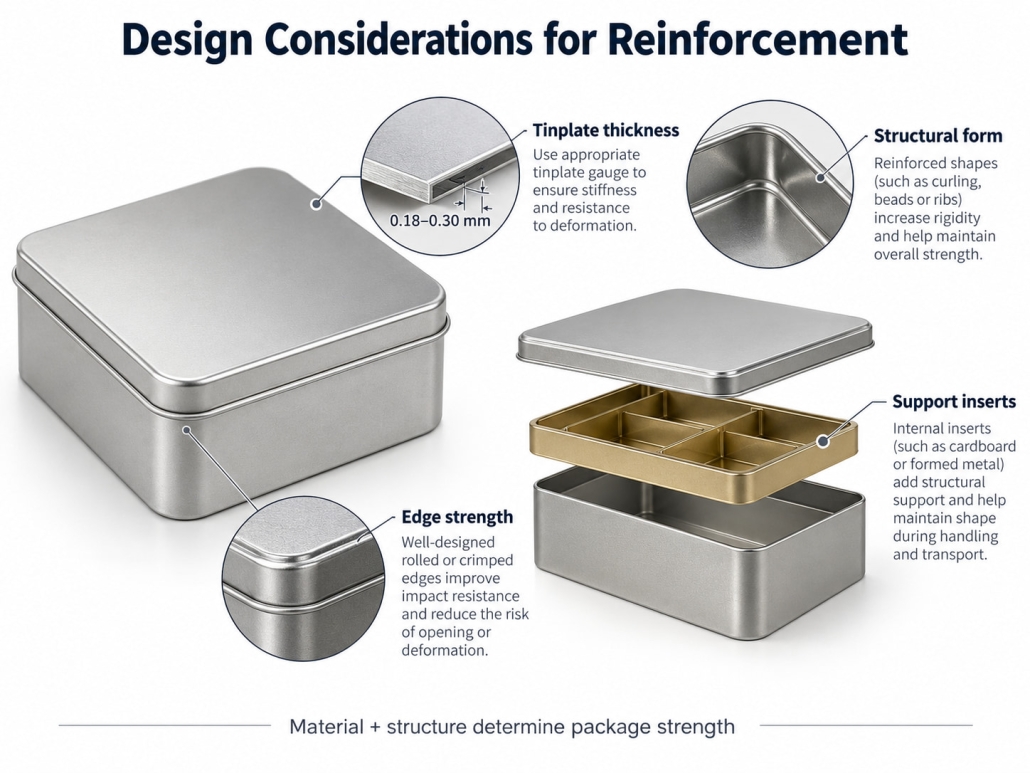
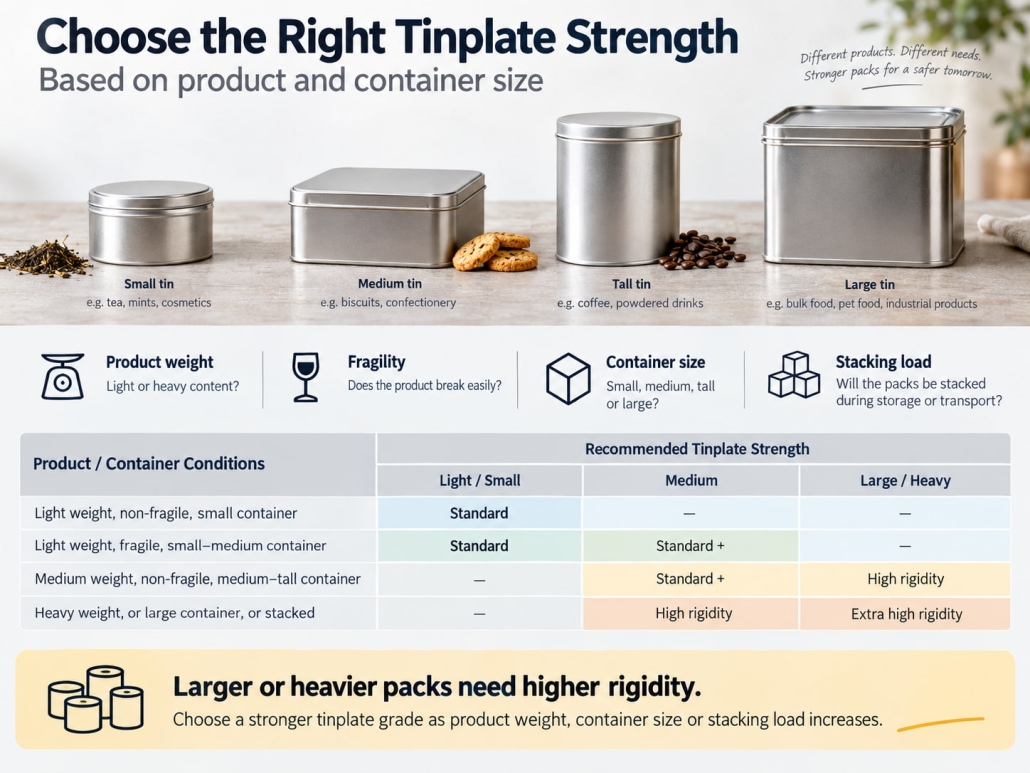
Cigarette Tins Case Thickness Specifications—0.23–0.28 mm

Metal thickness is a key parameter that determines the durability of cigarette tin cases—too thin and they’re easily dented; too thick and they’re too expensive. Based on Sing’s years of manufacturing experience, the ideal thickness range for tinplate cigarette boxes is 0.23–0.28 mm:

0.23 mm: The minimum thickness to guarantee bulk durability. Suitable for standard 20-pack cigarette boxes, it is less prone to dents during normal transport and stacking. It is the best size to balance cost and durability.

0.25 mm: The most popular specification for bulk orders. Offers additional impact resistance without a significant increase in cost.

0.28 mm: Suitable for heavy-duty needs (e.g., international shipping, long-term storage). Recommended for brands sold in humid areas or shipped by sea.

It is important to avoid thicknesses below 0.20 mm, as these cigarette boxes will dent if stacked to a height of more than 10.

Coatings and Linings for Rust Prevention and Freshness Preservation

Even the best metals require coatings to maximize durability and maintain cigarette quality. For bulk cigarette boxes, two coatings are essential:

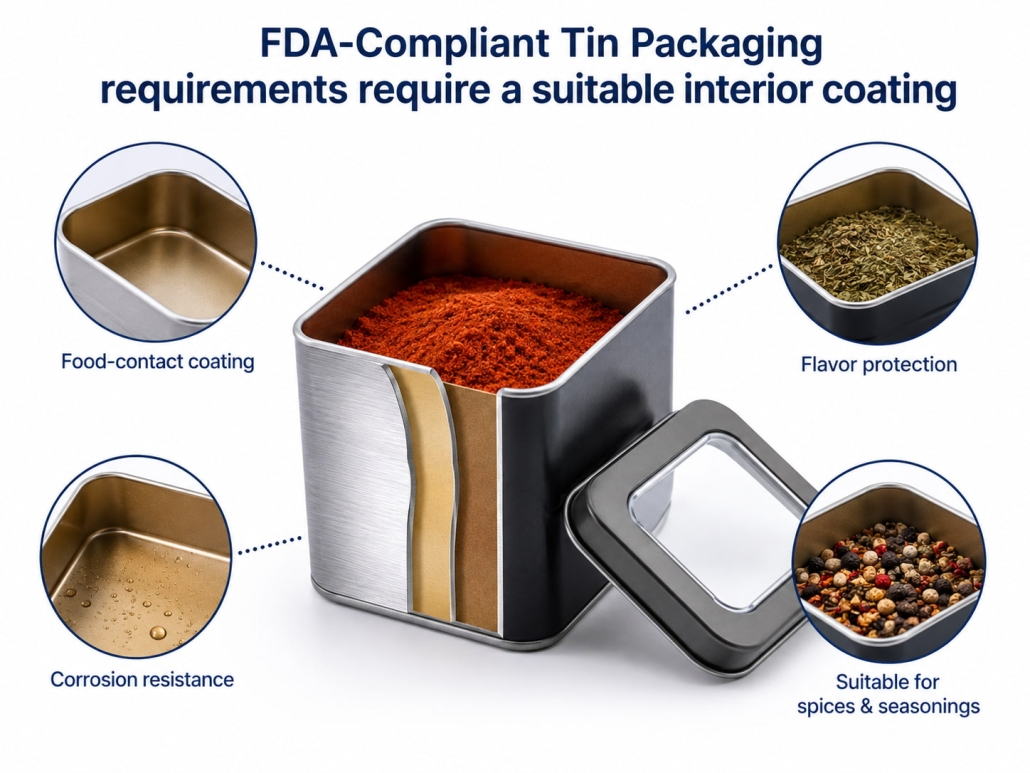
Lining: Food-grade epoxy coating: In direct contact with cigarettes, therefore must be non-toxic and moisture-proof. Tsing uses BPA-free epoxy resin (FDA- and EU-certified) that prevents metal from contacting tobacco. It prevents moisture from seeping into the can, extending the cigarette’s shelf life by 6-12 months. It also resists the corrosive effects of tobacco oils.

Outer Coating: Matte/gloss protective layers protect the can from scratches, fingerprints, and rust. Some common options include a matte finish, which is highly fingerprint-resistant and enhances a premium look. Gloss finishes enhance brand image and are easy to wipe clean.

Both coatings are applied by electrostatic spraying, a crucial factor for batch consistency. A tobacco brand specializing in menthol cigarettes states, “Tsing’s internal epoxy coating keeps our cigarettes fresh for 8 months.”

Coatings and Linings for Rust Prevention and Freshness Preservation

Seams, edges, and lid fit ensure batch durability.

Durability depends not only on the metal used but also on the cigarette case’s manufacturing process. For large orders, here are the manufacturing specifications Tsing uses to ensure consistency and strength:

Double-Seam Construction: The lid and body feature double-rolled seams to prevent leakage and separation during transport. Tsing’s double-seam overlap is 0.3 mm.

Reinforced Edges: Top and bottom edges feature a rolled edge design to avoid sharp edges and enhance structural rigidity. Unreinforced edges are prone to bending during bulk stacking.

Tight-Fitting Lids: Lids that are too loose are prone to leakage; lids that are too tight are difficult to open. Tsing uses CNC molds to ensure the lid is aligned with the body.

Seams, edges, and lid fit ensure batch durability.

Bulk Order Considerations, Consistency, and Quality Control

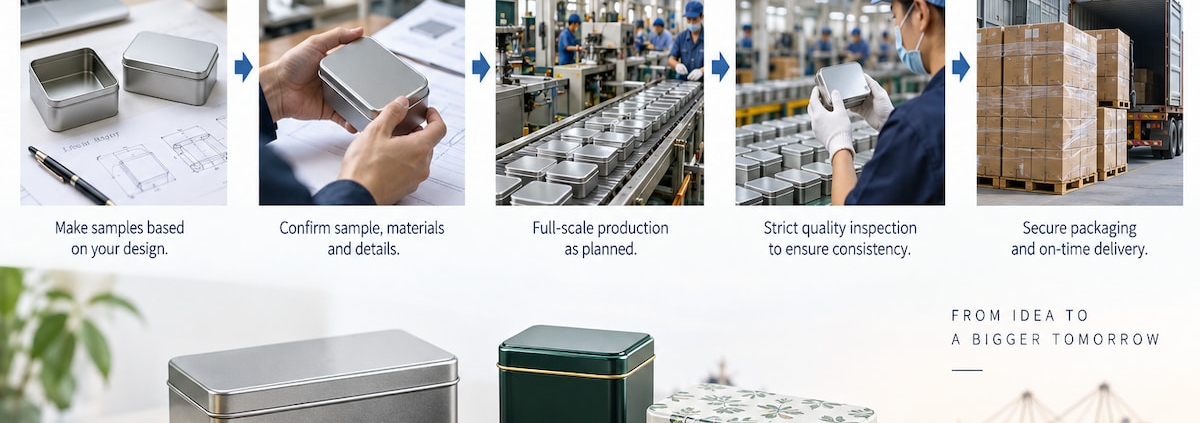
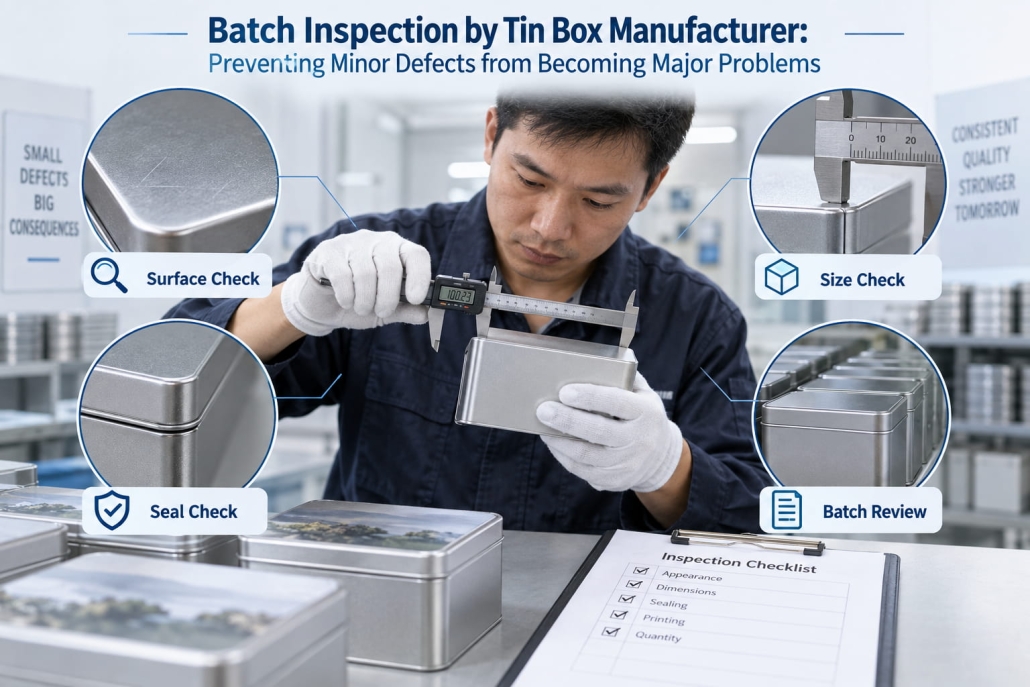
For high-volume production (6,000 pieces and above), consistency is just as important as durability. Even a single defective can out of 100 cans results in losses. Tsing’s bulk cigarettes can include metal specifications, include stringent quality control (QC) measures:

Material Batch Testing: Before production, each roll of metal undergoes thickness testing (tolerance ±0.01 mm) and tin coating weight testing (minimum 0.5 μm).

Process Inspection: Every 100 cans undergo dent resistance testing, drop testing, seam strength testing, tensile testing, and coating adhesion checks.

Final Batch Audit: 5% of the total order undergoes a consistency check to ensure no variations in thickness, coating, or fit.

This quality control reduces the batch defect rate to below 0.5%, ensuring seamless transitions for your tin cans during bulk shipping and retail distribution.

Optimal Metal Specifications

For bulk orders of durable cigarette tin cans, the optimal metal specifications are:
Material: Tinplate (0.23–0.28 mm) for maximum durability.

Coating: BPA-free epoxy liner (moisture-resistant/durable) and matte/gloss exterior coating (scratch-resistant).

Manufacturing: Double-seam construction, reinforced edges, and a tight lid fit.

With over 20 years of experience in bulk production, Tsing has refined these specifications to strike a balance between durability, cost, and cigarette freshness, ensuring your batches withstand shipping, storage, and retail use. Whether you order 6,000 cans or 600,000 cans, these specifications carry potential risks.

Matte Black Tins 1-2

How to Avoid Common Printing Mistakes on Matte Black Tins: High-Quality Matte Black Tins

Some companies that ordered matte black tins have experienced issues with poor printing quality, forcing the entire company to reprint entire batches, while others have been completely scrapped due to irreparable defects. The top complaints? Faded logos, blurred text, poor contrast between light colors and the matte black surface, and misaligned graphics. For a company ordering 6,000 custom black tins, a 20% error rate means 1,200 units were wasted, enough to delay sales and erode customer trust. Printing matte black tins can be challenging, but with the right printing process, errors can be avoided. Tsing has solved these problems for hundreds of customers, and we’ll share how we can deliver high-quality matte black tins when you work with us.

Why is matte black tins printing more difficult than glossy black tins?

Why is matte black tin printing more difficult? It’s different from glossy black tins or standard metal packaging. Three key characteristics of the matte black surface make printing prone to errors:

Porous Texture: Matte black tins have a slightly rough surface (compared to the smooth, non-porous surface of glossy tins). This material absorbs ink unevenly, resulting in spotting or fading if not treated properly.

Low Reflectivity: Glossy tins reflect light, making colors more vibrant—but matte black tins absorb light, which washes out lighter inks and reduces contrast. A white logo looks striking on a glossy can, but without the right ink, it can appear dull or gray on a matte surface.

Ink Adhesion Issues: Matte coatings will repel standard inks and may cause smudging if the surface is not treated.

Matte Black Tins 1-3

Five Common Printing Mistakes on Matte Black Tins

Printing errors on matte black tins aren’t accidental; they stem from cutting corners in preparation, ink selection, or technique. Here are the most common mistakes and their effects, based on our years of experience:

Logo/Text Fading: This is caused by using low-quality, non-UV-resistant inks. Fading occurs within 3-6 months after exposure to light, making your brand difficult to discern.

Image bleed: This occurs when the ink isn’t fully cured before handling. Bleeding ruins the can’s professional appearance, and according to a TPA survey, 42% of shoppers say they avoid products in bleed-out tins.

Poor contrast: Using light-colored inks without a primer. On matte black, these inks appear faded, making it difficult for customers to discern your brand name or product details.

Design misalignment: This occurs when the printing plate isn’t calibrated to the shape of the black tin. Misalignment can make the logo appear “skewed” or off-center, undermining brand consistency.

Scratched ink: This occurs when the surface finish is omitted. When the cans are opened or stacked, ink can come off, leading to increased reprinting costs and damaging your reputation.

These errors aren’t just cosmetic; they can also hurt your bottom line. A mid-sized tea brand told us they wasted significant money reprinting 10,000 matte black tins due to a supplier’s coating error.

Tsing’s Three-Step Surface Treatment for Perfect Printing

The leading cause of printing errors is improper surface preparation. Tsing’s matte black tins undergo a rigorous three-step treatment process to ensure even ink adhesion and maintain a vibrant, vibrant color:

Step 1: Degreasing and Cleaning: We first wash each matte black tin with a food-grade alkaline solution to remove dust, oil, and residue from the manufacturing process. This step eliminates the risk of ink stains, even from tiny surface particles.

Step 2: Corona Treatment: The tin’s surface is exposed to a low-voltage electrical charge, creating micropores in the matte coating. These micropores act as tiny anchors to “grab” the ink, preventing stains and scratches. (80% of cheap black tin manufacturers lack this step in their process.)

Step 3: Primer Application: For lighter inks, we apply a thin layer of clear primer. Primer acts as a bridge between the matte black surface and the ink, enhancing contrast and preventing fading. Furthermore, white logos on primed matte black cans appear three times brighter than on unprimed ones.

Ink Selection and Printing Technology

After ensuring the pre-treatment process, we select the right ink and printing method, employing key technologies to ensure flawless results on matte black tins:

UV-curable inks: We abandon standard solvent-based inks in favor of UV-curable inks. These inks dry instantly under UV light and resist smudging. They are also UV-resistant, maintaining vibrant colors for over two years. For light colors, we use high-hiding UV inks that are clearly visible against matte black without the need for multiple coats.

Precision Digital Offset Printing: For custom black tins with intricate designs, we utilize digital offset printing. This technology calibrates the printing plate to the exact dimensions of the can, ensuring registration within ±0.1 mm. Unlike screen printing, digital offset printing eliminates misregistration and uneven ink distribution.

UV Matte

Quality Control and Pre-Shipping Inspections

Preparation and technology can prevent most errors, but Tsing has implemented additional quality control processes to identify any issues before your matte black tins leave the factory:

Prepress Testing: We first print 5-10 sample tins based on your design and send them to you for approval. This allows you to check color accuracy, alignment, and contrast, ensuring there are no surprises in the final batch.

In-Process Inspection: Every 100 tins rolling off the production line are inspected for smudges, fading, alignment, and scratch resistance. If errors are found, we stop production, address the issues, and retest.

Post-Press Batch Inspection: Before shipping, we check 5% of the entire order for consistency. We also seal the sample tins in a simulated retail environment for 72 hours to ensure no fading or ink damage. This quality control process ensures Tsing’s error rate is less than 0.5%, well below the industry average of 8-12%.

Tin can quality inspection

Perfect Printing, Uncompromising Quality

Printing issues on matte black tins are solvable. With the right surface treatment, ink selection, printing technology, and quality control, you can achieve custom black tins that are sharp, vibrant, and on-brand every time. This means you’re buying more than just a container; you can rest assured that it will be used for your product packaging.