hinged lid tins 3-2

5 Reasons: Why hinged lid tins are a popular packaging solution?

When a customer stands in front of a product display, they open a small metal box, feel the smooth movement of the hinge, and then put the box in their pocket. Your brand logo is still clearly visible, and the brand image is deeply imprinted in the customer’s mind. As a tin can manufacturer, I’ve seen many clients perfectly combine practical functionality with branding using hinged tins. Therefore, I will explain 5 specific reasons, from the perspectives of manufacturing experience, material science, and valuable marketing, why hinged lid tins remain the preferred packaging solution for many product categories, such as mints, chewing gum, nail polish tins, and electronic accessories.

Reason 1: Hinged Lid Tins: Durability and Product Protection

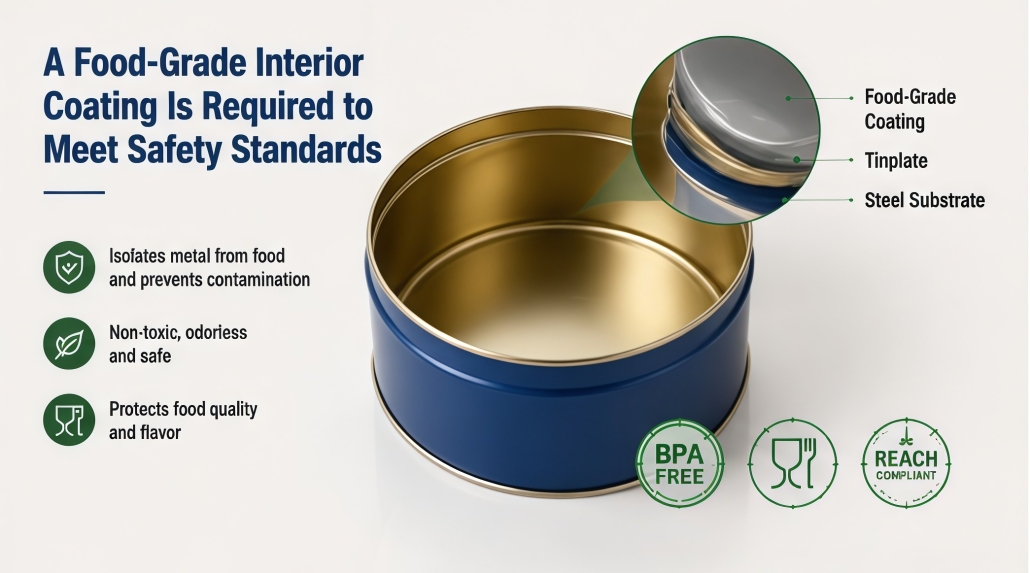
First, hinged lid tins effectively protect their contents. Unlike thin cardboard or soft plastic, tinplate provides strong mechanical protection against crushing, punctures, and moisture. The hinged lid design keeps the lid attached to the body, reducing the risk of loss and preventing accidental spills. As a tin can manufacturer, Tsing optimizes hinge torque to balance secure closure and easy opening. Too tight would be inconvenient for users; too loose would lead to accidental opening. For products requiring a more robust seal (such as powder samples or small electronic devices), we also consider using gaskets or nested lid designs. For food contact applications, we use food-grade coatings and verify the internal coating to prevent corrosion and odor transfer.

Hinged Lid Tins Durability and Product Protection

Reason 2: Hinged Lid Tins Offer a Better User Experience and Convenience

Packaging is more than just a container—it’s the interface between the brand and the user. Hinged lid tins excel in user convenience. Because the lid is permanently attached to the body, users can open and close the box with one hand without losing the lid. For pocket-sized items like mints, lip balm, or cosmetic samples, this convenient one-handed operation encourages repeated use.

Tsing’s hinged tin cans are designed with ergonomics in mind: rounded edges provide a comfortable feel, the lid has a secure clasp, and there is appropriate internal clearance for easy removal of contents. For promotional gifts, this pleasant tactile experience enhances the perceived value of the product. Users will keep and reuse these metal tins, for example, to store sewing needles, pills, or small cables.

Hinged Lid Tins 4-5

Reason 3: High-Impact Branding and Customization Options

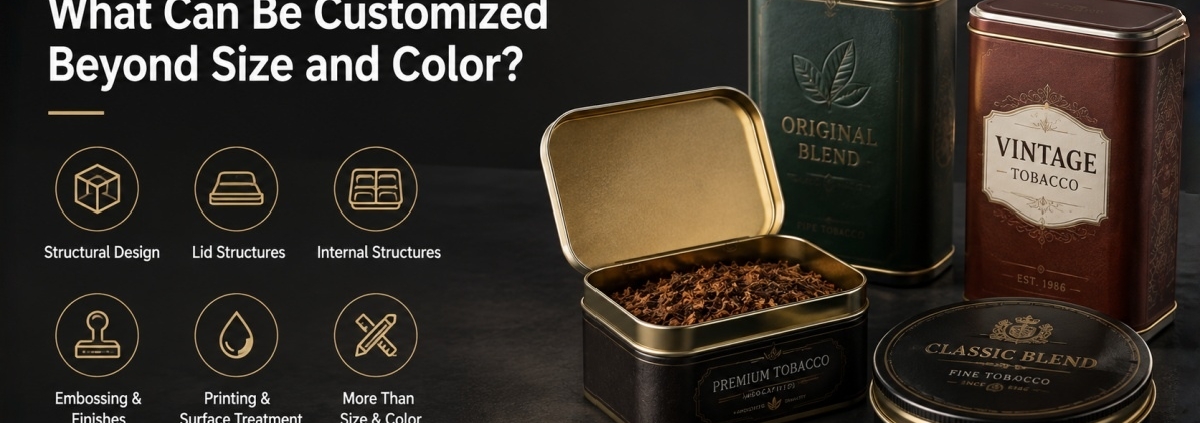
The flat lid and body of hinged tins provide excellent space for branding. At Tsing, we help clients cleverly utilize this space: using offset printing for full-color photos, Pantone color matching for corporate branding, hot stamping for high-end details, and embossing for tactile logos. These decorative options are particularly effective on hinged lid metal tins.

We also offer more advanced options—3D embossing, micro-engraving, and soft-touch varnish—all of which add depth and a premium feel to the product. For brands requiring precise color reproduction, our Pantone color-matching process and color proofing minimize color variations across production batches. Furthermore, the hinged design allows for a double-sided display: one side for prominent branding and the other (on the inside of the lid or on the bottom) for product information or brief brand messaging. We can also customize special shapes and windowed lids based on display needs, especially for limited editions or gift sets.

High-Impact Branding and Customization Options

Reason 4: Sustainability, Reusability, and Lifecycle Advantages

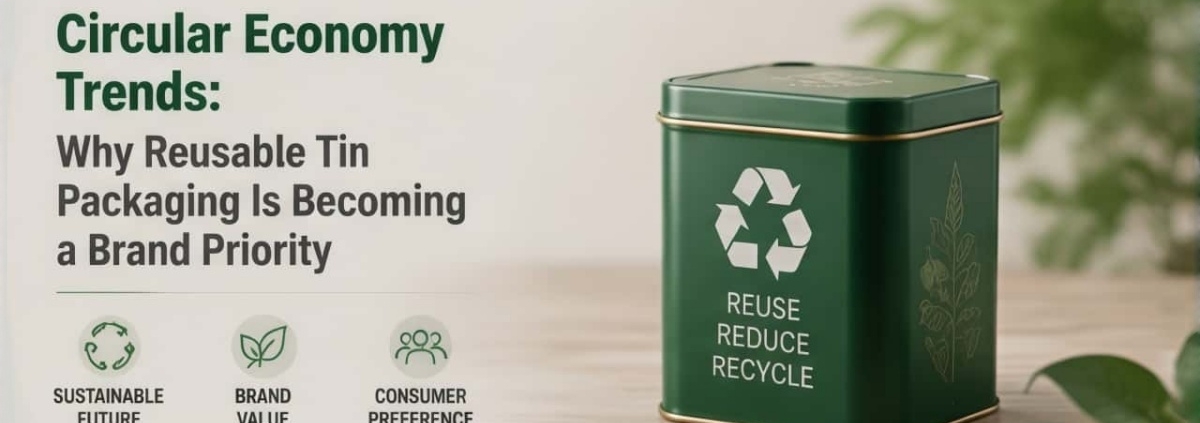
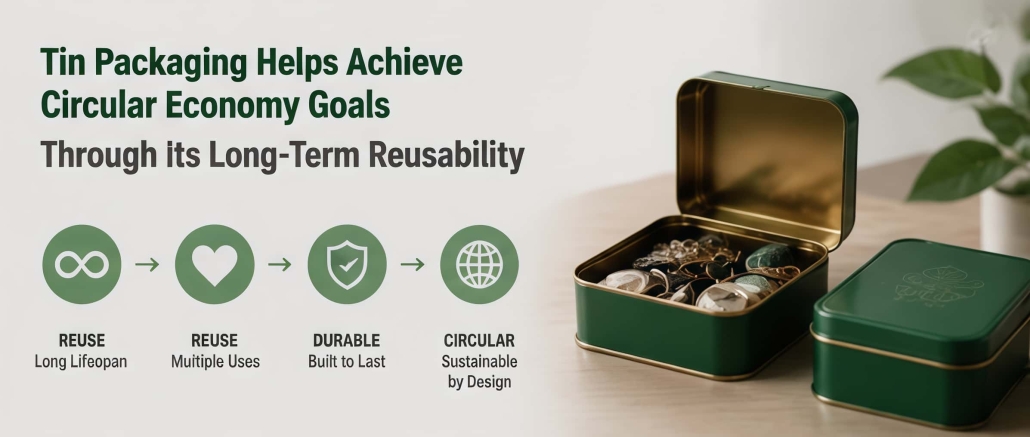
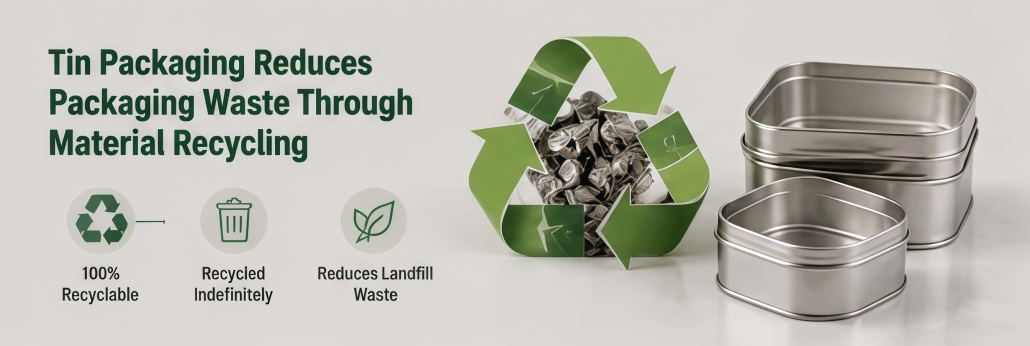
Tin cans perform exceptionally well in terms of recyclability and circularity; tinplate is fully recyclable and re-enters the metal supply chain with a high recycling rate. More importantly, hinged metal tins are durable and reusable, and in many scenarios, consumers typically keep and reuse them for years, extending the packaging’s lifespan.

At Tsing, we emphasize design choices that enhance recyclability: single-material construction, easily removable liners, and the use of water-based varnishes whenever possible. We can source tinplate containing recycled content to reduce carbon emissions and provide chain-of-custody documentation when needed to support sustainability claims. For many brands, the reusability of hinged metal tins increases brand exposure while reducing the environmental impact per use.

Reason 5: Merchandising, Shelf Display, and Distribution Advantages

Hinged lid tins not only protect products and promote brands but also boost sales. Their sturdy design and reflective surface make them particularly eye-catching on retail shelves and counters. Hinged lids on tins facilitate product sampling at the point of purchase: staff can open the tin to showcase the product and immediately close it again, maintaining hygiene and a tidy display. In terms of merchandising, hinged tins stack easily and integrate well into attractive retail displays.

From a distribution perspective, hinged lid tins are more resistant to common shipping risks than many other packaging types. They reduce breakage and return rates, thereby lowering distribution costs. The reusability of tin cans also encourages consumers to discover the brand through the retained tin, leading to repeat purchases or upsells. At Tsing, we assist our clients with display design and secondary packaging to ensure that hinged tin cans perform optimally in retail environments.

Protective and Reusable Tins

Hinged lid tins are popular because they offer a combination of protection, reusability, brand impact, sustainability, and measurable production economies. If product protection and reusability are crucial, hinged tins are an excellent choice. If durability or long-term visibility of the product is required, hinged tins are often the best option. As a tin cans manufacturer, Tsing always prioritizes design for manufacturability, high precision, and high-quality craftsmanship.

Mint Tins 1

Custom-Printed Mint Tins with Hinged Lids: Brand Logos for Promotional Giveaways.

When potential customers reach for mints during promotional events in various shopping malls, the packaging often leaves the first and most lasting impression. Small, exquisite, and well-crafted hinged-lid mint tins do more than hold the product; they are brand keepsakes and touchpoints that accompany customers in their daily lives. Therefore, I will tell you everything that Tsing includes when providing custom-printed hinged-lid mint tins as promotional gifts: materials, decoration processes (including our 3D embossing, micro-engraving, and Pantone color matching), structural precision to address sticker application issues, food contact material compliance, and more.

Why Hinged Mint Tins are an Ideal Choice for Promotional Gifts

The hinged lid provides a premium tactile experience: a crisp, satisfying click when opening and closing, secure and reliable, not easily lost, and easy to operate with one hand, making it ideal for pocket-sized gifts. From a brand promotion perspective, hinged tins offer two large flat surfaces for displaying brand logos and designs: the lid and the base. Our designers can use one surface for eye-catching graphics and the other for product labeling.

From a practical standpoint, hinged mint tins are durable and reusable. Recipients will keep and reuse them—for example, to store pills, badges, or small trinkets—giving your brand logo repeated exposure. Compared to disposable packaging, well-made hinged-lid mint tins extend brand presence in consumers’ minds and enhance brand value.

Why Hinged Mint Tins are an Ideal Choice for Promotional Gifts

Mint Tins Materials, Internal Coatings, and Food Contact Compliance

We primarily use high-quality tinplate for our mint tins because of its formability, printability, and recyclability. Tinplate is strong and durable, suitable for the hinge mechanism, and maintains clear patterns after embossing or printing. If you require lightweight or special needs, aluminum is also an option, although its decorative and forming characteristics differ.

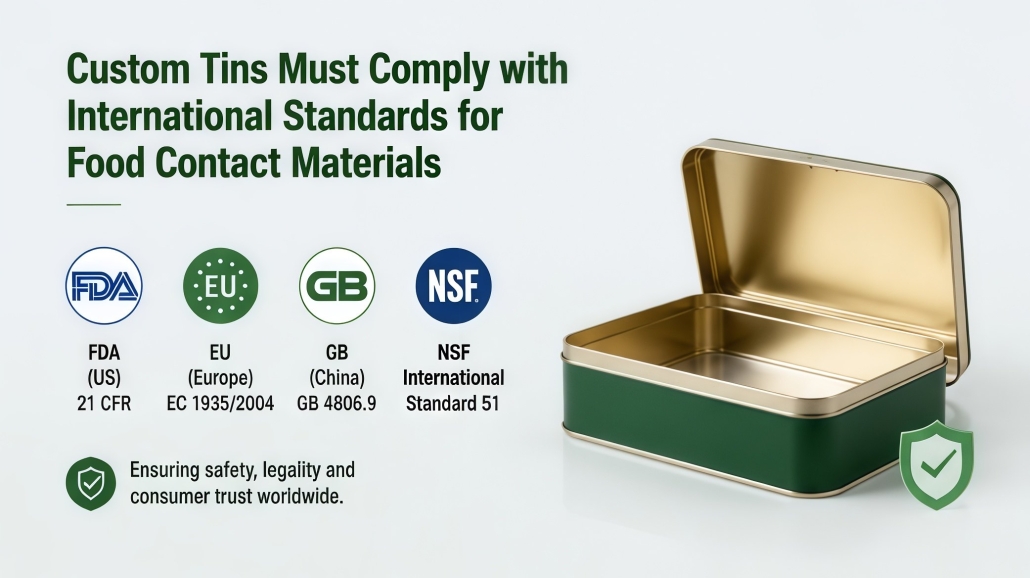
Food contact safety involves two related decisions: internal coating and regulatory compliance. Many mint formulations contain flavorings and acidic substances that can react with or accelerate corrosion of bare metal. To prevent flavor transfer and ensure shelf life, Tsing applies food-grade varnish or polymer barrier coatings to the inside walls of the tins. These varnishes comply with FDA and EU food contact requirements; compliance documents can be provided upon request. For products with high oil content, we use varnishes that have been tested and certified for specific compatibility.

3D Embossing, Micro-Engraving, and Pantone Spot Color Printing

Decoration is key to making your mint tins reflect your unique brand personality. At Tsing, we offer a range of surface treatment techniques that meet high-craftsmanship standards, combining them to achieve a striking, precise brand image.

3D Embossing: Embossing adds texture and depth by raising design elements from the metal surface, creating a tactile impact that immediately catches the consumer’s eye. For brand identification, we can emboss logos, seals, or patterned backgrounds. Embossing can be applied to the lid, base, or both; multi-layer embossing creates a striking, premium effect.

Micro-Engraving: For extremely fine details such as miniature text, intricate patterns, or serial numbers, we use micro-engraving technology. This can be milling-based tool machining or laser-assisted engraving to achieve extremely high precision. Micro-engraving combined with localized surface treatments such as hot stamping can create sophisticated anti-counterfeiting features or collector’s editions.

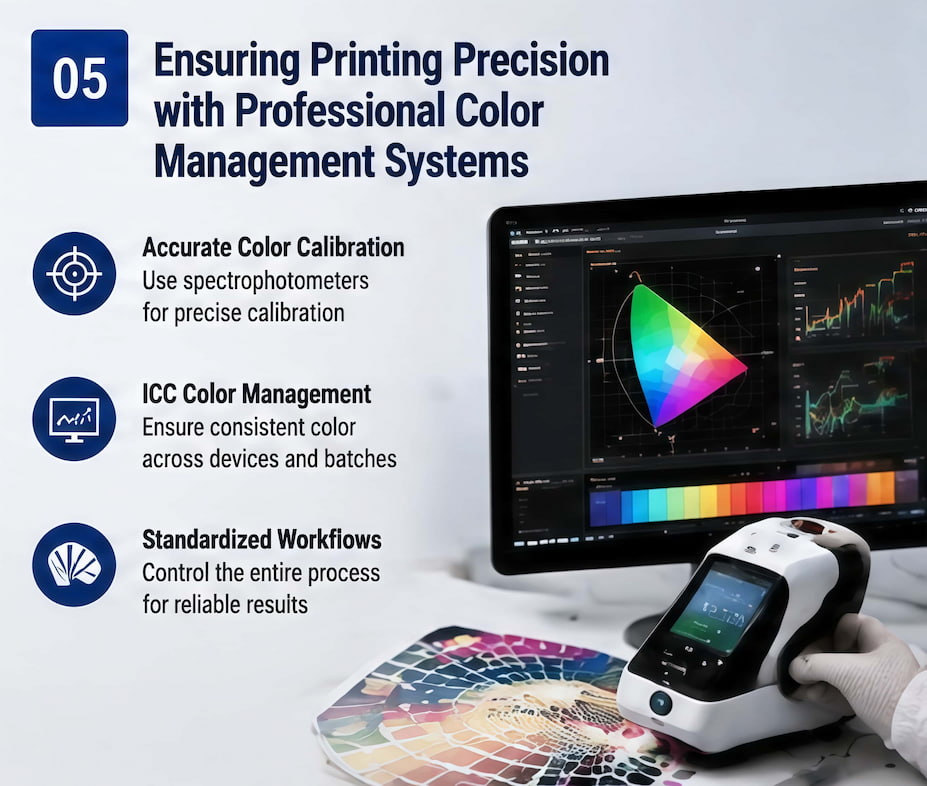
Spot Color Printing and Pantone Matching: We also offer Pantone spot-color printing to ensure your brand colors remain consistent across batches and print runs. The Pantone Matching System (PMS) spot color printing delivers predictable, repeatable brand colors. At Tsing, we conduct color proofing and review Pantone color swatches before production. We also offer spectrophotometer testing services and can provide color certification reports for applications requiring the highest color accuracy.

3D Embossing, Micro-Engraving, and Pantone Spot Color Printing

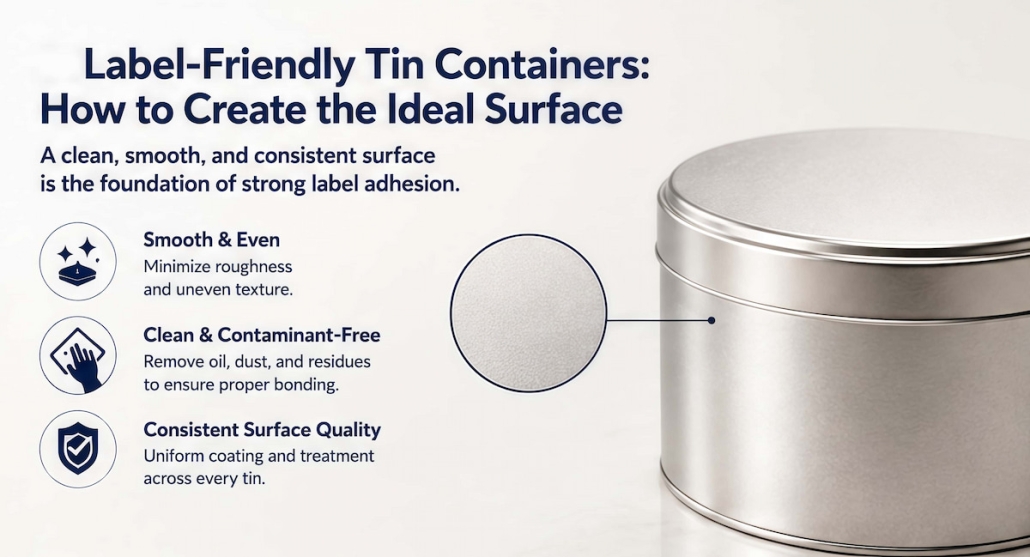
Addressing Uneven Bottoms and Sticker Application Issues

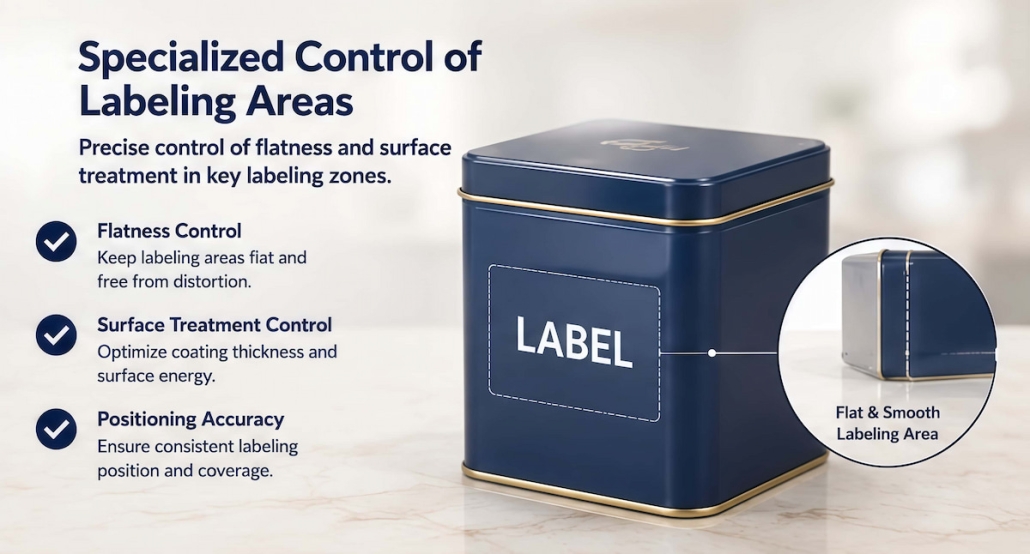
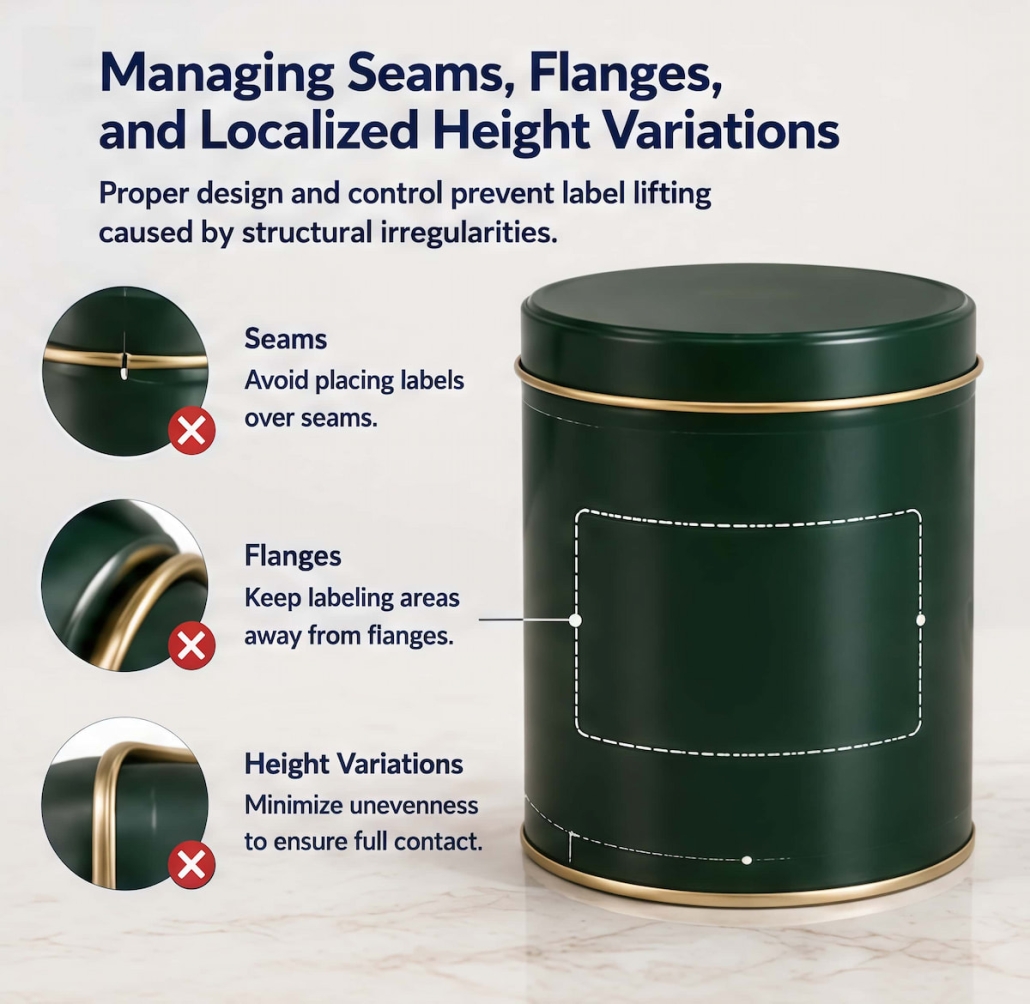
A common packaging problem is uneven tin bottoms, which make sticker application difficult and give the display a less professional look on the shelf. Based on our production experience, the root causes are inconsistent molds, forming stress, and mold design flaws. At Tsing, our automated manufacturing processes and engineering controls effectively address this issue, ensuring consistent base flatness and precise hinge alignment.

Mold Design: Our molds feature compensation zones and precise male-female clearances to minimize springback and deformation during forming. Mold tolerances are verified through first-article inspection and optimized for specific tin can diameters and thicknesses.

Process Control: During stamping and forming, we control the blank holder pressure, drawing depth, and annealing cycles. Segmented forming prevents excessive work hardening and ensures the base remains consistently flat. We utilize Statistical Process Control (SPC) on critical dimensions (base flatness, lid fit, and hinge torque) to identify deviations before mass production.

Post-Forming Processes: For surfaces intended for labeling, we ensure a smooth, tool-mark-free base. If you plan to secondary-label, we can conduct pre-labeling tests to verify sticker adhesion and flatness.

Addressing Uneven Bottoms and Sticker Application Issues (1)

Production Process, Tooling, Minimum Order Quantity, Lead Time, and Cost Considerations

In addition to providing reliable custom mint tin services, we will also inform you about our overall production flow, tooling, minimum order quantities, and lead times to help you better understand our process.

Tooling and Manufacturing: Custom tin cans require tooling – stamping dies, embossing dies, and printing plates. Tooling costs depend on size, complexity, and additional processes such as micro-engraving or hot stamping. We will provide a tooling quote in advance and can store the molds for subsequent orders according to mutually agreed terms.

Minimum Order Quantity (MOQ): Our minimum order quantity is 3000 pieces, while multi-color spot printing, embossing, and hot stamping processes require higher MOQs due to higher plate-making and setup costs.

Lead Time: The lead time for most custom products is approximately 6 weeks, from design confirmation to shipment. For complex projects involving 3D embossing, multi-color matching, or new molds, the lead time may extend to 10-12 weeks. Cost Optimization: To help you balance cost and impact, please consider the following aspects: Choose one or two high-impact decorative processes (e.g., Pantone color printing + embossed logo) instead of using multiple complex effects on both the lid and base; standardize the dimensions of different product lines to allow for mold reuse; and consolidate production batches of different SKUs to achieve corresponding pricing targets.

Delivering Product Packaging with Higher Craftsmanship and More Precise Structure

Custom-printed hinged-lid mint tins are more than just simple containers; they are also a functional, durable, and visually impactful brand promotion tool. For Tsing, a successful mint tin project begins with the right structural design and material selection. High-quality tinplate, food-grade inner coating, and precisely designed hinged lids ensure product safety, ease of use, and a superior tactile experience. Equally important is manufacturing precision: by addressing common issues such as uneven tin box bottoms, Tsing ensures reliable label application and consistent product appearance in large-scale production.

Gold Round Tins 4-4

Compact Gold Round Tins: Perfect for Lip Balm & Cosmetic Samples

On the counter of a boutique store, an exquisite, shimmering gold package catches the customer’s eye. Inside the box is a perfectly shaped lip balm or cosmetic sample, irresistible to the touch. The moment the packaging transforms curiosity into a desire to purchase is precisely where the small, round gold tin plays a crucial role. Gold round tins offer stunning visual appeal, combining practicality with high perceived value. They protect delicate formulas, enhance shelf appeal, and are perfectly suited for high-end luxury applications. Tsing, with decades of experience in tin packaging, will show you how we create the perfect gold round tin cans for lip balms and cosmetic samples.

Choosing the Right Size and Shape of Gold Round Tin Cans for Lip Balms and Cosmetic Samples

Choosing the right size and shape of the gold tins is the first consideration when selecting packaging for lip balms and small cosmetic samples. Lip balms and small cosmetic samples require small, gold round tins that both protect the product and provide a good user experience. Common lip balm tins typically hold 5 to 15 grams, while cosmetic samples such as creams or lip balms usually fit well in 10- to 30-gram gold tins. Therefore, during production, we also measure the finished product volume and consider the headspace in the can.

In terms of shape, flat or round tins are ideal for lip balms and solid cream products, allowing direct application with fingertips. Deeper round tins are suitable for creams and thicker samples. The lid design of the round tin also vary; we choose screw caps, flip-top lids, or hinged lids based on user interaction needs and a premium feel. Generally, gold tins use screw caps to ensure airtightness.

Size and Shape of Gold Round Tin Cans for Lip Balms and Cosmetic Samples

Material Selection and Internal Coating of Gold Round Tins

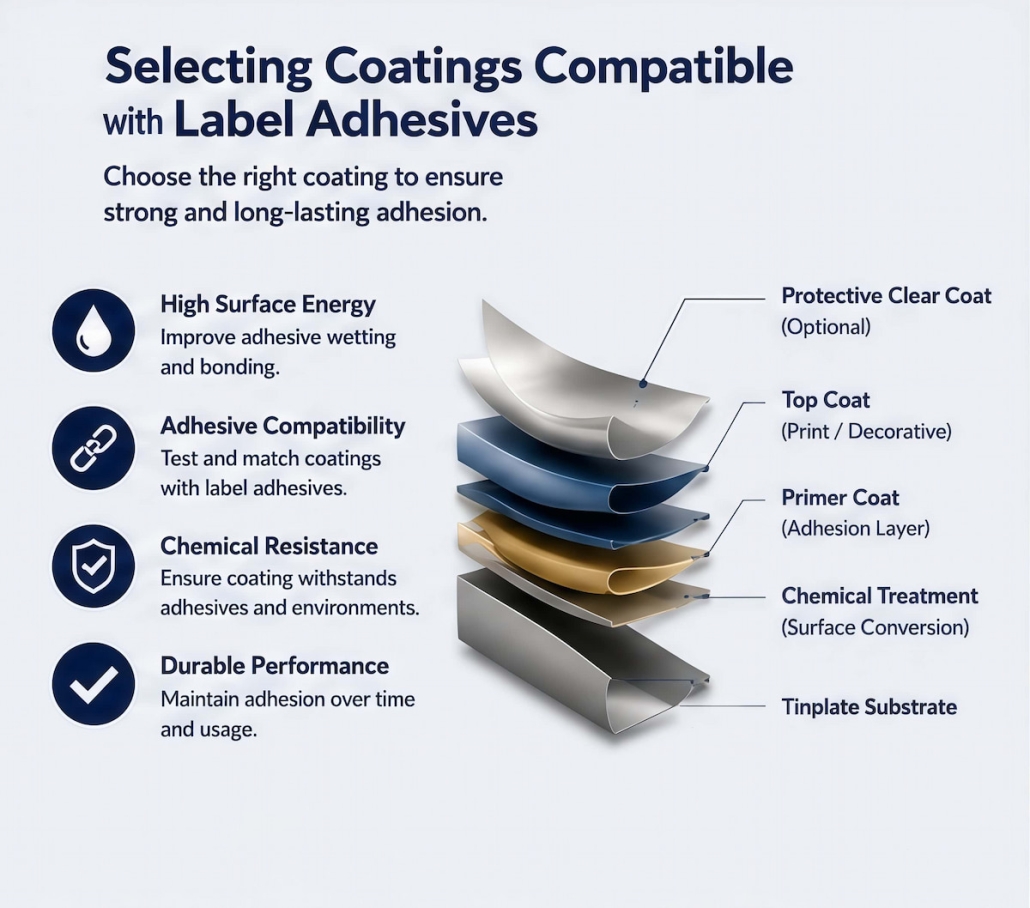
Material selection affects durability, appearance, and product compatibility. Tinplate is the industry standard for round tins due to its excellent formability, printability, and recyclability. The gold color on the tin cans is usually achieved through offset printing with metallic inks or post-processing techniques such as hot stamping and electroplating.

The internal coating is crucial for cosmetic contact. Many formulas contain oils, fragrances, or active ingredients that may react with exposed metal. Therefore, we use food-grade or cosmetic-grade lacquer coatings for the inner lining. These linings prevent metal migration, maintain the integrity of the fragrance, and protect the can and product throughout its shelf life. We also conduct regular compatibility tests to ensure that our tin cans and round tins do not alter the product’s color, scent, or performance.

Exquisite surface treatments, decorations, and branding deliver a premium experience

The visual and tactile effects of the gold round tin significantly influence the product’s perceived value. Therefore, you can choose full offset printing to showcase exquisite photographs, or opt for a minimalist metallic gold base coat paired with sophisticated embossing. Processes such as hot stamping, spot UV, and soft-touch varnishing enhance the product’s texture and perfectly complement high-margin cosmetic lines.

When designing the decoration, we pay close attention to several manufacturing details. First, for wrap-around designs, we ensure that the lid and base align properly to avoid misaligned seams that could affect product quality. Second, we selectively use embossing to reduce complexity. Additionally, many consumers often carry tin cans in their handbags, making them susceptible to wear and tear. Therefore, we use protective varnishes and durable inks to prevent scratching and maintain the clarity of brand information. Finally, we also consider internal decoration, using matte inner walls to hide fingerprints and keep the product looking pristine.


Considerations for closure design, sealing, and user experience

The closure design determines the product’s functionality and appearance. The main closure options for round tins include friction-fit lids, screw caps, and hinged lids. Each closure has its advantages and disadvantages: friction-fit lids are cost-effective and easy to assemble; screw caps are secure, reliable, and resealable, but require more precise molds; hinged lids enhance the product’s perceived value and gift appeal, but are usually more expensive and have longer lead times.

Sealing is a crucial functional requirement for cosmetics, especially semi-solid or paste-like samples. Our designs incorporate nested closures or inner plugs to reduce leakage and minimize the risk of contamination when the product is applied with fingers. For certain formulations, tamper-evident features can be considered, such as an outer shrink wrap or a tear-off foil seal under the lid. These measures enhance user confidence and help retailers meet hygiene requirements. In terms of ergonomic design, we have perfected the user experience. We ensure the lid opens easily without excessive force and test how consumers interact with the product in real-world scenarios.

Considerations for closure design, sealing, and user experience

Sustainability, Recyclability, and Regulatory Considerations

Modern brands must strike a balance between aesthetics and sustainability. A major advantage of the gold tin can is its recyclability: manufacturers and recyclers can easily process tinplate, aligning with a circular materials strategy. Furthermore, the durability of tin cans often reduces single-use waste and encourages reuse; many consumers use them to store small items, thereby extending the product’s lifespan. Of course, we also ensure that the inner coating complies with relevant food or cosmetic contact regulations in the target market. For markets with strict chemical restrictions, we ensure that inks, coatings, and plating processes comply with applicable standards such as EU REACH regulations or US FDA guidelines.

Ideal for Lipsticks and Cosmetic Samples

The small, round gold tin perfectly combines protection, brand enhancement, and sustainability, making it ideal for lipsticks and cosmetic samples. When manufacturing gold tins for you, we accurately measure product dimensions and clearly define user experience requirements. We prioritize the inner coating to ensure product safety and select surface treatments that reflect your brand positioning. Finally, we carefully plan delivery schedules and minimum order quantities to ensure you receive a perfect batch of gold tin cans.

cigarette tin case 2-3(1)

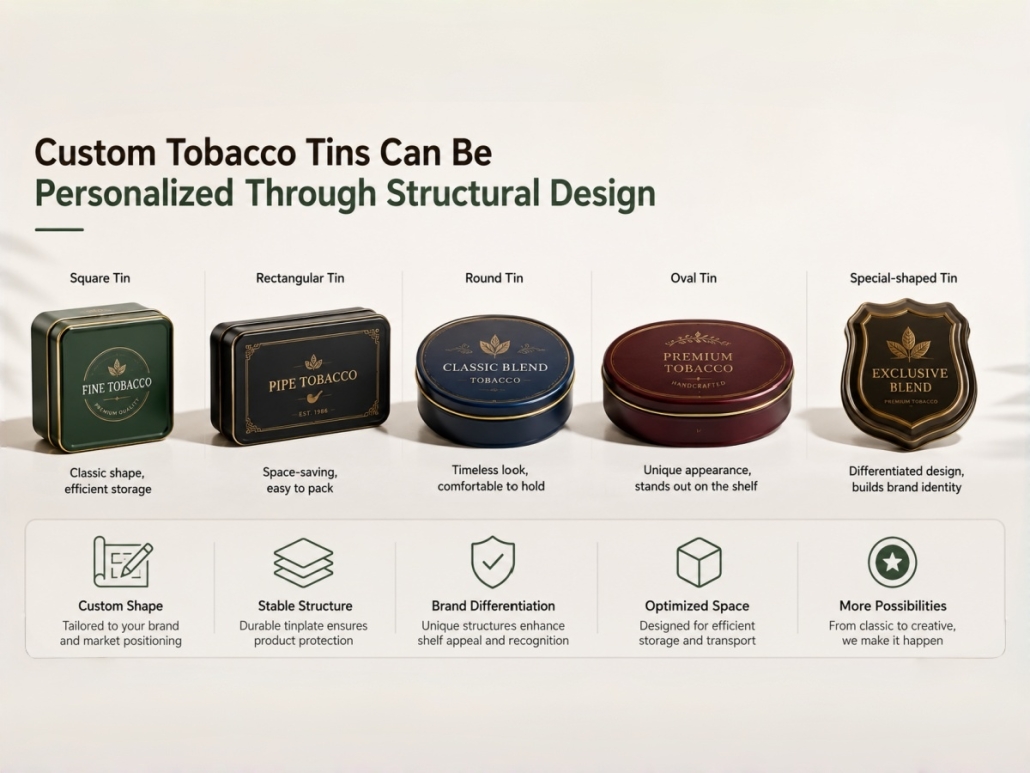
Solving the problem of mismatched tobacco packaging sizes: Custom cigarette tin case services

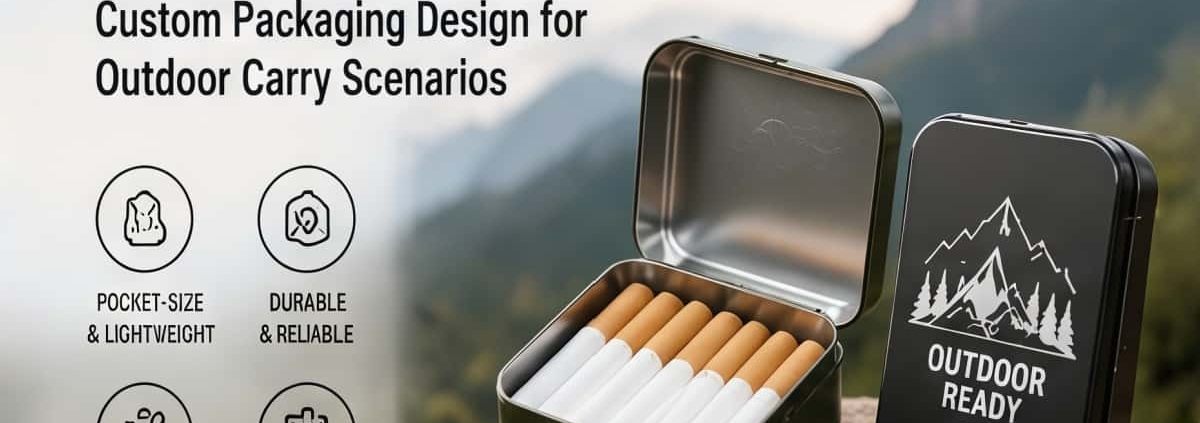
When your new product is about to launch, but off-the-shelf packaging boxes aren’t suitable—cigarettes rattling around, corners exposed, or the box looking bulky and crude—these small flaws can silently damage your brand image and increase return costs. We’ve seen too many examples of this among our clients. Therefore, “solving the problem of mismatched cigarette packaging sizes” is a core service for us. Custom cigarette tin cases can eliminate size mismatches, protect your product, and enhance the brand experience. We will also show you how to choose the right cigarette tin case and how custom cigarette tins can achieve stable packaging quality practically and economically.

Determining the Basic Elements of Cigarette Tin Case Dimensions

Precise dimensions are the foundation of any successful cigarette tin case. First, accurately measure your product: length, width, height, and any irregular external features, such as filter caps, recessed mouthpieces, or protective sleeves. When measuring, consider the manufacturing tolerances of the cigarettes themselves, as well as any inner lining or foil. For cigarettes with soft packaging or sliding lids, measure both the compressed and fully extended states to determine the worst-case clearance.

Next, determine the performance margin. A tight fit prevents movement and protects the product; a slightly looser fit may be easier for the end user to insert and remove. Industry practice typically uses a clearance of 0.5–1.5 mm per side for hard cigarettes or pre-filled tins. Still, the specific clearance will vary depending on the product’s fragility and user preference. If you plan to accommodate multiple packaging types in a single tin design, clearly define the acceptable minimum and maximum dimensions, and we will reserve space for internal dividers or foam padding. Additionally, when working with Tsing or other cigarette tin manufacturers, provide clear dimension drawings or samples. This helps improve mold accuracy; physical samples allow for rapid prototyping and size verification.

wholesale tin can manufacturer 1-2

Materials and Surface Treatments for Custom Cigarette Tin Case

The choice of material directly affects appearance, protective performance, weight, and cost. Tinplate remains the industry standard for cigarette tin cases due to its good formability, recyclability, and printability. For high-end product lines, we can use thicker tinplate to increase weight, or aluminum to enhance corrosion resistance and provide a premium feel.

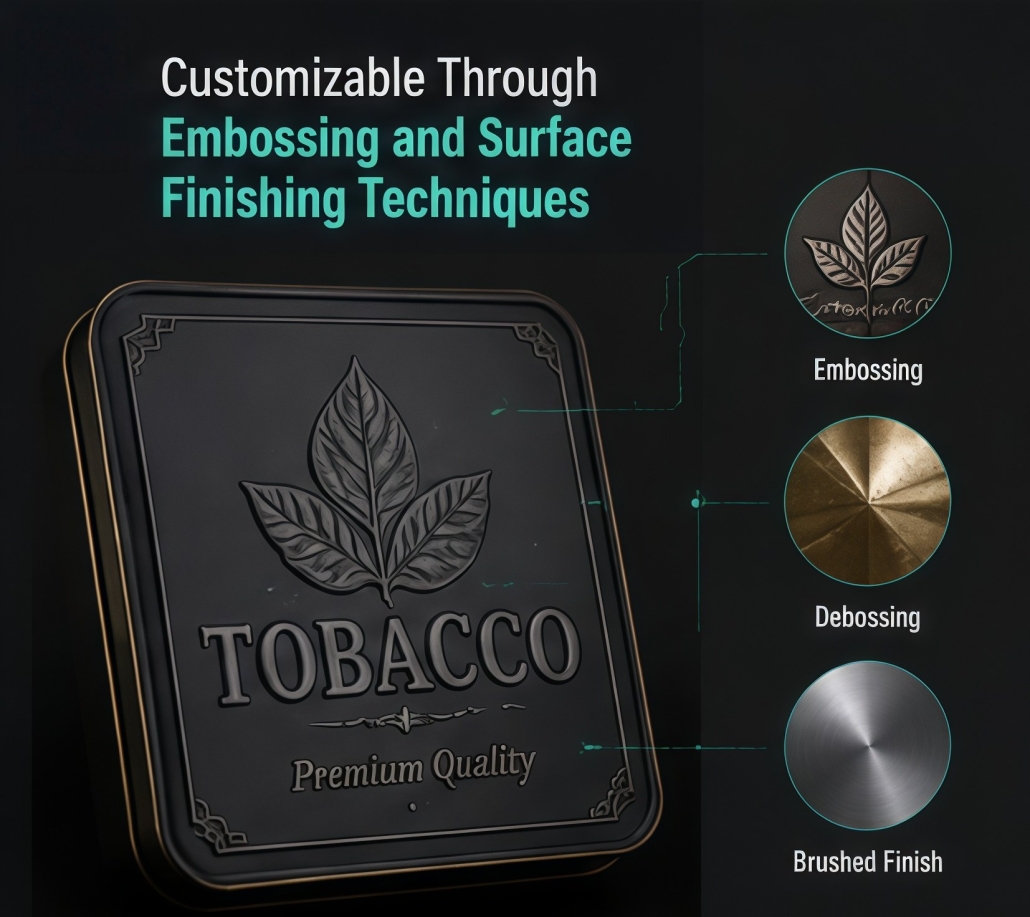
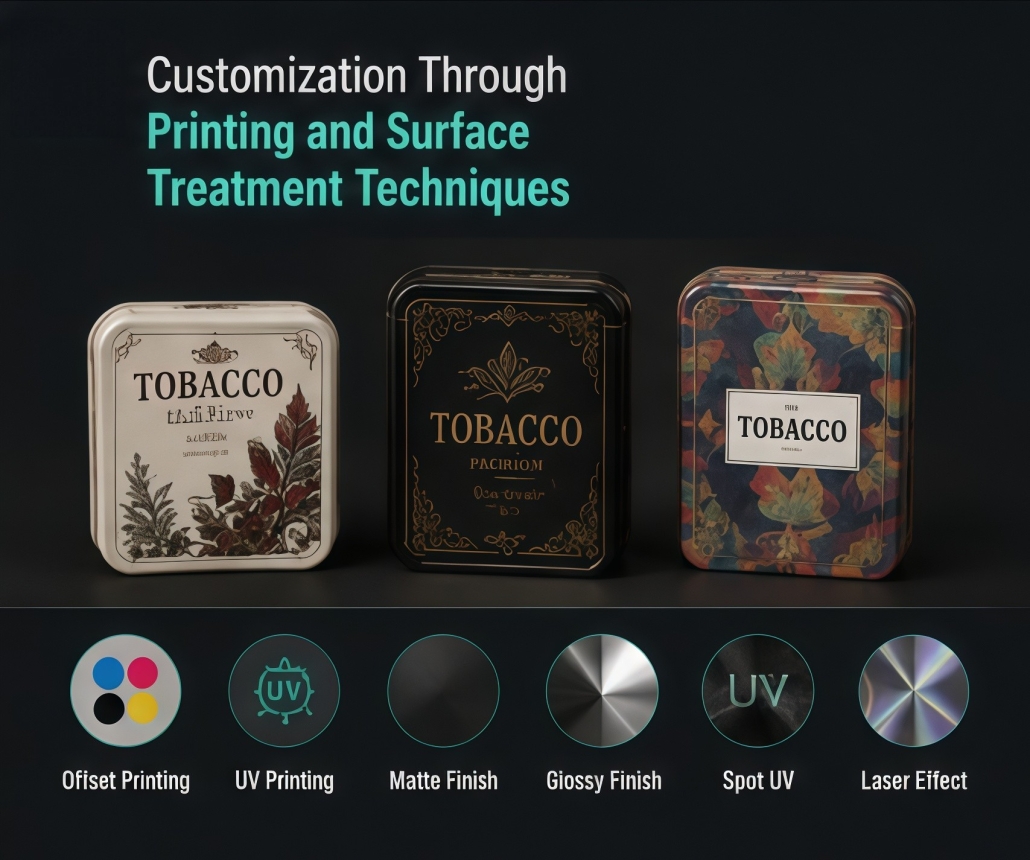
Custom surface finishing transforms functionality into a brand experience. Offset printing allows for full-color images and photographic detail. Embossing and debossing add tactile differences, enhancing the product’s perceived value. Additionally, special finishing options—such as soft-touch coatings, matte varnish, gloss varnish, spot UV, hot stamping/silver stamping, or flocking—create unique shelf appeal. When choosing decorative patterns for custom cigarette case tins, consider printing registration accuracy: multi-part tins require precise alignment during decoration to ensure the pattern aligns perfectly when closed.

Determining Structural Design, Lid Type, Closure Method, and Protective Features

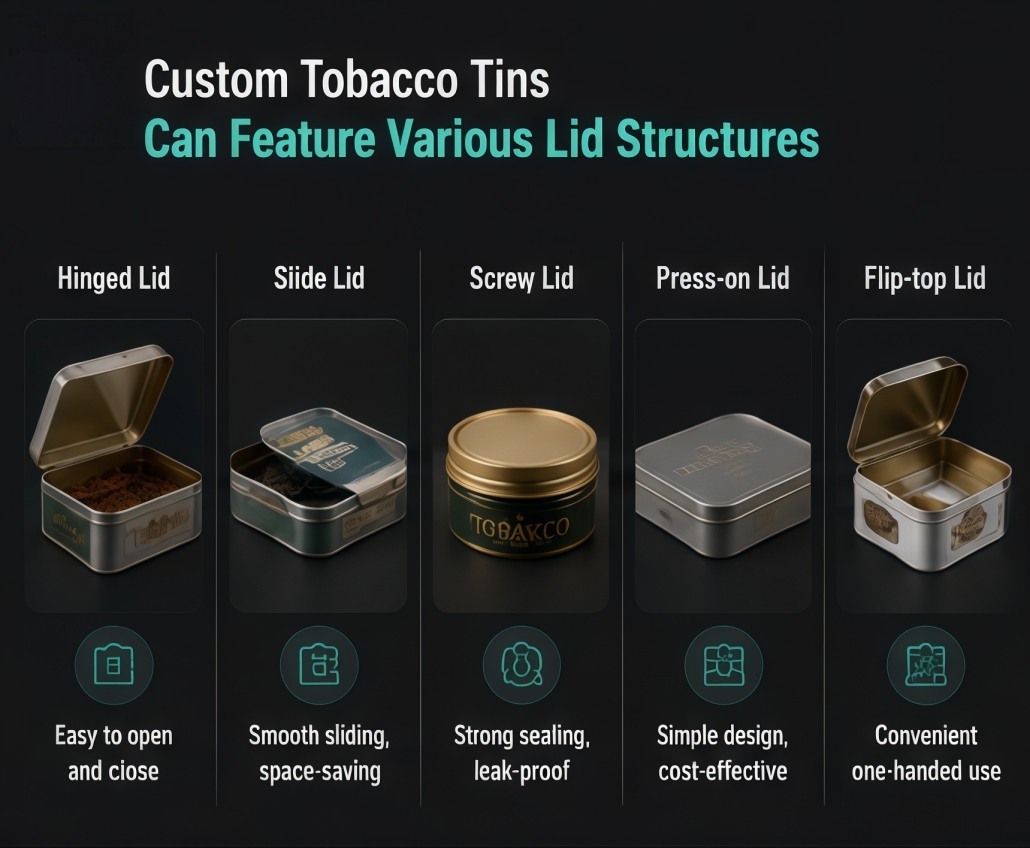
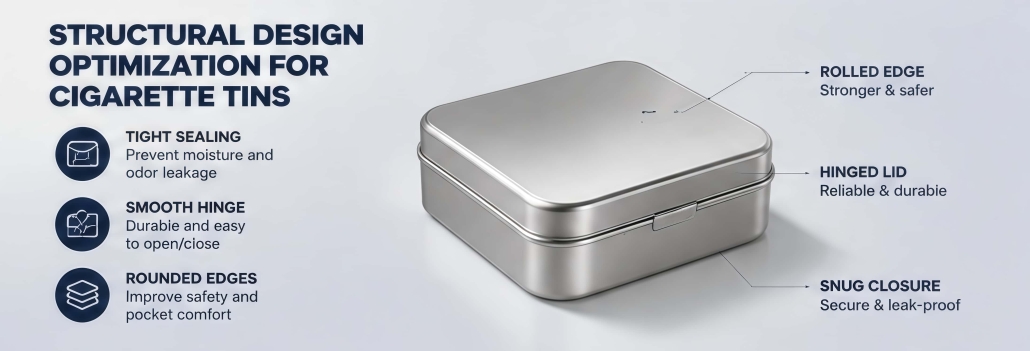
Structural design balances size and functionality. First, determine the lid style: hinged, removable, sliding, or drawer-style. Hinged lids are popular for their everyday convenience and can be designed with a robust, shallow seam to ensure a tight closure. Removable lids typically have a cleaner appearance and are easier to manufacture, while sliding or drawer-style lids offer both novelty and internal structural stability.

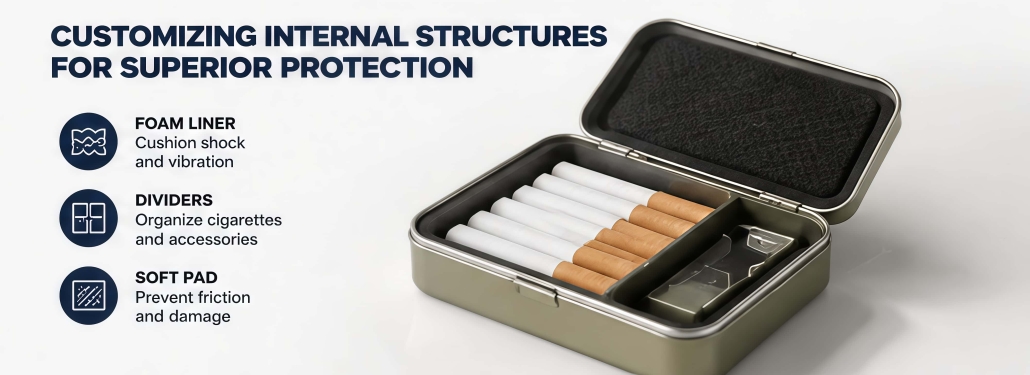
The seal integrity of the cigarette tin case impacts its protective performance. A tight-fitting friction seal or snap-fit ​​inner lip prevents accidental opening during transport. If tamper-evident features are required, designs such as pull tabs, tamper-evident bands, or shrink wrap can be incorporated. For high-end or collectible cigarette tin cases, magnetic closures or precisely engineered nesting lids provide a satisfying user experience. Internal protective components are also crucial. Soft foam padding, protective film, or inner sleeves reduce product movement and minimize wear on the printed surface. If needed, we can add internal ribs or shoulders to secure the product in a precise position, ensuring consistent presentation upon opening.

custom cigarette case tins

Decoration and Printing for Visual Impact

Decoration can transform an ordinary cigarette tin case into a brand ambassador. The most common process for high-quality cigarette tins is offset printing the design onto the tinplate before forming. This process allows for vibrant colors, crisp text, and intricate images. Please ensure design files are high-resolution and provide color references.
When planning brand design, we consider the physical geometry of the cigarette tin case, including the wrap-around design, embossed areas, and the alignment of the lid and base, as these factors affect the placement of the artwork. If you plan to use embossing, we will create separate artwork layers for the raised areas and consider using spot varnishing or hot stamping to highlight these details. Furthermore, for limited-edition or high-end products, combining hot stamping, UV spot varnishing, and embossing techniques can create a premium feel while ensuring reproducible, scalable production of custom cigarette case tins.

Quality Control, Testing, and Compliance

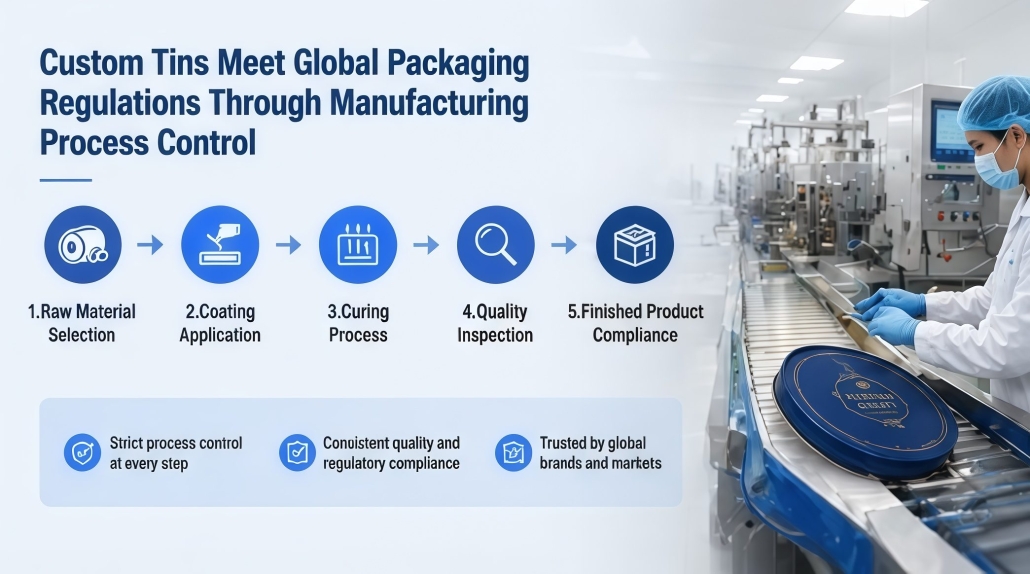
We implement incoming material inspection to check tin plating thickness and coating uniformity, in-process inspection, and final inspection for all types of tin production. Statistical process control (SPC) is used for critical dimensions and decorative tolerances to detect deviations early.

Regulatory compliance is equally important. Depending on the target market, Tsing’s cigarette packaging must comply with labeling regulations, health warnings, child-resistant designs, and specific material restrictions. For example, some regions restrict the sale of flavored tobacco or require standardized packaging elements; your custom cigarette tins must comply with mandatory labeling requirements and not violate any laws.

Delivering Consistent Cigarette Packaging

Our custom cigarette tin service effectively addresses size inconsistencies by combining precise dimensions, material and surface finish selections, clever structural design, accurate decoration, and strict production controls. If you are currently experiencing packaging size inconsistencies, start by recording your existing packaging dimensions and analyzing your target market and regulatory requirements. With this information, we can provide you with an optimized design solution.

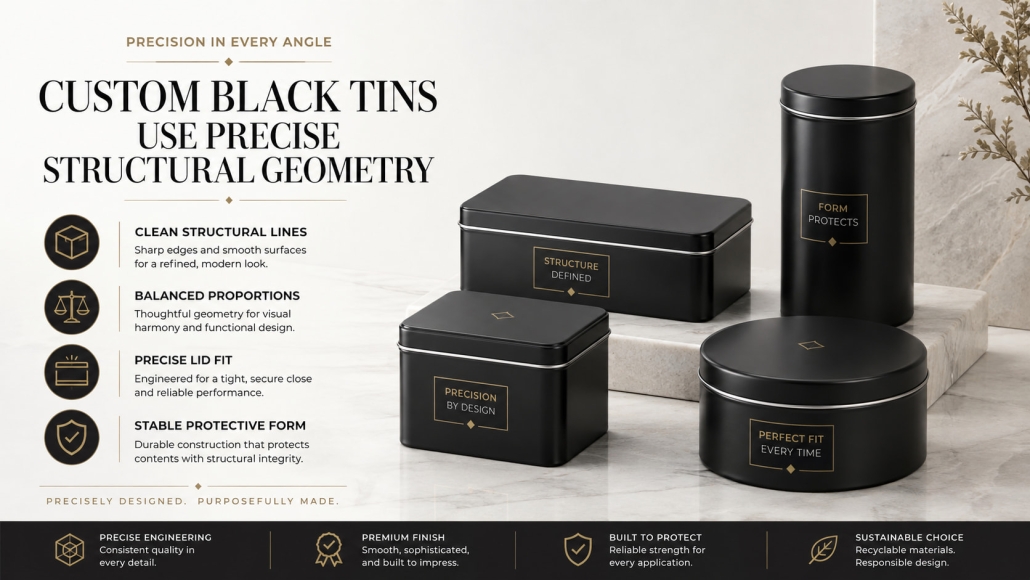
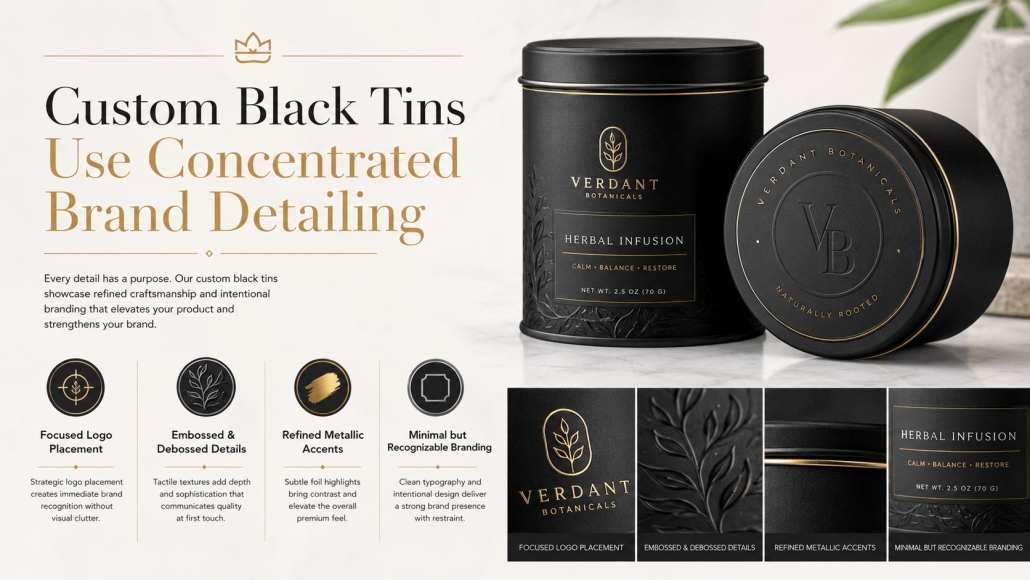
Personalized Black Tins 1-3

Complete Guide to Choosing Personalized Black Tins: Shape, Lid & Food-Grade Safety for Brand Packaging

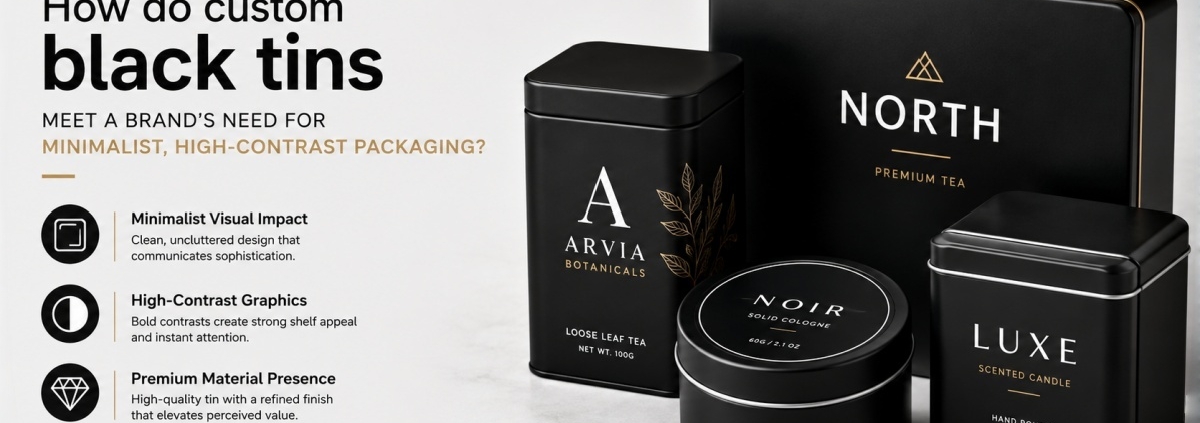
When a customer is browsing the shelves, your product stands alongside dozens of competitors, but one thing makes it stand out: a matte black tin can adorned with a subtle gold brand logo. This small, sophisticated package tells a story—one of luxury, understated elegance, and trust. Choosing the right custom black tin can for your brand is more than just selecting a color and shape. It’s a product decision that impacts shelf appeal and product safety. Therefore, this guide will help you make informed decisions. You’ll receive a step-by-step framework for selecting materials, finishes, lid systems, and compliance pathways. You’ll learn about the differences in personalized black tins for food, candles, cosmetics, and gift packaging.

Materials and Finishes for Personalized Black Tins

The right substrate and finishing process affect print quality, scratch resistance, weight, cost, and recyclability.

Substrates and Specifications:

Tinplate is the industry standard material for most black cans. It’s strong, durable, easy to form, and offers excellent printability. Common wall thicknesses range from 0.18 mm to 0.30 mm. For everyday consumer product cans, a thickness of 0.20 to 0.23 mm is common. Thicker walls offer better resistance to dents but increase cost and shipping weight.

Aluminum is lightweight and corrosion-resistant, making it a good choice if weight is a primary consideration. However, aluminum’s forming properties differ from those of other materials, and its surface texture may not be suitable for printing.

Black Finishes and Their Effects:

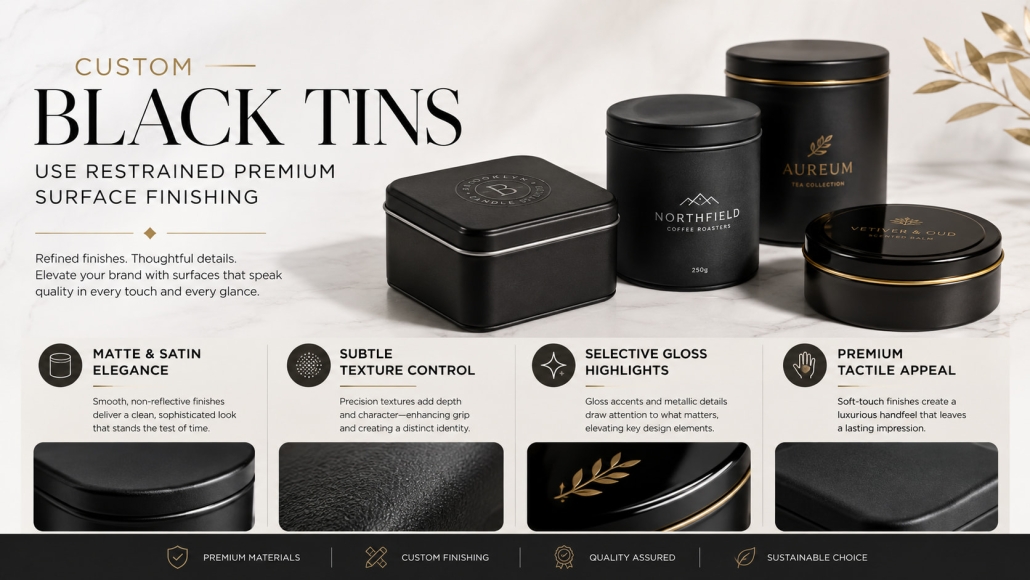
Matte Black (Soft Touch): Very popular in high-end cosmetics and candle tins due to its luxurious feel. The soft-touch coating feels velvety smooth but requires a protective topcoat for enhanced durability.

Satin or Eggshell Black: Less delicate than soft touch; hides fingerprints and smudges well.

Gloss Black: High visual depth and shine; more prone to fingerprints and scratches.

Pearlescent or Metallic Black: Adds a subtle shimmer—suitable for limited editions. Textured Finishes: Hammered or brushed textures can conceal minor wear and add visual interest.

How do the shape and size of personalized black tins affect functionality

How do the shape and size of personalized black tins affect functionality?

The geometric shape of personalized black tins directly impacts filling efficiency, insulation performance, stackability, and visual balance. Shape selection also affects mold costs and lead times.

Common Shapes and Their Uses:

Round tin cans are classic and highly efficient to produce, ideal for single-wick candles, mints, and cosmetics like lip balm. They are easy to stack and generally offer the best mold economics.

Square/rectangular tin boxes have a high-end appearance and maximize shelf space utilization. These shapes are ideal for gift sets, cookie tins, or cosmetic sets, but require more careful consideration of corner radii to avoid grease accumulation or stress points.

Tall, narrow tin cans are suitable for tapered or specialty candles and create a striking shelf display, but may be less stable during transportation.

In terms of the manufacturability of custom black tins, the ratio of can height to diameter affects the can’s rigidity and resistance to denting. Taller black tin cans require thicker walls or internal reinforcement to increase stability. Additionally, the lid clearance and gasket design determine the lid’s fit and sealing quality. A loose lid can lead to fragrance loss, while a tight lid is difficult to open; both situations negatively impact the consumer experience.

How do the shape and size of personalized black tins affect functionality

Choosing a Lid that Protects Aroma, Ensures Safety, and Facilitates Handling

The lid is the interface between the product and the consumer. For personalized black tins, the lid choice affects aroma retention, tamper-evident features, and the unboxing experience.

Main Lid Types:

Press-on (snap-on) lids: Economical and easy to open. Best suited for candles and dry goods. Tolerances must be tightly controlled to avoid looseness.

Friction-fit lids with liners or gaskets: Adding silicone or foam liners improves sealing. Suitable for strongly scented items and some cosmetics.

Threaded lids: Offer superior sealing. While more complex to manufacture, they are ideal for products that require strong barriers and resealability. Hinged Lid: Creates a premium unboxing experience for gift sets; requires additional tools and hinge assembly.

Double-Layer Lid System: An outer decorative lid combined with an inner seal (aluminum foil or plastic) for tamper evidence and extra barrier protection.

Sealing Materials and Food Safety:

Silicone Gasket: Food-grade (FDA-compliant) silicone gaskets offer excellent aroma retention and durability. Please specify the hardness and compression-set requirements.

Foam Liner: Economical yet durable, resistant to damage from repeated opening.

In practical selection, for black tin cans used to hold fragrances or perishable items, prioritize systems with sealing gaskets or induction seals. For frequently opened candles, a balance between sealing and ease of opening is necessary.

Choosing a Lid that Protects Aroma, Ensures Safety, and Facilitates Handling

Food-Grade Safety and Regulatory Requirements: Coatings, Testing, and Compliance

If your customized black tins will contain food—such as tea, spices, or cookies—food-grade safety standards are mandatory. Similarly, cosmetics and lip care products require certified materials.

Internal Coatings and Their Function:

Epoxy Phenolic Coatings: Widely used for food contact; they offer good barrier properties, but some products require migration testing.

Polyester Lacquers: Offer higher chemical resistance.

Polyurethane and Fluoropolymer Coatings: Offer higher chemical resistance for candles rich in essential oils or heavy oil cosmetics, but at a higher cost.

Regulatory standards to meet include:

US FDA (21 CFR): Internal coatings for food contact must comply with FDA food contact regulations. Request a declaration of conformity from your supplier.

European Regulations: EU Regulation No. 10/2011 covers plastic materials and articles; for metal cans, verify compliance with relevant EU food contact directives and national regulations.

RoHS / REACH: Ensure inks and coatings are free of restricted substances.

ISO and HACCP Considerations: For large-scale food production lines, confirm HACCP compatibility and traceability.

Decoration, Branding, and Printing: Creating a Unique Visual Impact

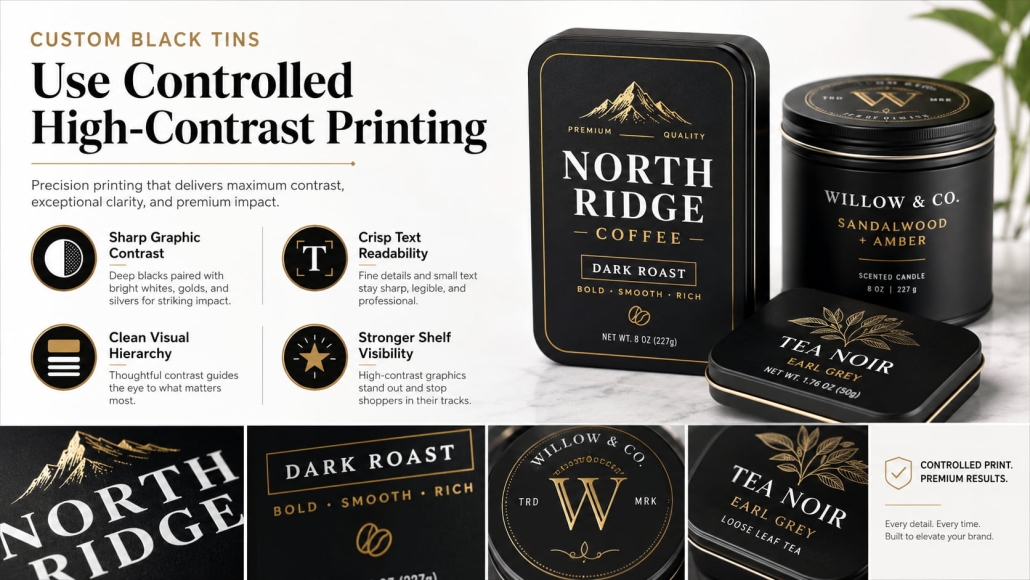
The black surface is aesthetically pleasing but unforgiving of any imperfections. To ensure a consistent brand image across different production batches, strict control over the decoration process and prototyping is essential. For printing effects, offset printing is best suited for high-quality CMYK printing and fine details on cylindrical tin cans. UV digital printing is ideal for small batch printing and variable data. Hot stamping is ideal for adding metallic luster (gold or rose gold) to black surfaces, creating a striking contrast. Embossing/debossing adds a luxurious tactile feel and interacts elegantly with a matte black finish.

Additionally, we adjust our processes for different application scenarios. For frequently handled items, we apply a scratch-resistant topcoat. For gift sets and direct-to-consumer shipping, we test for abrasion resistance, stacking wear, and fingerprint visibility during production.

Packaging that both protects the product and enhances brand image

Custom black tins are not simply a packaging choice, but a systematic decision that integrates multiple elements. From material thickness and black surface treatment to can shape proportions and structural strength, from lid sealing performance to food-grade inner coatings and regulatory compliance, and to the impact of printing and decoration processes on brand recognition, every detail directly affects product safety, consumer experience, and brand credibility. Only by fully understanding the needs of different application scenarios and balancing functionality, aesthetics, and compliance can we create personalized black tins that possess a high-end feel and withstand the test of time and the market.

How to design metal candle tins for gift sets?

Typically, when receiving a gift, you’re attracted not only by the contents but also by the packaging—its appearance, feel, and whether it’s worth keeping. When designing metal candle tins for gift sets, the packaging itself becomes part of the product story. A well-designed candle tin elevates the candle’s perceived value, strengthens brand image, and makes the entire gift set appear more harmonious and high-end. Therefore, this guide will show you how Tsing designs candle tins for gift sets and addresses the practical concerns that candle brands truly care about: how to choose shapes and sizes, which surface treatments and decorative techniques create a festive atmosphere, and how to ensure the candle’s safety and integrity.

Design Concepts for Metal Candle Tins in Gift Sets

Any metal candle tin design should begin with a clear visual strategy. For gift sets—especially seasonal or high-end collections—Tsing uses pearl white paired with gold accents, a classic and versatile combination that is also retail-friendly. Pearl white conveys a sense of purity and flawlessness; gold accents convey a sense of luxury and celebration. This is ideal for candles, cosmetics, and other carefully selected gift set products.

Design Concepts and Techniques:

Using pearl white as the main color makes multiple tins look more stable and unified. The pearl white surface has a subtle sheen, is more photogenic than pure white, and feels more luxurious to the touch.

Clever use of gold elements: hot-stamped logos, thin line borders, lid edges, and embossed badges. Too much gold can look gaudy; moderate use creates a sense of luxury.
For limited editions, use gold finishes to indicate different tiers within the same series.

Combine different finishes to create rich layers; a soft-touch pearl white body paired with a high-gloss or metallic gold lid band creates a multi-layered tactile experience.

candle tins for gift sets 1

Functional Design of Metal Candle Tins for Gift Sets

While a beautiful tin is important, practicality is equally essential. The performance of a candle depends on the tin’s geometry, wall thickness, lid design, and internal compatibility with the wax and wick. When designing metal candle tins, we consider their aesthetic appeal within the gift set while ensuring stable, safe candle performance. Key Dimensions and Shape Considerations:

Common Diameters: Single-wick container candles are typically 70–90 mm; multi-wick or larger candles are 100–120 mm or larger. Common heights are 30–70 mm, depending on the wax volume.

Geometric Shape: Straight-sided tin cans are easy to decorate and stack. A slightly rounded shoulder design gives the candle a more premium feel when held. For nested gift sets, we use candle tins with gradually increasing diameters for neat stacking.

Wall Thickness: The typical wall thickness range for tinplate candle tins is 0.23 mm to 0.30 mm. Thicker walls provide greater resistance to dents and a better overall appearance.

Lid and Closure Functionality:

For candles with high fragrance requirements or higher value, consider using silicone sealing rings or foam-lined inner lids. If choosing silicone sealing rings, we use food-grade, heat-resistant materials that are compatible with essential oils. Additionally, we use interior coatings that resist oily fragrances and essential oils to prevent coating degradation and metal staining.
Metal Candle Tins 2

Printing, Hot Stamping, Embossing, and Tactile Effects

In gift sets, the decorative options on metal candle tins are crucial for conveying brand and seasonal messages. Pearl white paired with gold accents works best when cleverly combined with printing and surface-finishing techniques.

Tsing’s Main Decorative Effects:

Offset Printing – Ideal for printing full-color patterns on flat or slightly curved tin can surfaces. Can be used for photographic or complex gradient patterns on the can body.

Hot Stamping – A classic choice for gold accents, logos, and limited edition serial numbers. Hot-stamping foil works exceptionally well on a pearl-white base, creating a luxurious golden sheen.

Embossing/Debossing – Adds tactile depth to brand logos or decorations. Shallow embossing combined with hot stamping can enhance perceived product value.

Soft-Touch Coating – A velvety surface paired with metallic edges gives a premium feel, but requires a protective topcoat to prevent wear during handling and retail. In our designs, if text effects are required, we maintain high contrast between the text and the background. Even with a pearlescent white background, we ensure clarity in retail environments. For tin cans that are frequently handled, stacked, or used for gift display and transportation, we use a wear-resistant topcoat. Applying a matte protective varnish over the pearlescent white base coat helps maintain the paint’s luster. This results in candle tins that are both visually striking and practical and durable.

Printing, Hot Stamping, Embossing, and Tactile Effects

Ensuring Varnish, Coating, and Fragrance Compatibility

The internal chemical properties of metal candle tins are just as important as their external aesthetics. Candle wax, fragrance oils, and essential oils can react with coatings and the metal substrate. Therefore, when designing candle tins for gift sets, we apply special internal treatments to prevent substance migration, corrosion, or changes in fragrance.

For coatings, we typically use food-grade epoxy phenolic varnish. This is a standard coating for many tin cans; it protects the metal from acidic or oily substances. Alternatively, polyester-based varnishes offer good chemical resistance and better temperature resistance, suitable for waxes with higher melting points. Additionally, the inner coating and sealing gasket affect how well the fragrance is retained during storage. For gift sets, sealed tins with silicone liners and a pearlescent white/foil finish can preserve the fragrance until the box is opened.

Beautiful and Practical for Gift Sets

Designing metal candle tins for gift sets is both an aesthetic challenge and an engineering design task. A pearlescent white body with gold accents is a tried-and-tested design language for holiday and high-end product lines. Tsing combines the shape and thickness of the candle tin body, the compatibility of the inner coating, the lid-sealing method, the decorative process, and the candle tins nesting in the gift box to create candle tins that are both beautiful and practical.

Common FAQs when ordering:

1. Why choose a pearlescent white candle tin gift box with gold accents?
A1: Pearlescent white is a high-end neutral color that photographs well and perfectly complements a variety of brand images. Gold accents enhance visual value and create a festive atmosphere. Combined, these elements create a timeless and elegant look, perfect for gifting and appealing to a wide range of people.

2. Do candle tins in gift boxes require silicone sealing rings?
A2: If fragrance retention and odor control during transportation are primary concerns, a silicone sealing ring or liner is recommended. For regular candles with moderate fragrance concentration, a tight-fitting snap-on lid with a suitable varnish is sufficient. Be sure to conduct compatibility testing between the wax and fragrance first.

3. What are the typical lead time and minimum order quantity for custom candle tins?
A3: Our minimum order quantity is 3000 pieces, and the typical lead time is approximately 45 days. Complex molds or surface treatment processes may extend the lead time.

Custom Tin Box 1-3

Multi-Purpose Custom Tin Box: Versatile for Food/Candles/Cosmetics & Gift Sets

Consumers pick up an item from a retail shelf. What makes them stop? Often, it’s the tactile feel of the beautiful packaging, its substantial weight, or a clever design that suggests reusability. Packaging is more than just protection; it’s a promise. A well-designed custom tin box can protect fragile products, convey brand value, enhance perceived value, reduce returns, and encourage repeat purchases. This is especially true for food, candles, cosmetics, and gift sets, where the packaging itself becomes part of the product experience.

Material Selection and Safety for Custom Tin Box

When choosing a custom tin box specifically for food, safety and compliance are paramount. Food-grade tin boxes require appropriate coatings, compatible inks, and sealing methods to preserve food flavor, extend shelf life, and prevent chemical migration.

Start with the substrate. TSING’s food-grade tin cans are made of tinplate because of its corrosion resistance, high mechanical strength, and excellent printability. Secondly, the coating is crucial. The inner coating used for food contact must be food-safety certified (compliant with FDA/EFSA standards) and compatible with the product’s acidity and oil content, for acidic foods such as jams, coatings with high barrier properties, and migration limit testing are essential. If your product contains fragrances or oils, long-term aroma retention and potential discoloration must be evaluated.

Additionally, the choice of printing and inks is also crucial. For areas that may come into contact with the product (e.g., the inner lid surface), we use food-grade inks or contact-resistant gaskets. Furthermore, we use silicone sealing rings, pressure caps, or integrated gaskets to slow oxidation and moisture penetration.

Food-grade tinplate material


Design and Construction Selection of a Custom Tin Box for Candles and Cosmetics

Candles and cosmetics present different mechanical and thermal challenges for custom tin boxes. Candles generate heat and may drip; cosmetics may be light-sensitive and require precise measurement. Design choices should reflect these nuances.

For candles, heat resistance and stability are paramount. Therefore, we use tin cans with sturdy lids and, where necessary, double-walled structures to reduce heat loss. Cosmetics require high-dimensional accuracy and aesthetic appeal. Lipstick jars and small face cream jars typically require airtight lids to prevent leakage and contamination. For face creams and serums, we provide linings or sensor-sealed containers to maintain hygiene.

For stackable or bulk-shipped gift sets, structural reinforcement is crucial. During production, we reinforce the edges of the base and lid to prevent dents during transport. Additionally, we use embossing techniques to enhance the luxurious feel. For cosmetics, we incorporate comfortable surface treatments, such as soft-touch coatings, to improve the product’s premium texture, while still requiring a durable finish to ensure longevity.

Custom candle tins

Value-Enhancing Printing, Branding, and Surface Finishing Techniques

Custom tin boxes become brand ambassadors through printing and surface finishing. The perfect combination of printing processes, inks, surface finishes, and decorations can transform a simple tin box into a high-end product or an affordable mass-market packaging box.

You can choose the printing method based on the desired level of detail:

  • Offset printing is ideal for producing clear CMYK images and high-volume printing. It delivers consistent colors and fine details, making it perfect for printing photographic images on custom tin cans.
  • Gravure printing delivers deep, saturated colors, making it ideal for high-volume production.
  • UV digital printing enables rapid turnaround and limited-edition variable data printing.
  • Pad printing is suitable for small logos or components with curved surfaces.

Surface treatments and tactile finishes can enhance the perceived value of a product:

  • Embossing/gravure processes can increase depth and tactile contrast.
  • Soft-touch coatings offer a velvety texture and modern aesthetic, but may attract fingerprints; oleophobic topcoats can be used if needed.
  • In general, choosing a printing technology that matches the print volume and design complexity, strategically using tactile finishes, demanding durable topcoats, and insisting on proofs that match the substrate are crucial.

Custom printed cans

Sealing Mechanisms, Silicone Gaskets, and Barrier Properties

A high-performance custom tin box must balance practicality with excellent barrier properties. Whether it’s extending the shelf life of coffee, preventing candle scent loss, or maintaining the purity of creams, the lid system and sealing strategy are critical.

Common Sealing Methods Used by TSING:

Simple friction-fit lids are economical and easy to use. They are suitable for many dry goods and candles, provided the seal is adequate.

Silicone gaskets significantly improve sealing. Whether molded onto the lid or installed as an insert, silicone effectively blocks oxygen and moisture. This is an ideal solution for food and reusable containers.

Induction seals increase tamper-evident properties and provide strong barrier performance—suitable for situations where product freshness and consumer safety are critical.

Double-lid systems (an inner liner and an outer decorative lid) are common in coffee cans, preserving aroma while maintaining an aesthetically pleasing appearance.

Cost, Molds, and the Economics of Multi-Purpose Production

Understanding cost drivers when choosing custom tin cans helps you plan inventory units, set product prices, and negotiate effectively.

Key cost drivers include:

Molds: Embossing, special shapes, and custom lids all require molds. One-time mold costs can be amortized over long-term production but increase unit costs in the short term.

Printing Complexity: More colors, special inks, and effects (hot stamping, metallic colors) increase plate-making and material costs. Spot varnishing increases the cost of specific products.

Surface Finishes and Coatings: Soft-touch coatings, UV varnishes, and premium lacquers are more expensive but add perceived value.

Material Thickness and Shape Complexity: Thicker materials and complex shapes (hinged lids, one-piece handles) require more materials and labor.

Assembly and Attachments: Gaskets, liners, and inserts increase bill of materials costs and assembly time.

Choose Custom Packaging for Your Products

Custom tin boxes are more than just containers; they are functional elements of product design, critical touchpoints with customers, and an extension of your brand promise. For food, candles, cosmetics, and gift sets, tin box packaging offers durability, an elegant look, and reusability. We carefully select materials, finishes, and seals to create customized packaging for your products.

Metal Tins 5-9(1)

Metal Tins with vs Without Silicone Seals: Product Shelf Life Comparison

Imagine a matte black metal tin, printed with a crisp brand logo, its lid closing with a satisfying “click,” perfectly preserving the aroma for the next brew. Now imagine the same metal tin after a quarter of transportation and shelf display—the brand logo is still intact, but the aroma has dissipated, and the coffee is no longer fresh. In packaging, the difference between these two outcomes often comes down to the seal. A small silicone ring can transform packaging from merely adequate to truly effective in preserving freshness. Therefore, we’ll explain the practical impact of silicone sealing rings on metal tins, showing you how they affect product shelf life, performance, manufacturability, and cost.

The Difference Between Metal Tins With and Without Silicone Sealing Rings

When evaluating metal tins, the presence or absence of a silicone sealing ring changes three key attributes: physical closure behavior, barrier performance at the lid interface, and consumer experience.

First, let’s look at the physical seal. Ordinary press-fit lids rely primarily on mechanical interference between the lid edge and the can body for sealing. Initially, this seal feels very tight, but small variations in manufacturing tolerances, lid deformation, or repeated opening and closing can reduce sealing effectiveness. In contrast, metal tins with silicone sealing rings compress to fill tiny gaps and maintain a tight fit through repeated cycles. This results in a more uniform and stable sealing force and a lower likelihood of air ingress over time.

Secondly, there’s barrier performance. The barrier performance of metal tins without a compressible seal depends on the quality of the metal flange and the precision of the can lid. With proper storage and handling, these tins can be suitable for dry goods. However, for products that require strict odor retention or protection against moisture ingress, a silicone sealing ring effectively reduces air convection at the lid seam, thereby improving barrier performance.

The Difference Between Metal Tins With and Without Silicone Sealing Rings

How Does the Seal of Metal Tins Affect Product Stability?

The shelf life of products packaged in metal tins depends on a variety of interacting factors: oxygen ingress, moisture exchange, light exposure, headspace chemistry, and the product’s own oxidation kinetics. Silicone seals most directly impact two variables: oxygen/moisture ingress at the can lid and the stability of the headspace after filling.

Oxygen and Moisture Ingress: While tin cans offer excellent barrier properties against gases and moisture, the lid seam is a common weak point. Even tiny air channels in the lid can lead to slow oxygen ingress. For products like roasted coffee, which contain volatile aroma compounds and are sensitive to oxygen, even small amounts of continuous oxygen ingress can shorten shelf life.

Headspace and Degassing: Some products, especially coffee or tea, degas after roasting. This degassing can cause micropores to open momentarily; the elasticity of the silicone seal can accommodate slight changes in internal pressure during early storage, reducing cyclical exchange with ambient air. Similarly, for products containing hygroscopic ingredients, reducing repeated exposure to humid air slows moisture absorption, thus reducing the risk of clumping or microbial growth.

In practice, for products sensitive to aroma and humidity, using metal tins with appropriate silicone seals can often extend their effective shelf life.

Silicone Seal Materials, Design, and Food Safety

Not all silicone seals are created equal. When evaluating metal tins with silicone seals, consider the material grade, geometry, installation method, and compliance with relevant regulations.

Material Properties: Food-grade silicone is the standard material for consumables. It is typically platinum- or peroxide-cured room-temperature vulcanizing (RTV) or high-consistency rubber (HCR/LSR) silicone, formulated to comply with US Food and Drug Administration (FDA) and European Union food contact regulations. Key performance characteristics to consider include hardness, compression set, and thermal stability. Softer hardness improves conformability but may wear faster; harder materials maintain their shape better but may not conform tightly to rough surfaces.

Seal Geometry and Placement:

Insert Ring: A molded silicone ring that is inserted into a groove in the lid. This design is common and, in some styles, allows for easy replacement.

Overmolded Seal: During assembly, manufacturers mold the silicone directly onto the metal lid, creating a seamless connection and minimizing assembly steps. Integrated Lip Seal: Designers integrate a thin silicone lip into the lid edge, providing a secure seal while minimizing visual impact on low-profile lids.

Installation and Durability: Inserted seals can sometimes detach if they lack a securing mechanism; overmolded seals are securely bonded but require dedicated molds. Consider the expected number of openings and closings – consumer product tins may undergo dozens of cycles, so silicone with low compression set and good abrasion resistance should be chosen.

Regulations and Food Safety: For food products, manufacturers require relevant certifications, including compliance with U.S. Food and Drug Administration (FDA) 21 CFR food contact requirements, and ideally also meet EU 10/2011 or equivalent standards.

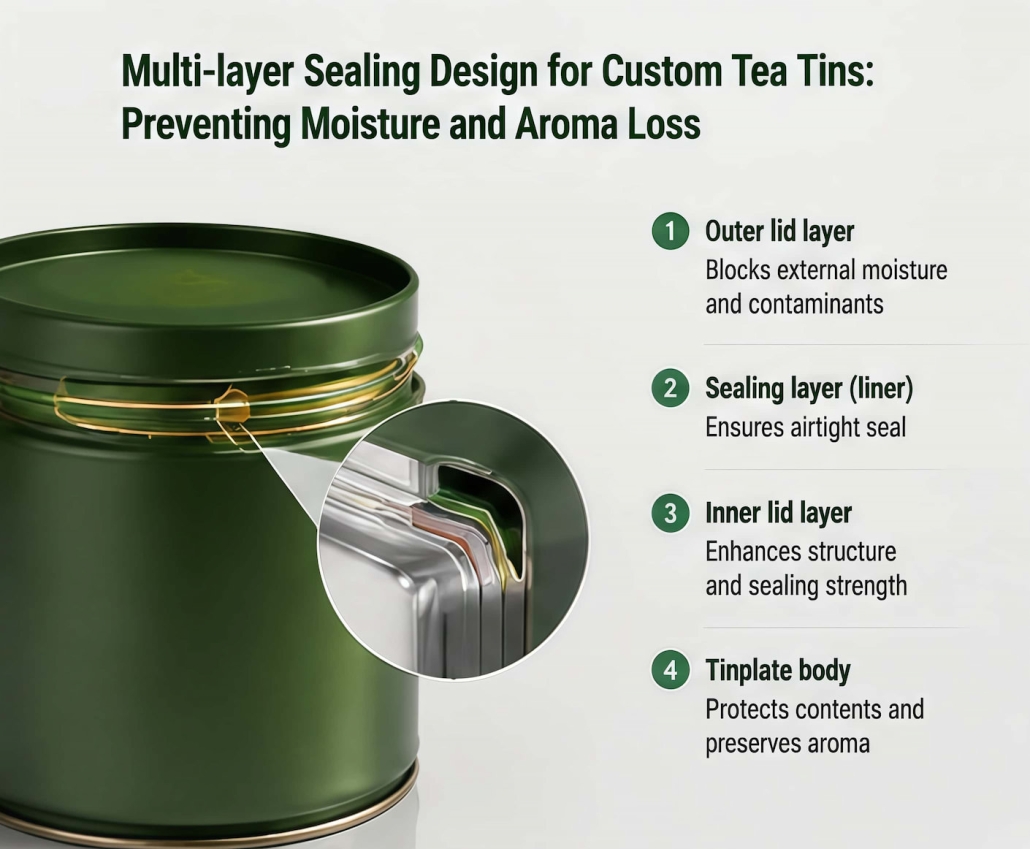
Silicone Sealing Rings

Which Products Need Silicone Seals, and Which Don’t?

Whether to add a silicone seal to a metal tin depends primarily on product sensitivity and brand positioning.

The following products benefit from silicone seals in metal tins:

Coffee Beans: Aroma is crucial. Silicone seals reduce contact between coffee and oxygen, helping to preserve volatile aroma compounds and extend freshness. The seal also aids in the degassing process during the first few days after packaging.

Specialty Teas and Fine Spices: Volatile aromas and moisture sensitivity make sealing essential to prevent flavor loss and clumping.

High-Value Cosmetics and Fragrances: Essential oils and perfumes benefit from improved headspace stability and reduced odor transfer to adjacent products.

The following products do not require them:

Non-perishable dry goods (hardware, small parts): The need for sealing to preserve aroma or moisture is low; a standard press-fit metal tin may suffice.

Bulk, low-cost promotions: If cost control is the primary factor and product sensitivity is low, the seal may not justify the expense.

Before specifying silicone seals for metal tins, evaluate product sensitivity (hygroscopicity, volatility) and brand positioning.

Which Products Need Silicone Seals, and Which Don't

Balancing Shelf Life, Experience, and Practicality

Silicone seals significantly improve the sealing performance of metal tin lids, making them a valuable investment for products sensitive to aroma or moisture. Sealing rings effectively reduce oxygen and moisture ingress at critical failure points, stabilize the container’s internal environment, and enhance consumer perception through tactile feedback. However, they also increase complexity in manufacturing, supply chain management, and disposal costs.

The choice between metal tins with or without silicone sealing rings should depend on the product characteristics: for coffee, specialty foods, and high-value aromatic products, tin cans with sealing rings should be prioritized; while for products that do not require high levels of airtightness, well-designed standard metal tins can usually provide satisfactory performance at a lower cost.

wholesale tin can manufacturer 1-2

Wholesale tin can manufacturer: Customization capabilities with over 2500 molds

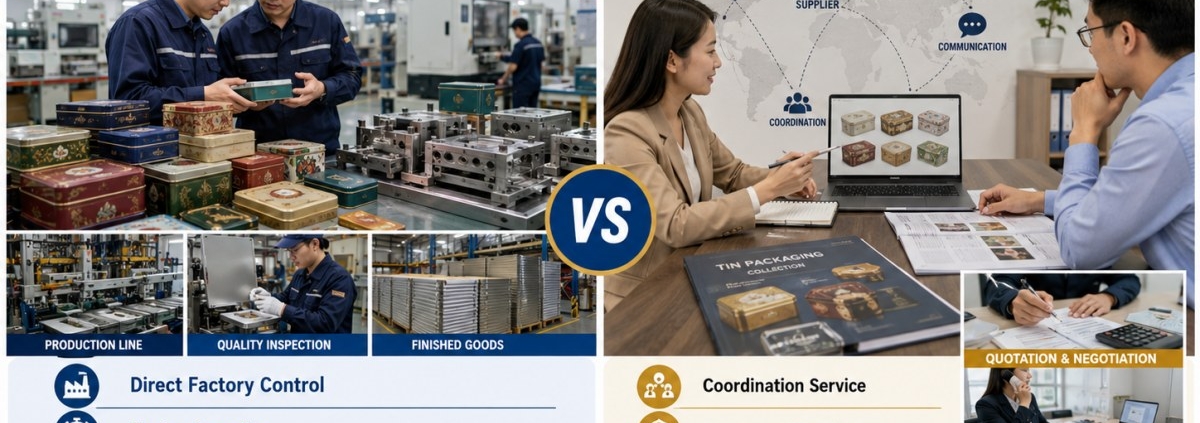
In any industry, time-to-market and design flexibility directly translate into sales opportunities. Therefore, the size and diversity of a supplier’s mold library are critical strategic factors when choosing a wholesale tin can manufacturer. A large mold inventory can shorten lead times, reduce upfront tooling costs, and expand the range of shapes and sizes available for branding and retail. Tsing, a wholesale tin can manufacturer with a deep history in moldmaking, boasts over 2,500 existing molds. Therefore, we will help buyers evaluate tin can manufacturers and understand why mold capacity is so important.

The Importance of a Wholesale Tin Can Manufacturer Having 2500 Mold Production Capabilities

When a wholesale tin can manufacturer claims to have “2500 molds,” it represents years of accumulated design expertise in diameters, heights, lid styles, surface finishes, embossing patterns, and specialized closures. For buyers needing wholesale tin cans, this extensive selection shortens the cycle from concept to production.

Specifically, a large mold library means that the diameter/height combination you need is likely already available, saving time and cost on new mold manufacturing. At the same time, existing moulds often include multiple variations (straight walls, tapered walls, rounded corners, custom lids), providing multiple options for the same SKU. It also leads to faster sample production. With in-house moulds, rapid prototyping becomes easier, and obtaining physical samples for approval takes days rather than months. Additionally, a large mould library enables multiple production lines to run simultaneously for high-volume production, which is very useful for large tin can orders.

Wholesale Tin Can Manufacturer Having 2500 Mold Production Capabilities

How Does a Large Mold Library Accelerate Custom Design?

Most brands want standardization while also incorporating some minor customization: for example, different lids, embossing patterns, or modified heights. A tin can wholesale manufacturer with over 2,500 moulds can facilitate incremental customisation, saving time and costs. As a tin can manufacturer, we can start with the closest existing mold and customize only key elements such as logo embossing, edge details, or internal coatings, significantly shortening lead times. It’s also possible to use a standard can body mold with a custom lid mold, achieving a unique look without incurring the full cost of a complete mold set. Additionally, companies with a large number of molds typically standardize their stamping dies to allow for easy replacement of decorative panels and embossing dies. Tsing, as a manufacturer with this capability, can fully leverage these advantages while also documenting your required tolerances and expected visual effects.

Custom Design 1

Wholesale Tin Can Manufacturer Guaranteeing Mold Quality and Maintenance Capabilities

A large mold inventory is only effective if the wholesale tin can manufacturer maintains high standards of mold maintenance. A high-volume mold library requires rigorous maintenance and quality control to ensure consistent quality of wholesale tin cans across different batches and time periods.

Molds are precision-machined parts, and it’s crucial to confirm that the tin can manufacturer performs cleaning, polishing, wear checks, and part replacements according to a defined schedule. Furthermore, proper storage and temperature/humidity control are essential, as corrosion is an invisible killer. Proper storage extends mold lifespan and prevents unexpected refurbishment delays. Each mold should also have a traceable usage history, including cycle counts, last maintenance date, previous jobs, and any modification records. This history helps predict refurbishment needs and prevent unexpected issues. Suppliers with robust maintenance processes reduce production risks for high-volume buyers.

Wholesale Tin Can Manufacturer Guaranteeing Mold Quality and Maintenance Capabilities

Production Capacity and Production Line Redundancy

Having 2500 sets of molds is only part of the capacity; translating these molds into timely, high-volume tin can orders requires sufficient production lines, rigorous production planning, and redundant backups. A reliable wholesale tin can manufacturer combines mold depth with production efficiency.

Production Capacity Metrics to Verify:

Number of Production Lines and Shift Patterns: How many tin mold forming and decorating production lines are currently running? What are the shift patterns? More production lines and shifts mean faster completion of large orders.

Parallel Mold Production Capability: Can the supplier run the same mold on multiple stamping machines? Parallel production shortens production cycles for high-volume SKUs and reduces the risk of single-stamping-machine failures.

Capacity Modeling: Ask the supplier to compare your projected orders with their weekly output per mold.

Contingency Plans: Does the supplier have backup molds, extra production lines, or partner workshops to handle unexpected surges in demand or production line downtime? Tsing’s model – integrating over 2,500 moulds across multiple production lines – can translate customised requirements into mass production.

How Mold Diversity Helps Brand Differentiation

Packaging is both practical and promotional. A wholesale tin can manufacturer with over 2500 molds is your design partner: the more shapes and lid styles available, the more distinctive your product will be on the shelves. Mold diversity enables unique tin can profiles, including non-standard oval, heart, and rectangular shapes. Additionally, different lid and body molds enable deep or creative shallow embossing, telling a brand story in a tactile way – an important high-end cue for coffee, confectionery, and cosmetics. Meanwhile, mold variations include airtight edges, internal seals, sliding lids, and stackable geometries, each of which meets specific market needs.

Choosing a Manufacturer with Extensive Tin Can Mold Capabilities

A partner’s mold inventory is more than just a number; it’s a capability – directly impacting your costs, speed, and market differentiation. Choosing a wholesale tin can manufacturer with a vast mould library (such as Tsing, with over 2500 molds) can shorten time-to-market, reduce initial tooling costs, and provide design flexibility.

Bulk Tin Cans Supplier 1-2(1)

How to Verify Production Capacity of a Bulk Tin Cans Supplier?

When ordering bulk tin cans, in addition to the quality of the cans themselves, it’s crucial to ensure the supplier can meet your required quantity and quality within the specified timeframe. A reliable bulk tin can supplier is more than just a source of cans; they are a partner in your supply chain, ensuring efficient and consistent product packaging. So, how can you determine if your tin can supplier can genuinely meet the demands of large-scale orders? You can assess them from monthly output and production line capacity to quality control and delivery cycles. We’ll also tell you what capabilities a suitable bulk tin can supplier should possess.

The Importance of Bulk Tin Can Supplier Production Capacity

When ordering bulk tin cans, a supplier’s production capacity directly impacts the timeliness, cost-effectiveness, and quality of your order. Insufficient production capacity leads to delays, decreased tin can quality, and ultimately disrupts your supply chain. Therefore, verifying a bulk tin can supplier’s production capacity is not just a precaution; it is essential.

Why is capacity so important? First, to ensure large-volume demand, suppliers with limited capacity may struggle to meet the needs of large orders. Suppliers with strong capacity, on the other hand, can easily handle large orders, ensuring you don’t encounter stockouts or delays. Secondly, it can shorten delivery time. Suppliers with higher production capacity can shorten delivery times, ensuring on-time delivery of your orders even during peak demand periods. Thirdly, it can provide consistent product quality. Larger, well-equipped suppliers are more likely to maintain consistent production quality, which is crucial for bulk tin can orders.

The Importance of Bulk Tin Can Supplier Production Capacity

How to Assess the Production Capacity of a Bulk Tin Can Supplier?

One key indicator of bulk tin cans supplier’s production capacity is monthly output. For example, Tsing’s monthly output is 8 million cans, reflecting its ability to handle large orders without compromising quality or delivery time. However, how do you verify this output and determine if it meets your needs?

How to Verify Monthly Output:

Request Production Data: Request historical production data from your tin can supplier for the past 6-12 months. This will help you understand their actual capacity, production fluctuations, and their ability to handle large orders consistently.

Production Planning: Suppliers should provide detailed production plans, outlining their monthly output and delivery schedules. This helps you understand whether they can meet your order deadlines.

Large Order Records: Inquire about the supplier’s past successful large orders. This demonstrates their ability to meet your needs based on past performance.

On-site Visit or Audit: If possible, arrange a visit to the supplier’s production facility. This will allow you to observe their equipment and staff, providing a better understanding of their actual production capacity.

By verifying the monthly output of bulk tin can suppliers, you can ensure they have sufficient capacity to meet your needs without delays or quality issues.

How to Assess the Production Capacity of a Bulk Tin Can Supplier

Assessing the Supplier’s Production Capacity

The number of production lines operated by the bulk tin cans supplier is crucial to their ability to fulfill large-volume orders. Suppliers with more production lines are generally better able to handle large-volume orders and maintain consistent product quality.

Multiple production lines mean greater production flexibility, as suppliers can allocate lines to different types of tin cans or production schedules, ensuring you don’t experience delays or interruptions. Furthermore, when multiple production lines are operating simultaneously, suppliers can minimize downtime risk. If one production line experiences a problem, others can continue production, ensuring your order is unaffected. Simultaneously, faster turnaround times are possible; more production lines increase capacity, enabling more rapid completion of large-volume orders. Tsing, as a bulk tin can supplier, typically offers faster lead times and can meet tight deadlines by having suppliers with 8 or more production lines.

Assessing the Supplier's Production Capacity

Ensuring Production Lines Equipped to Meet High-Volume Production Needs

While the number of production lines is important, the actual equipment used on those lines is equally crucial. Advanced, well-maintained machinery is essential for efficient, stable production of bulk tin cans. Therefore, when selecting a bulk tin can supplier, please inquire about the machinery specifications used in their production lines. First and foremost is automation capability; automated machinery in the workshop helps improve production efficiency and accuracy. These automation systems reduce the risk of errors, speed up production, and ensure consistent quality.

Additionally, inquire about each machine’s capacity and how many tin cans it can produce per hour or per day. This helps determine how quickly a supplier can meet the demands of large orders. Tsing, as a professional tin can manufacturer, possesses a Japanese Fuji P453 tinplate printing machine and fully automated production lines, ensuring high efficiency and high-quality products.

Ensuring Consistency in Bulk Tin Can Production

Consistent quality is paramount for any large-volume tin can order. High production volume should not come at the expense of quality. A large-volume tin can supplier with a robust quality control system will ensure that every can produced meets your standards.

How to verify a tin can supplier’s quality control:

Request quality certifications: Request certifications such as ISO 9001 to demonstrate the supplier’s commitment to maintaining high-quality standards throughout the production process.

Understand the testing process: Inquire about the supplier’s testing procedures for each batch of bulk tin cans. This includes checking for consistency in dimensions, surface finish, and overall can quality.

Inspect product samples: Request samples from previous orders from the supplier to assess the quality of the cans. This helps you determine if the supplier meets your specific requirements.

Confirm that the bulk tin can supplier has a robust quality control system to ensure that your bulk tin can orders meet the necessary standards in terms of performance and appearance.

Verify the tin can supplier’s production capacity

Verifying the bulk tin can supplier’s production capacity is crucial, as it ensures that your bulk tin can orders meet both quality and quantity requirements. By evaluating a supplier’s monthly output, number of production lines in operation, machine performance, and quality control measures, you can ensure your orders are completed efficiently and with high quality. Choosing a mature supplier like Tsing, with a monthly capacity of up to 8 million cans and more than 8 production lines, provides the reliability and scalability your business needs.