
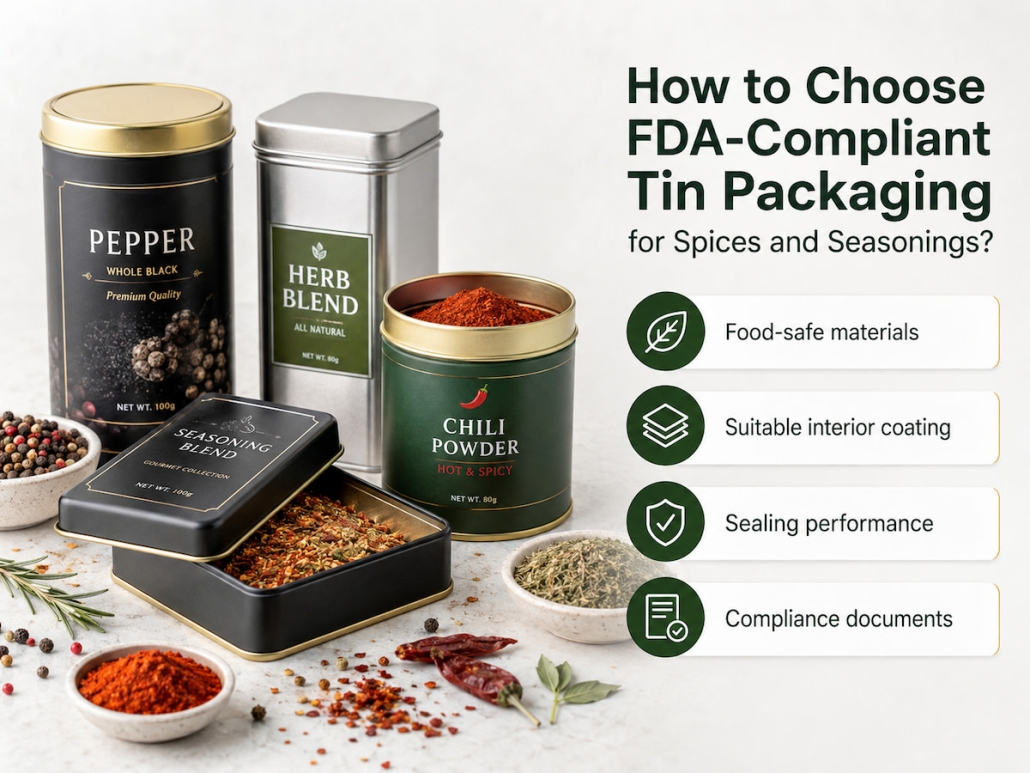
How to Choose FDA-Compliant Tin Packaging for Spices and Seasonings?
When it comes to spices and seasonings, choosing a metal container isn’t as simple as picking an aesthetically pleasing shape and slapping on a “food-grade” label. Products such as chili powder, paprika, turmeric powder, and mixed herbs vary significantly in oil content, moisture sensitivity, aroma intensity, and storage requirements. Therefore, when selecting FDA-compliant tin packaging, evaluate five key areas: food-contact materials, internal coating compatibility, sealing performance, production controls, and compliance documentation.
The FDA regulates food contact substances through various mechanisms, including applicable provisions of Title 21 of the Code of Federal Regulations (21 CFR) and effective “Food Contact Substance Notifications” (FCNs). For buyers of spice jars (including custom spice tins), this means that compliance must always align with the actual materials and intended use.
FDA-Compliant Tin Packaging: Starting with Food Contact
The primary question should not be: “Is this jar food-grade?”
Rather, it should be: “What product will come into contact with the interior of the jar? And what are the storage conditions?”
Different spices have different packaging requirements.
| Product | Main Packaging Concern |
| Dried herbs | Moisture and aroma protection |
| Chili or paprika powder | Pigments, aroma, and possible oil content |
| Curry blends | Multiple volatile and oil-containing ingredients |
| Salt-based seasoning | Moisture pickup and possible corrosion concerns |
| Whole spices | Aroma protection and physical containment |
Dry spice blends and oil-based seasoning powders should not use the same inner coating specifications.
The steel body of tin packaging provides strength and protection from light, but the coating on the food-contact surface is often the actual interface between the food and the metal. Therefore, TSING first verifies the following information:
- Product ingredients
- Powdered or whole form
- Oil content
- Salt content
- Expected shelf life
- Filling conditions
- Storage environment
This information helps determine the appropriate interior coating.
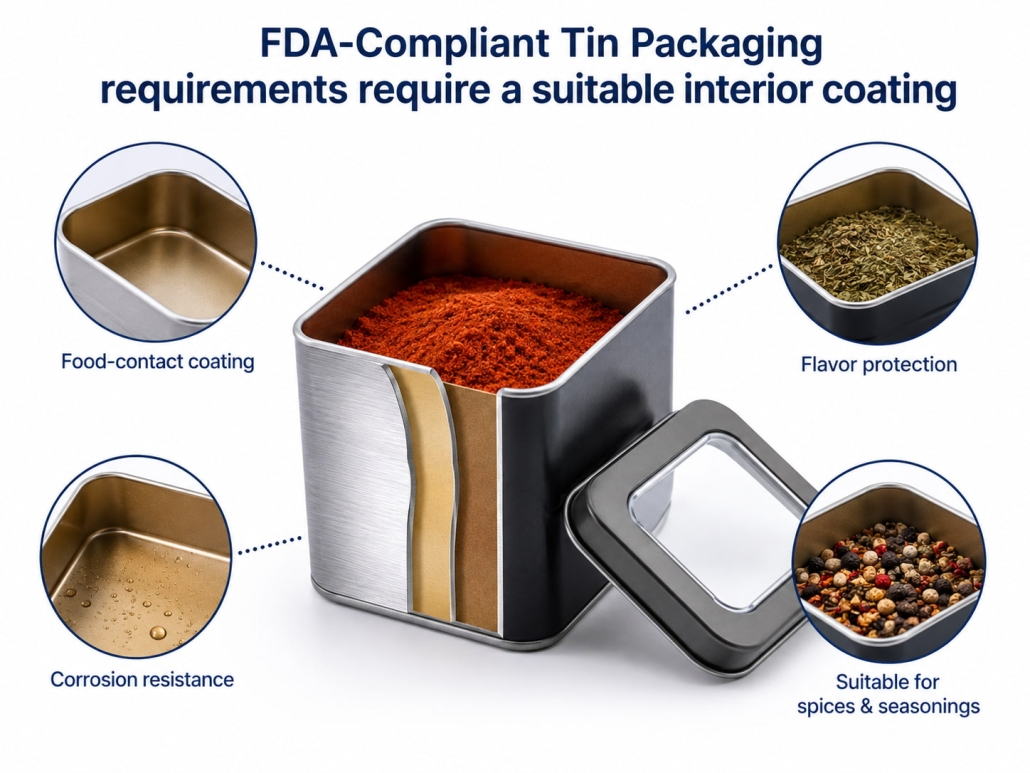
FDA-Compliant Tin Packaging requirements require a suitable interior coating
For many spice tins, the most critical decision for food-contact safety is selecting the interior coating.
Resin and polymer coatings used on metal food contact articles may fall under the regulatory scope of 21 CFR § 175.300, depending on their formulation and intended use. The FDA’s List of Food Contact Substances also includes coating materials for metal substrates specifically intended for certain food types and usage conditions.
Therefore, manufacturers should not select an interior coating simply because it is generically labeled as “food-safe.” Instead, purchasers should request confirmation that the coating system suits the specific seasoning product and intended conditions of use. For example, factors such as resistance to seasoning oils,
salt resistance, adhesion to tinplate, and uniformity of coverage may need to be considered when selecting a coating:
The coating should form a continuous, stable barrier after curing. Scratches, areas with incomplete coverage, or poorly cured sections may compromise the protection provided by the inner surface.
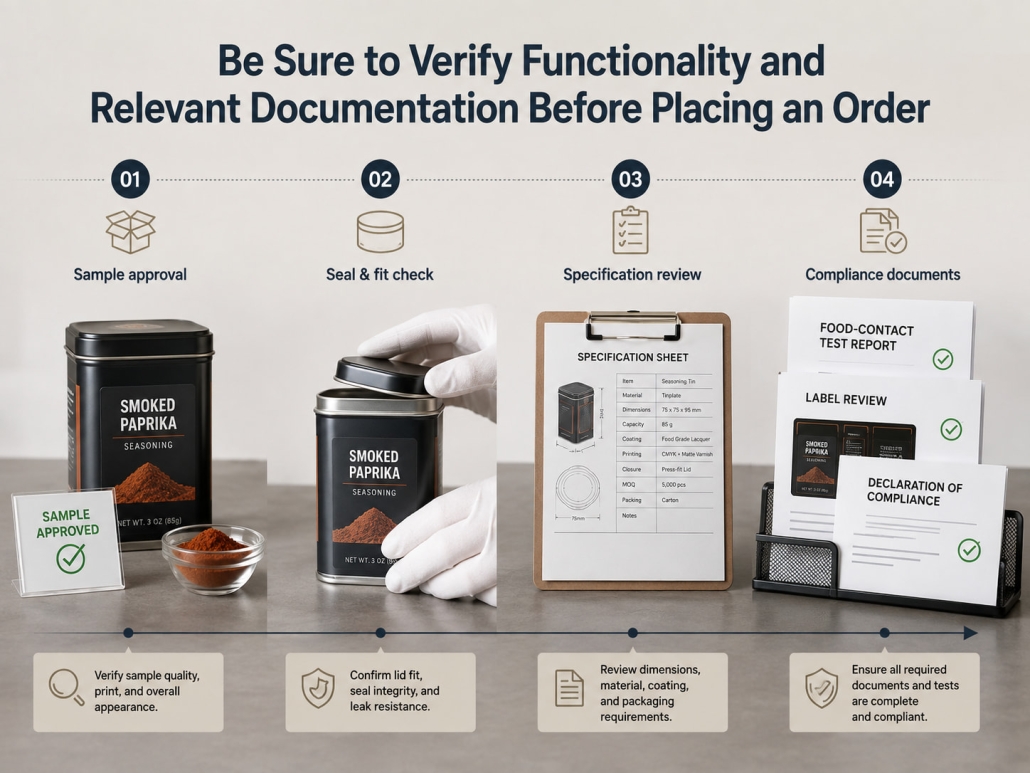
Be Sure to Verify Functionality and Relevant Documentation Before Placing an Order
While regulatory compliance is important, a compliant container may still perform poorly if the seal is improperly designed. Many spices are sensitive to humidity and can lose their aroma. Fine powders may also leak through areas where the seal is not tight. Therefore, choose the right cap design for the specific product. Common options include:
- Tight-fitting metal lids
- Push-on lids
- Screw-on lids
- Inner lids
- Sealed lids with liners
For aromatic seasoning blends, adding a liner or inner lid helps retain aroma better. For powders prone to moisture absorption, effective seal control helps reduce the risk of moisture ingress after filling and during consumer use.
Any gaskets, seals, or other components that may come into contact with food must also meet relevant food-contact compliance requirements. The FDA’s regulatory framework applies to food-contact materials used as packaging components, not just the metal cans themselves.
Ensuring Proper Production Process Control
Even if you select compliant materials, the product may still fail to meet standards if production process control is inadequate.
For tinplate packaging that meets FDA standards, TSING focuses on production control aspects such as tinplate cleanliness, internal coating application, coating coverage, oven curing, forming quality, lid dimensions, and surface defect inspection:
If the internal coating is scratched during forming or not fully cured, the final product may not meet expected requirements—even if the original coating material has compliance documentation.
A practical pre-production checklist should include:
- Confirm the type of food.
- Confirm whether the product is in direct or indirect contact with food.
- Confirm the inner coating specifications.
- Confirm the lid or liner material.
- Confirm and approve production samples.
- Inspect the coating condition after forming.
This transforms compliance requirements from mere procurement declarations into a controlled production process.
Request Specific Compliance Documentation
The final step is document verification.
Buyers should be cautious if a supplier makes a vague claim like “our tin boxes are FDA certified” without specifying which materials or regulations the claim applies to.
The FDA does not apply a blanket “food packaging permit” to all finished packaging products. Food-contact compliance depends on specific sections of the Code of Federal Regulations (CFR), active Food Contact Notifications (FCNs), or other applicable regulatory bases, as well as the intended conditions of use. The FDA also publishes a list of food-contact substances for public reference.
Truly FDA-compliant tin packaging should feature the following elements:
Suitable food-contact materials + compatible internal coating + adequate sealing performance + controlled production processes + traceable compliance documentation.
From our perspective, this is the pragmatic approach to selecting reliable tin boxes for spices. Before manufacturing custom spice tins, we identify the seasoning’s characteristics and intended use, then match the tin structure, food-contact surfaces, and sealing system to those requirements.
 Facebook
 Twitter
 Linkedin
