
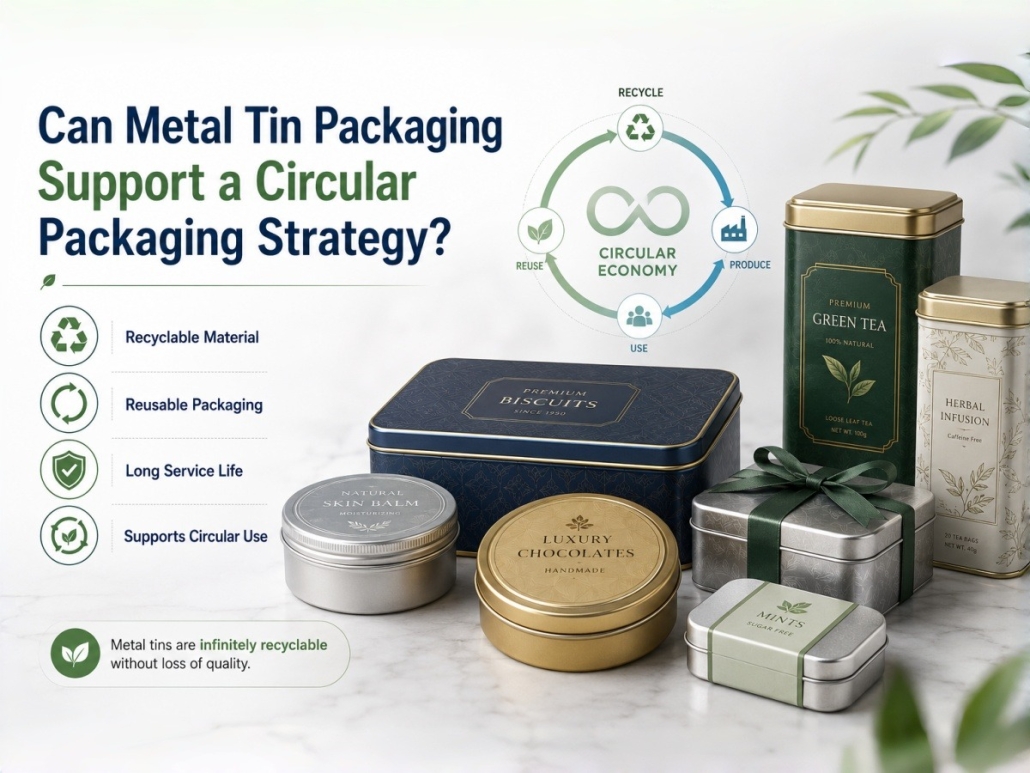
Can Metal Tin Packaging Support a Circular Packaging Strategy?
That’s right—metal tin packaging can support circular packaging strategies, but being recyclable alone isn’t enough to ensure the packaging is truly reused.
True circularity ultimately depends on the packaging’s design.
If a heavy metal can contains an unnecessary plastic liner, it may not be the optimal solution for reuse, even if the steel can body is recyclable. Conversely, if a metal can is designed to be lightweight—protecting the product while continuing to serve a purpose after its initial use and entering a well-established steel recycling system—it will better support circular packaging strategies.
Therefore, as professional metal can manufacturers, we believe the following five factors determine whether a packaging solution is suitable for a circular strategy:
- Material circularity
- Material reduction
- Reuse potential
- Design for recycling
- Quantifiable packaging decisions.
By following these principles, brands can integrate metal tin packaging into a practical circular packaging strategy.
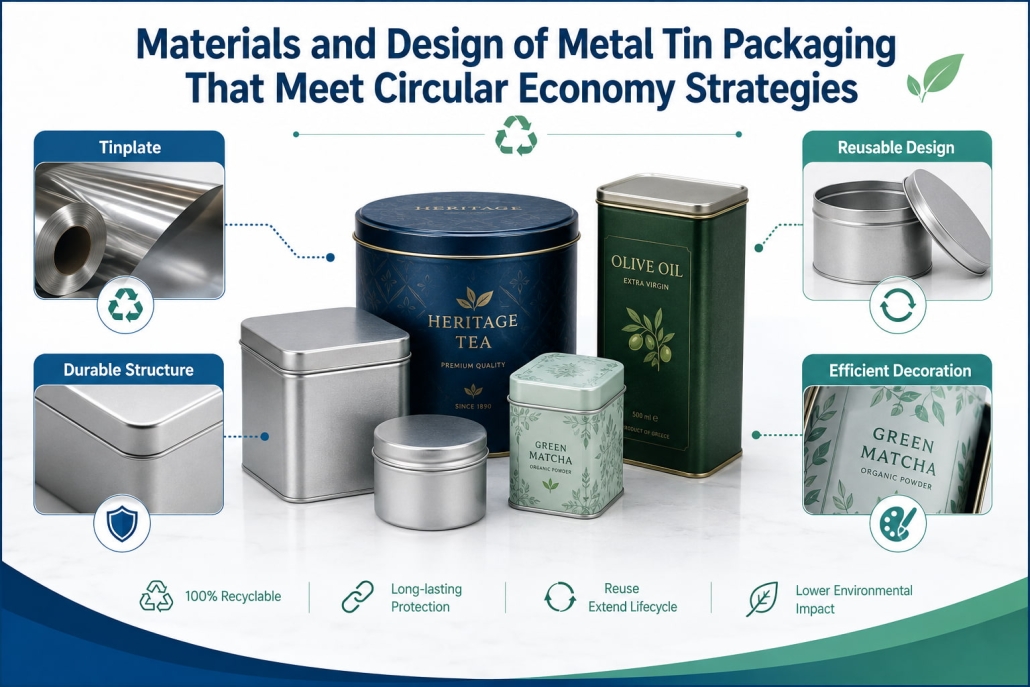
Materials and Design of Metal Tin Packaging That Meet Circular Economy Strategies
The biggest circularity advantage of tin packaging comes from its steel substrate.
Tinplate is typically made from thin, cold-rolled steel sheets that have been tin-plated. World Steel data on the life cycle of tinplate indicates that commercial tinplate generally ranges from 0.13 to 0.49 millimeters thick. However, the specific thickness of a finished product depends on packaging dimensions, forming requirements, rigidity, and intended use.
This is crucial for custom tin packaging, as finished tinplate cans are, by nature, still ferrous metal products.
Metal Tin Packaging Can Be Separated via Magnetic Separation
Steel offers a practical advantage during waste sorting: it is magnetic.
In regions with appropriate collection and recycling infrastructure, magnetic separation technology can relatively efficiently separate ferrous metal packaging from mixed waste. Both the World Steel Association and the European Design for Recycling Guidelines consider magnetic separation recycling to be an important characteristic of steel packaging. This establishes a well-established technical pathway for tin packaging:
Collection → Sorting → Magnetic Separation → Steel Processing → Smelting → New Steel Products
Recycled steel is not necessarily remanufactured into tin cans. Depending on the recycling system and market demand, it may also be used in other steel applications.
Metal Tin Packaging Retains Its Material Value After Use
Steel differs from certain packaging materials, whose recycling pathways may be limited by repeated processing. The World Steel Association notes that recycled steel retains the original steel’s inherent properties and can be repeatedly recycled into new steel products.
However, this does not mean that every tin can placed in a trash bin is actually recycled. The actual recycling rate still depends on the following factors:
- Local collection systems
- Consumer disposal behavior
- Sorting infrastructure
- Packaging size and structure
- Conditions of the local recycling market
Distinguishing between these factors is crucial for credible sustainability communications.
Manufacturers should state:
“This steel packaging is designed to be recycled within a suitable steel recycling system.”
A circular packaging strategy requires distinguishing between “technical recyclability” and “actual recycling outcomes.” This distinction makes sustainability claims more accurate and provides buyers with more meaningful guidance.
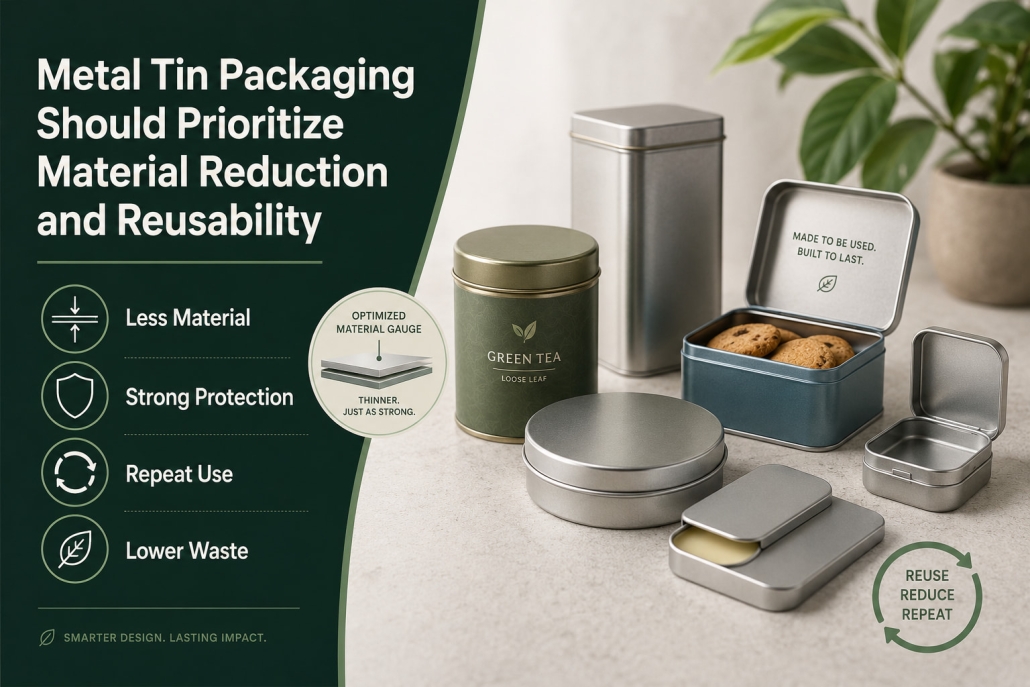
Metal Tin Packaging Should Prioritize Material Reduction and Reusability
Circular economy strategies should not begin with the recycling stage. The first question is: Can you achieve the same packaging performance with fewer resources? For tin packaging, this means optimizing both material usage and structural design.
Reducing Material Usage Through Engineering Design
Using thinner tinplate may seem like an obvious eco-friendly solution, but unthinkingly reducing thickness without considering structural performance can create new problems. If the tinplate thickness cannot support the packaging design requirements, it may lead to the following consequences:
- Sidewall deformation
- Lid warping
- Insufficient stacking strength
- Denting during transport
- Reduced sealing accuracy
A more professional approach is to achieve material reduction through structural optimization. For each custom tin can, we evaluate various factors such as can dimensions, tinplate thickness, can depth, flange design, product weight, and shipping conditions.
For example, by incorporating controlled structural reinforcements, the can can maintain its rigidity without simply increasing the overall metal thickness of the packaging.
Our goal is not to “use the thinnest possible tinplate.”
Rather, it is to “minimize material usage as much as possible while meeting packaging performance requirements.”
This is the more valuable principle of circular design.
Design for Reuse
The inherent rigidity of metal cans offers another advantage for the circular economy: even after the original product has been consumed, parts of the packaging can continue to serve a purpose.
Tea tins can be repurposed to store loose tea, spices, or various household items; cookie tins can be converted into storage containers; and high-end gift tins are often kept long after the product they originally contained has been consumed.
We can support this reuse through the following design elements, such as:
- Durable hinges
- Resealable lids
- Smooth, rounded flanges
- Sturdy surface coatings
- Neutral-style interior space
- Structural design suitable for repeated opening
However, brands should not assume that durable packaging automatically equates to reuse. “Designing for reuse” and “actually being reused” are two entirely different concepts.
True reuse depends on consumer behavior, packaging appeal, hygiene requirements, product type, and whether the packaging offers a practical secondary function.
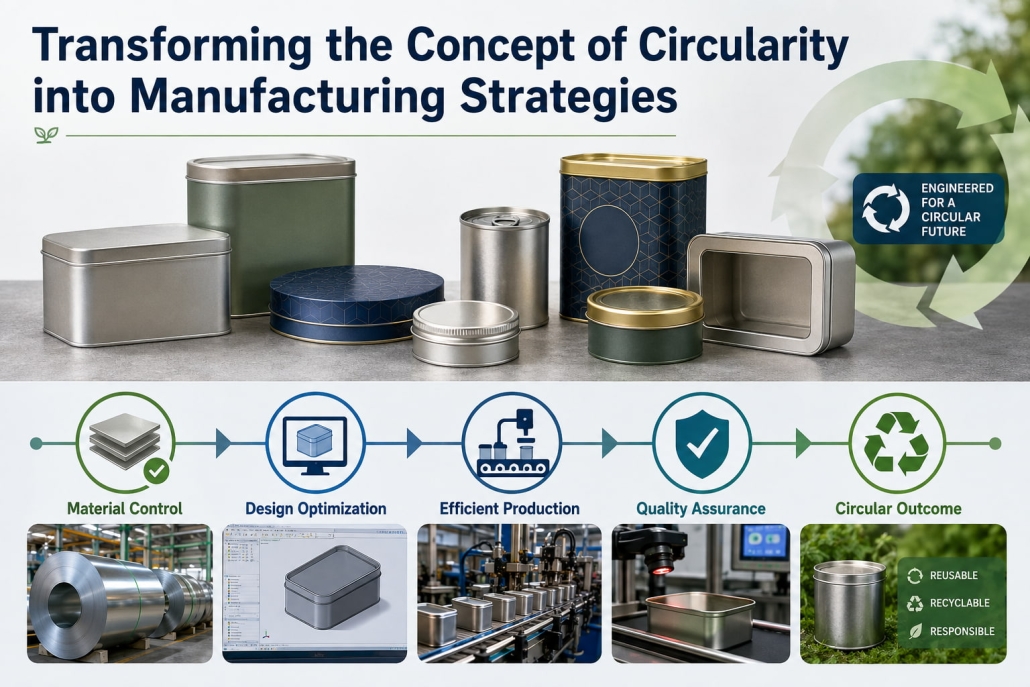
Transforming the Concept of Circularity into Manufacturing Strategies
When it comes to circular packaging, many people assume sustainability requires plain, standardized packaging. This is not the case for custom tin can projects. Manufacturers can leverage the metal material itself to create distinctive, differentiating features without adding numerous single-use decorative components.
Achieving Decorative Effects Through the Structure of Tin Packaging
Embossing is an excellent way to do this.
You can emboss logos directly onto the metal without additional plastic emblems. Similarly, custom can shapes, lid geometries, and metal embossing techniques can drive brand differentiation. This lets materials and manufacturing processes play a bigger role in brand presentation.
For high-end products, a circularity-oriented design approach might include:
One-piece steel can body + direct printing + embossed logo + reusable lid.
This approach maintains a highly customized appearance while reducing material complexity. Through appropriate design,metal tin packaging can support circular economy strategies. Metal Tin packaging can effectively support circular packaging strategies, but its value extends far beyond the recyclability of the steel material itself.
For users, the most practical approach is to follow three key principles: reduce unnecessary material usage, extend the packaging’s lifespan, and simplify the structure to facilitate recycling. By considering material efficiency, reusability, recyclability, and brand building from the outset, tin packaging can offer brands a durable, customizable, and more circular packaging solution.
Through More Rational Design, Metal Tin Packaging Can Support Circular Economy Strategies
Metal Tin packaging can support circular packaging strategies, but its value extends beyond the recyclability of the steel itself.
For customers, the most practical approach is to follow three key principles: reduce unnecessary material use, extend the packaging’s lifespan, and simplify the structure to facilitate recycling. By considering material efficiency, reusability, recyclability, and brand building from the outset, Metal tin packaging can offer brands a solution that is durable, customizable, and better aligned with circular-economy principles.
 Facebook
 Twitter
 Linkedin
