
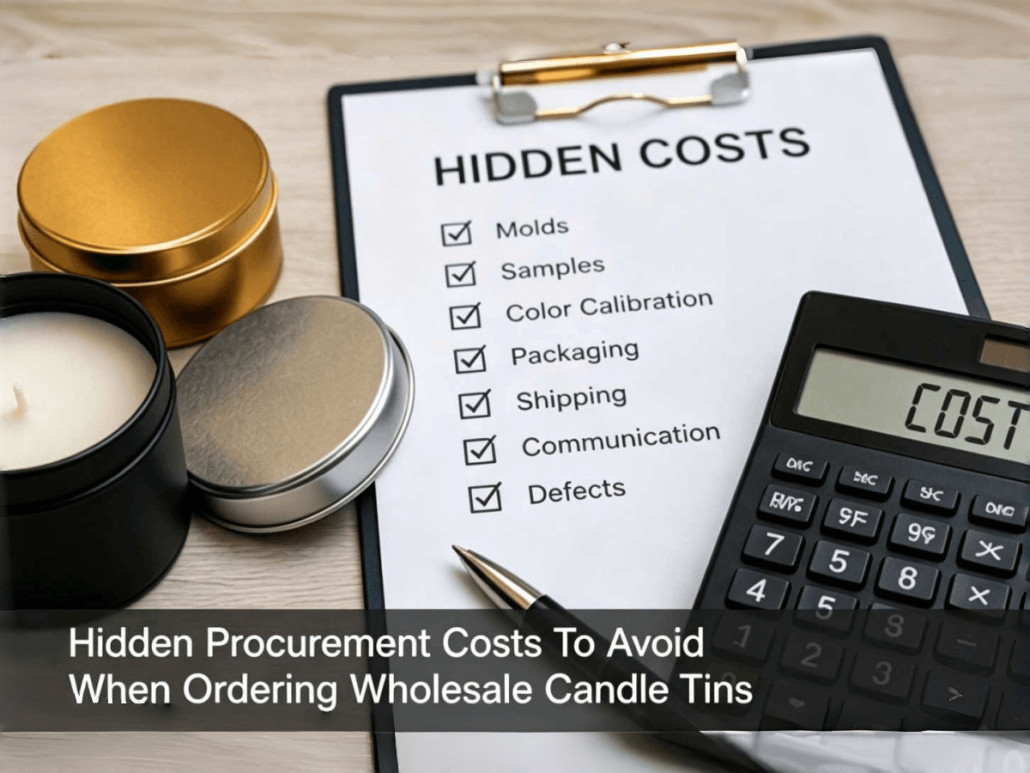
Hidden Procurement Costs To Avoid When Ordering Wholesale Candle Tins
The actual cost of wholesale candle tins extends far beyond the product itself; it also includes molds, sample production, color calibration, packaging methods, shipping costs, communication time, and financial losses resulting from hidden defects. Some of these costs exist even before production begins, while others only arise after the order is delivered, when the customer discovers that the candle tins do not meet expectations.
For candle brands, packaging is an integral part of the product experience. A candle tin is not merely a container; it influences appeal, gift value, customer experience, and even repeat purchases. If the packaging falls short in these areas, the business will be indirectly affected. Therefore, when placing an order, you need to know how to avoid these hidden procurement costs.
Hidden Costs in Wholesale Candle Tins Exist Before Production Begins
Many buyers believe that costs are calculated only after the factory begins producing candle tins. In reality, however, hidden costs often arise much earlier. Stages such as procurement planning, design coordination, sample approval, and technical specifications can all incur expenses if not managed properly.
A common issue is unclear project specifications. If the buyer fails to confirm dimensions, surface finishes, lid styles, print layouts, or intended usage scenarios, the factory must spend extra time clarifying the order. This time may not appear on the cost breakdown, but it still impacts the project’s overall cost. Delays, revisions, and repeated communication all put pressure on the timeline.
Another early cost is poor product compatibility. If the selected candle tins do not match the wax fill weight, candle diameter, wick placement, or the desired burning experience, the client may need to adjust the formula or redesign the packaging. This adds new production and sample-creation costs.
When clients place bulk orders for candle tins without clear packaging requirements, they often end up paying more for subsequent modifications that could have been avoided.
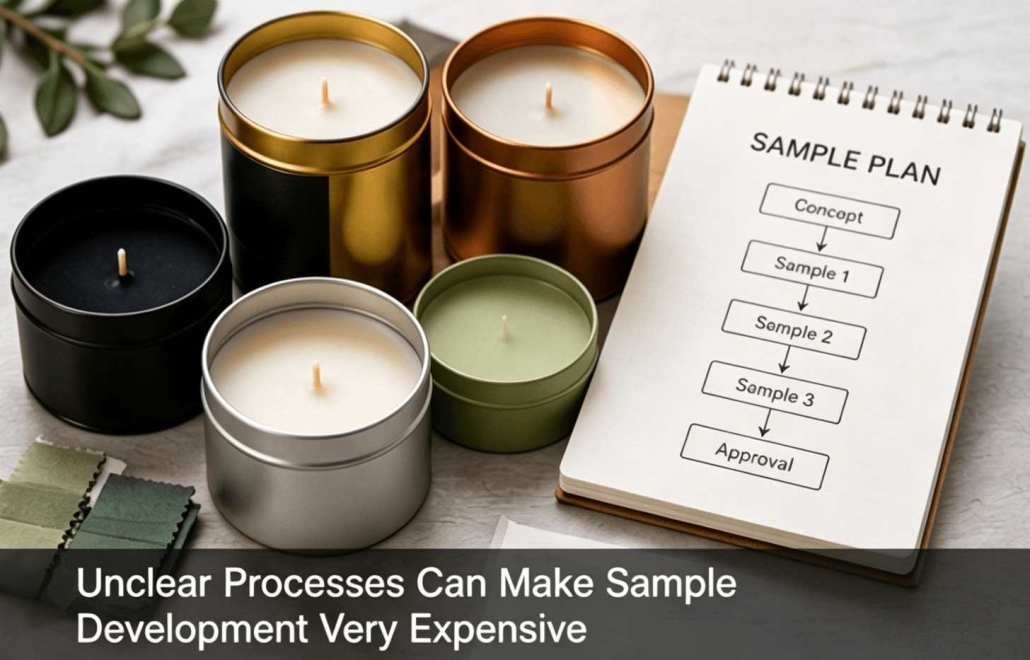
Unclear Processes Can Make Sample Development Very Expensive
If a buyer requests samples of multiple wholesale candle tins without a clear decision in mind, each modification adds time and cost. If the supplier fails to manage the process properly, sample costs can quickly escalate.
A good sample production process should answer one question: Is this design suitable for the product and brand? If the answer is yes, production can proceed. If the answer is no, the candle tin manufacturer should explain what needs to be modified and why. However, if the buyer continually requests minor revisions without a clear objective, the project may get bogged down in unnecessary back-and-forth.
Therefore, we always recommend that candle brands define their target aesthetic and functional requirements as early as possible. A targeted sample production process saves time, reduces waste, and lowers the risk of having to redo molds or reprint designs.
Material, Surface Finish, and Structural Choices Impact Wholesale Candle Tins Costs
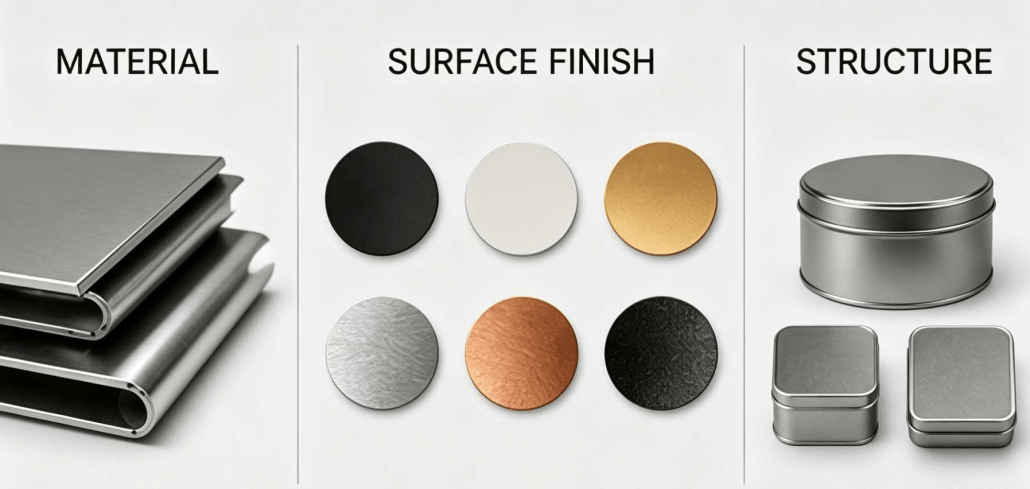
Once a project enters the production planning phase, the next area where hidden costs can easily arise is the specification selection. Many buyers assume that all candle tins function similarly. In reality, material thickness, coating type, surface treatment complexity, and structural design all significantly impact price.
The Material Thickness of Wholesale Candle Tins Affects Price and Performance
Tinplate thickness is one of the simplest examples of hidden cost factors. Thinner materials may lower the quoted price, but they also increase the risk of dents, deformation, and damage to the product’s appearance. If the tinplate is damaged during shipping or handling, the customer’s financial loss will far exceed the initial savings.
On the other hand, choosing excessively strong material will drive up costs without adding actual value. The key is not to purchase the thickest material available, but to select the appropriate material based on candle size, shipping conditions, and brand positioning. High-end candle brands may require sturdier, more durable tins, while mass-market product lines may require more cost-conscious bulk candle tins.
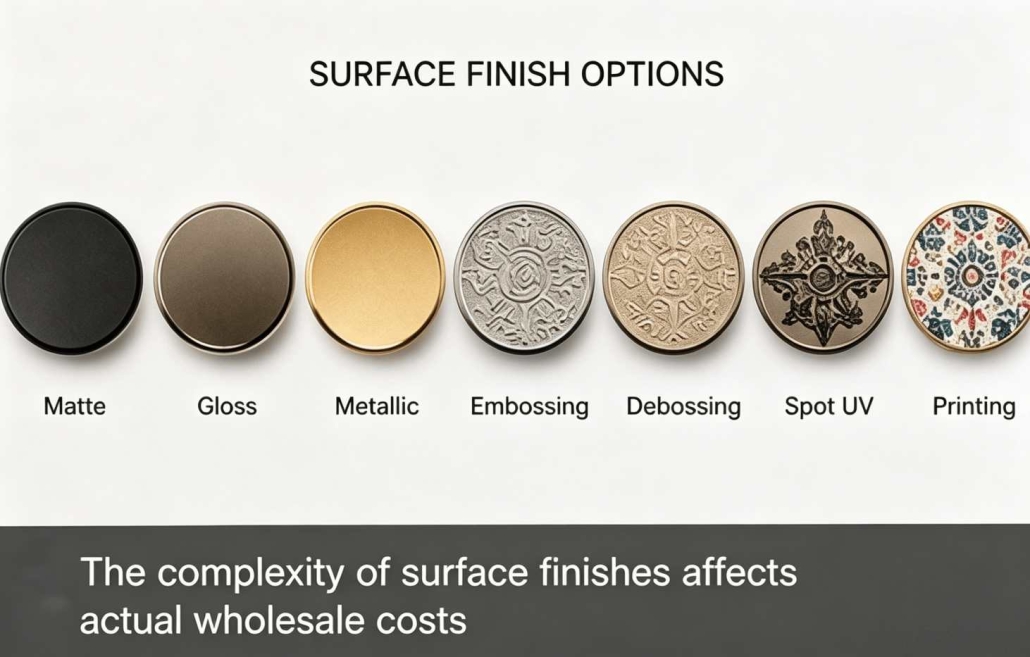
The complexity of surface finishes affects actual wholesale costs
Surface finishing processes are another area prone to hidden costs. Finishes such as matte, gloss, metallic, embossing, debossing, spot UV, and printing all have different production requirements. Some finishes may seem simple, but the actual setup and inspection workload required may exceed the buyer’s expectations. If a client requests a high-end finish without understanding the production costs, the final quote may increase after the design is finalized. If the buyer is not prepared for this, it becomes a hidden cost.
Structural design may incur additional mold costs
Candle tins come in various shapes, including round and rectangular. Some feature special lids, rolled edges, or internal structures. While more complex designs may enhance brand appeal, they also increase mold or setup costs. This is one of the most easily overlooked aspects of wholesale candle tin procurement. Buyers may focus solely on the visual design, overlooking that unique structures require additional production preparation. If these costs are not discussed early on, the final order price may exceed expectations.
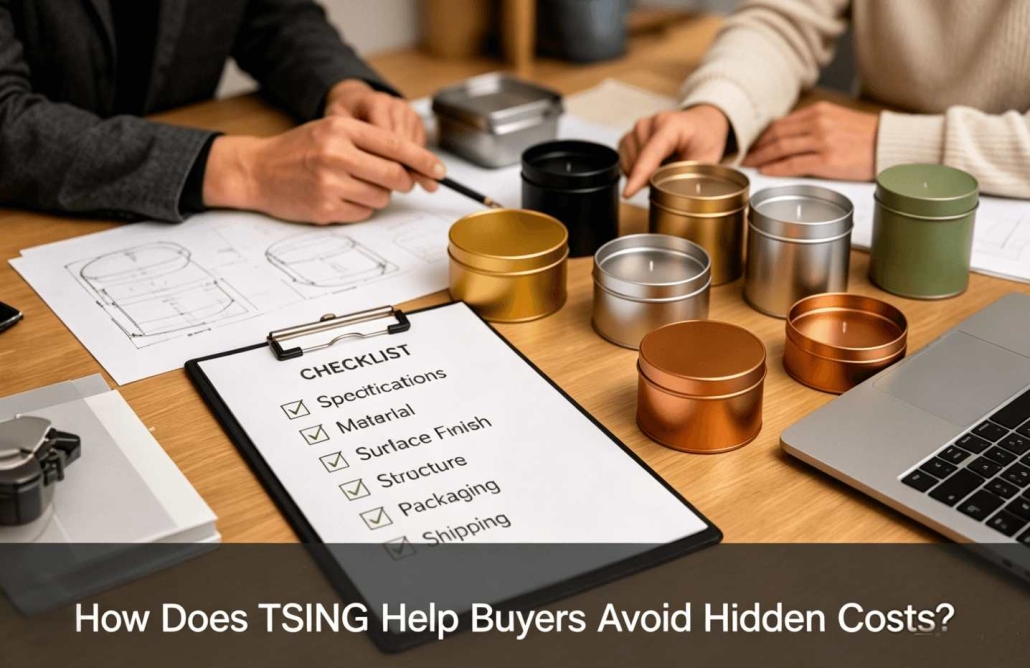
How Does TSING Help Buyers Avoid Hidden Costs?
At TSING, we believe the best way to control hidden costs is to eliminate uncertainty early on. Before production begins, we help clients clarify order details, select appropriate materials and structures, plan surface treatments correctly, and prepare for logistics and shipping.
Specifications are clarified before production begins
We first confirm the project’s key details: dimensions, candle fill weight, lid style, surface finish, printing requirements, packaging method, and delivery expectations. This prevents unnecessary revisions and reduces the risk of cost overruns later in the process. For bulk candle tins, this clarity allows us to manufacture based on the client’s actual needs rather than guesswork. This saves time and keeps costs under control.
Open Communication on Factors Affecting Wholesale Candle Tins Pricing
We do not hide cost factors from our clients. If a design proposal increases mold costs, material usage, printing complexity, or shipping volume, we explain this honestly. This transparency helps buyers make more informed decisions. This approach also helps build trust. Clients understand exactly what they are purchasing and why.
Our designs balance production efficiency with shipping convenience.
Our goal is not merely to produce aesthetically pleasing candle tins, but to create packaging that functions efficiently within the actual supply chain. This includes carton efficiency, stacking stability, and protection during transit. We factor these elements into our packaging design, allowing clients to save money without compromising on appearance. This is the value we strive to deliver.
The best procurement approach is transparency, not unexpected costs
At TSING, we help buyers avoid these surprises by making the entire communication process transparent. We believe that candle tins should enhance brand image, protect the candles, and stay within budget. When buyers partner with a manufacturer that communicates clearly and produces responsibly, bulk purchasing candle tins becomes a more predictable and profitable investment.
 Facebook
 Twitter
 Linkedin
