
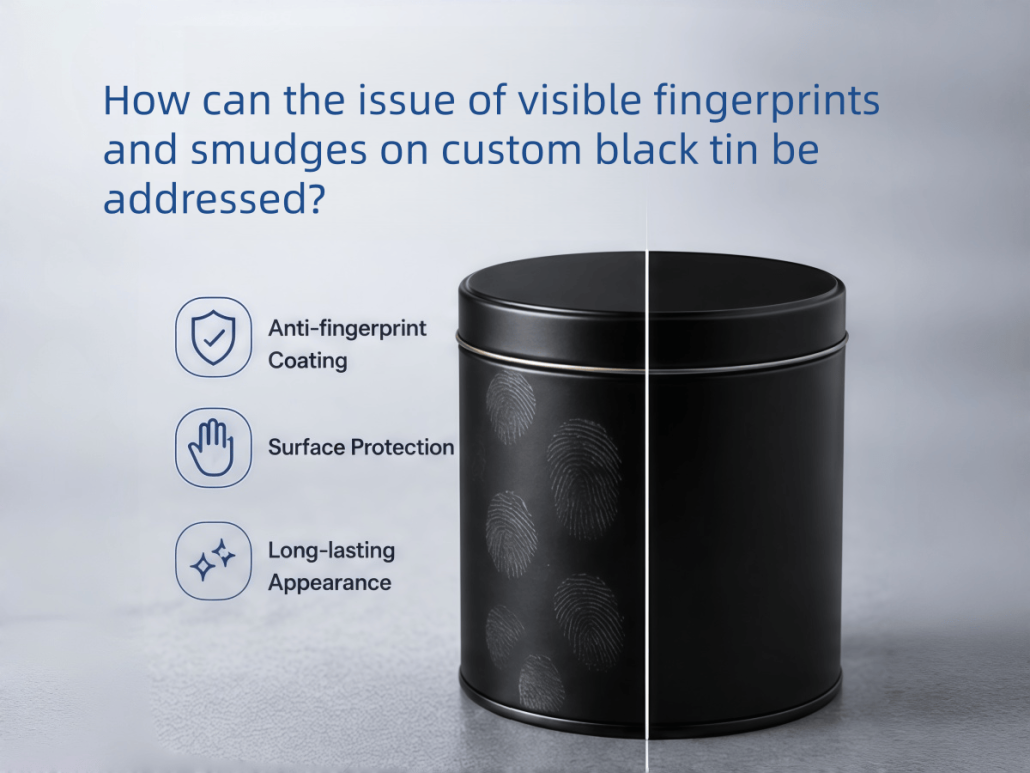
How can the issue of visible fingerprints and smudges on custom black tin be addressed?
In the retail of some high-end products, appearance is often the primary factor influencing consumer perception. A beautifully designed, custom black tin can instantly convey a sense of refined brand value. However, fingerprints, oil stains, and smudges that appear during production, transportation, retail display, or customer handling can diminish this visual experience.
Based on our production experience, the visibility of fingerprints is not merely an aesthetic issue; it reflects the combined impact of numerous factors, including material selection, surface treatment, and printing processes. Therefore, during the production of custom black tins, we can address this challenge by employing specific printing techniques, protective coatings, and customized surface treatments.
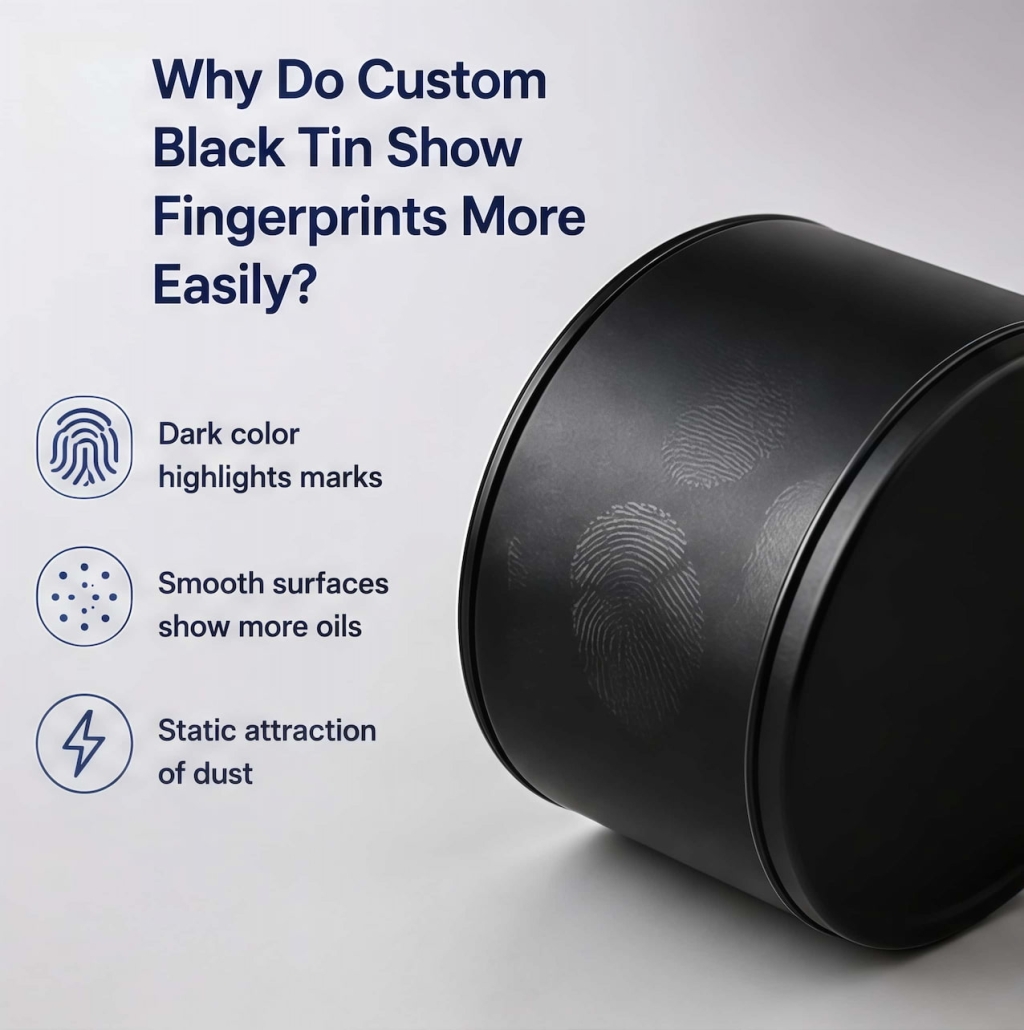
Why Do Custom Black Tin Show Fingerprints More Easily?
From high-end tea tins to cosmetics packaging and collector-grade gift boxes, black metal packaging gives products strong visual recognition, allowing them to stand out on crowded retail shelves.
However, the very appeal of black packaging is also its challenge. The fundamental reason fingerprints are more noticeable on black tins surfaces is the interaction between light reflection and surface contamination.
When a person touches the surface of a black tin, oils and moisture from the skin are transferred to the coating. These substances alter the way light reflects off the surface. Against a black background, even subtle differences in surface reflection can create very noticeable marks. Compared to light-colored packaging, black surfaces have a lower visual tolerance. Fingerprints that might go unnoticed on white, silver, or light-colored packaging become immediately apparent on a deep black surface.
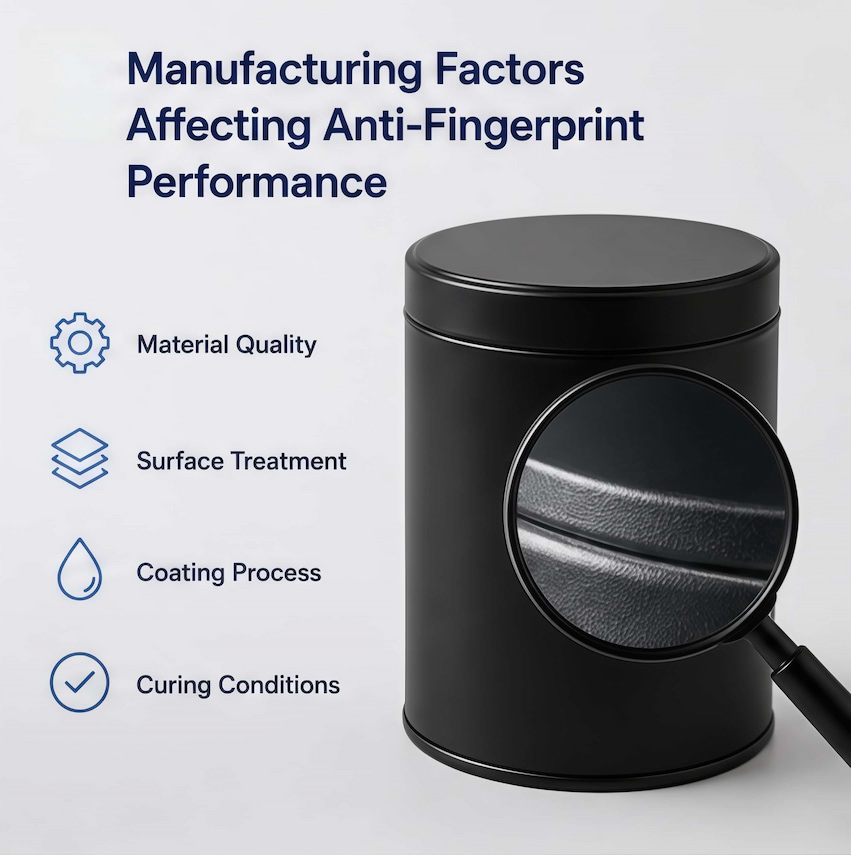
Manufacturing Factors Affecting the Anti-Fingerprint Performance of Custom Black Tins
Many fingerprint residue issues are often rooted in problems that arise before the coating process even begins. Among these, the quality of the tinplate surface directly affects the performance of the ink and protective coating. The tinplate used for custom tin boxes is manufactured by plating a thin layer of tin onto the surface of a steel sheet, thereby enhancing corrosion resistance and providing a surface suitable for printing. However, during production and transportation, processing oils, dust particles, and metal debris may remain on the metal surface. If these contaminants are not thoroughly removed, they will compromise the coating’s adhesion.
At TSING, surface pretreatment is regarded as the key foundation for ensuring packaging quality.
The pretreatment process typically includes:
Degreasing:
Before printing, the tinplate must be cleaned to remove oil residues and impurities left by the manufacturing process. A clean surface helps the coating bond more effectively to the metal substrate.
Surface Activation:
Proper surface activation improves coating adhesion by creating an optimal bonding environment between the metal and the coating. This helps prevent uneven coating distribution, surface peeling, poor durability, and inconsistent appearance.
Surface Cleanliness Inspection:
Professional manufacturers conduct surface inspections before printing. These inspections ensure that the tinplate meets production requirements before entering the decorative finishing process. A stable substrate is the foundation for ensuring consistent fingerprint resistance in finished custom black tins.
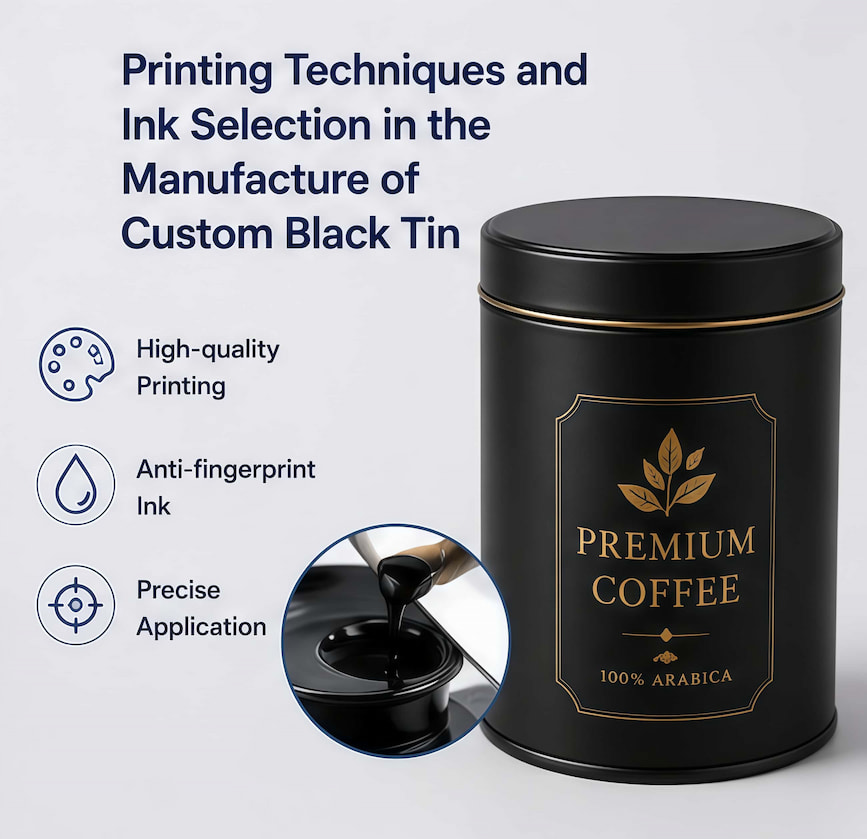
Printing Techniques and Ink Selection in the Manufacture of Custom Black Tin
The printing process largely determines the final appearance and durability of black metal packaging. Many people mistakenly believe that fingerprint issues are solely related to the final coating, but in fact, the printed layer also affects surface performance. Black printing requires extremely high precision in process control, as dark tones reveal unevenness or imperfections more easily than light tones.
During production, the following aspects must be strictly controlled:
Ink formulation
Printing thickness
Drying temperature
Curing conditions
Color consistency
Different types of black inks possess distinct surface characteristics. Certain inks offer the following advantages:
High color density
Stronger adhesion
Greater chemical resistance
Better surface stability
For high-end custom black tin packaging, it is essential to select the appropriate ink system. Inappropriate ink selection can lead to uneven color rendering, reduced coating compatibility, diminished scratch resistance, and more visible surface marks, all of which affect print consistency and surface uniformity. A uniform and consistent print layer helps ensure the stability of the final coating’s performance. If ink thickness varies in certain areas, the surface’s reflection of light will also differ, making fingerprint marks more noticeable.
Solutions for Improving Fingerprint Resistance
Addressing fingerprint and smudge issues on custom black tin packaging requires a systematic approach, rather than a simple one-time production adjustment. A black tinplate surface results from multiple manufacturing processes working in concert, including tinplate preparation, printing, coating, curing, and surface treatment. If any of these processes is not properly controlled, the final packaging may exhibit uneven gloss, inadequate surface protection, or prominent fingerprint marks.
Therefore, addressing fingerprints and smudges on custom black tin packaging is part of the comprehensive packaging engineering process. When developing custom black tin boxes for different industries, we consider the following key factors:
How frequently consumers use the product;
Whether the packaging will be displayed under intense retail lighting;
Whether the brand requires a luxurious visual appeal or practical durability;
Whether the product will be subject to friction during shipping;
Whether the packaging requires long-term storage capabilities;
Matte Coating Technology for Surface Protection on Custom Black Tins
Matte coatings are one of the most widely adopted solutions for reducing visible fingerprints on black metal packaging. Traditional glossy black finishes create a smooth, reflective surface that enhances color saturation and visual depth. However, this high reflectivity also makes fingerprints, oil stains, and minor surface imperfections more noticeable.
Matte coatings address this issue by altering the surface’s optical properties. These coatings contain microscopic particles that create a controlled surface texture. Rather than reflecting light directly back to the observer, they scatter it in multiple directions. This reduces the contrast between the surface and its surroundings. As a result, custom black tin cans with a matte finish maintain a cleaner, more consistent appearance during handling.
We optimize coating thickness based on various factors, and the matte finish is particularly well-suited for:
Premium tea tins
Coffee packaging
Chocolate tins
Cosmetic containers
Luxury gift packaging
For these applications, matte black not only creates a refined appearance but also significantly reduces fingerprint marks.
How Does UV Coating Enhance the Performance of Custom Black Tin Surfaces?
UV coating is another important surface treatment technology used in high-end metal packaging. Unlike traditional coatings that rely solely on heat curing, UV coatings utilize ultraviolet energy to achieve rapid surface curing.
This process forms a hard, durable protective layer. Benefits include:
Improved scratch resistance
Strong surface protection
Enhanced gloss control
Better print protection
For brands that require durable custom tin cans, UV coating provides additional protection against daily wear and tear.
Expert Manufacturing is the Key to Solving Fingerprint Issues
Visible fingerprints and smudges on custom black tin can packaging are not inevitable. These are manufacturing challenges that can be effectively addressed through the selection of appropriate materials, surface treatments, print optimization, and quality control.
From a tin can manufacturer’s perspective, the most effective methods include:
Selecting the appropriate matte or low-reflective finish
Applying an anti-fingerprint protective coating
Optimizing printing and varnishing processes
Using embossed and textured designs
Conducting rigorous quality inspections
The key is to consider anti-fingerprint performance during packaging development, rather than waiting until production issues arise. A successful custom black tin packaging solution requires close collaboration between brand designers and professional manufacturers. By understanding product positioning, consumer behavior, and production constraints, we help clients create packaging that maintains its visual impact from the factory floor to the end customer’s experience.
 Facebook
 Twitter
 Linkedin
