

How do you balance the lightweight design and strength of a black tins?
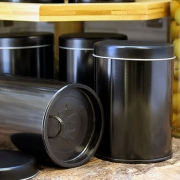
Achieving the perfect balance between lightweight design and strength in black tins is not a simple matter of choosing the right material thickness; it requires careful selection of tinplate grade, optimized structure, and advanced surface treatment technologies. Tin cans with too-thin walls will dent or deform under pressure, compromising product integrity and increasing return rates. Tin cans with too-thick walls will add unnecessary weight, driving up raw material costs and transportation expenses. At Tsing, we weigh material selection, manufacturing processes, and design considerations to create robust, lightweight, and stunningly beautiful black tin cans that minimize costs while ensuring product integrity.
Choosing the Right Tinplate Grade for Black Tins
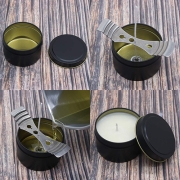
Tinplate is a tin-coated steel sheet with various grades and specifications, each with a unique weight, formability, and corrosion resistance combination. Lower-gauge tinplates, such as 0.12-0.15 mm, can reduce weight and lower material costs, but they have limited rigidity and may wrinkle during deep drawing. Conversely, higher-gauge tinplate, such as 0.20-0.30 mm, provides greater rigidity and dent resistance but adds weight. Then, during the collaborative process, we will select the best specifications based on the product’s fragility, stacking height, and drop test requirements. For example, a premium candle collection for retail display may require a 0.18mm tinplate to prevent the lid from warping during shelf stacking. A lightweight tea can use a 0.14mm tinplate with a plastic liner added inside to maintain shape. In addition, incorporating specialized alloy coatings such as tin-free steel (TFS) or brushed tinplate finishes can enhance corrosion and scratch resistance.

Wall Thickness Optimization and Cost Effectiveness of Black Tins
Once the material grade is selected, the next step is to optimize the wall thickness of the black tin to meet structural needs while minimizing material usage. Uniform thickness is not always ideal, and we will strategically vary the thickness to reduce weight without compromising strength. For example, cylindrical designs benefit from uniform thickness, but rectangular or square tins have higher stress concentrations at the corners. Therefore, Tsing’s Custom Tin Service team analyzes stress distributions under simulated stacking loads, impact scenarios, and internal pressure tests to guide wall-thickness adjustments. Thicken the wall at high-stress corners and thin the panel at flat surfaces. Compared to a uniform thickness design, this reduces overall material consumption by up to 15%. This focused approach not only reduces weight but also reduces production costs and environmental footprint.

Structural reinforcement through design features
Design features such as ribs, stiffeners, and rolled edges significantly increase the stiffness of the black tin without increasing thickness. A simple circular stiffener increases panel stiffness by up to 30%, preventing sidewall buckling and improving stacking stability during shipping and storage. Multiple longitudinal stiffeners can be integrated into the sidewalls for larger can sizes, creating a lightweight yet strong structure similar to an I-beam cross-section. Our team incorporates these reinforcements directly into the custom mold, ensuring they complement the label placement and branding graphics. The rolled lid and bottom interlock securely, evenly distributing loads and preventing deformation during high-speed automated packaging processes. Combining these structural enhancements with optimized wall thickness creates a black tin that is both attractive and strong.
Coating, Varnish, and Surface Treatment Considerations
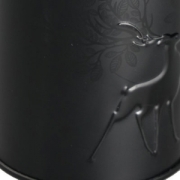
In addition to mechanical reinforcement, the surface treatment of black tins plays a vital role in the product’s long-term performance and appeal. We apply a high-strength lacquer to interior and exterior surfaces to create a protective barrier against moisture, acid, and UV rays, preventing corrosion and maintaining structural integrity. Special finishes, such as soft-touch or velvet matte powder coatings, enhance the tactile feel and introduce micro-textures that resist scratches and fingerprints. Our custom tin services include selecting environmentally friendly lacquer systems that cure at low temperatures, reduce energy consumption during production, and avoid metal softening. In addition, combined with printing technology, UV-curable inks and hot stamping can reliably adhere to these coatings, ensuring that vibrant brand graphics remain precise and durable.
Ensure consistency through precision molds and automated production.
Precise molds and strong process control are essential to achieve strength and lightweight performance in black tins. We use a fully automated production manufacturer to produce tin cans with dimensional tolerances within ±0.15 mm, ensuring that each lid and base fits perfectly. Automated welding and seaming units ensure uniform seams that meet food-grade or industrial-grade strength specifications. At the same time, laser micrometers and visual inspections detect deviations in real time, allowing press parameters to be adjusted immediately. By strictly controlling punch speed, sheet temperature, and die gap, springback and metal fatigue are minimized, reducing scrap rates by up to 10%. This high-precision manufacturing foundation ensures that every black can that leaves our factory is a perfect balance between lightweight design and structural strength.

Improving Lightweight Design and Strength in Black Tin Cans
In the black tin can design, balancing lightweight design with strength requires a holistic approach. Tsing selects the appropriate tinplate grade, optimizes wall thickness, and integrates structural reinforcement and durable coatings. Precision molds, automated production, and rigorous quality control ensure product consistency, reduce waste, and enhance the overall balanced performance of each black tin can. These manufacturing techniques achieve a balance between lightweight design and strength.



 Facebook
 Twitter
 Linkedin
