

How to solve packaging leakage problems: Deep-drawn metal tins design solutions
Packaging leaks not only cause confusion but also damage brand trust, lead to returns, and even regulatory risks. For manufacturers and brand owners transporting liquids, fine powders, or hygroscopic ingredients, addressing packaging leaks is crucial. Instead of trying to fix it late in production, a structural approach is needed: designing a container that eliminates common leak paths. From a tin can manufacturer’s perspective, deep-drawn metal tins offer this structural advantage. Due to their one-piece molding process, these cans eliminate side seams—the most common source of leaks in traditional tins. Therefore, we’ll explain how deep-drawn design, materials, inner coatings, lids, and sealing systems, production controls, and testing processes work together to create leak-free packaging.
Deep-Drawn Metal Tins: Why Seamless Tins Eliminate Major Leak Pathways
Most leaks originate at seams—folded edges, side seams, or welded edges—where coatings are prone to failure, gaps can form, or mechanical stress concentrations can occur. Deep-drawn metal tins are made from a single flat blank, gradually shaped into a cylinder through a series of drawing processes, with the bottom finished. The final result is a seamless, monolithic structure without side seams or welds. This structural difference offers numerous practical benefits in preventing leaks:
No continuous seams: Therefore, corrosion or delamination does not occur. Side seams are elongated, linear weak points. Over time, crevice corrosion, coating failure, or mechanical deformation at these seams can create capillary channels for liquids and fine powders.
Uniform wall thickness and predictable deformation: Proper deep-drawing processes ensure uniform material flow, reducing wall thinning and stress concentrations that can lead to leaks after impact or thermal cycling. More uniform geometry improves coating adhesion and enhances the dimensional stability of caps and seals.
Simpler interior coating continuity: Coatings adhere more uniformly to smooth, monolithic surfaces than to folded or welded surfaces. This reduces microporosity and localized permeability.
Higher dimensional accuracy: Due to the precision molds used in deep drawing, roundness and diameter tolerances are smaller, contributing to better cap fit and repeated compression performance of sealing gaskets.
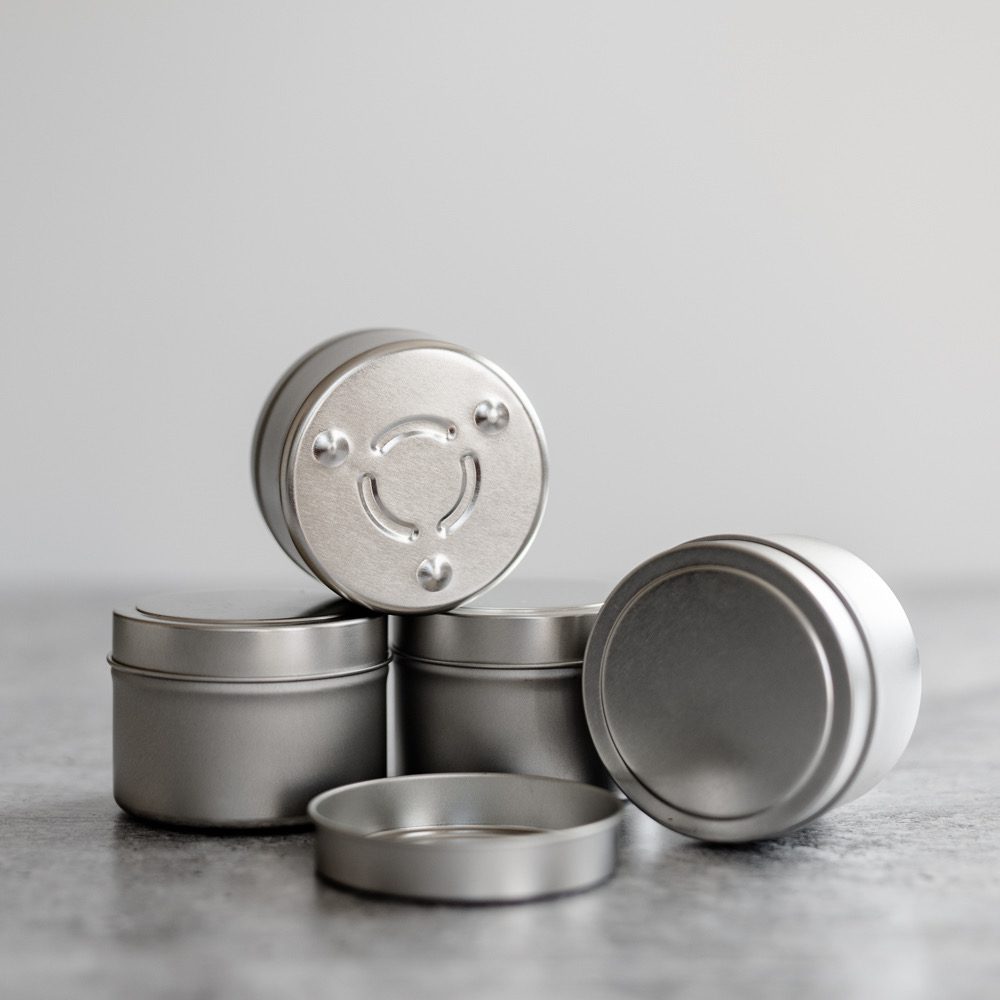
From a product development perspective, this means that the primary design decision for leak prevention should be structural: deep-drawn metal tin is ideal when your product requires a high level of sealing reliability, especially for liquids, emulsions, essential oils, or fine powders.
Materials and Inner Coatings and Their Impact on Chemical and Barrier Properties
Structural elements prevent mechanical leakage; materials and coatings prevent chemical and diffusion-induced failures. Choosing the right substrate and coating combination for deep-drawn metal tins is crucial to avoid corrosion, migration, or odor transfer when containing liquids or powders.
Material Selection and Trade-offs:
Tinplate: Versatile, formable, and cost-effective. Suitable for packaging a variety of foods and dry powders when used with compatible inner coatings.
Electroplated Chromium Steel (ECCS/TSF): Tin-free, offers good corrosion resistance if properly coated; often chosen for environmental or regulatory reasons.
Aluminum: Corrosion-resistant and lightweight; suitable for specific acidic formulations and applications requiring rust prevention. Due to varying ductility, deep-drawn aluminum requires adjustments to molds and processes.
Stainless steel: Best suited for corrosive chemicals, sterilization cycles, and medical-grade packaging, but cost and stretchability are limiting factors.
Inner Coating and Barrier Layer Selection:
Epoxy phenolic or polyester varnishes: Commonly used in food contact applications. They offer good adhesion, oil resistance, and resistance to weak acids.
Polyurethane/Topcoat: Provides abrasion resistance and durability, extending shelf life or allowing for repeated handling.
Fluoropolymer Liners (PFA/PTFE): For highly corrosive solvents or pharmaceutical compounds, low-interaction fluoropolymer linings may be required, although they increase cost and require compatible curing processes.
Material and coating choices are not interchangeable. During manufacturing, Tsing selects materials based on chemical-compatibility testing and proven barrier-property assessments to ensure our deep-drawn metal tins seal securely and reliably hold liquids and powders.
Sealing Engineering for Deep-Drawn Metal Tins: Necking, Crimping, Gaskets, and Inner Plugs
Even with a flawless can body, a poorly designed lid can lead to leaks. Successful sealing depends on a sealing system designed specifically for the characteristics of the product during transportation, storage, and use. Deep-drawing processes support advanced sealing technologies, making metal tins truly leakproof.
Necking and Crimping to Increase Sealing Contact Area
Necking: Slightly narrowing the can opening allows the lid to fit snugly and evenly along the can rim. This tighter radial fit increases friction, contributing to uniform compression of the sealing ring.
Crimping: Forming a controlled inner pressure flange creates an interference zone that resists axial lift and provides a second mechanical barrier to prevent leakage. Precision molds must be used to ensure uniform crimping without deforming the sealing surface.
Multi-Layer Seal Stacking
Inner Plug (Crimped): A polymer or thin metal inner plug beneath the outer cap forms the first physical barrier. For products with intense aromas or high liquid content, nested inner caps prevent fluid leakage and improve sealing.
Gasket Materials: Silicone gaskets offer long-term elasticity and high-temperature resistance; PVC gaskets are economical and suitable for dry powders; EPE liners provide cushioning protection for fragile items. When selecting a gasket material, we evaluate its optimal compression set, oxygen and water vapor transmission rates, and chemical compatibility.
Design Guidelines
Tsing determines the necessary gasket compression based on the target torque or pressure, ensuring consistent compression while keeping bottleneck and cap tolerances within a narrow range (e.g., ±0.05 mm). Additionally, prototypes of multiple cap stacks are created using actual products to evaluate sealing performance under thermal cycling and pressure variations. In fact, a properly designed cap stack can transform deep-drawn metal cans into robust liquid and powder containers, minimizing reliance on secondary barriers.
Molding, Molding, and Quality Systems for Preventing Large-Scale Leaks
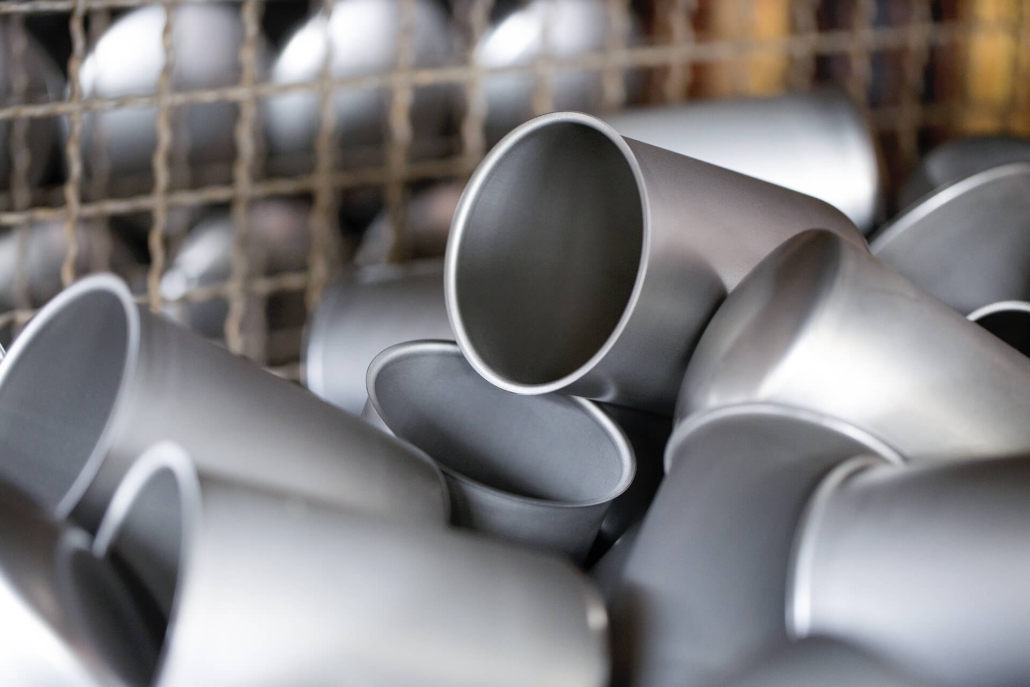
Design intent must be translated into manufacturing reality. Large-scale leak prevention requires stringent mold tolerances, process control, and a quality management system that monitors critical dimensions and coating integrity. During production, Tsing employs multi-stage drawing and intermediate annealing processes to prevent thinning and cracking. A well-designed edge-pressing strategy prevents wrinkling, ensuring the smoothness of the inner coating and sealing surface. Additionally, precision necking and pressing dies are used to achieve a concentric, uniform neck. Any eccentricity will lead to uneven gasket compression and potentially leakage. Regular polishing and die inspections maintain the geometry.
During production, we regularly use laser micrometers or go/no-go gauges to measure the neck inner diameter, edge flatness, and wall thickness. We regularly measure paint thickness and conduct adhesion tests, paying special attention to corners and neck fillets, as the coating often thins in these areas. For high-volume production, we leverage automation to reduce leakage caused by human error.
What applications are deep-drawn metal tins suitable for?
Deep-drawn tin cans are advantageous for applications including liquid foods and condiments; oils, sauces, and concentrated extracts benefit from seamless walls and proven coatings. Fine powders and hygroscopic ingredients, such as pharmaceuticals, nutritional supplements, and specialty powders, require sealed packaging during transportation and storage. Additionally, high-value or volatile products, such as aromatic compounds, essential oils, and fragrances, require multiple layers of seals to prevent evaporation and aroma loss. For medical or technical chemicals requiring chemical compatibility and sterilization, stainless steel or coated deep-drawn tin cans offer reliable seals.
Tin Can Structures for Leakage Prevention
Deep-drawn metal tins offer a structurally superior solution: the seamless can body eliminates side seams—leakage pathways—while a carefully designed sealing system, suitable materials and coatings, rigorous manufacturing processes, and stringent testing ensure a leak-free product. For liquids, fine powders, and volatile products, choosing deep-drawn metal cans reduces the risk of leakage throughout the product’s lifecycle.
 Facebook
 Twitter
 Linkedin
