
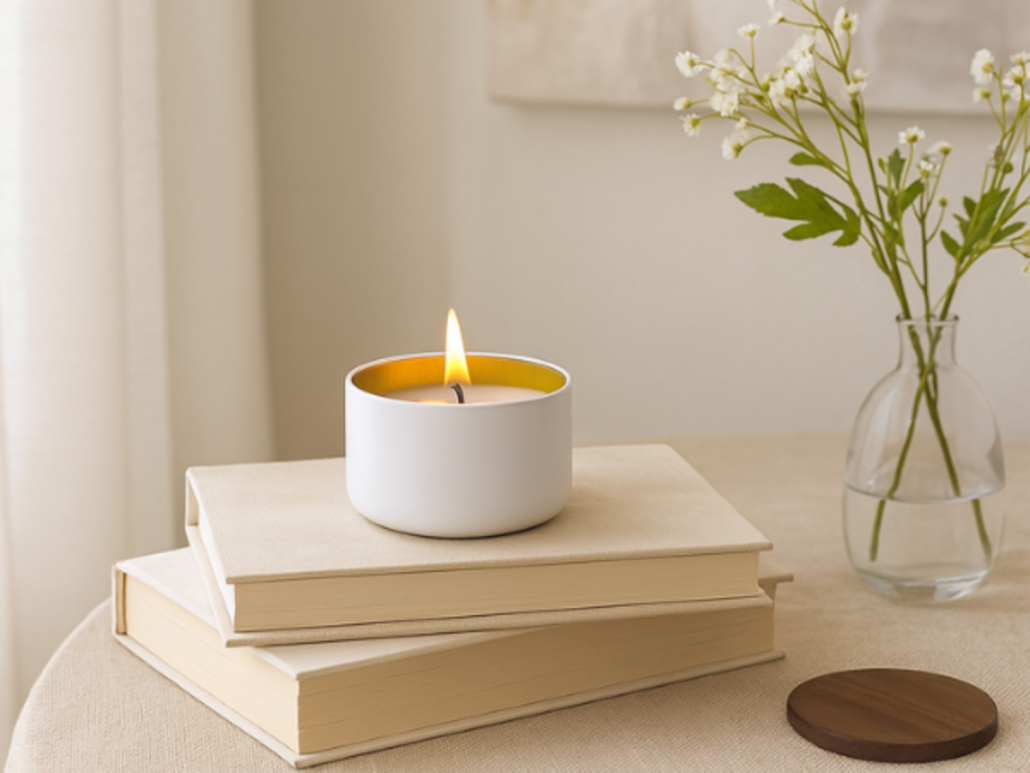
What are the most common capacities for candle tins?
When sourcing candle tins, capacity is a critical decision-making factor, as it directly impacts product performance, cost structure, and customer perception. The dimensions of a candle tin determine the required wax volume, burn time, fragrance intensity, and shipping efficiency. Furthermore, capacity influences the candle’s burning characteristics. Smaller vessels tend to heat up more quickly, allowing for a faster release of fragrance; conversely, larger vessels require more precise wick selection to ensure the wax surface melts evenly. If the vessel’s capacity is mismatched with the wick and wax formulation, issues such as “tunneling” or overheating may arise.
Industry Standards: 4 oz and 8 oz candle tins
Among the wide array of available sizes, the 4 oz and 8 oz candle tins are recognized as the industry standards. These two capacities dominate the market because they strike a perfect balance between economic efficiency, practicality, and retail appeal.
Compact and highly cost-effective, the 4 oz tin is an ideal choice for artisanal candles, travel-sized products, and entry-level offerings. It allows brands to test various fragrance profiles with minimal inventory risk while ensuring the product appears complete and fully functional to customers. In contrast, the 8 oz vessel is typically regarded as the “full-size” product. It offers a longer burn time and a more robust fragrance throw, while also commanding a stronger visual presence on retail shelves. From a business perspective, adopting these standard sizes streamlines manufacturing, packaging, and logistics processes. Their compatibility with a wide variety of wax types and wick configurations is the primary reason why the vast majority of candle brands build their core product lines around these two capacities.
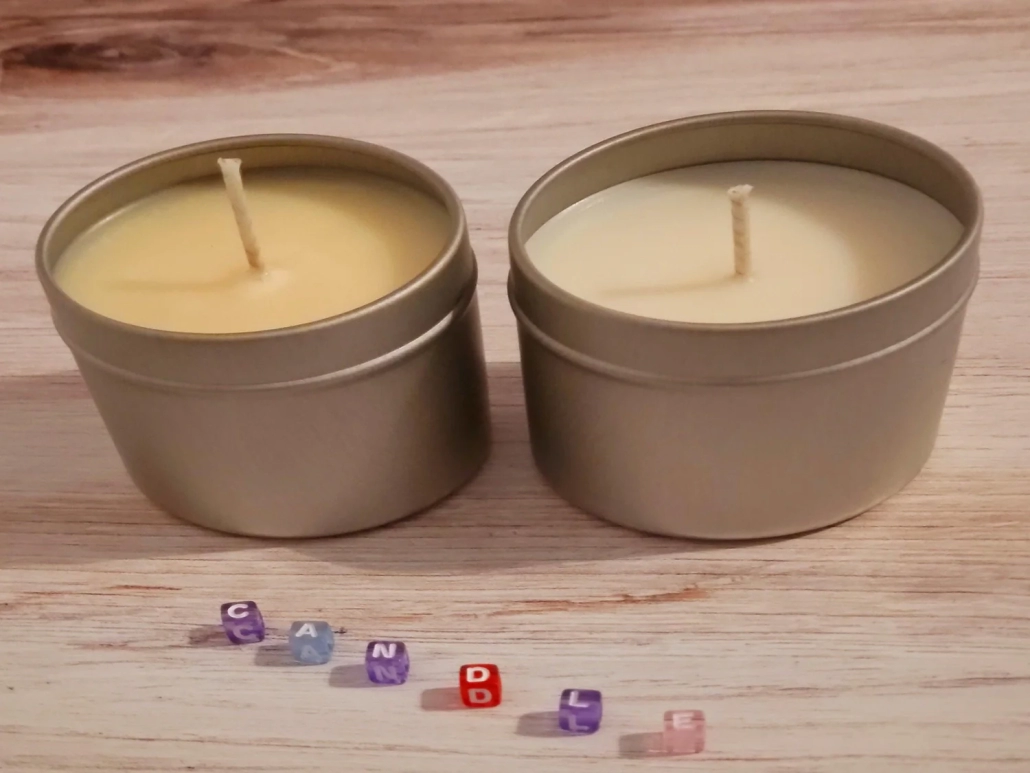
How 2 oz, 6 oz, and 10 oz Capacities Fit into different product strategies?
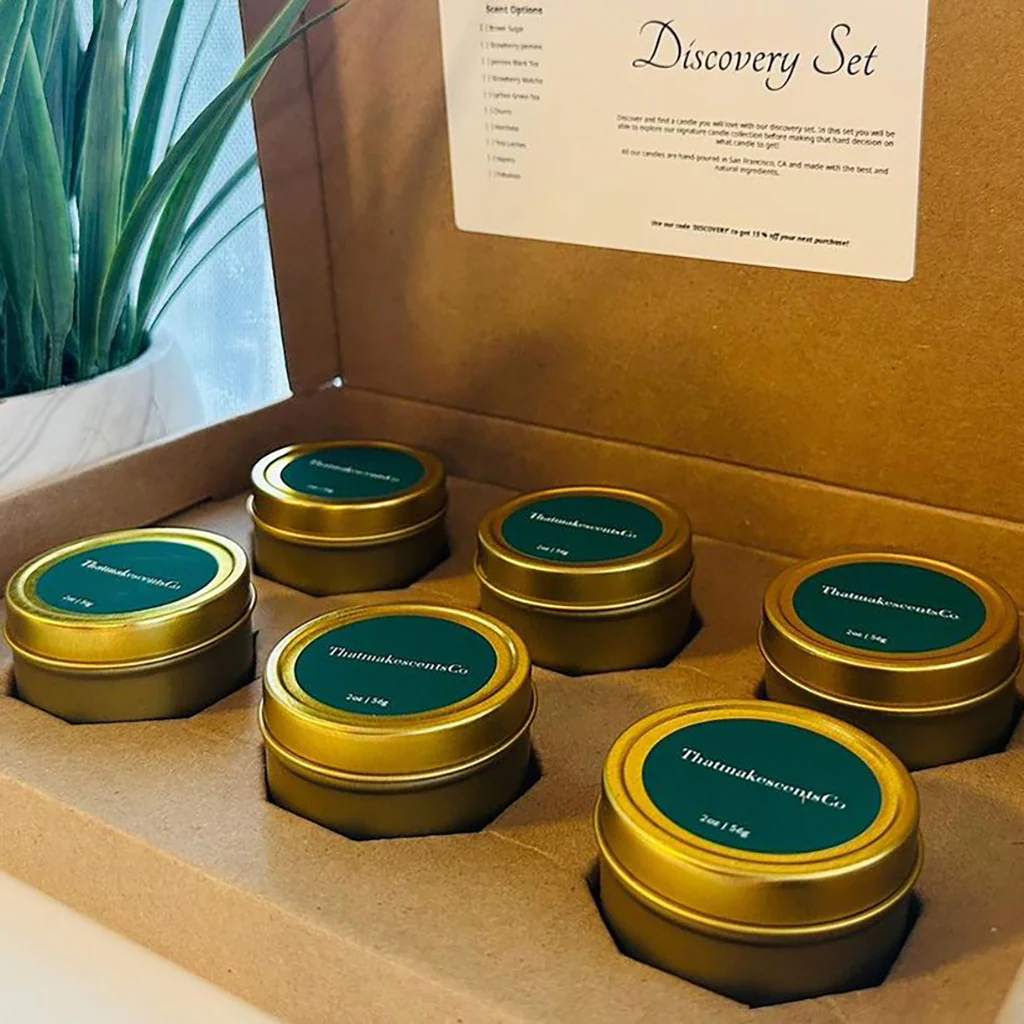
While 4 oz and 8 oz vessels remain the most common choices, smaller and mid-sized packaging options also serve important purposes. For instance, brands frequently use 2 oz tins for samples, discovery kits, wedding favors, hospitality amenities, and promotional giveaways. They are inexpensive to produce and easy to distribute. For fragrance testing purposes, the 2 oz container is highly effective, as it significantly lowers the barrier to trial.
The 6 oz candle tins represent another practical choice. It strikes an excellent balance between portability and burn time. Many brands opt for this size to create product lines that appear more premium or substantial than their 4 oz counterparts—without the need to step up to the 8 oz specification. This size suits products positioned somewhere between travel-sized candles and standard retail candles. It is particularly suitable when a brand desires a consistent aesthetic across its entire product line but requires a larger wax volume to enhance burning performance.
10 oz candle tins serve a different purpose. Candle makers prefer them for candles that require extended burn times or that aim to command greater visual presence on retail shelves. The 10 oz size tends to appeal more to customers seeking luxury products or those desiring a fragrance that is both long-lasting and intense. Furthermore, thanks to the jar’s larger surface area, this size offers greater scope for labeling and printing, thereby facilitating stronger brand image building.
In certain markets, 12 oz to 16 oz candle tins are also quite popular, particularly for multi-wick candles or larger-format home fragrance products. While small-batch artisanal brands may not typically choose this packaging format, it holds a significant place within high-end retail environments or product lines focused on refillable options.
Matching Candle Tins Capacity, Performance, and Design
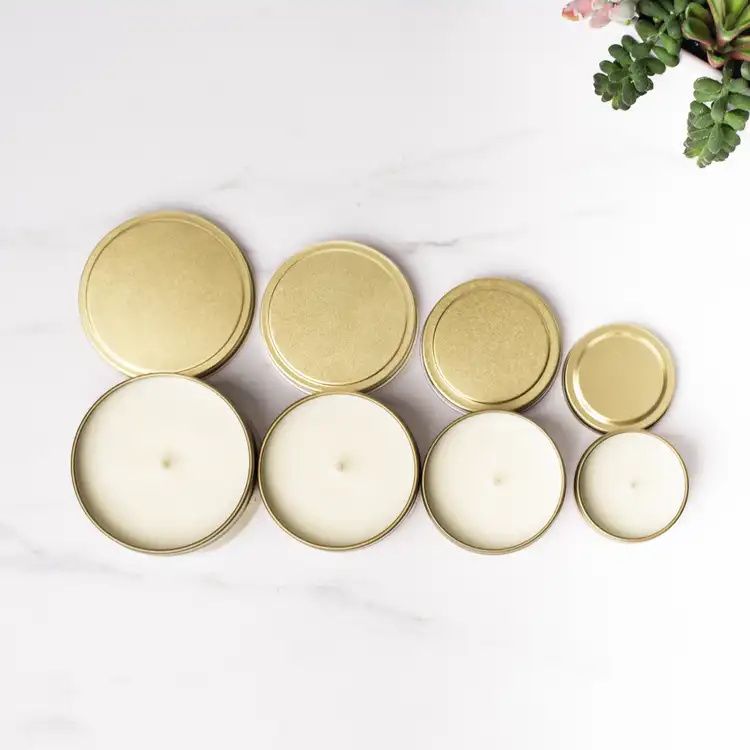
Selecting the appropriate candle tin capacity requires aligning the packaging dimensions with the candle’s performance characteristics. Smaller tins—such as the 2 oz and 4 oz sizes—are better suited for short-term use or product sampling, whereas larger tins—specifically 8 oz and above—are designed to deliver extended burn times and sustained fragrance diffusion.
As container capacity increases, selecting the candle wick becomes increasingly critical. Larger-diameter containers may require multiple wicks to ensure an even burn pool and prevent “tunneling.” Additionally, manufacturers must carefully adjust the fragrance load and wax blend to suit the specific container size, thereby ensuring optimal scent throw and safety. Consequently, from a design perspective, brands may choose to commission custom candle tins, which allow them to optimize capacity, shape, and aesthetic to precisely align with their specific market positioning—in contrast to standard sizes, which, while economical and straightforward, offer less scope for differentiation.
How Can Custom Design Help Brands Position Different Capacities?
Not all candle brands require a fixed set of standard sizes. Many businesses opt for custom candle tins to align their packaging with a specific market positioning, seasonal collection, or fragrance theme. Custom tin cans allow brands to tailor the size, shape, finish, and closure style to suit how their candles are sold. In some cases, this means adjusting an existing capacity; in others, it means creating a unique size.
For instance, a brand might use 4 oz tins for entry-level products, 8 oz tins for their core product line, and then commission custom 6 oz or 10 oz sizes for limited-edition collections. This approach creates a more organized product line and helps consumers instantly understand the product hierarchy.
Furthermore, custom sizing plays a key role in brand building. Slightly widening, heightening, or lowering the tin’s profile can completely transform a product’s overall aesthetic. Custom candle tins meet these specific design needs while retaining the practical advantages inherent in metal packaging. Additionally, brands can enhance the design appeal of their tins by selecting finishes—such as matte, glossy, soft-touch, printed, embossed, or minimalist styles—that resonate with their target audience.
How Do You Choose the Right Capacity?
The appropriate capacity depends on how the candles are sold. Retail products, artisanal candles, and gift candles each have distinct requirements, and the candle tins should reflect these differences. A size that works well in one market may prove ineffective in another.
For artisanal candle brands, 4 oz tins are often the ideal choice for early product lines. They are cost-effective to produce, easy to ship, and facilitate the testing of multiple fragrance varieties. Smaller brands can launch a diverse range of scents simultaneously without incurring excessive inventory risk. If a particular candle sells well, the brand can subsequently introduce an 8 oz tin as a flagship size.
For the retail market, brands typically consider 8 oz tins the safest bet, as they convey a sense of substance and premium quality. Moreover, 8 oz packaging provides ample space on the label for branding, ingredient details, and fragrance names—giving the product a substantial and impressive presence that appeals to retail buyers.
For candle gift sets, 2 oz and 6 oz tins are highly practical choices. Small candle tins are ideal for inclusion in gift sets, sample packs, wedding favors, and holiday gift boxes. They are easy to display and price. If the gift aims to evoke a sense of luxury or convey lasting value, designers may choose larger candle tins as more appropriate. For high-end home fragrance products, 10 oz or 12- to 16 oz candle tins are often the optimal choice. These sizes allow for a better showcase of the product’s design while also extending its burn time.
Selecting the Ideal Capacity
Choosing the right candle tin capacity is not merely a matter of packaging; it directly impacts burn performance, fragrance throw, consumer satisfaction, and brand perception. While 4 oz and 8 oz tins remain the industry standard for small-batch production and retail success, exploring alternative sizes—such as 2 oz, 6 oz, and 10-to-16 oz—enables brands to more effectively target specific market segments, from trial-size offerings to mid-range and high-end markets. Furthermore, customizing candle tins enables brands to differentiate their products while maintaining consistent product quality and functionality.




 Facebook
 Twitter
 Linkedin