
Posts

cigarette tins 9-9

Tinplate or aluminum: Which is better suited for making cigarette tins?

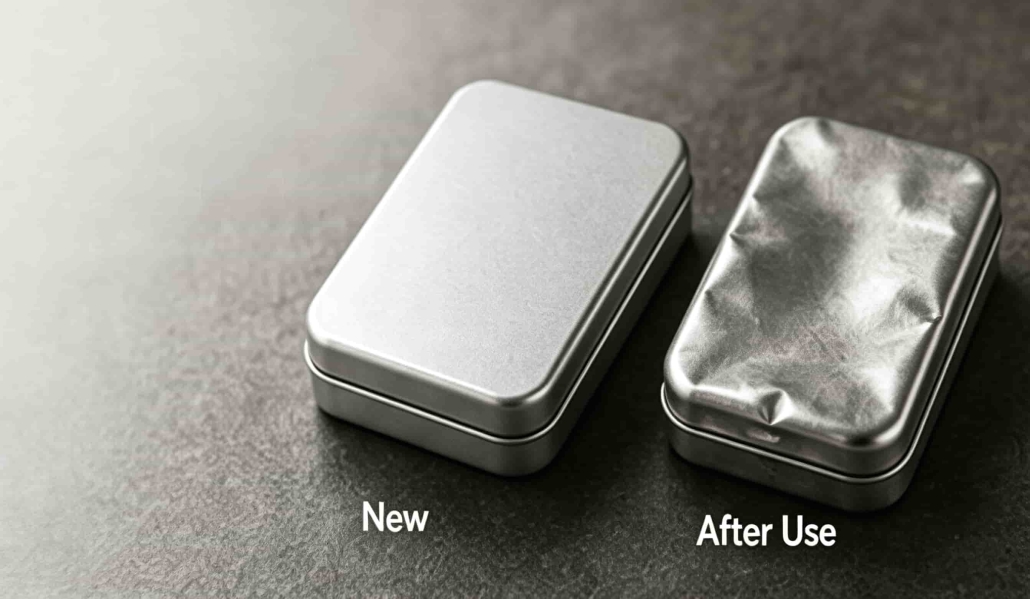
In theory, both materials can be used to manufacture cigarette tins. However, in practical applications, their performance characteristics differ significantly. Tinplate provides cigarette packs with greater rigidity, better shape retention, and better support for intricate surface decorations. Aluminum cigarette packs, on the other hand, are lightweight and stylish but softer in texture and more prone to deformation. For packaging like cigarette packs, where appearance, reusability, and structural precision are paramount, this can compromise the pack’s lifespan and durability.

We will compare these two materials in terms of structure, surface treatment, production efficiency, and long-term value, and explain why tinplate is the more balanced and reliable material choice.

Essential Functions of Cigarette Tins in Practical Use

A cigarette case must protect the cigarettes inside, open and close smoothly, look attractive whether displayed on a shelf or held in hand, and be sturdy and durable enough to withstand repeated use. In many cases, it is also part of the brand image. For this type of packaging, rigidity is crucial. If the shell bends too easily or develops dents, it loses its premium feel, and the perceived value of the product decreases; if the lid becomes loose after repeated use, the packaging’s reliability declines. These issues directly impact the user experience.

Tinplate cans have a sturdier structure, better shape retention, and a more premium feel

If your goal is to produce a cigarette tin that feels reliable and resists deformation, tinplate offers a clear advantage. This is one of the primary reasons TSING has chosen tinplate as its main material.

Tinplate maintains a crisp shape throughout production and use

Cigarette tins must retain their shape, with clean, neat edges, a lid that fits perfectly, and a stable exterior. Tinplate meets these requirements because it has the rigidity necessary for precise forming. When we manufacture cigarette tins using tinplate, the tins resist deformation better both during production and after the product reaches the customer, offering excellent stability. In contrast, aluminum is softer. Although aluminum can also be formed, it typically does not retain the sharp, defined edges of tinplate.

Tinplate maintains a crisp shape throughout production and use

Delivering a More Solid Tactile Experience

Before judging the appearance of packaging, consumers often touch it first. A cigarette case should feel sturdy in the hand, open effortlessly, and close securely. Tinplate imparts a more substantial tactile quality to the packaging, thereby enhancing its perceived value. This is one reason why premium brands often prefer metal cigarette cases made from tinplate. Consumers perceive this packaging as durable. This sensation helps elevate the product’s perceived value and conveys a sense of craftsmanship.

Easier to customize without compromising the rigidity of the cigarette tin

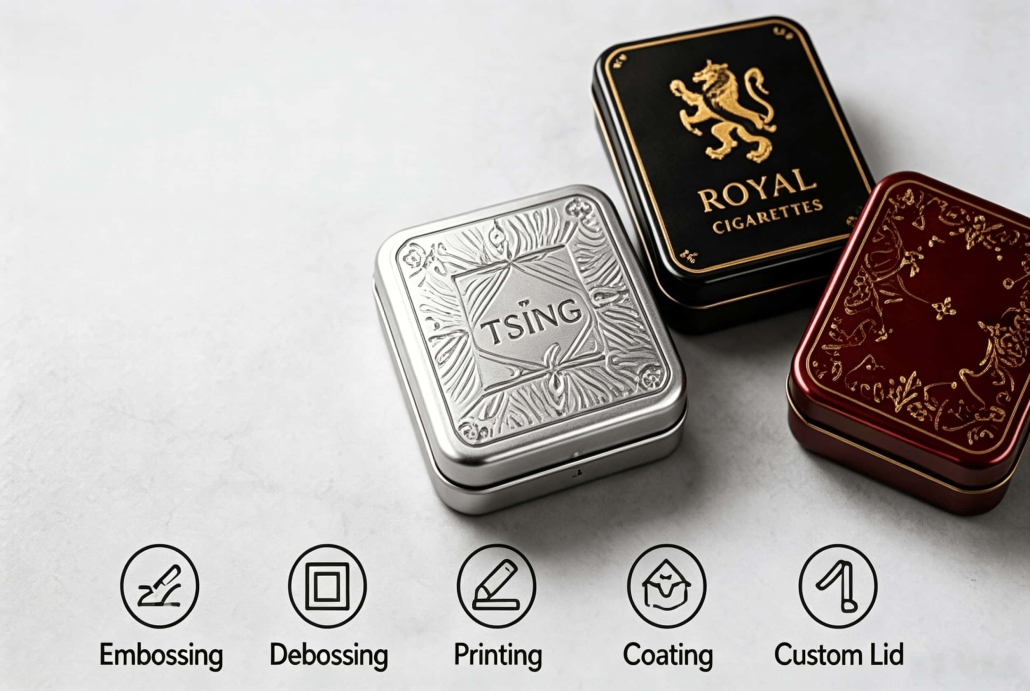
Another practical advantage of tinplate is that it allows for personalization without sacrificing too much strength. Techniques such as embossing, debossing, printed patterns, coatings, and custom lid details can all be effectively applied to tinplate substrates. This allows us greater freedom to create distinctive, custom cigarette tins while maintaining the can’s structural integrity. For brands seeking to create unique cigarette tin cases, tinplate offers a perfect balance of customization, premium feel, and durability. Tinplate makes achieving this balance easier.

Easier to customize without compromising the rigidity of the cigarette tin

Aluminum Has Certain Limitations

Aluminum is not without its merits. Certain properties make it quite attractive for specific product packaging applications. However, when it comes to cigarette tins, their limitations become impossible to ignore.

Aluminum tins are lighter, but that is not the primary requirement for cigarette tins

The most obvious advantage of aluminum is its light weight. It is lighter than a tinplate, offering a significant advantage in portability. However, cigarette cases are not products that can win in the market based solely on their lightweight. Most buyers want packaging that feels durable and high-quality. In this context, being too light can actually backfire. If the case feels too thin or too easily bent, it will appear low-value. At TSING, we’ve found that many clients prioritize the feel of the cigarette pack over its weight.

Aluminum is softer and more prone to visible deformation

One of aluminum’s biggest drawbacks is its softness. Softer materials are more prone to dents, and these dents quickly become apparent on small metal cases. This poses a problem for packaging designed to achieve a sleek, refined appearance. Cigarette tin cases frequently pass through many hands and may be placed in pockets, bags, drawers, or on display shelves. If the material is prone to deformation, the packaging loses its aesthetic appeal, which can undermine the brand image even if the product inside is high-quality. Tinplate cases perform better in this regard because they are structurally sturdier. These cases can withstand the various bumps and knocks of daily use.

It should be noted that aluminum can also be used for certain cigarette tin cases and is not entirely impractical. However, if you seek excellence in all aspects of a cigarette tin—including structure, surface finish, durability, customization, and a premium feel—tinplate offers distinct advantages.

Aluminum is softer and more prone to visible deformation

Tinplate is the most suitable material for cigarette tins

At TSING, we choose tinplate as our primary material because it delivers the best overall performance for cigarette tins. It maintains a crisp shape, is easy to customize, offers reliable surface finishes, and better preserves the tin’s appearance over time. Additionally, it allows us to produce cigarette tins that feel substantial and are reusable—exactly what many brands require. While aluminum may serve a purpose in certain specific applications, tinplate is the more comprehensive choice.

cigarette tin

Why is a hinged lid design more suitable for cigarette tins?

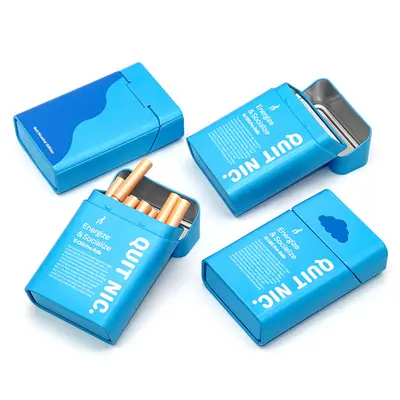
Besides protecting cigarettes, cigarette packaging needs to function in a way that aligns with user habits, closes securely, and feels premium in hand. Based on our years of manufacturing experience, hinged lids are the most practical. They offer a degree of durability and convenience. More importantly, their opening mechanism is very similar to that of ordinary cardboard cigarette tins, making them more user-friendly.

Why is a hinged lid the most natural opening method?

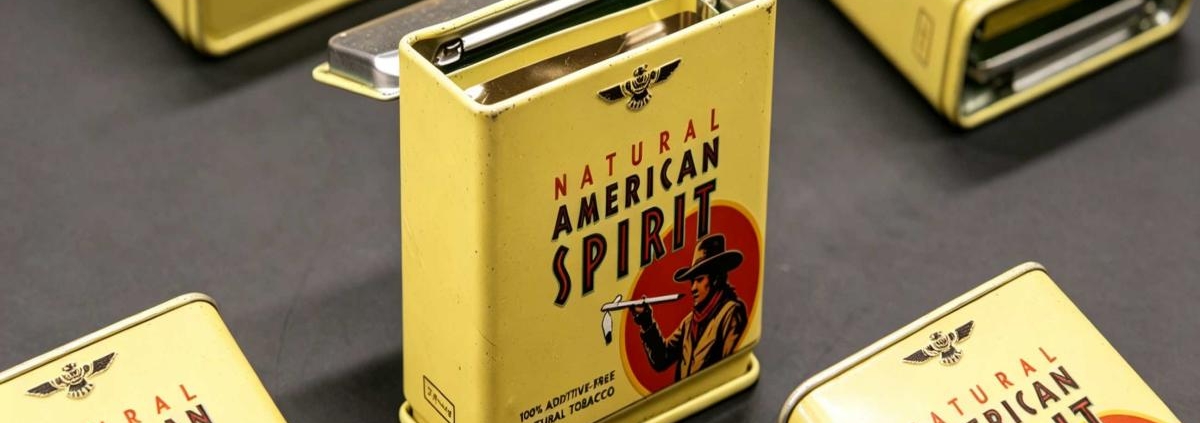
The opening action of a hinged lid is the same as that of a common cardboard cigarette tin: flipping or lifting it from the top. Hinged lid cigarette tins allow users to open the lid upwards, remove the cigarettes, and close it with a simple action. This packaging method doesn’t require users to develop new habits. Users accustomed to cardboard cigarette packaging can easily transition to tin cigarette boxes. This natural and smooth interaction is why hinged lid designs are more attractive in cigarette can packaging. For many brands, minimal design changes are unnecessary; users can still enjoy a familiar, convenient opening experience.

What advantages does a hinge design bring to cigarette tins?

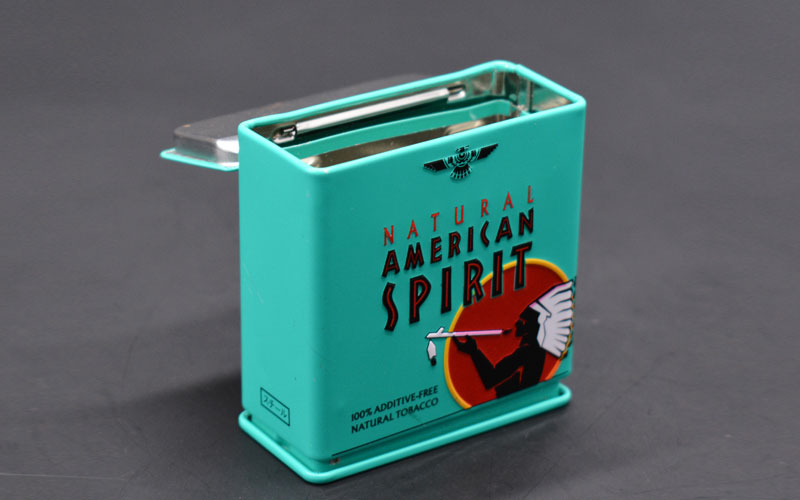
The hinge design reduces the risk of losing the lid. While removable lids may be practical in some packaging categories, for cigarette packaging, if the lid is easily lost, the packaging becomes unusable. A hinged cigarette case connects the lid to the body, eliminating the need for separate lid handling. Cigarette tin cases are opened and closed frequently throughout the day. A loose lid is inconvenient to keep in a pocket, a bag, or on a car dashboard. A hinged lid reduces this risk, as it’s integrated into the case structure. This small design improves the overall usability of the packaging. If customers want the product to feel like a practical everyday item rather than a fancy accessory, we usually recommend a hinged cigarette canister.

custom-cigarette-case-wholesale-5 (1)

Its structure allows for repeated use without complex design

Cigarette packaging requires frequent opening and closing, so its lid must withstand the wear and tear of repeated use. Hinged cigarette cases excel in their simple opening mechanism and straightforward mechanical structure. No separate lid or complex closing system is needed. Users can open, remove, and close the cigarette case with a single action. As tin can manufacturers, we know that the more complex the packaging design, the greater the likelihood of malfunctions. A well-designed hinge provides a stable opening point for the cigarette case while maintaining structural compactness. For cigarette cases, this better balances ease of use and overall lid stability.

A cigarette tin case with hinged lids offers superior ease of use

Good packaging design is never about making customers rack their brains trying to figure out how to use it. The effectiveness of hinged cigarette tin cases lies in their simple and intuitive opening mechanism. Users see the lid, open it, and can retrieve the contents. No twisting, prying, or disassembling of any parts is required. This simplicity makes the packaging more intuitive to use.

Cigarette packaging is typically opened multiple times a day, so the entire process from first to last opening should be smooth. Cigarette tin with hinged lids reduce the likelihood that users will be annoyed by cumbersome opening methods. This design maintains familiarity and predictability. Users fully understand how to use the packaging. A simple and easy-to-use design leads to greater user comfort and a longer lifespan. This is what a cigarette tin can package should be.

Tin cigarette can with hinged lid

It stems from a sense of structural sophistication, not just decoration.

Many of our clients believe that high-quality packaging is solely about printing or surface treatment, hoping to achieve a more premium feel through these methods. However, a sense of luxury can also stem from the structure itself. A cigarette case with a hinge often conveys a more upscale feel, like a finely crafted item. It opens and closes precisely, smoothly, and seamlessly. This tactile and user experience is itself part of the brand message. Because customers frequently interact with it, each opening and closing reinforces the impression of the product. Cardboard boxes may feel disposable, while fragile, removable lids may seem temporary. In contrast, a hinged metal case appears more thoughtful and durable. This helps enhance the brand’s value positioning.

The most suitable design for cigarette tins lids is the hinged lid

The hinged design is the best among many cigarette tin designs. It retains the common opening method of paper cigarette cases while combining the durability and premium feel of metal containers. Consumers will find this packaging easy to open and convenient to use, while also receiving a more robust, refined, and durable package. The hinged lid of the cigarette case solves the problem of difficult opening without adding complexity. It maintains the packaging’s compactness, ensures a secure lid, and aligns with people’s preconceived notions of cigarette packaging.

cigarette tins 3-3

How to ensure cigarette tins are corrosion resistant: Coatings, Liners, and Handling Tips

A high-end tobacco manufacturer received 5,000 custom cigarette tins ordered before last year’s holiday season, only to find rust at the seams when they arrived at retail stores. These tins, stored in a damp warehouse for three weeks, were severely corroded, even contaminating the cigarette packaging inside. For tobacco products, freshness and appearance are just as important as the product itself. Rusty cigarette cans not only affect aesthetics but also quality and can damage the tobacco inside. As a professional tin can manufacturer, we use advanced coatings, food-grade linings, and precise pretreatment techniques in our cigarette can production. We will also introduce methods to prevent rust, protect against moisture, and enhance the durability of cigarette cans, and provide practical maintenance tips to help you keep your cigarette boxes in perfect condition.

Why Does Rust in Cigarette Tins Affect Tobacco Quality?

Rust in cigarette tins is not just a cosmetic issue; it threatens the quality of the tobacco inside and the brand’s reputation. When cigarette boxes are typically stored in warehouses, transported to different climate zones, or placed in humid environments, even small amounts of moisture can react with the cigarette box’s metal substrate, causing oxidation. An unprotected tinplate reacts with oxygen and moisture. A single scratch on a poor-quality coating can expose the metal, leading to rapid rust spread. Furthermore, tobacco is sensitive; moisture from corrosion can seep into the cigarette case, spoiling the tobacco’s freshness. A rusty cigarette tin also conveys a sense of neglect. For a premium cigarette brand priced over $50, rusty packaging is unacceptable.

cigarette tins 3-5

Anti-corrosion Coating – The First Line of Defense Against Corrosion

The outer layer of the cigarette tin is its first line of defense against moisture and oxygen. Tsing uses two layers of corrosion-resistant coatings specifically designed to meet the unique needs of cigarette tins:

Base Coating: Food-grade tinplate, passivated: All Tsing cigarette tins are made from high-quality food-grade tinplate (pure tin-coated steel). Then we passivate it – forming a thin, invisible layer of chromate or zirconium on the tin surface to prevent it from reacting with oxygen. This single step reduces corrosion risk by 60%, well below that of unpassivated tinplate.

Topcoat: We use a premium low-VOC powder coating for surface treatment, available in matte, gloss, and metallic colors. Unlike cheap paints, our powder coating is 80 microns thick, three times the industry standard, allowing it to adhere firmly to tinplate and effectively resist scratches, impacts, and moisture. Furthermore, it is UV-resistant, so the cigarette packs will not fade or age even when stored in bright retail display cases. The seams of cigarette packs are the most susceptible to moisture. Tsing applies a clear, flexible sealant to all seams.

Food-grade liner for cigarette tins, protecting tobacco from internal corrosion

While the outer coating protects against external moisture, the inside of the cigarette pack requires a food-grade liner to prevent direct contact between the metal and tobacco and to block internal humidity. Tsing offers two liners, customizable to your needs:

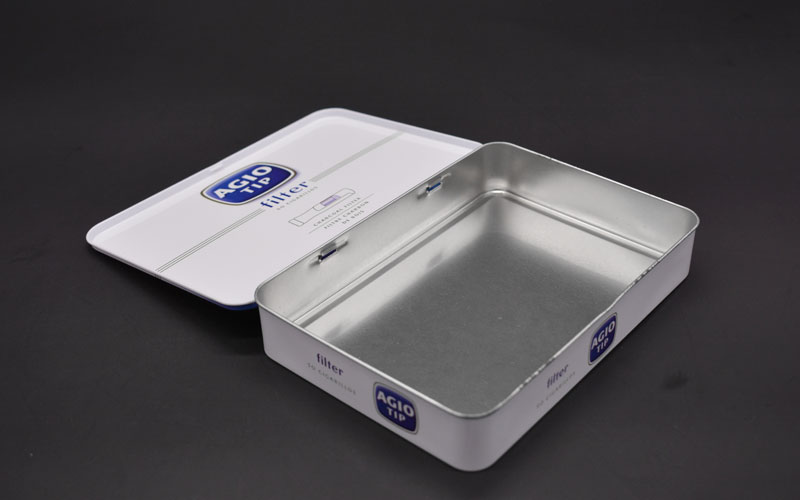
BPA-free epoxy liner: Our standard liner uses food-grade epoxy resin to form a smooth, non-reactive barrier between the cigarette pack metal and the tobacco. It is colorless and odorless, and prevents any metal particles from seeping into the product. This liner is suitable for most cigarette cases, including bulk and branded packaging.

Polypropylene (PP) Liner: We offer PP liners for premium cigarette cases or cigarettes requiring long-term storage—thicker, more durable, and 100% moisture-proof. It is heat-sealable, so you can lock in the freshness of your cigarettes while adding an extra layer of corrosion protection. Both cigarette case liners meet US FDA and EU food safety standards, so you can be confident they will not affect the flavor or safety of the tobacco.

Food-grade liner for cigarette tins, protecting tobacco from internal corrosion

Pretreatment Technology—Metal Pretreatment for Maximum Durability

Corrosion protection begins before the first coating is applied. Tsing uses a three-step pretreatment process to ensure perfect adhesion between the coating and liner, eliminating weak points:

Degreasing: We clean the tinplate with a food-grade alkaline solution to remove residual oil, dust, or debris from the manufacturing process. Even tiny contaminants can hinder coating adhesion, creating gaps that allow moisture to seep in.

Pickling: The tin-plated iron sheet is immersed in a dilute acid solution to remove surface rust or oxides that may have formed during storage. This step ensures the metal is clean and smooth, preparing it for subsequent coating.

Rinsing and Drying: We rinse the tin-plated steel sheets with deionized water and dry them in a controlled environment. Moisture during pretreatment can cause premature corrosion, so we tolerate no mistakes.

While Tsing’s pretreatment process adds 24 hours to production time, it doubles the corrosion resistance of cigarette canisters (from 2 years to over 5 years).

Treatment and Storage Tips for Extending Corrosion Resistance

Even the highest quality cigarette canisters require proper care to prevent rust. Here are our expert tips for the care and storage of cigarette tins:

Avoid Humid Environments: Store cigarette tins in a dry place. Use desiccant packets in warehouses or shipping containers to absorb excess moisture, especially in coastal or tropical areas.

Prevent Scratch: The coating is scratch-resistant, but not completely scratch-proof. Avoid stacking heavy objects on cigarette tins and use partitions inside shipping containers to reduce friction. Scratching the metal will expose it, so handle the cigarette case with clean, dry hands.

Control Temperature: Drastic temperature changes can cause condensation. Before opening the cigarette case, allow it to reach room temperature to prevent moisture buildup.

Gentle Cleaning: If the case gets dirty, wipe it with a dry, soft cloth. Avoid using water, cleaning sprays, or abrasive materials, as these can damage the coating or lining.

Visible, Reliable Protection

Corrosion of cigarette cases is not inevitable. Tsing’s triple protection system—an advanced coating, a food-grade lining, and precise pretreatment—effectively blocks moisture, oxygen, and time. Our rigorous quality control ensures that every cigarette case meets the highest standards, and our care guidelines help you maintain its protective properties long after you receive the product.