
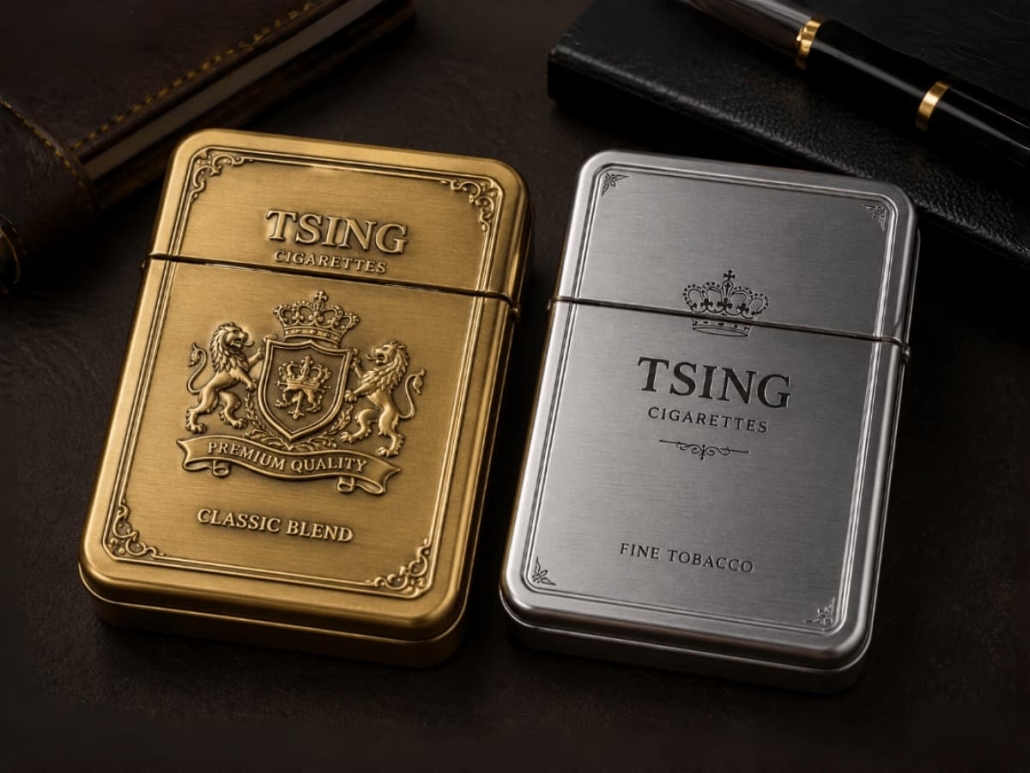
Tinplate or aluminum: Which is better suited for making cigarette tins?
In theory, both materials can be used to manufacture cigarette tins. However, in practical applications, their performance characteristics differ significantly. Tinplate provides cigarette packs with greater rigidity, better shape retention, and better support for intricate surface decorations. Aluminum cigarette packs, on the other hand, are lightweight and stylish but softer in texture and more prone to deformation. For packaging like cigarette packs, where appearance, reusability, and structural precision are paramount, this can compromise the pack’s lifespan and durability.
We will compare these two materials in terms of structure, surface treatment, production efficiency, and long-term value, and explain why tinplate is the more balanced and reliable material choice.
Essential Functions of Cigarette Tins in Practical Use
A cigarette case must protect the cigarettes inside, open and close smoothly, look attractive whether displayed on a shelf or held in hand, and be sturdy and durable enough to withstand repeated use. In many cases, it is also part of the brand image. For this type of packaging, rigidity is crucial. If the shell bends too easily or develops dents, it loses its premium feel, and the perceived value of the product decreases; if the lid becomes loose after repeated use, the packaging’s reliability declines. These issues directly impact the user experience.
Tinplate cans have a sturdier structure, better shape retention, and a more premium feel
If your goal is to produce a cigarette tin that feels reliable and resists deformation, tinplate offers a clear advantage. This is one of the primary reasons TSING has chosen tinplate as its main material.
Tinplate maintains a crisp shape throughout production and use
Cigarette tins must retain their shape, with clean, neat edges, a lid that fits perfectly, and a stable exterior. Tinplate meets these requirements because it has the rigidity necessary for precise forming. When we manufacture cigarette tins using tinplate, the tins resist deformation better both during production and after the product reaches the customer, offering excellent stability. In contrast, aluminum is softer. Although aluminum can also be formed, it typically does not retain the sharp, defined edges of tinplate.

Delivering a More Solid Tactile Experience
Before judging the appearance of packaging, consumers often touch it first. A cigarette case should feel sturdy in the hand, open effortlessly, and close securely. Tinplate imparts a more substantial tactile quality to the packaging, thereby enhancing its perceived value. This is one reason why premium brands often prefer metal cigarette cases made from tinplate. Consumers perceive this packaging as durable. This sensation helps elevate the product’s perceived value and conveys a sense of craftsmanship.
Easier to customize without compromising the rigidity of the cigarette tin
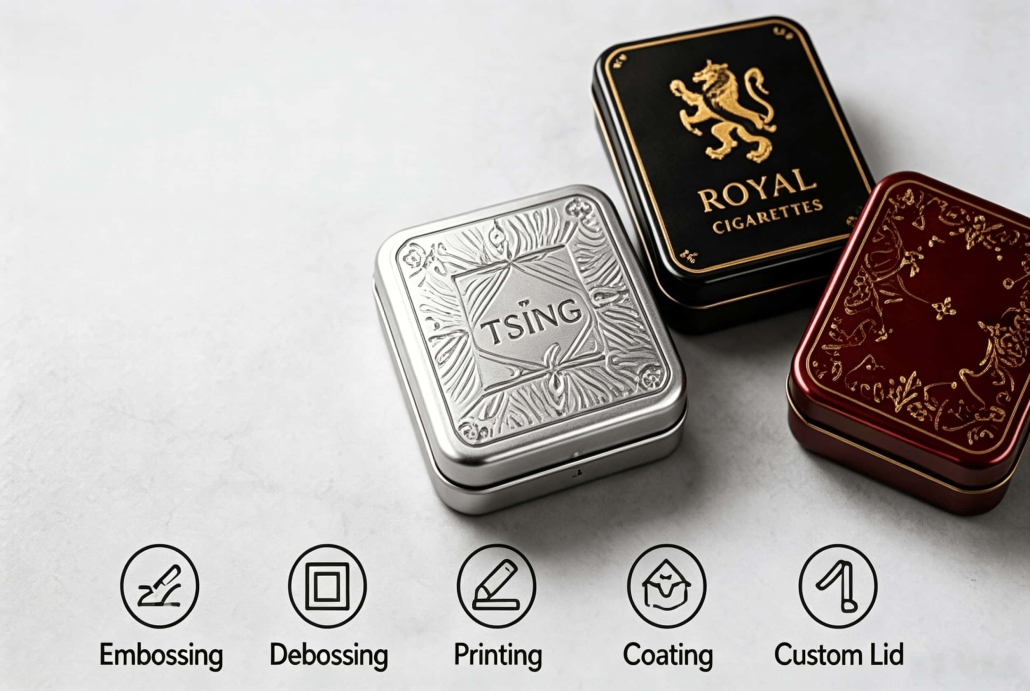
Another practical advantage of tinplate is that it allows for personalization without sacrificing too much strength. Techniques such as embossing, debossing, printed patterns, coatings, and custom lid details can all be effectively applied to tinplate substrates. This allows us greater freedom to create distinctive, custom cigarette tins while maintaining the can’s structural integrity. For brands seeking to create unique cigarette tin cases, tinplate offers a perfect balance of customization, premium feel, and durability. Tinplate makes achieving this balance easier.
Aluminum Has Certain Limitations
Aluminum is not without its merits. Certain properties make it quite attractive for specific product packaging applications. However, when it comes to cigarette tins, their limitations become impossible to ignore.
Aluminum tins are lighter, but that is not the primary requirement for cigarette tins
The most obvious advantage of aluminum is its light weight. It is lighter than a tinplate, offering a significant advantage in portability. However, cigarette cases are not products that can win in the market based solely on their lightweight. Most buyers want packaging that feels durable and high-quality. In this context, being too light can actually backfire. If the case feels too thin or too easily bent, it will appear low-value. At TSING, we’ve found that many clients prioritize the feel of the cigarette pack over its weight.
Aluminum is softer and more prone to visible deformation
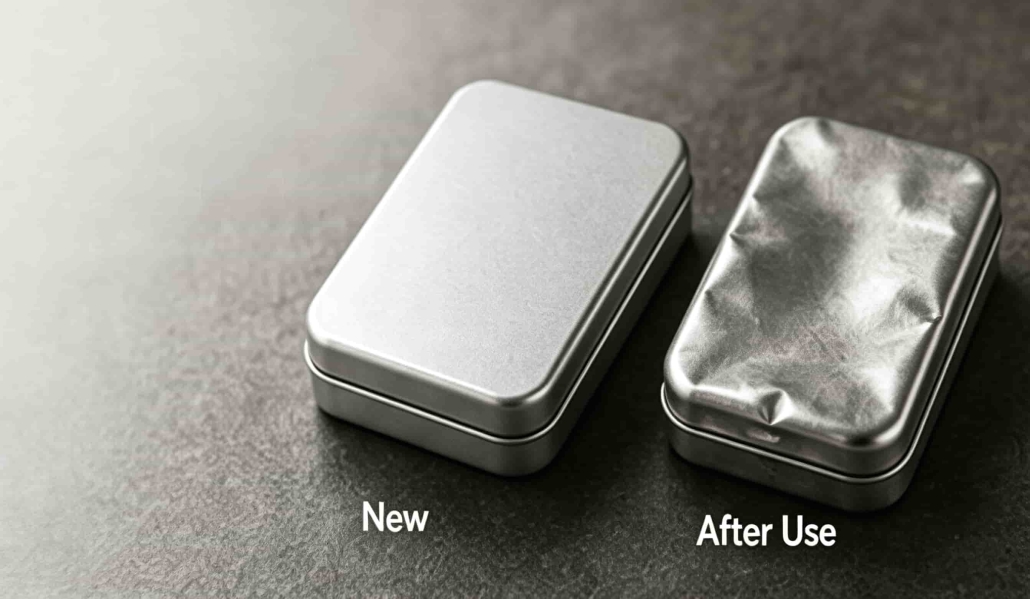
One of aluminum’s biggest drawbacks is its softness. Softer materials are more prone to dents, and these dents quickly become apparent on small metal cases. This poses a problem for packaging designed to achieve a sleek, refined appearance. Cigarette tin cases frequently pass through many hands and may be placed in pockets, bags, drawers, or on display shelves. If the material is prone to deformation, the packaging loses its aesthetic appeal, which can undermine the brand image even if the product inside is high-quality. Tinplate cases perform better in this regard because they are structurally sturdier. These cases can withstand the various bumps and knocks of daily use.
It should be noted that aluminum can also be used for certain cigarette tin cases and is not entirely impractical. However, if you seek excellence in all aspects of a cigarette tin—including structure, surface finish, durability, customization, and a premium feel—tinplate offers distinct advantages.
Tinplate is the most suitable material for cigarette tins
At TSING, we choose tinplate as our primary material because it delivers the best overall performance for cigarette tins. It maintains a crisp shape, is easy to customize, offers reliable surface finishes, and better preserves the tin’s appearance over time. Additionally, it allows us to produce cigarette tins that feel substantial and are reusable—exactly what many brands require. While aluminum may serve a purpose in certain specific applications, tinplate is the more comprehensive choice.



 Facebook
 Twitter
 Linkedin
