
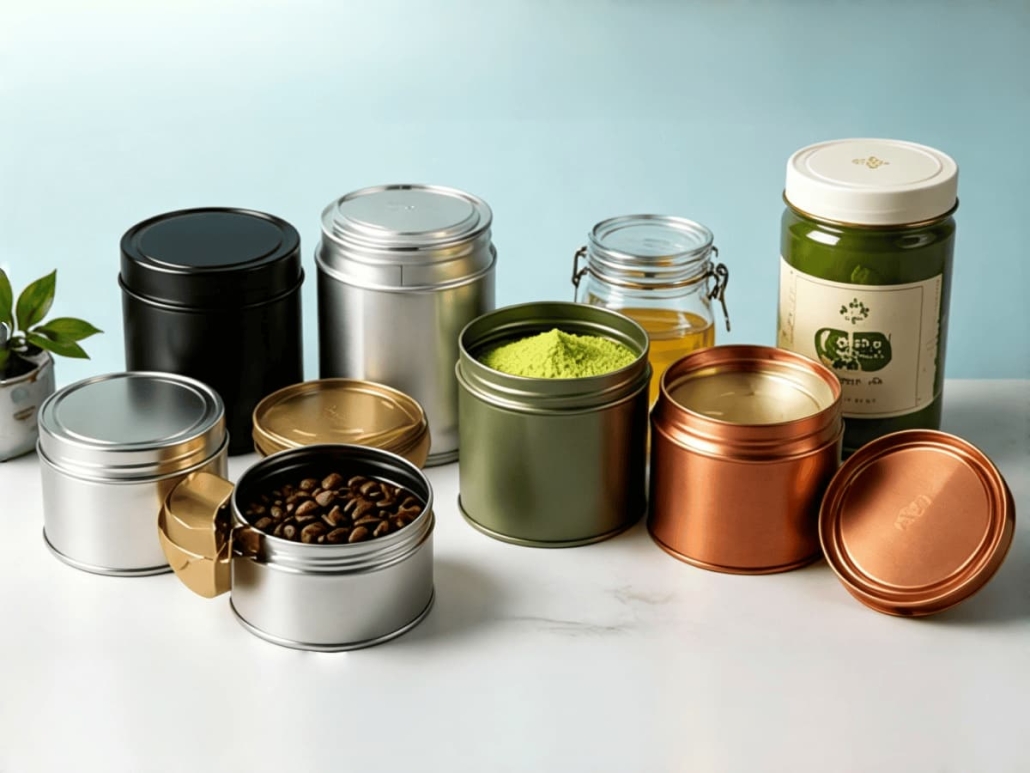
Customized Leak-Proof Metal Containers: Meeting Diverse Leak-Proof Packaging Need
Different products have varying requirements for packaging seal integrity and leak resistance; products that require aroma protection differ from those that require antioxidant protection. Liquid products also have different packaging requirements than fine powders. Even for two products within the same category, improvements may be needed in terms of sealing performance, cap feel, or internal protection. Therefore, in such cases, customers typically opt for customized leak-proof metal containers. We view leak-proof packaging as a holistic system and design the structural and sealing performance of leak-proof metal containers for specific products and requirements.
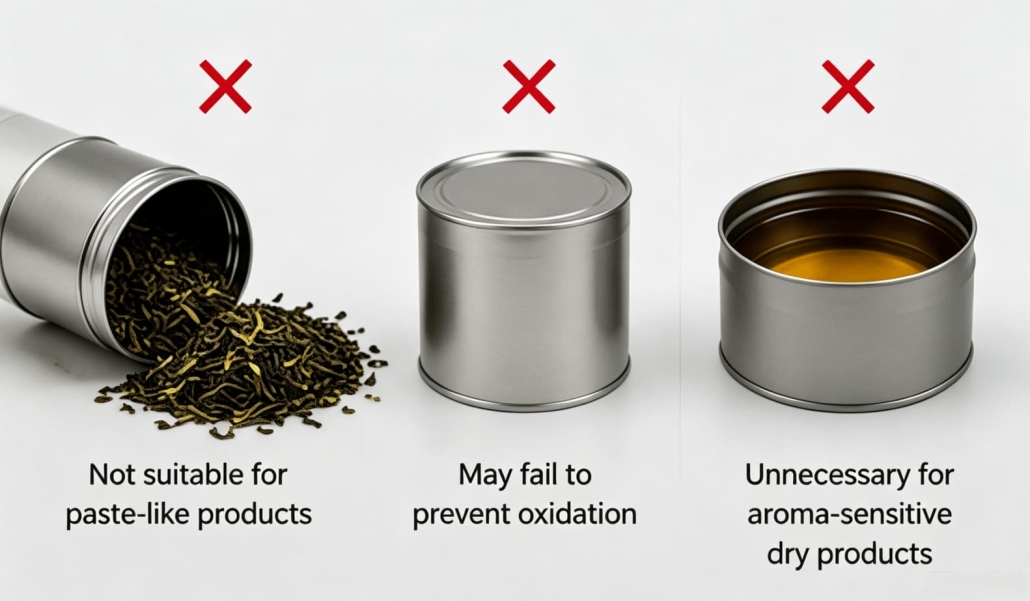
Why Can’t Generic Metal Containers Provide Optimal Sealing for Every Product?
A lid suitable for dry tea may not be sufficient to seal a paste-like product. A simple metal can may look clean and high-end, but it may fail to prevent oxidation. A deep-drawn can body may be ideal for liquids, but it is unnecessary for dry products that only need to retain their aroma.
This is why customization is essential. Different products require different forms of support, and leak-proof metal containers must reflect these differences. If the packaging is too simple, the product may be compromised; if it is too complex, buyers will end up paying for features that offer no added value. The optimal packaging solution lies somewhere in between: it must be specific enough to solve practical problems while remaining practical enough to ensure stability in mass production.
How do we match leak-proof metal containers design with product requirements?
At TSING, we do not view leak-proof performance as a single function, but rather as a structural decision. Therefore, we categorize packaging solutions into distinct structural designs, ensuring each type meets the sealing requirements of its specific product category. This enables us to recommend the most suitable metal cans to our clients.
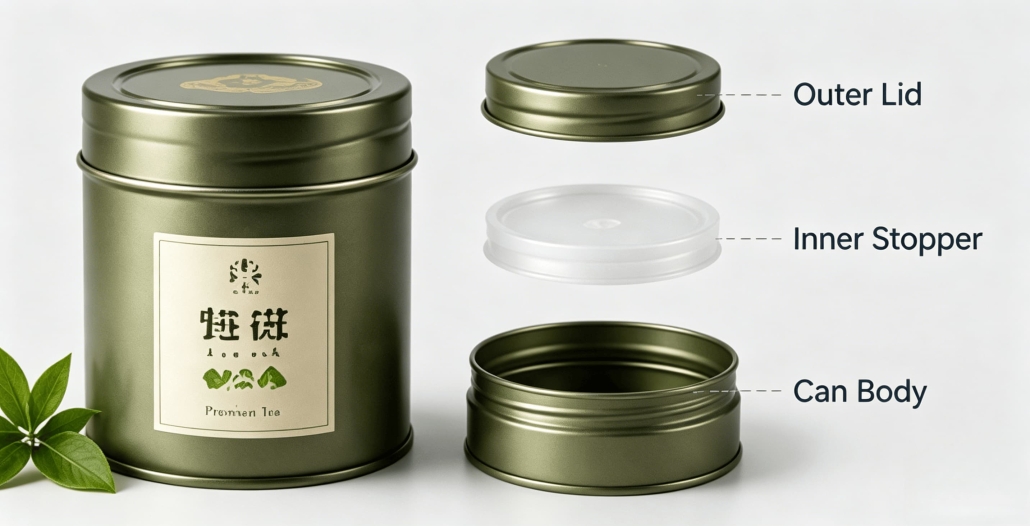
Inner Stopper Lid Structure, Suitable for Aroma-Sensitive Products
The inner stopper lid structure is one of the most effective methods for enhancing the sealing performance of aroma-sensitive products. This design incorporates an inner stopper (typically made of plastic) or a metal inner lid beneath the outer lid. The outer lid provides the primary sealing function and aesthetic appeal, while the inner stopper creates an additional barrier between the product and the external environment.
This structure is particularly suitable for matcha, premium teas, coffee beans, and other products where aroma retention is critical. While these products may not require a completely airtight liquid container, they do require superior air-tightness compared to standard lids. Inner-seal lids help retain aroma for longer, maintaining product freshness and enhancing customer satisfaction.
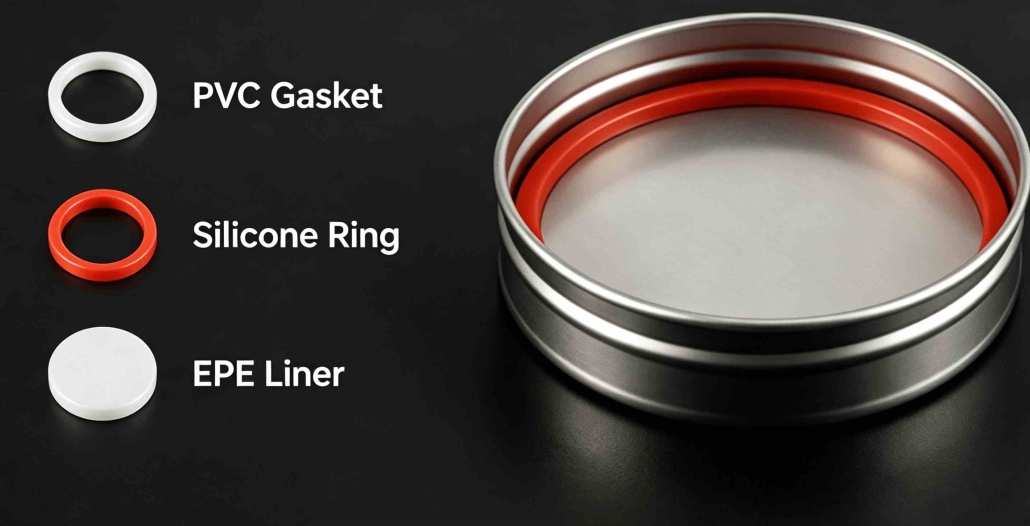
Sealing Gaskets and Liner Technologies for Oxidation Control
The second key design involves sealing gaskets or liner technologies. This approach involves inserting PVC gaskets, silicone rings, or EPE liners into the inner surface of the lid of a leak-proof metal container. The liner creates a tighter contact surface between the cap and the container, thereby improving the seal and reducing the likelihood of air exchange or leakage. This sealing technology is ideal for specific product categories that require protection against oxidation, moisture, or minor leakage. It not only prevents visible spills but also slows the degradation of quality caused by environmental exposure.
Seamless Deep Drawing for Liquids and Fine Powders
The seamless deep-drawing process is one of the most reliable options for leak proof metal container construction. This process forms the entire container body by directly deep drawing a single sheet of metal, thereby eliminating weld seams at the bottom and side walls.
Liquids exert pressure on every weak point in the packaging. Even the smallest structural gaps can allow fine powders to leak out. Seamless tins reduce these risks by eliminating the most common pathways for side leakage. Therefore, deep-drawn metal cans are often the best choice for products requiring a stronger seal. This construction also improves consistency. When the body of the package is made from a single piece of material, we can better control the shape, wall thickness, integrity, and seal alignment. This makes the packaging more reliable during production and more stable during transportation.
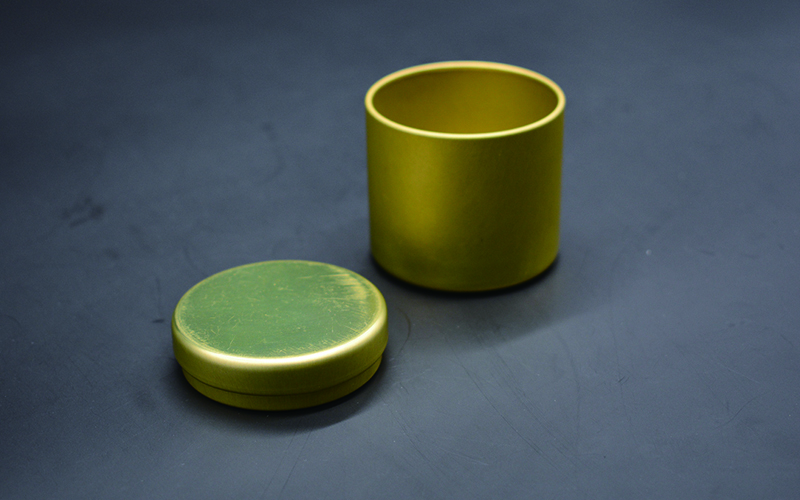
The Neck-In Process: Achieving a Tighter Fit
The neck-in process, also known as an inward-tapered structure, is another leak-proof structural option. In this design, the rim of the can gradually tapers inward, creating a tighter fit between the lid and the body. This increases friction, making the lid feel tighter when closed. The primary advantage of this design lies in the quality of contact. A tighter-fitting lid typically improves the overall seal and provides a more secure feel. This structure is suitable for products that require a cleaner, more premium appearance while enhancing sealing performance. This includes dry goods, creams, and other products that require a precise seal.
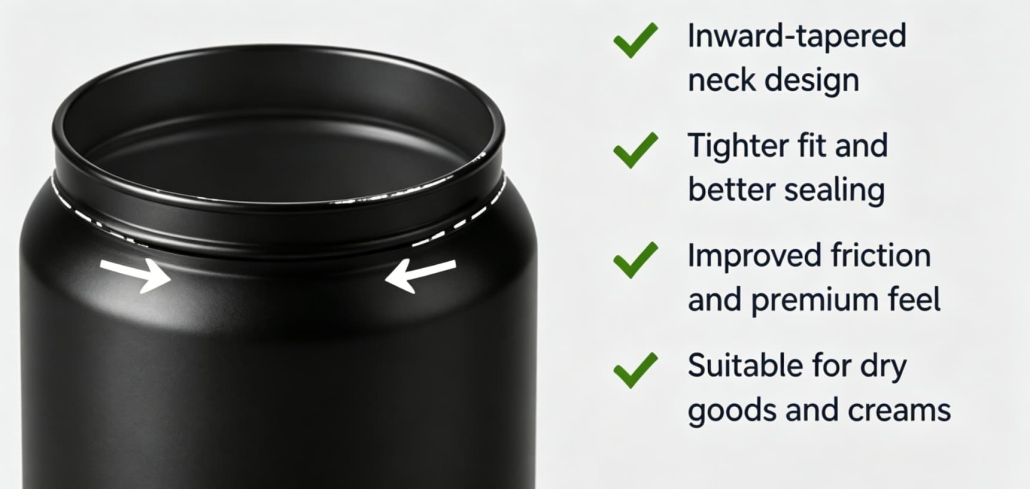
Customized Leak-Proof Metal Containers Structures Meet Diverse Packaging Needs
Different products require different leak-proof strategies, but the goal remains consistent: to protect the product and ensure reliable packaging. Inner-seal lid structures help preserve aroma. Sealing gaskets and liners help prevent oxidation and leakage. Seamless deep-draw forming eliminates the risk of side leakage. A widened neck design improves lid fit and grip. As a tin can manufacturer, we utilize these customized structures to provide our customers with a variety of leak-proof metal containers.
 Facebook
 Twitter
 Linkedin
