
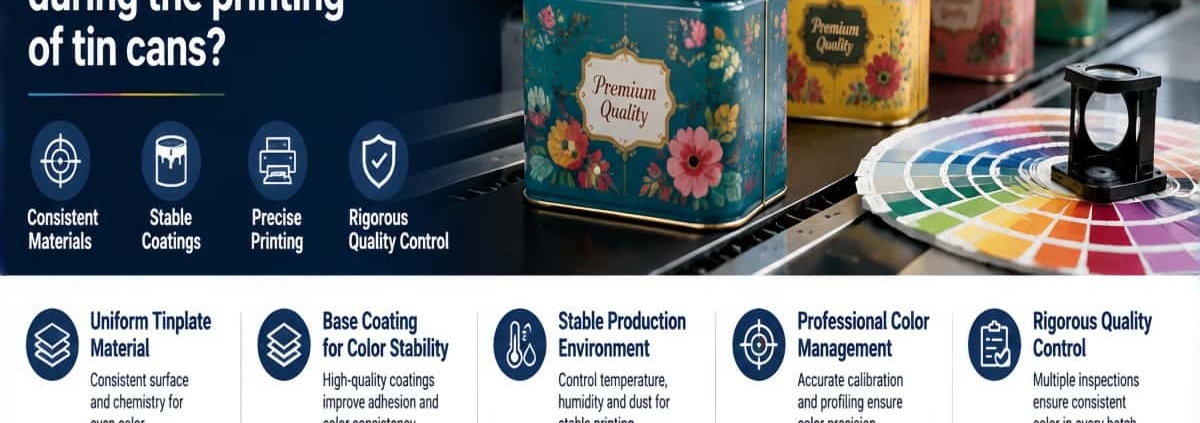
How do tin box manufacturers prevent color deviation issues during the printing of tin cans?
Unlike paper or flexible packaging materials, tinplate packaging possesses unique characteristics that make color control more complex. The metallic surface of tinplate affects ink reflection, coating adhesion, and the final visual color effect. Factors such as surface treatment, printing pressure, ink formulation, drying conditions, and the production environment all influence the final appearance of the tin box. Achieving consistent color reproduction during production relies not only on adjusting printing equipment but also on a comprehensive control system covering every stage—from raw material inspection and pre-press color management to print calibration and final product inspection. Through standardized processes, advanced printing technology, and rigorous quality monitoring, tin box manufacturers can significantly reduce color variation and ensure that every batch of custom tin boxes meets approved design specifications.
Tin Box Manufacturers Ensure Stable Printing Foundations by Controlling Raw Material Quality
For tin box manufacturers, preventing color variation begins before the printing process even starts. The quality and condition of the tinplate directly affect how ink appears on the surface. If the surface characteristics of the metal substrate are inconsistent, it is difficult to guarantee stable color performance, even with the best printing equipment. The surface characteristics of tinplate differ vastly from those of paper or plastic substrates. Tinplate’s reflective properties alter the visual effect of printed colors, particularly with light shades, metallic effects, and high-gloss finishes. Therefore, professional tin box manufacturers strictly screen and inspect tinplate materials before production.
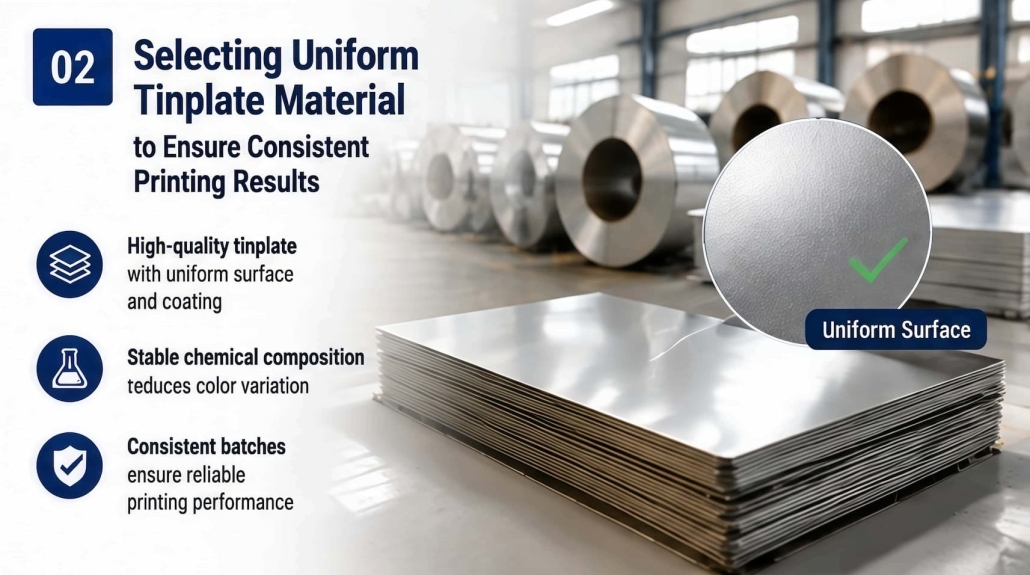
Selecting Uniform Tinplate Material to Ensure Consistent Printing Results
Reliable tin box manufacturers first ensure that every batch of tinplate meets strict quality standards. Consistency must be maintained regarding thickness, surface flatness, coating compatibility, and cleanliness.
Common inspection criteria include:
- Tinplate thickness consistency:
Fluctuations in material thickness affect printing pressure and ink transfer, leading to uneven color rendering. - Surface flatness:
A flat metal surface facilitates even ink distribution, preventing variations in gloss or color density. - Surface Cleanliness:
Oil, dust, or oxide layers on the tinplate surface can reduce ink adhesion, leading to uneven printing results. - Coating Compatibility:
The base coating applied before printing must be highly compatible with the printing ink to ensure consistent color reproduction.
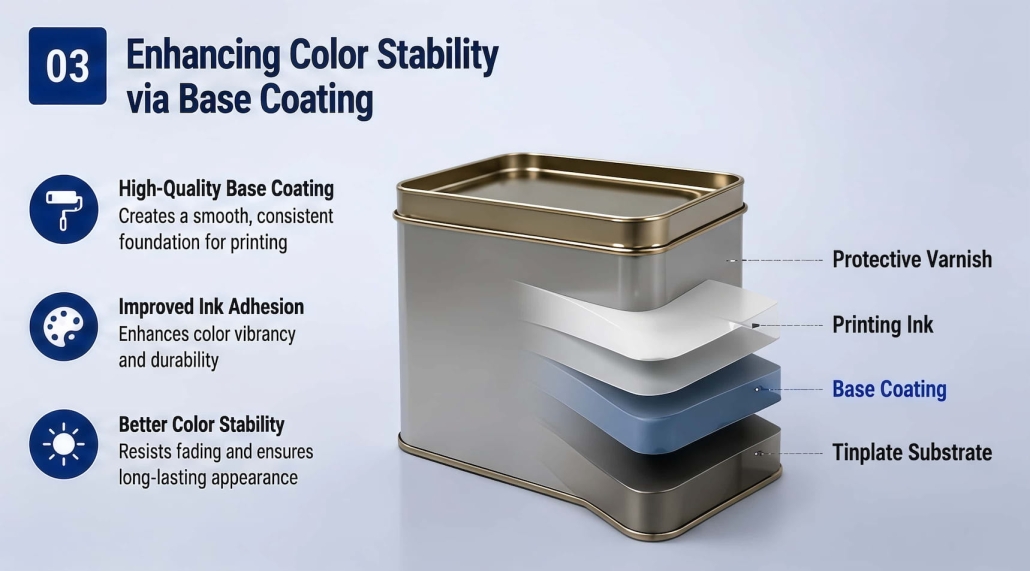
Enhancing Color Stability via Base Coating
Before printing designs onto tin cans, manufacturers typically apply a base coat (primer). This step is crucial for ensuring color accuracy. Since tinplate has a natural silvery metallic sheen, printing directly onto the bare metal surface can lead to color deviations. The reflective nature of the metal can cause certain colors to appear darker or brighter than the original design, or result in unwanted color shifts.
Applying a white base coat creates a neutral background, allowing printed colors to be rendered more accurately.
For example:
| Printing Method | Without Base Coating | With Base Coating |
|---|---|---|
| Light colors | May appear grayish or metallic | Cleaner and closer to design color |
| Brand colors | May shift due to metal reflection | More stable and consistent |
| Fine patterns | Lower contrast | Sharper visual effect |
For custom tin boxes—especially those requiring precise brand color matching—manufacturers often use a controlled white base-coating process before proceeding with CMYK or spot color printing. This practice significantly improves color consistency across different production batches.
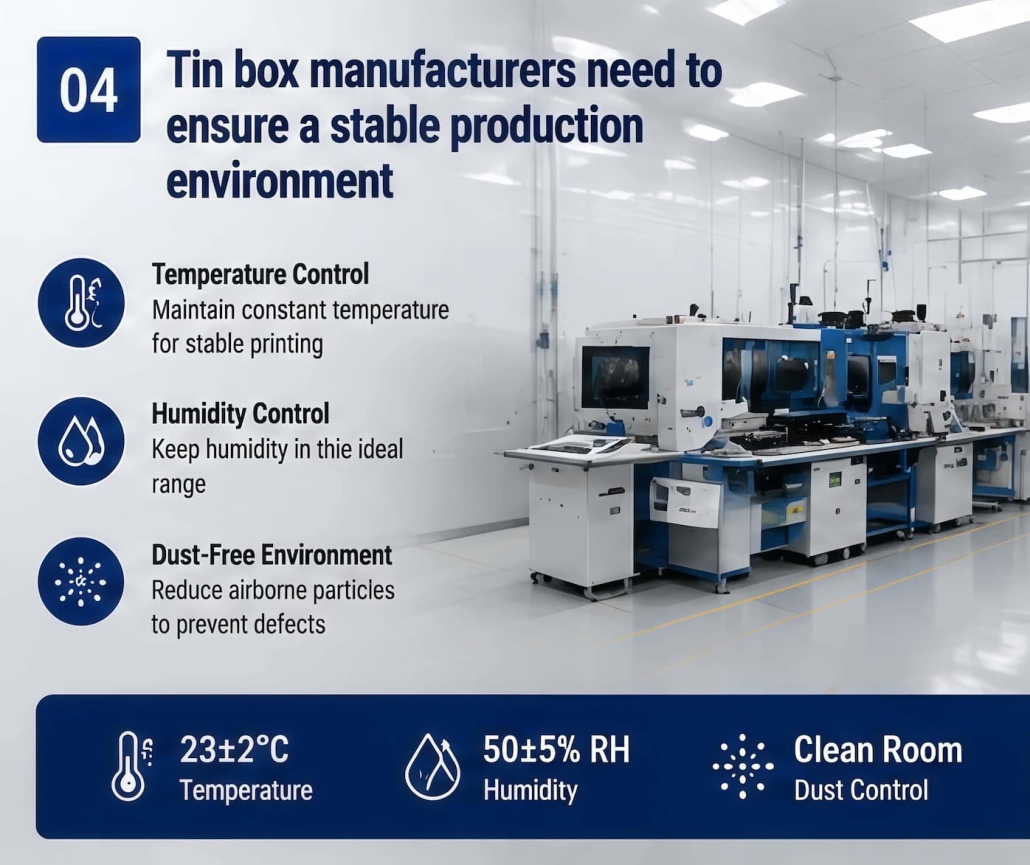
Tin box manufacturers need to ensure a stable production environment
Environmental conditions also impact printing outcomes. Temperature, humidity, and dust levels can affect ink viscosity, drying times, and color rendering. Tin can manufacturers can manage the production environment by taking the following measures:
- Maintaining stable workshop temperatures
- Controlling humidity levels
- Keeping the printing area clean
- Performing regular equipment maintenance
For example, excessive humidity can slow down ink drying, leading to color deviations after curing; conversely, an overly dry environment can generate static electricity, affecting ink distribution and printing precision. Therefore, controlling the production environment helps manufacturers minimize unexpected color variations and ensures consistent product quality during mass production.
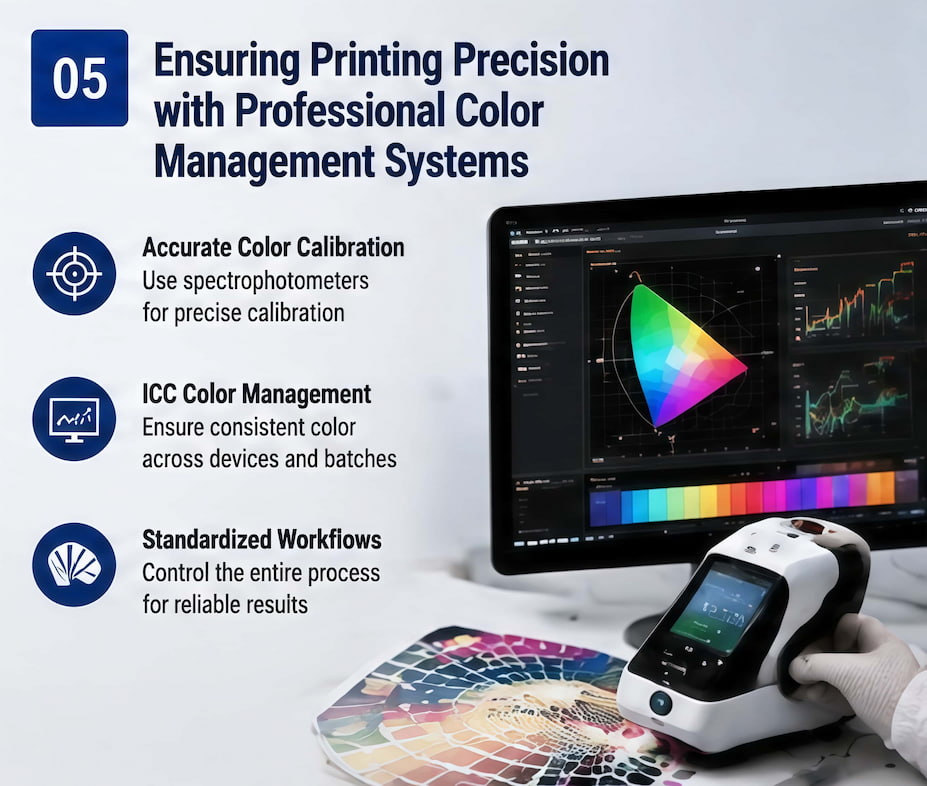
Ensuring Printing Precision with Professional Color Management Systems
After preparing a stable tinplate surface, manufacturers must accurately translate the client’s design concepts into production-ready printing standards. Many color discrepancies do not stem from the printing press itself, but rather from differences between digital design files, physical samples, and mass-produced finished goods.
Therefore, a professional tin box manufacturer needs to establish a comprehensive color management process before printing. This ensures that designers, production teams, and quality control personnel all adhere to unified color reference standards.
Establishing Standard Color References Before Mass Production
For custom tins, clients typically provide brand colors, logos, illustrations, and packaging designs via digital files. However, discrepancies often exist between the colors displayed on a computer screen and the actual printed output because monitors use the RGB color model, whereas tin box printing primarily employs CMYK, spot colors, and special coating effects. To avoid such issues, manufacturers typically convert client designs into professional printing standards before production begins.
Key steps include:
1. Design Review and Color Separation
Production engineers analyze the client’s design files to confirm color suitability for tinplate printing. They verify the following elements:
- CMYK color values
- Pantone spot colors
- Printing layers
- White ink coating requirements
- Metallic finish requirements
2. Physical Proof Confirmation
Before large-scale production, manufacturers produce printed proofs for client approval. This allows clients to evaluate the actual color appearance on the tinplate rather than relying solely on digital images.
3. Color Matching During Production
Once the client approves the proof, the manufacturer uses it as the standard color reference for production.
This process is particularly crucial for brands that repeatedly order custom tins over several years. Standardized color references ensure that new orders remain visually consistent with previous batches.
Ensuring Brand Color Consistency with the Pantone Matching System
Many global brands rely on specific, iconic colors to enhance brand recognition. For instance, a coffee brand might require a consistent dark green, a luxury scented candle brand might need a specific gold tone, and a cosmetics brand might demand precise, soft pastel shades. To achieve this level of color precision, tin can manufacturers typically use the Pantone Matching System (PMS) as a standard reference.
Compared to standard CMYK printing, Pantone colors offer superior color control for:
- Corporate logos
- Brand-specific colors
- Luxury packaging designs
- Limited-edition custom tins
By utilizing a standardized color system, manufacturers can minimize color discrepancies between approved proofs and the final product.
Tin Box Manufacturers Employing Rigorous Quality Control Systems
Even with advanced printing technology and controlled production processes, professional tin can manufacturers must conduct rigorous quality inspections before delivering products to clients. Color consistency is not merely a basic production requirement; it is a critical factor influencing brand image. Reliable manufacturers combine professional color measurement equipment, production proofs, and manual assessment to ensure every batch meets established color standards.
Tin box manufacturers use professional color measurement equipment
Human visual perception is susceptible to variables such as lighting conditions, viewing angles, and individual differences. Consequently, professional manufacturers use color measurement instruments to assess color differences objectively. A common metric used is the ΔE (Delta E) value, which quantifies the difference between the approved color standard and the actual printed product.
A lower ΔE value indicates that the printed color is closer to the standard reference.
A typical quality control process includes:
- Selecting the approved color standard.
- Measuring baseline color values.
- Randomly sampling production units.
- Comparing differences between samples.
- Adjusting production parameters as necessary.
For instance, when producing thousands of custom tins for global food or cosmetics brands, manufacturers can use color measurement data to verify visual consistency across production batches. This data-driven approach reduces reliance on subjective judgment, thereby establishing a more reliable color management system.
Batch Sampling During Production
Large-scale tin packaging production requires continuous monitoring, as color drift can occur over extended production runs. Professional manufacturers typically conduct random inspections at various stages of production. Key inspection points include:
| Inspection Stage | Main Purpose |
|---|---|
| First printed samples | Confirm initial color accuracy |
| Middle production samples | Detect color changes during production |
| Final production samples | Verify overall batch consistency |
| Finished product inspection | Ensure packaging quality before shipment |
Through regular random sampling and testing, manufacturers can promptly identify issues and adjust equipment, thereby preventing large batches of products from being compromised.
Ensuring Perfect Color Reproduction through Professional Printing Control
Color deviation is one of the primary quality challenges in tinplate box printing. Given the unique surface characteristics of tinplate, achieving color consistency requires professional expertise, advanced equipment, and rigorous process management. As a professional tin box manufacturer, TSING ensures color consistency through several key steps:
- Selecting stable tinplate
- Applying suitable base coatings
- Managing digital color standards
- Utilizing professional printing calibration
- Controlling ink properties
- Monitoring the curing process
- Conducting strict quality inspections
Each of these steps ensures the perfect color reproduction of custom tin cans.


 Facebook
 Twitter
 Linkedin