
Mistakes to Avoid When Sourcing Custom Tin Boxes from Tin Box Manufacturers
Purchasing custom tin boxes is not merely a simple packaging task; it is a decision that affects product protection, appeal, customer brand perception, and logistics efficiency. We have worked with clients in industries such as food, tea, confectionery, cosmetics, gifts, stationery, and promotional packaging. Across these industries, we frequently observe the same procurement pitfalls: unclear specifications, rushed prototyping, selecting tin box manufacturers based solely on price, and insufficient attention to materials, coatings, printing, and delivery schedules. Therefore, in this article, we aim to help buyers prevent these issues before they arise and avoid costly mistakes. Our goal is simple: to help clients procure custom tin boxes with greater confidence and compare tin can manufacturers more accurately.
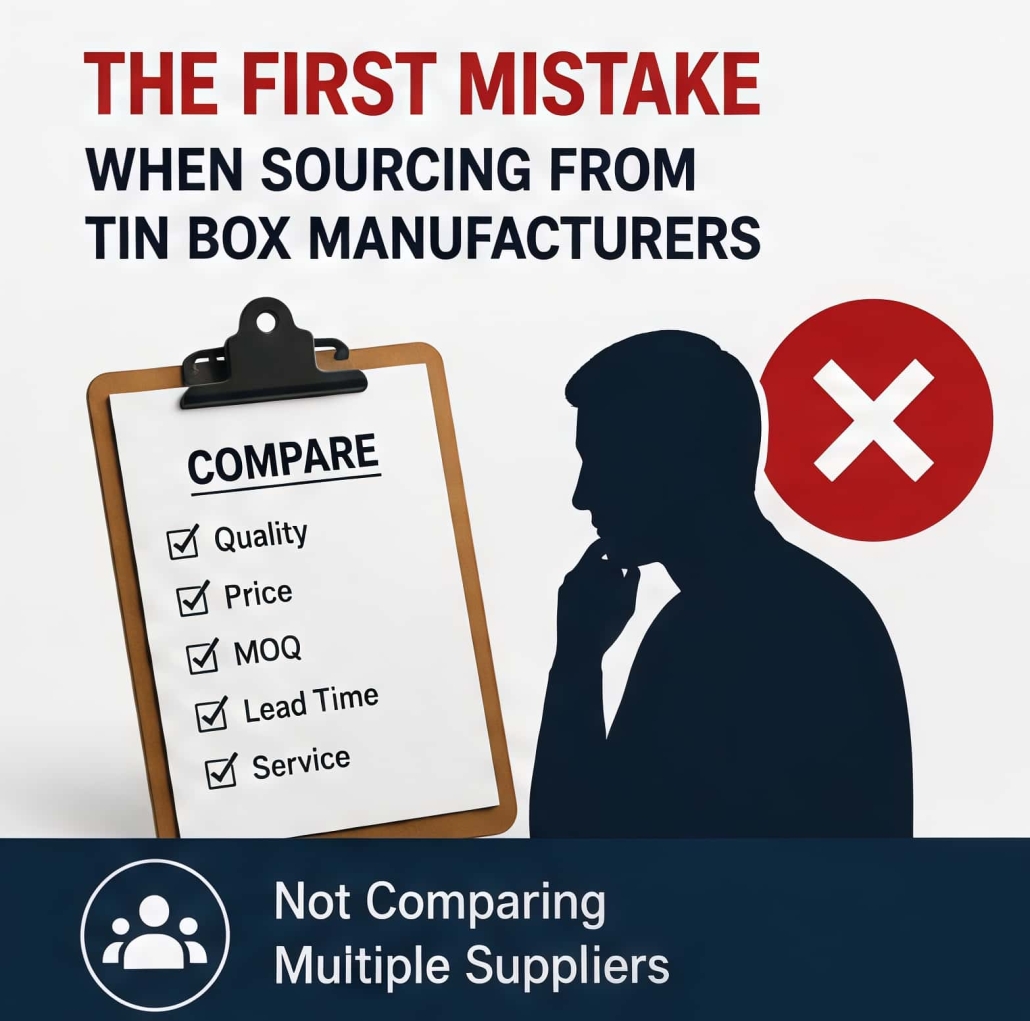
The First Mistake When Sourcing from Tin Box Manufacturers
“Treating Custom Tin Cans as Ordinary Commodity Packaging”
One of the most common mistakes buyers make is viewing custom tin cans merely as simple containers. On the surface, tin cans may seem straightforward. Still, in reality, each project involves numerous considerations, including tinplate thickness, structure, die design, lid seal integrity, printing, coatings, surface treatments, packaging methods, and shipping protection measures.
If buyers focus solely on unit price, they often end up comparing quotes based on different specifications. For example, one manufacturer might quote a price using thinner material; another might not include a food-grade coating; and yet another might base its pricing on a simpler lid structure. While these quotes may seem comparable at first glance, they actually correspond to entirely different products.
How to Avoid This Mistake?
Before requesting a quote, buyers should clearly define the product’s specific application. Will the tin come into direct contact with food, or will it be used to hold inner packaging bags? Does the product require moisture-proofing? Will consumers reuse the packaging? Or will it be sold as a seasonal gift?
Professional tin manufacturers will recommend the most suitable structure and materials based on this information. Take TSING as an example: we often assist clients in adjusting dimensions, depth, lid styles, or internal packaging methods before production begins. These upfront decisions help prevent dents, poor seals, wasted space, and unnecessary costs.
The Second Mistake When Sourcing from Tin Box Manufacturers
“Launching a Project Without Clear Requirements”
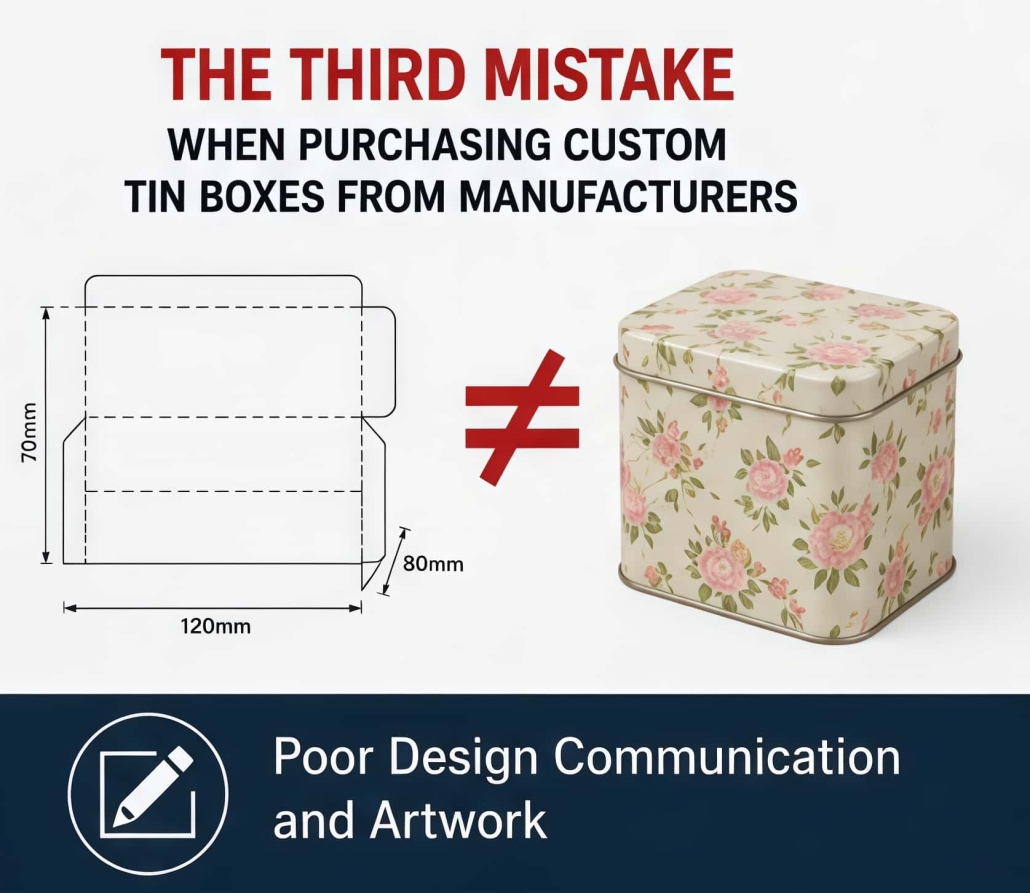
When contacting tin box manufacturers, many buyers often provide only a reference photo or approximate dimensions. While this conveys a general idea of the requirements, it is far from sufficient for an accurate quote or production planning. Without clear information, tin can manufacturers can only make assumptions—and assumptions often come with risks.
A detailed procurement specification should cover the following: product type, target dimensions, quantity, target market, food contact safety requirements, design expectations, desired surface finishes, delivery deadlines, and packaging requirements. Regardless of the intended use of the custom tin cans, the manufacturer must be informed of these details from the very beginning of the project.
What can be done to avoid such problems?
Before requesting a formal quote, buyers should prepare practical project details.
For example, tea tins may require lids with better seals to lock in aroma, while cookie tins may require more attention to internal space and shipping protection; cosmetic tins may prioritize surface texture and color accuracy, whereas promotional tins may place greater emphasis on cost control and fast delivery.
Clear requirements help tin can manufacturers provide accurate quotes, realistic delivery schedules, and valuable technical advice, while also helping buyers avoid repeated design revisions later in the process.
The Third Mistake When Purchasing Custom Tin Boxes from Manufacturers
“Ignoring Material, Coating, and Food Safety Requirements”
Material selection is a critical aspect of the procurement process for custom tin cans. However, some buyers tend to focus more on shape and appearance while neglecting tinplate thickness, interior coating, and the material’s compatibility with the product. This oversight can lead to issues with the product’s durability, safety, appearance, or user experience.
Tinplate packaging offers advantages such as sturdiness, durability, ease of printing, high malleability, and recyclability. However, different products have varying material specification requirements. One should not simply adopt the same structure or thickness specifications across the board. Additionally, careful consideration must be given to the choice of coating. If the product comes into direct contact with the tin can’s inner wall, buyers should discuss food-grade inner coatings and applicable testing standards with the manufacturer.
How Should You Communicate with Tin Box Manufacturers?
Buyers should clearly inform tin can manufacturers about the contents to be packaged and the consumer’s usage scenarios. Factors such as strong odors, oils, powders, moisture, and high-temperature environments can all influence the selection of coatings and structures. For example, products like tea, coffee, spices, chocolate, candles, and cosmetics have vastly different packaging requirements.
At TSING, we consider not only the tin’s initial use but also its potential for repeated use. If a client wants consumers to reuse the tin to store loose tea, candy, or other items, the quality of the interior coating and the seal’s fit on the lid become critical design considerations. Decisions made at this stage often significantly enhance the safety, durability, and value of the final custom tin.
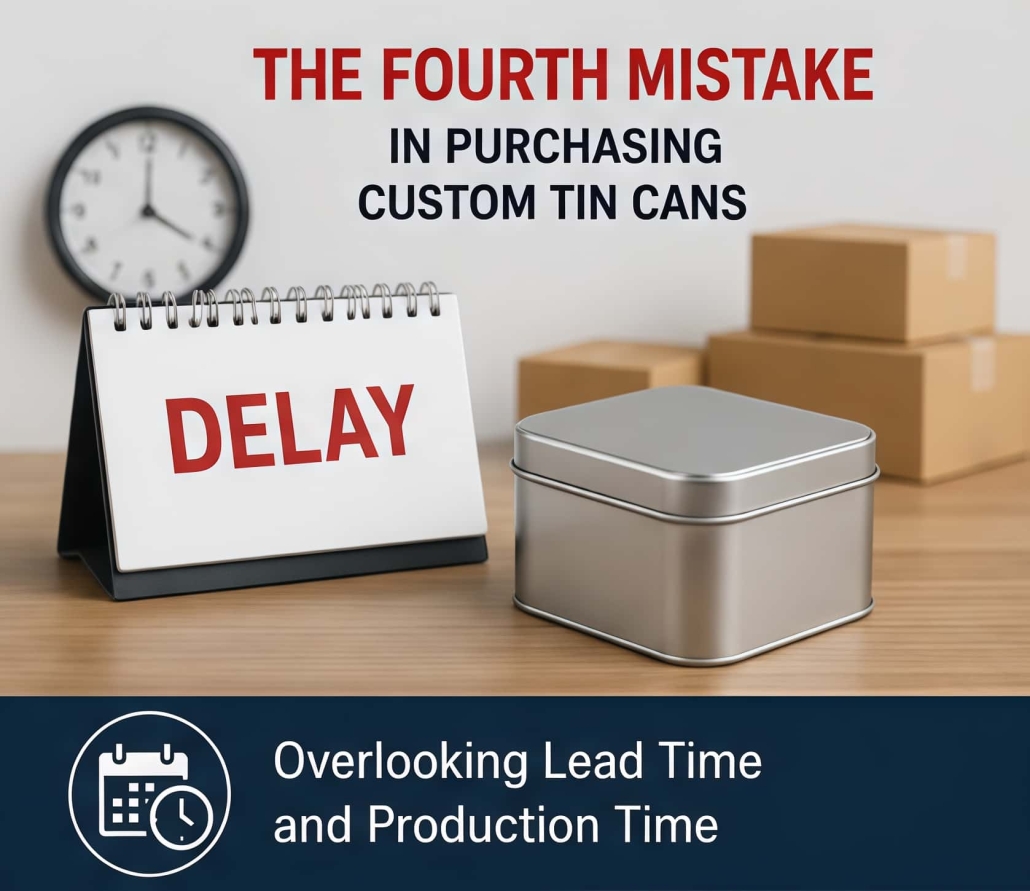
The Fourth Mistake in Purchasing Custom Tin Cans
“Neglecting Lead Times and Quality Control”
The final misconception often arises after the purchase order has been placed. Buyers may focus solely on the production completion date while overlooking the entire timeline, which includes sample approval, material preparation, printing, forming, inspection, packaging, export documentation, shipping, customs clearance, and inland distribution.
Custom tinplate production involves multiple coordinated production steps. New mold development, complex printing processes, special surface treatments, and testing requirements can all affect the lead time. If buyers allocate too little time, they may face risks such as rushed approvals, increased shipping costs, or missing the product’s market launch window.
How Should You Coordinate with Tin Box Manufacturers?
Buyers should work with manufacturers to establish a realistic schedule early in the collaboration. This plan should cover all stages, including design confirmation, sample production, sample approval, mass production, inspection, packaging, and shipping. Quality control should also be incorporated into the communication process as early as possible. Professional tin can manufacturers will inspect materials, printing, coatings, forming, lid fit, surface condition, carton packaging, and final quantities. For glossy, dark-colored, or high-end tin cans, additional surface protection measures may also be required.
Delivering a Superior Custom Tin Packaging Procurement Experience
As a professional tin box manufacturer, TSING combines technical expertise with practical procurement support to help clients avoid common pitfalls. Whether for food, tea, candy, cosmetics, gifts, promotional items, or other types of custom tin packaging projects, our procurement process effectively mitigates risks and enhances final outcomes. A reliable tin box manufacturer should assist buyers in asking key questions, accurately comparing prices, carefully reviewing samples, and managing every production detail from concept design to final delivery.
 Facebook
 Twitter
 Linkedin
