
Tinplate vs Aluminum: Which Material Is Better for Wholesale Candle Tins?
Choosing between tinplate and aluminum packaging is more than just a material consideration. For candle brands, it impacts product safety, filling effect, decorative quality, transport durability, cost control, and consumer perception of the final candle packaging. Tinplate and aluminum each have their advantages. Aluminum is lightweight and corrosion-resistant. Tinplate, on the other hand, offers greater rigidity, better structural stability, superior printability, and a premium feel, making it particularly suitable for branded candle tins. We will compare these two materials from a professional manufacturing perspective to help users choose the right packaging for their wholesale candle tins orders.
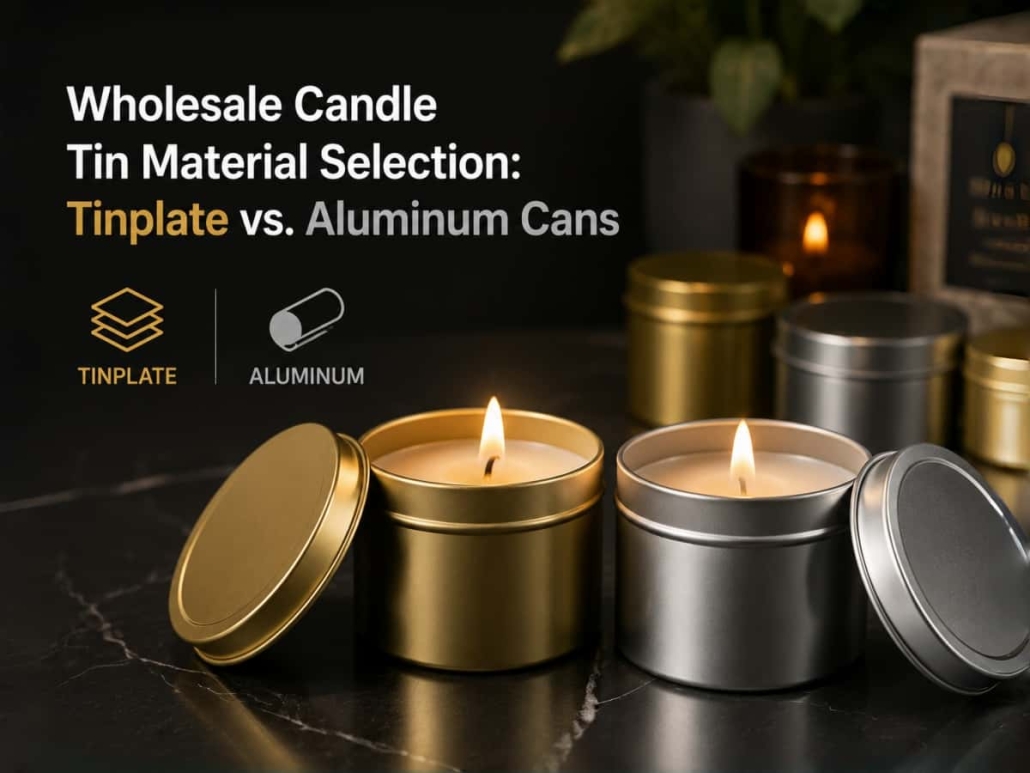
Wholesale Candle Tin Material Selection: Tinplate vs. Aluminum Cans
Wholesale candle tins serve many functions beyond simply holding candles. They must withstand high temperatures, protect the fragrance, endure transportation, support brand promotion, and provide a better user experience. Therefore, material selection should precede decoration, pricing, or final mold confirmation. Choosing the right material makes the entire candle packaging process much easier to manage.
The Importance of Material Selection for Wholesale Candle Tins
Candle tins are part of the product experience. Customers will touch them, open them, burn candles inside, and often keep the tins. Therefore, the container must feel sturdy, secure, and well-made. Even if the candle itself is of high quality, a flimsy or easily dented package will undermine customer trust.
Tinplate provides candle brands with a robust structure and a premium feel. This material allows for precise molding, consistent lid fit, and aesthetically pleasing surface finishes during manufacturing. Aluminum cans, on the other hand, offer a lightweight and clean look. However, the softer nature of this material can pose challenges for brands, particularly when a stronger sidewall, larger size, or more durable wholesale candle tin is required. For wholesale candle tin buyers, the best choice depends on product size, wax weight, sales channels, shipping routes, and brand positioning.

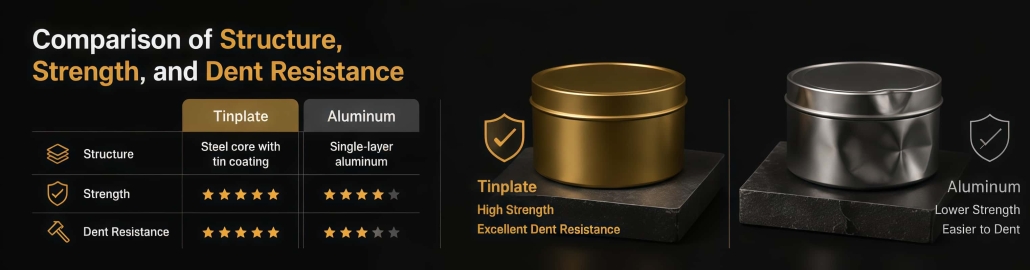
Comparison of Structure, Strength, and Dent Resistance
Tinplate cans are made by plating a thin layer of tin onto a sheet of steel. This gives them high rigidity while maintaining a surface suitable for printing and processing.
This rigidity is important for wholesale candle tins because the containers may need to undergo wax filling, cooling, labeling, carton packaging, warehousing, and long-distance shipping before reaching the customer. If the container is easily dented, brand value is immediately damaged. Even a small dent can make a candle look folded, damaged, or poorly made. Tin cans excel when a brand needs stable sidewalls, a sturdy base, and a consistent lid. They are particularly suitable for medium- and large-sized candle tins, gift sets, private-label collections, and retail candle packaging.
Aluminum cans are lighter and suitable for small travel candles or minimalist products. However, aluminum cans may require careful control of thickness to avoid deformation.
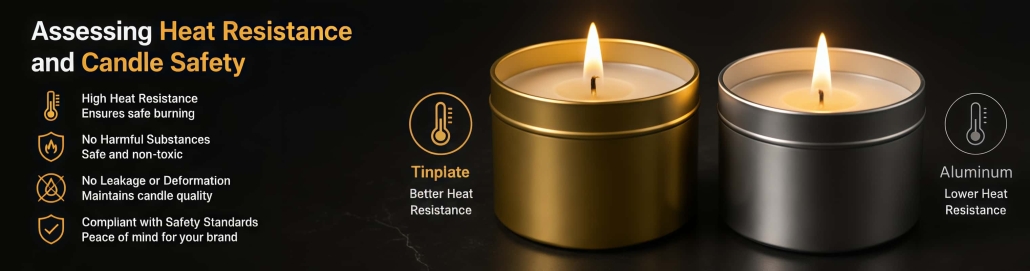
Assessing Heat Resistance and Candle Safety
Candle tins must withstand high temperatures during production and use. During filling, hot wax enters the tin and cools, forming the final candle. Afterward, the flame, wick position, wax pool, and burn time all affect the temperature inside the tin. Therefore, material properties are particularly important.
If the tin structure is designed properly, tin cans offer reliable heat resistance. Their strength helps the tin maintain its shape during filling, cooling, packaging, and handling.
Aluminum conducts heat rapidly. This may not be a problem for some small candles. However, for large containers, buyers should check the wall thickness, bottom stability, wick placement, and safety during customer handling. It’s important to note that the material itself does not guarantee candle safety. Factors such as the wax formula, wick size, fragrance content, fill volume, warning labels, and burn tests are all crucial.
Which material is best for wholesale candle tins?
For many commercial candle brands, tinplate is a more comprehensive solution. It is durable, has a high-end appearance, reliable printing, a good seal, and offers excellent value for wholesale production. Aluminum tins are suitable for small, lightweight, minimalist, or travel-sized candles. They are also suitable for brands that prioritize lightweight over decoration and structure. However, tinplate is often a more practical choice when projects require prominent branding, elegant gift wrapping, larger sizes, custom shapes, embossing, or stable mass production.
 Facebook
 Twitter
 Linkedin
