
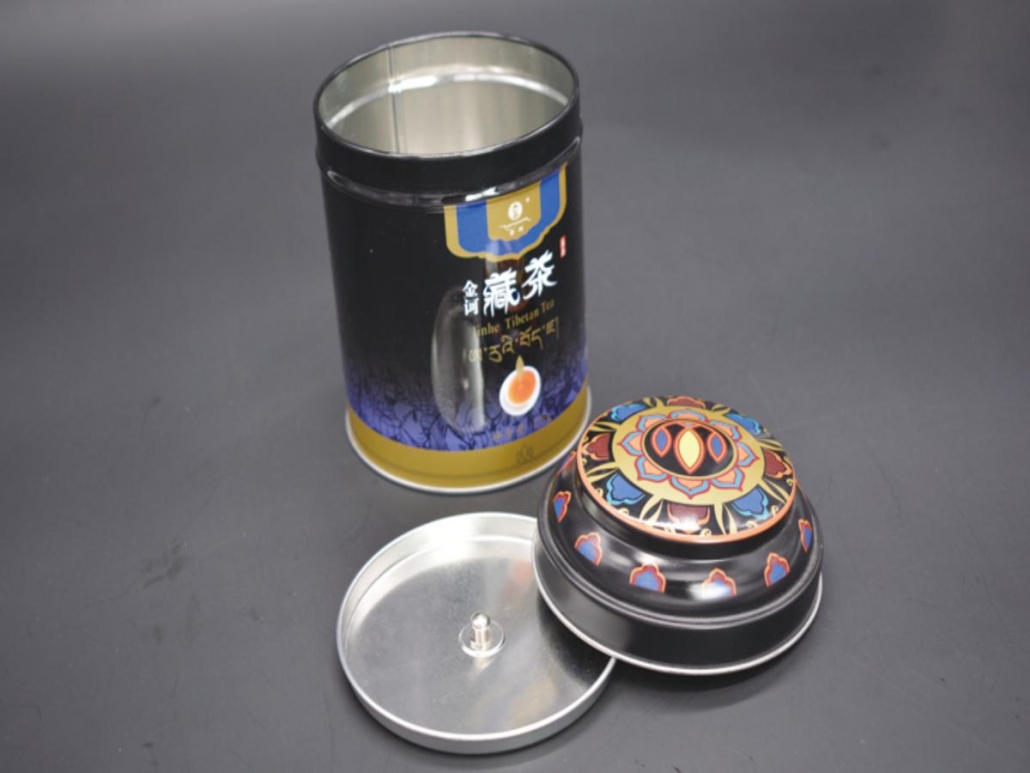
Can tea tins with inner lid prevent the loss of tea aroma? Key Sealing Benefits
Among the many tea packaging options, tea tins with inner lid is a practical and high-value solution. The inner lid is not merely a decorative addition; it’s a proven functional layer that significantly slows down aroma loss, reduces oxidation, and extends shelf life. As a professional tin manufacturer, I will explain how tea tins with inner lids work, which inner lid types perform best, and the manufacturing and quality control steps that ensure consistent sealing.
Tea Tins with Inner Lid: Why Aroma is Lost and How a Second Barrier Helps
The aroma of tea is composed of volatile organic compounds(VOCs), which easily evaporate, oxidize, or absorb external odors. Exposure to oxygen, moisture, heat, and light accelerates these processes. When you open a container, you not only release aroma but also introduce fresh oxygen. After repeated opening and closing, the aroma gradually dissipates, and the tea’s flavor becomes bland.
This is why tea tins with inner lids are so important. The second inner barrier reduces the amount of air exchanged each time the container is opened and creates a more controllable microenvironment. Essentially, the inner lid reduces the remaining headspace, provides effective resistance to air exchange, and offers an additional surface for an airtight seal. Compared to tins with single-layer lids, a well-designed inner lid can reduce the rate at which oxygen enters. Furthermore, the inner lid can act as a tamper-evident sacrificial element or as a convenient feature that consumers appreciate.
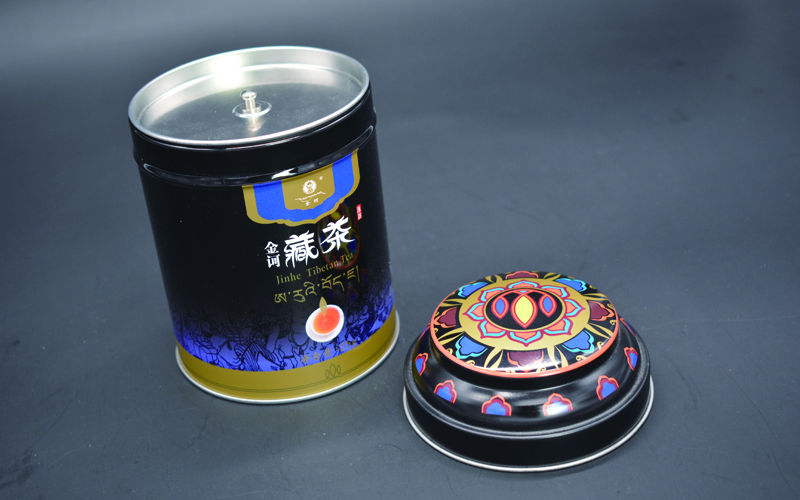
Inner Lid Types and How to Choose to Protect Aroma
Not all inner lids perform equally. The choice of inner lid depends on the required sealing performance, cost, user experience, and production feasibility. Below are common inner lid types we manufacture at Tsing and their performance characteristics.
Metal Press-Fit Inner Lid:
This is a thin metal insert that is pressed into the tin opening; typically made of tin-plated steel or thin aluminum. The advantages of metal press-fit inner lids are that they are made of the same metal material as the tin body, are recyclable, offer good barrier properties, and have a beautiful and consistent appearance. The disadvantages are that they require strict tolerance control and precision molds; they are less tolerant of dimensional variations than plastic. This type of inner lid is suitable for brands that want a full-metal solution and maintain higher aesthetic consistency.
Silicone or Elastomer Gasket Inner Lid:
A lid with a soft sealing ring (silicone) that increases contact pressure and reduces tiny gaps. Advantages include excellent repeatable sealing performance and chemical resistance; suitable for long-term storage. Disadvantages include a higher cost due to material mixing and potentially more complex recycling. Manufacturers best suit them for high-end or functional tea series where the superior sealing performance justifies the higher price.
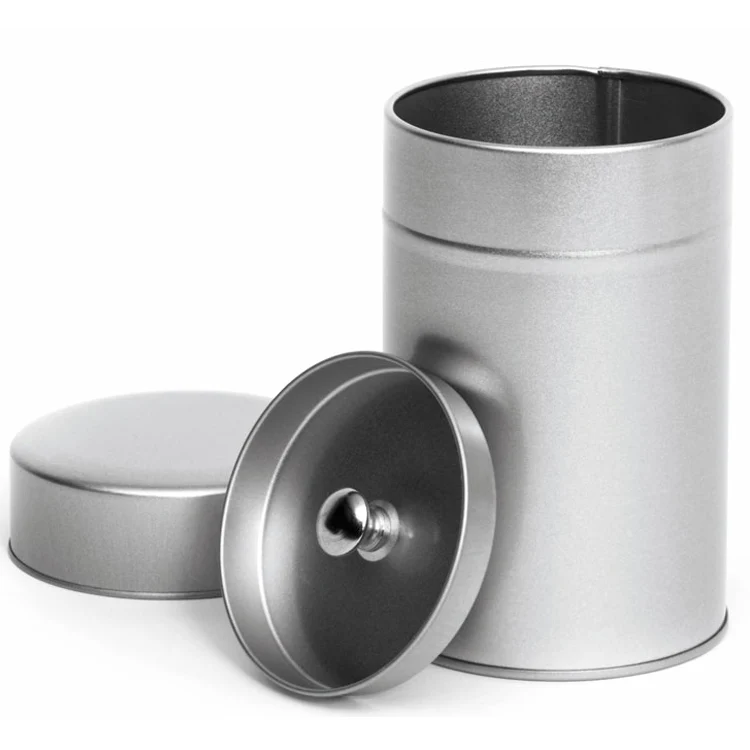
Material, Coating, and Compatibility Considerations for Tea Tins with Inner Lid
The effectiveness of the inner lid depends on the material selection of the can body, inner lid, and inner coating. Material compatibility is crucial for maintaining aroma neutrality, corrosion resistance, and long-term stability. We choose tinplate cans as the primary material because they are light-blocking, durable, and allow for high-quality printing. They are also easily recyclable. For aroma-sensitive teas, we recommend using tin cans coated with tested food-grade inner lacquer.
Food-grade, odorless coatings are used. For teas with high essential oil content, a coating formulation tested for oil resistance is selected. For metal inner lids, we ensure that the plating and surface treatment match the main body to avoid electrochemical reactions and maintain recyclability. At TSING, all tea tins are tested for odor neutrality, coating stability, and sealing performance. A well-designed tea canister with an inner lid ensures that neither the container nor the seal affects the natural aroma of the tea.
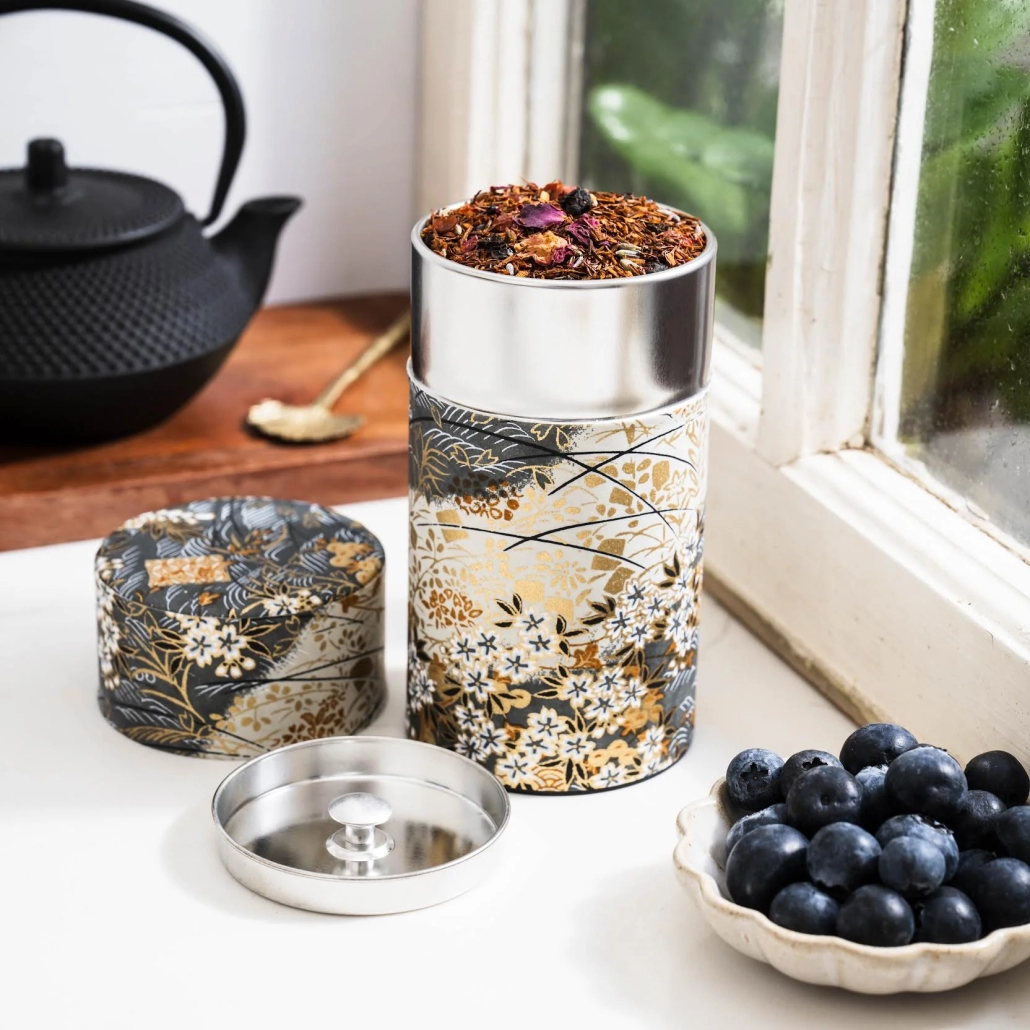
Manufacturing Precision and the Role of Molds
The sealing performance of tea tins with inner lids largely depends on manufacturing precision. Tiny dimensional deviations in the can opening or inner lid can affect sealing and aroma preservation. In the construction of tea tins with inner lids, manufacturers choose seamless drawn can bodies to reduce gaps associated with seams and create a more concentric can opening geometry. Therefore, for products sensitive to aroma, a seamless tin body ensures a more uniform and reliable contact with the inner lid.
In the production of inner lids, manufacturers use molds with diameter tolerances controlled to within a few hundredths of a millimeter. This precision ensures uniform radial compression and prevents localized air gaps. Engineers use SPC for critical dimensions to ensure the can opening diameter, flange height, and the inner lid’s outer and inner diameters. Finally, implement automated visual inspection or use go/no-go gauges during the assembly phase to detect defective products before packaging.
This delivers higher business value, sustainability, and consumer experience.
Ultimately, packaging choices should balance performance with commercial realities. While tea tins with inner lids may increase costs, they typically provide a return on investment by reducing returns, enhancing brand recognition, and improving shelf appeal.
Inner lids add to unit cost and sometimes increase process complexity. However, they reduce product spoilage and enhance perceived product value, which is especially important in the premium tea category. Metal inner lids ensure single-material recyclability, and they also enable more creative packaging strategies: for example, placing a fragrance strip under an easy-tear seal on the inner lid for sampling, or designing an inner lid that doubles as a measuring cup for convenience. These small details enhance product usability.
An effective packaging solution for preserving tea aroma
Tea tins with inner lids offer a practical and effective solution for tea packaging. By introducing a second sealing barrier, these tins significantly reduce oxygen and moisture ingress, stabilize the internal environment, and slow the evaporation of volatile aroma compounds during repeated opening and closing. Combined with appropriate materials, precise manufacturing processes, and proven seal testing, the inner lid design consistently outperforms standard single-lid tea tins in terms of freshness preservation and extended shelf life.
 Facebook
 Twitter
 Linkedin
