
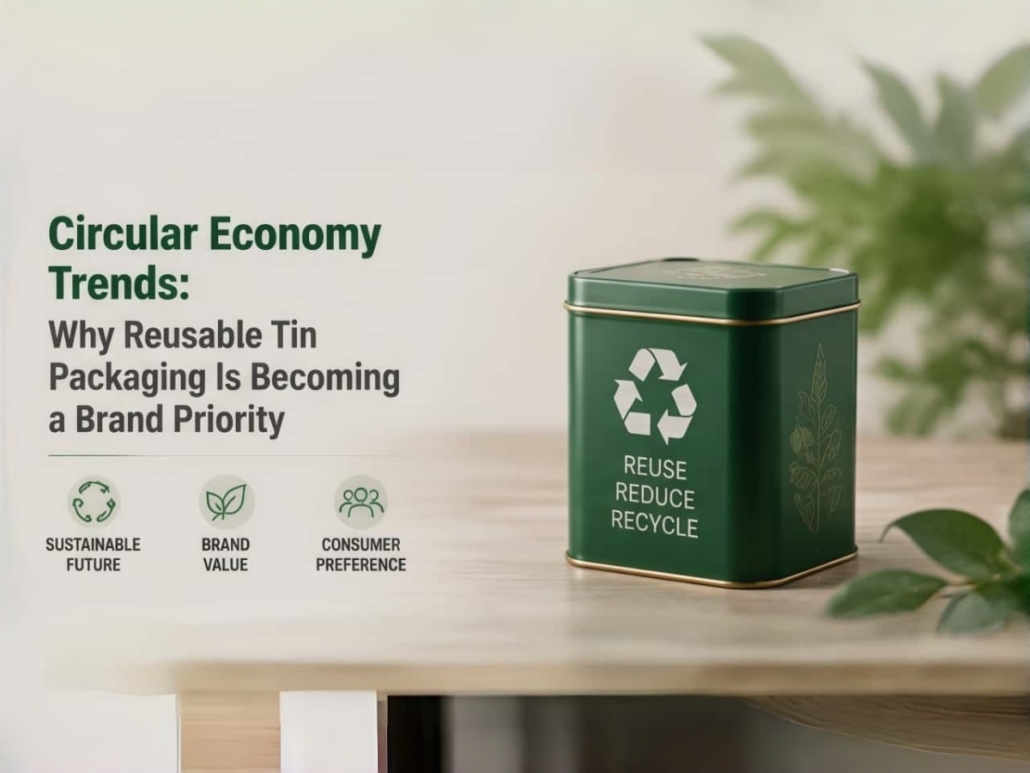
Circular Economy Trends: Why Reusable Tin Packaging Is Becoming a Brand Priority
In the past, many customers focused primarily on packaging costs, appearance, and protective performance; today, however, they are beginning to consider deeper questions: Can packaging create long-term value for users, rather than merely providing short-term value? Unlike packaging materials that are typically discarded after a single use, reusable tin packaging offers advantages such as a long service life, excellent recyclability, and strong brand retention value. A well-designed tin not only protects the product during shipping but also continues to serve a purpose after the original contents are used up, continuously reinforcing brand awareness through repeated use in consumers’ daily lives.
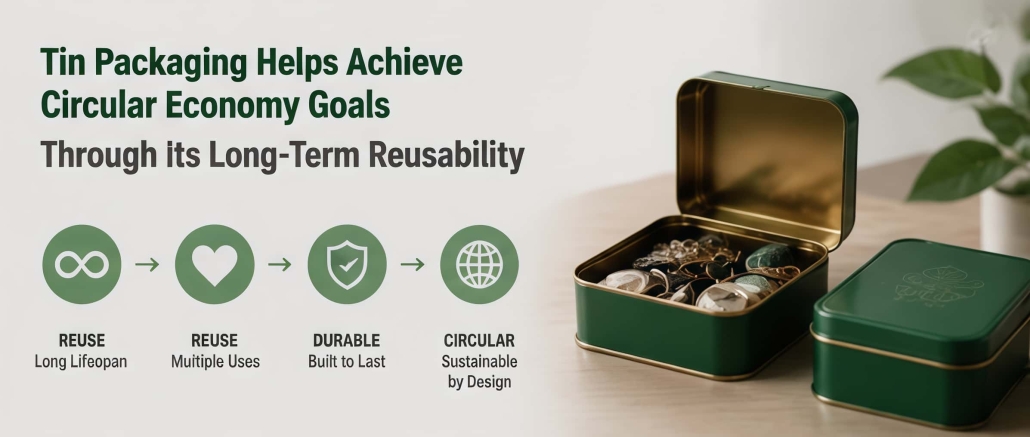
Tin Packaging Helps Achieve Circular Economy Goals Through Its Long-Term Reusability
The core concept of the circular economy lies in moving away from the traditional “produce–use–dispose” model and building a system that preserves the value of materials for as long as possible. Tin packaging is designed from the outset to be durable and reusable.
Compared to many single-use packaging materials, tin packaging offers superior mechanical strength. Tinplate consists of a steel substrate combined with a protective tin coating; this structure enables it to resist deformation, corrosion, and various environmental factors.
From a manufacturing perspective, we consider the following key factors when designing reusable tin containers:
- Structural Strength: The can must withstand transportation pressures, stacking, and repeated opening and closing.
- Surface Durability: The coating and printing processes must ensure the product retains its appearance throughout long-term use.
- Functional Design: The container should retain practical value even after the original product has been consumed.
Material Recyclability: Tinplate should be efficiently processed through existing recycling systems.
For brands, this durability offers a significant advantage. When consumers choose to reuse tin containers rather than discard them, the packaging’s lifecycle is significantly extended.
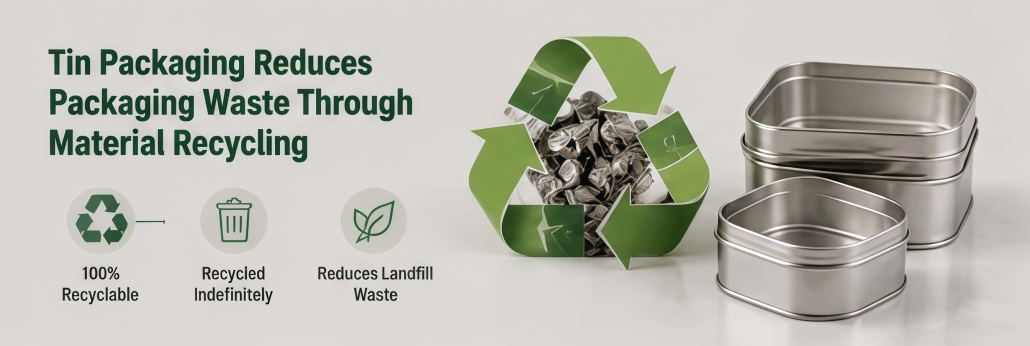
Tin Packaging Reduces Packaging Waste Through Material Recycling
Another major advantage of tins packaging lies in its exceptional recyclability.
Tinplate is a metallic material that can be recycled and reused through industrial recycling systems. Unlike mixed-material packaging structures that are difficult to separate, the recycling process for tin packaging is relatively simple, as its steel-based material can be processed efficiently.
As a tin box manufacturer, TSING fully considers recyclability throughout the entire production process. We have optimized aspects such as tinplate material selection, coating compatibility, printing processes, and structural design. These measures ensure that custom tin cans not only fulfill their basic packaging functions but also retain their material value at the end of a product’s lifespan. More importantly, reusable packaging helps consumers participate in the circular economy. When consumers continue to use custom tin cans for storage, organization, or decoration, they effectively extend the packaging’s lifespan.
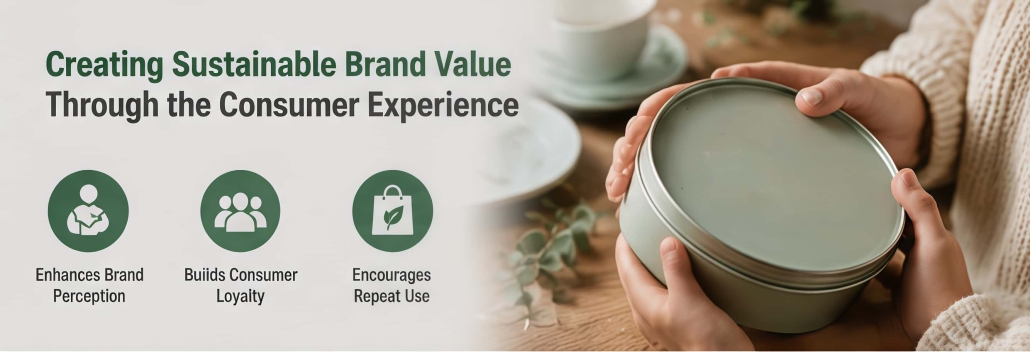
Creating Sustainable Brand Value Through the Consumer Experience
Modern packaging is no longer merely a protective layer for products; it has become a vital channel of communication between brands and consumers.
Reusable tin packaging offers a unique opportunity, as these containers often remain part of consumers’ daily lives after purchase.
For example:
- Coffee brands can design high-quality tin cans for customers to reuse for storing coffee.
- Cosmetics brands can create elegant metal tins for customers to use as storage for personal items.
- Candy brands can use beautifully decorated candy tins, turning them into collectible containers.
Every time a container is reused, it creates a new opportunity for consumers to engage with the brand’s logo, colors, and design elements.
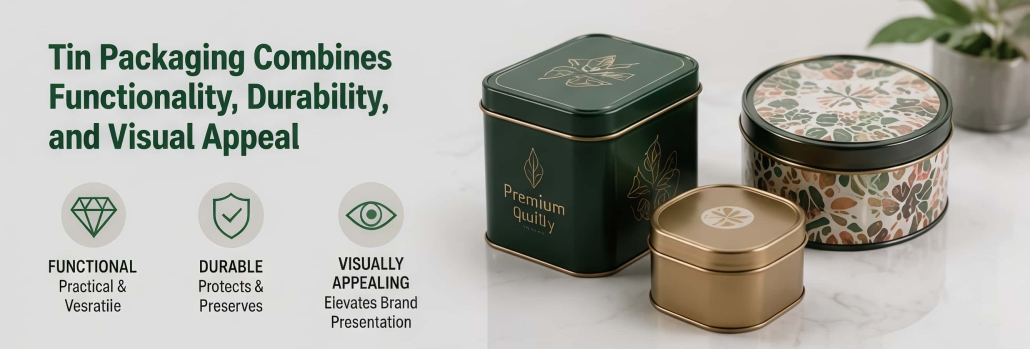
Tin Packaging Combines Functionality, Durability, and Visual Appeal
Reusable tin containers must provide practical value while maintaining an aesthetically pleasing appearance. Brands typically customize the following aspects:
1. Structural Design
- Hinged-lid tins
- Sliding-lid tins
- Round tins
- Square tins
- Rectangular tins
- Deep-drawn seamless tins
Different structures offer distinct user experiences.
2. Surface Finishing Techniques
To reinforce brand identity, manufacturers can employ:
- Matte coatings
- Glossy finishes
- Embossing
- Debossing
- Metallic effects
- Spot UV printing
- Gold/silver foil stamping
These techniques help brands create packaging that consumers are eager to keep and reuse.
3. Functional Improvements
Reusable tin packaging can also include:
- Inner lids to enhance sealing
- Dividers for product organization
- Special opening mechanisms
- Customized inner trays
These details enhance usability and increase the likelihood of long-term reuse.
Helps Brands Reduce Their Environmental Impact Without Sacrificing Quality
Sustainability has become a key consideration for many customers and consumers when making purchasing decisions. However, when switching to eco-friendly packaging materials, brands must not overlook critical factors such as product protection, shelf life, and customer experience. Tinplate combines the strength of steel with the protective properties of a tin coating. This structural advantage enables manufacturers to produce lightweight, durable, and recyclable packaging that is widely applicable to a variety of products.
Compared to fragile packaging materials, custom metal cans offer superior protection during transportation and storage. Their sturdy construction helps prevent crushing, deformation, and external contamination, thereby reducing product loss caused by damaged packaging.
For food products such as coffee beans, tea, cookies, chocolate, candy, and dried food ingredients—which typically require packaging that effectively blocks moisture, oxygen, and other external environmental factors—reusable tin packaging not only enhances product protection and reduces unnecessary waste caused by damaged goods, but its long service life also lowers the frequency of packaging replacement.
Tin Can Packaging Enables Sustainable Use
From the sturdy tinplate structure that protects products to the premium customer experience created through custom designs, the advantages of reusable tin packaging far exceed the functionality of traditional packaging. Its durability allows consumers to reuse the containers multiple times, while its recyclable nature supports global sustainability initiatives. For customers, adopting tin packaging means creating a packaging solution that delivers long-term value.
 Facebook
 Twitter
 Linkedin
