
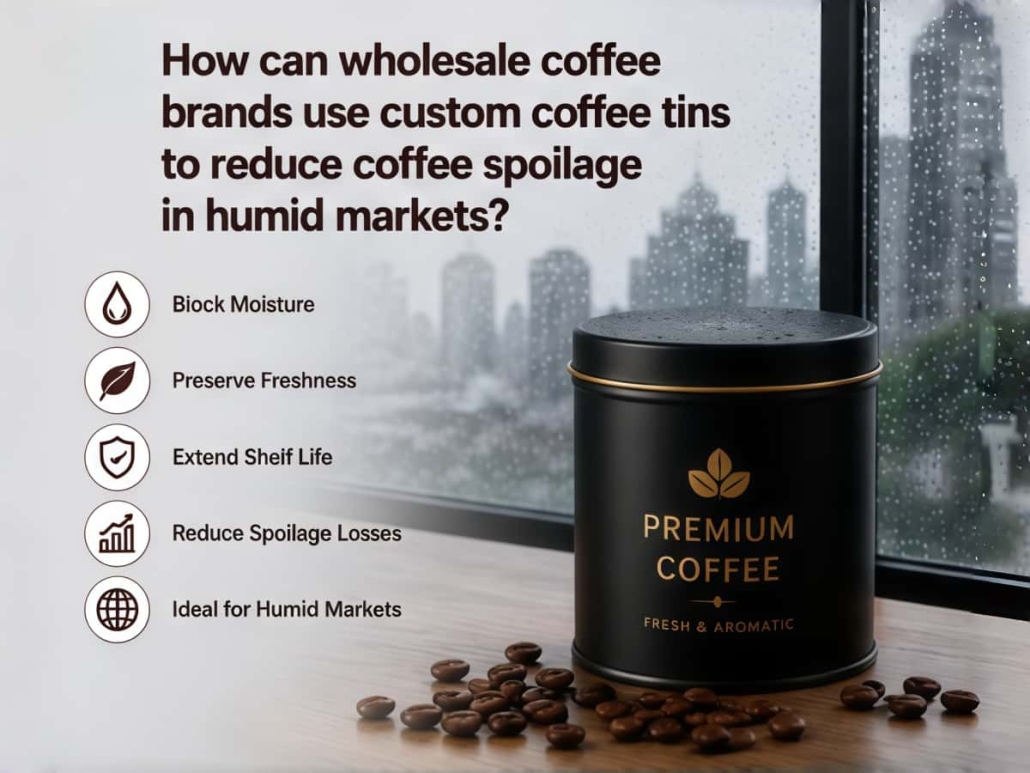
How can wholesale coffee brands use custom coffee tins to reduce coffee spoilage in humid markets?
In many regions around the world—including Southeast Asia, South America, the Middle East, and coastal areas of North America—high-humidity environments pose significant challenges for coffee brands. Even when coffee beans have been professionally roasted and packaged, excessive humidity, exposure to oxygen, and temperature fluctuations can still accelerate flavor loss, diminish aroma intensity, and shorten shelf life. TSING has collaborated with numerous international coffee brands to design custom coffee tins specifically for high-humidity distribution environments. By optimizing the structure, implementing sealing technologies, using food-grade interior coatings, and employing precision manufacturing processes, we have helped our clients significantly enhance their products’ moisture-proof performance without sacrificing packaging aesthetics or production efficiency.
Let’s look at a real-world example: How a coffee wholesale brand successfully upgraded its coffee packaging strategy using custom coffee tins.
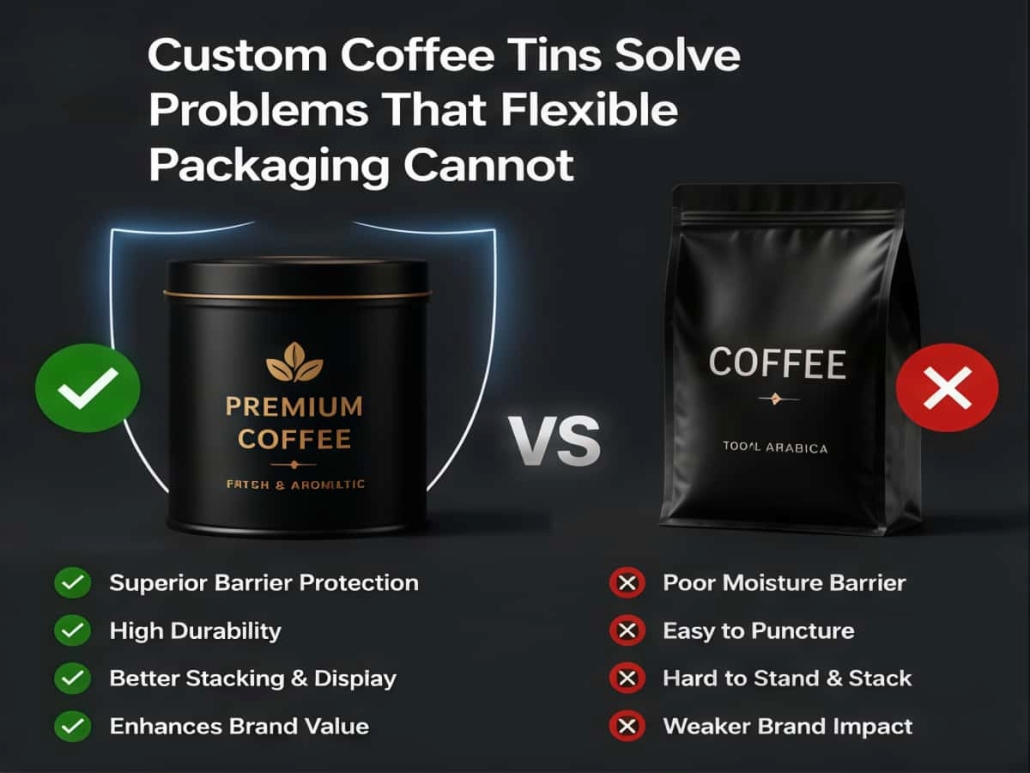
Custom Coffee Tins Solve Problems That Flexible Packaging Cannot
Many coffee wholesale brands initially package roasted coffee beans in composite bags equipped with one-way vent valves. While these bags perform well when used immediately after roasting, they become increasingly vulnerable once consumers repeatedly open and reseal them. In humid climates where relative humidity frequently exceeds 75%, it becomes increasingly difficult to prevent moisture infiltration—especially during prolonged home use.
One of our clients, a specialty coffee wholesaler supplying cafes and supermarkets across Southeast Asia, faced this exact problem. Customers reported that the coffee exhibited a rich flavor immediately after purchase, but after just two weeks of regular consumption, the aroma had noticeably diminished.
Our analysis confirmed that the roasting process had not changed; the primary cause of the decline in quality was repeated exposure to humid air after opening. Rather than adjusting the coffee blend or shortening the distribution cycle, the brand decided to redesign its packaging. They switched to high-quality, custom coffee tins specifically designed for tropical storage conditions.
The goal was clear: to minimize oxygen exchange, reduce moisture absorption, and preserve the coffee’s original flavor throughout the consumer’s entire usage period.
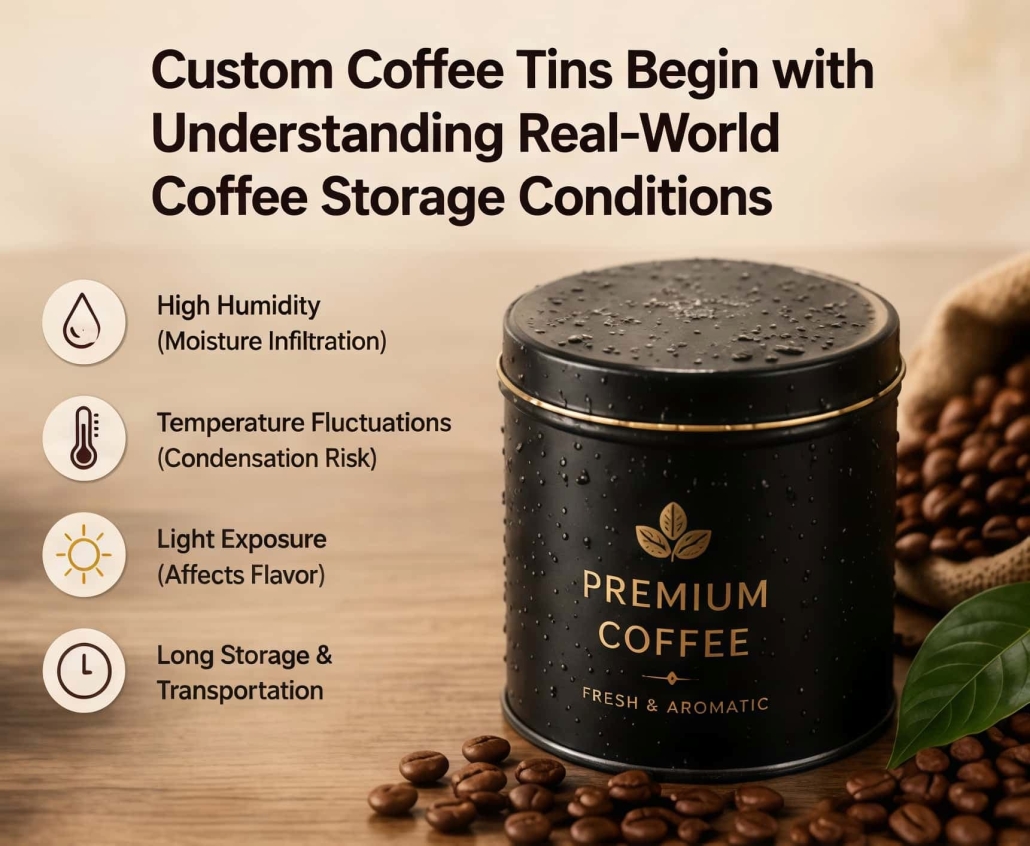
Custom Coffee Tins Begin with Understanding Real-World Coffee Storage Conditions
Before developing the new packaging, our team studied how customers actually store coffee after purchase.
After surveying consumers and observing retailers, we identified several common behaviors:
- Coffee is often stored on kitchen countertops, near the cooking area.
- Containers are opened multiple times a day.
- The product is subjected to daily fluctuations in temperature and humidity.
- Many consumers transfer beans from the original packaging bag to reusable containers.
- Some packaged products remain in use for more than six weeks after opening.
These findings influenced every aspect of our custom coffee tin design.
For whole coffee beans, we recommend capacity-optimized cylindrical cans:
| Coffee Capacity | Recommended Tin Size | Typical Dimensions |
|---|---|---|
| 250 g | Compact household tin | Ø99 × 120 mm |
| 500 g | Family-size tin | Ø120 × 160 mm |
| 1 kg | Wholesale refill tin | Ø153 × 220 mm |
Rather than maximizing container volume, we minimized unnecessary internal space in each can as much as possible.
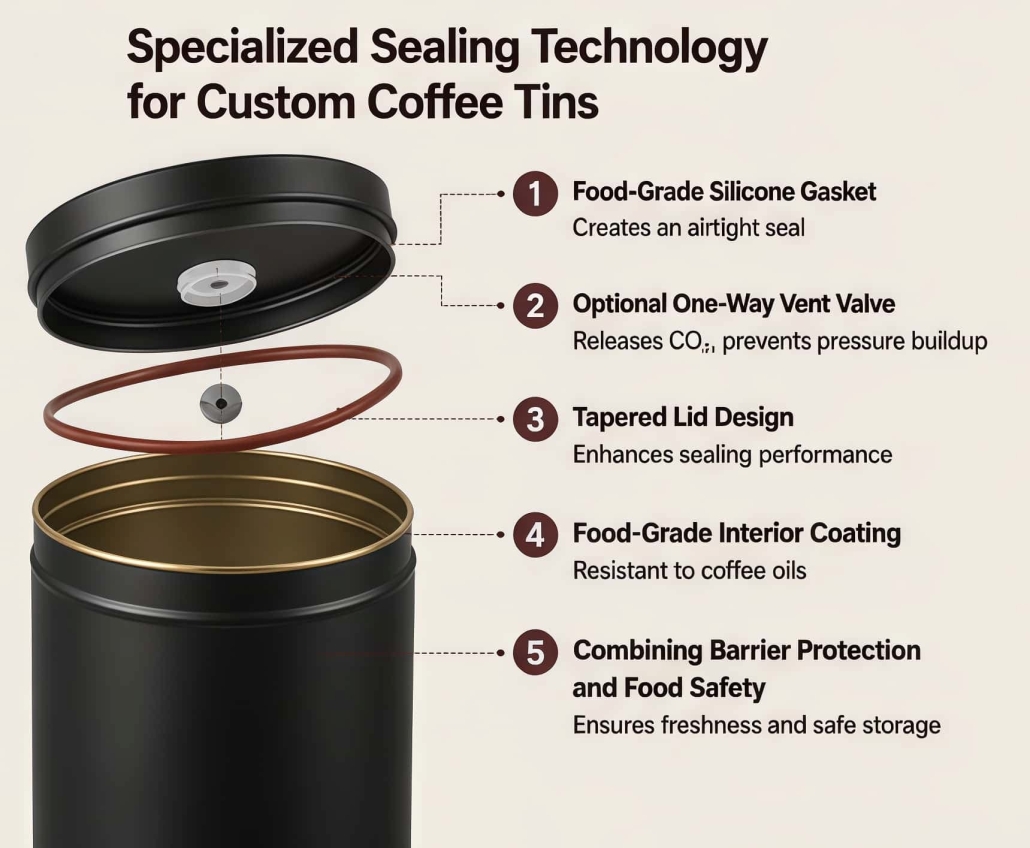
Specialized Sealing Technology for Custom Coffee Tins
For wholesale coffee brands, relying solely on a sealing lid is not enough. After roasting, coffee beans continue to release CO₂, and they are highly susceptible to oxygen, moisture, and external odors. Therefore, custom coffee tins require a sealing system designed specifically for coffee storage, rather than a standard sealing design.
We can customize a variety of sealing solutions based on roast profiles, distribution cycles, and target markets.
Food-Grade Silicone Gasket:
We install a food-grade silicone gasket on the inner side of the lid. Compared to standard friction-seal lids, the silicone gasket distributes pressure evenly across the rim of the coffee tins, significantly reducing oxygen and moisture infiltration after repeated opening and closing.
Optional One-Way Vent Valve:
For freshly roasted coffee beans, we can integrate a one-way vent valve directly into the lid or the upper portion of the custom coffee can. Freshly roasted coffee beans continue to release carbon dioxide for several days. Without a vent valve, the pressure inside the sealed container will gradually increase. Conversely, opening the package too early will expose the coffee beans to oxygen and moisture. A one-way valve automatically releases excess carbon dioxide while preventing outside air and moisture from entering the container.
Tapered Lid Design for Enhanced Sealing:
Many high-end coffee tins do not use a standard sliding lid design but instead feature a tapered body. The upper diameter of the can is slightly smaller, allowing the lid to fit snugly against the body. This design creates higher contact pressure around the sealing surface and further reduces air leakage in humid environments.
Food-Grade Interior Coating Resistant to Coffee Oils:
Coffee releases oils that can gradually react with untreated metal surfaces. To prevent flavor contamination, TSING uses a food-grade interior coating that complies with FDA and EU standards and is specifically formulated for roasted coffee products.
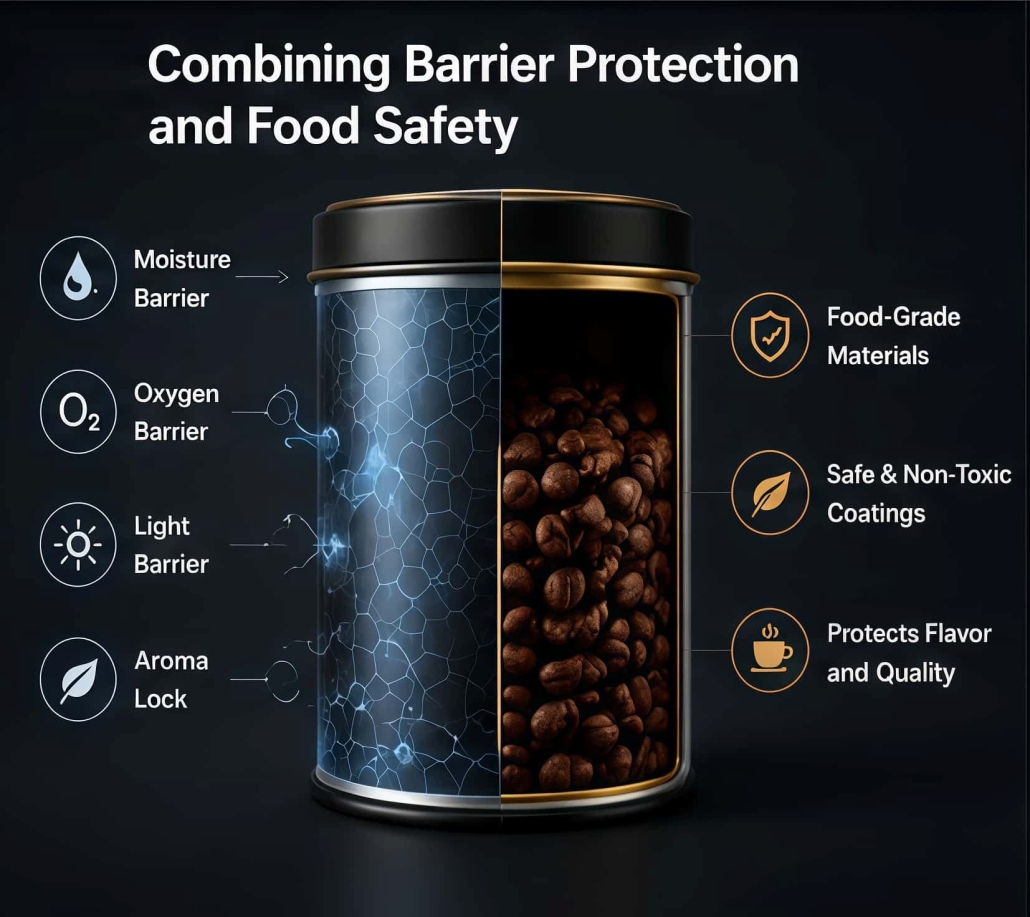
Combining Barrier Protection and Food Safety
Structural design alone cannot guarantee coffee quality; the right materials must also be selected.
For coffee applications, we typically recommend tinplated steel sheets with a thickness of 0.23 mm to 0.28 mm. This material offers excellent rigidity while remaining sufficiently lightweight. Additionally, the inner surface is coated with a protective layer of BPA-NI (if required) or food-grade epoxy resin, specifically formulated for roasted coffee products.
These coatings offer the following key advantages:
- Prevent direct contact between coffee oils and the metal surface.
- Resist acidic compounds naturally released during roasting.
- Maintain flavor neutrality.
- Prevent corrosion under humid storage conditions.
- Comply with international food contact regulations.
By combining high-quality tinplate with food-safe coatings, this material protects both the coffee and the container itself during long-term storage.
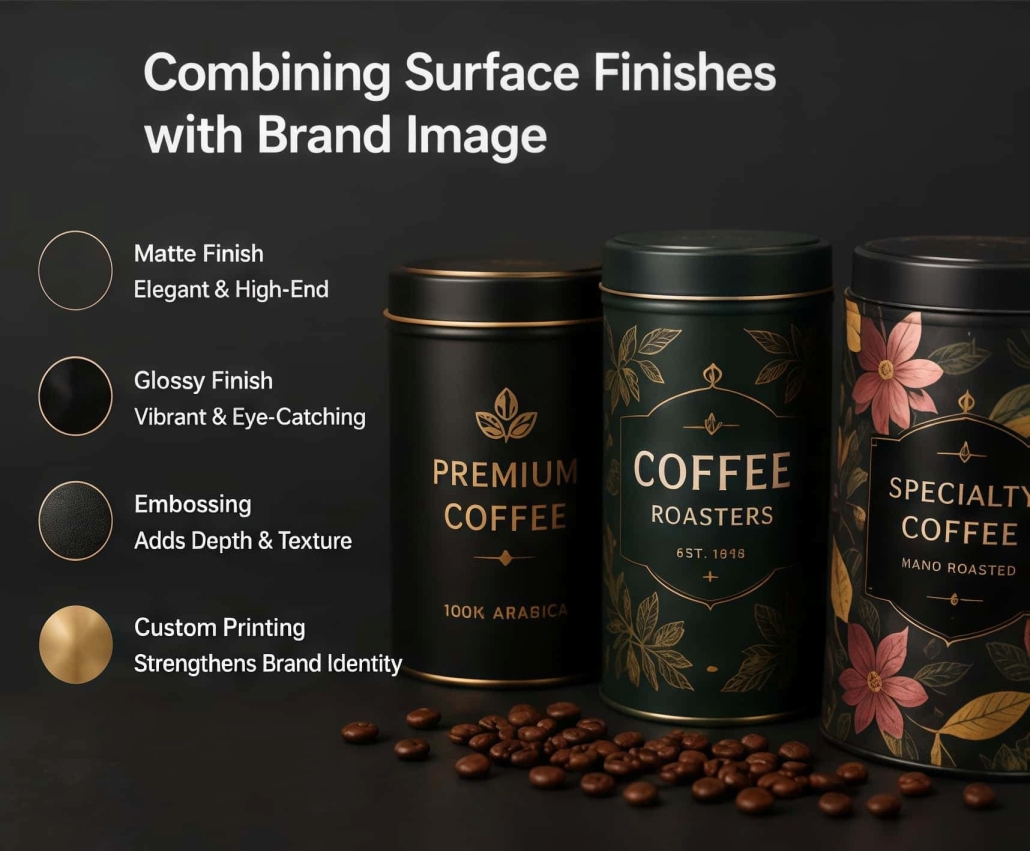
Combining Surface Finishes with Brand Image
Coffee packaging serves two equally important functions: maintaining coffee freshness and conveying the brand image. For specialty coffee brands, the surface finish of custom coffee tins should reflect the quality of the beans inside while also being durable enough to withstand the rigors of shipping, retail display, the cafe environment, and long-term consumer use.
Unlike packaging for cosmetics or luxury gifts, coffee tin packaging must balance sophisticated aesthetics with practicality.
| Surface Finish | Why It Works for Coffee Brands | Typical Application |
|---|---|---|
| Matte Varnish | Reduces fingerprints and creates a clean, modern appearance | Specialty coffee brands |
| Soft-Touch Coating | Delivers a premium tactile experience while improving grip | Premium single-origin coffee |
| Metallic Matte Gold or Bronze | Reinforces artisan roasting and premium positioning | Limited editions and gift collections |
| CMYK + Pantone Offset Printing | Produces highly accurate color reproduction for brand consistency | Large-scale wholesale production |
| Embossed Coffee Bean Patterns | Adds texture without excessive decoration | Premium retail coffee packaging |
| Laser Engraving Effect Printing | Creates a handcrafted appearance for boutique roasters | Small-batch specialty coffee |
We also recommend incorporating custom brand elements, such as:
- Embossed or debossed logos
- Origin maps indicating coffee-growing regions
- Roast level indicators
- Lot numbers and production dates
- Laser-engraved serial numbers for premium reserve coffees
These details transform a custom coffee tin into reusable packaging that continues to promote the brand long after the coffee has been consumed.
How Do Custom Coffee Tins Reduce Coffee Spoilage?
After redesigning the packaging, this wholesale coffee brand monitored its products’ performance during six months of commercial distribution. Compared to the previous flexible packaging solution, the brand reported measurable improvements in several areas:
| Performance Indicator | Previous Packaging | Custom Coffee Tins |
|---|---|---|
| Moisture protection | Moderate | Excellent |
| Aroma retention after repeated opening | Significant decline | Significantly improved |
| Consumer satisfaction | Good | Higher |
| Packaging durability | Moderate | Excellent |
| Premium perception | Standard | Significantly enhanced |
| Package reuse rate | Low | High |
The company also saw a reduction in customer complaints about coffee spoilage and packaging damage during shipping. Perhaps most importantly, by simply upgrading the packaging system—while retaining the existing coffee recipe—the company significantly improved the perceived quality of its product.
This case study illustrates an important principle: packaging should not merely serve as a container for coffee; it should actively protect the coffee.
 Facebook
 Twitter
 Linkedin
