
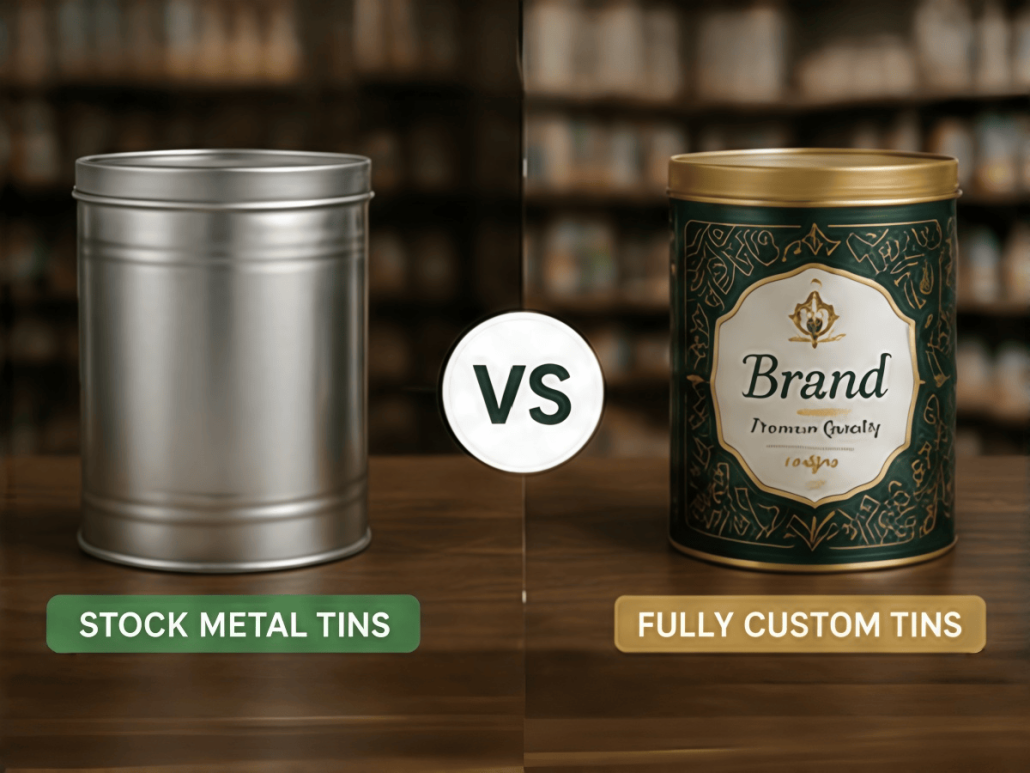
Stock Metal Tins vs Fully Custom Tins: Which Is More Cost-Effective
Stock metal tins are often less expensive because they come in standard sizes and designs. In contrast, custom metal tins require additional R&D, tooling, and production setup, which naturally increases the price. We believe that the lowest price does not necessarily equate to the best long-term value. True cost-effectiveness depends on a comprehensive evaluation of multiple factors.
In product packaging, tin cans influence consumers’ perception of product quality. Therefore, the decision between off-the-shelf metal cans and fully customized tin cans should never be based solely on unit price.
Instead, the following should be evaluated:
- Initial production costs
- Investment in tools and equipment
- Order volume
- Lead time requirements
- Brand objectives
- Packaging efficiency
- Product protection needs
- Long-term market value
That is why we help our clients conduct a comprehensive analysis of all these factors. In some cases, stock metal tins are clearly the most cost-effective option. In other cases, despite higher initial costs, custom metal tins can deliver better long-term economic benefits.
Why do many clients choose Stock metal tins?
Stock metal tins remain popular because they offer speed, ease of use, and low purchase costs. Since the design already exists, clients can avoid the numerous expenses associated with developing entirely new packaging.
The initial investment for metal tins is lower.
One of the biggest advantages of ready-made metal tins is the absence of tooling costs. Customers can typically choose from existing molds, sizes, and lid designs without incurring new customization fees.
This makes them particularly attractive to:
Small businesses
Startup brands
Product trials
When budgets are tight, avoiding custom tooling costs can significantly ease financial pressure during the early stages of a project. It also enables faster production and delivery. Since the tin can’s structure already exists, production preparation is greatly accelerated. Manufacturers can proceed directly to the printing and production stages without spending weeks developing prototypes or testing structural designs.
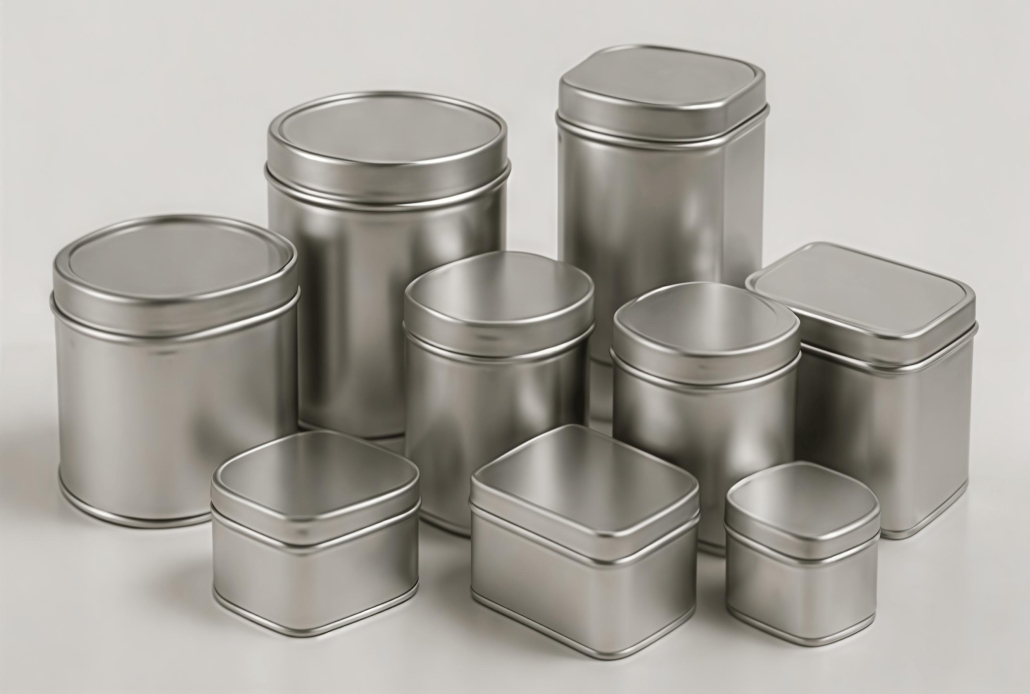
Limitations of Stock metal tins
While metal tins offer clear short-term savings, they also have some limitations.
Their suitability for specific products is limited; standard metal tins may not perfectly match the product’s dimensions. This can lead to operational issues such as:
- Excess space
- Product shifting during transport
- Additional insert costs
- Increased use of protective materials
When customers use these cans, these hidden inefficiencies can erode the initial cost advantage. For example, if a company must purchase foam liners or internal trays to compensate for a poor fit, the actual packaging cost will exceed the initial quote.
Furthermore, brand promotion flexibility is restricted, and generic packaging limits design differentiation. Since many companies may use similar structures, the final packaging may appear insufficiently distinctive on retail shelves.
For high-end products, a plain-looking metal can may also diminish consumers’ perception of the product’s value. This has a particularly significant impact on products such as tea, candles, and cosmetic packaging.

Why Do Fully Custom Tin Cans Require a Larger Budget?
Fully custom metal tins incur higher upfront costs because they require significant design and communication work before production begins.
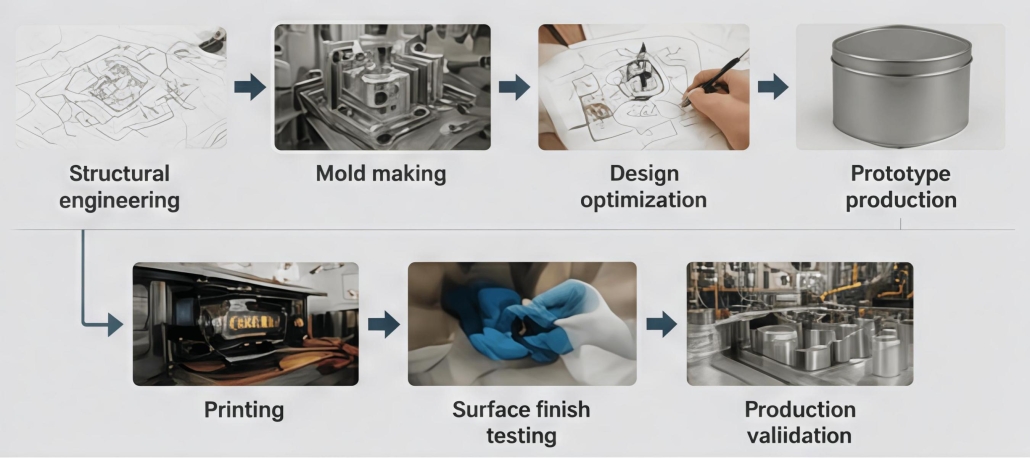
At TSING, a custom tin can design typically includes:
- Structural engineering
- Mold making
- Design optimization
- Prototype production
- Printing
- Surface finish testing
- Production validation
Each stage adds time, manpower, and technical expertise to the project. The largest upfront investment typically comes from tooling. Custom tin cans require specially designed molds tailored to the client’s product dimensions and packaging objectives.
Depending on the design’s complexity, this may include molds for the lid, base, embossing, hinge structures, and more. While these costs increase the initial budget, they also result in a packaging design uniquely optimized for the client’s product.
Custom tin can packaging requires closer collaboration between the manufacturer and the client. Both parties must agree on the following aspects; this additional coordination increases the project’s complexity but also ensures the final tin can packaging aligns more closely with the product itself.
Why Do Many Brands Still Choose Custom Tin Cans?
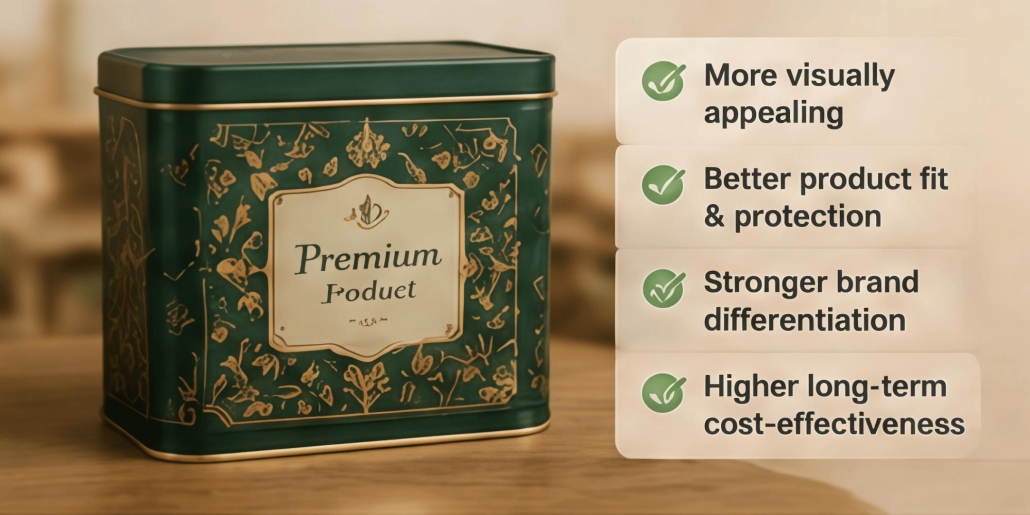
Despite the higher upfront investment, many companies still opt for fully customized metal tins because customization offers advantages that standard packaging cannot match.
Custom tin cans are more visually appealing. In retail environments, the appearance of packaging significantly affects consumer attention. Custom tin cans help brands create distinctive, eye-catching packaging that effectively communicates key messages, brand identity, and product uniqueness. For many high-end brands, these advantages justify the additional investment. Custom metal cans are specifically designed to fit product dimensions and handling requirements, reducing product movement during transit and lowering the risk of damage.
In many cases, despite higher initial costs, fully customized metal cans prove more cost-effective in the long run. Custom tin cans are particularly suitable for clients seeking high order volumes, operating in the high-end market, requiring strong product differentiation, and treating packaging as an integral part of their brand identity.
Helping Clients Choose the Most Suitable Metal Tin Can Packaging
As a tin can manufacturer, we do more than just produce metal tins; we help clients determine which packaging strategy will deliver the greatest overall value.
Our team evaluates:
- Product requirements
- Packaging objectives
- Budget constraints
- Brand goals
- Production timelines
- Long-term scalability
Based on this analysis, we recommend the most practical and cost-effective tin can packaging solutions tailored to each client’s specific needs. For some projects, using off-the-shelf metal cans with custom printing offers excellent value for money. In other cases, fully custom-made tin cans deliver superior performance.
 Facebook
 Twitter
 Linkedin
