
What Key Factors to Check Before Sourcing Wholesale Metal Storage Boxes?
Price is often the top priority for buyers, but when purchasing metal storage boxes in bulk, the lowest quote doesn’t always tell the whole story. A tin can that seems cheap at first glance can lead to greater losses down the line if it dents easily, has poor print quality, or fails to protect the products it’s meant to contain effectively.
A wholesale order is, above all, a packaging decision that impacts production stability, product presentation, customer experience, and long-term brand value. For businesses selling gifts, cosmetics, tea, candles, jewelry, or promotional items, packaging serves a purpose far beyond simply containing the product; it also shapes consumers’ perceptions of the product. Therefore, it is essential to clarify procurement objectives and learn to evaluate tin can manufacturers’ capabilities.
The most successful buyers do not focus solely on quotes; they compare material quality, surface finish performance, structural fit, supplier capabilities, consistency, and the final cost delivered to the destination.
What is the primary purpose of purchasing metal storage boxes?
The buyer’s first question is simple: what role will these tin packaging solutions play?
For example:
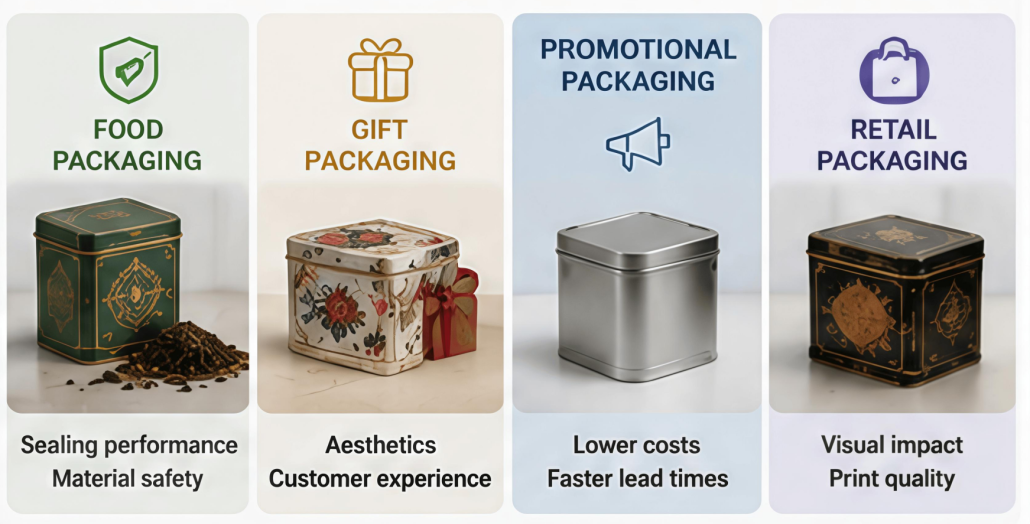
Food packaging may prioritize sealing performance and material safety.
Gift packaging may focus more on aesthetics and customer experience.
Promotional packaging may require lower costs and faster lead times.
Retail packaging may require a stronger visual impact and superior print quality.
The intended use directly influences the tin can’s structure, surface finish, material thickness, and production requirements.
Examine the Three Core Quality Factors of Metal Storage Boxes
Once the procurement objectives are clear, buyers should focus on the three most critical quality factors: material, structure, and surface finish.
These three aspects determine whether wholesale metal storage tins will prove truly reliable during production, transportation, retail display, and customer use.
Material and Thickness of Metal Storage Boxes
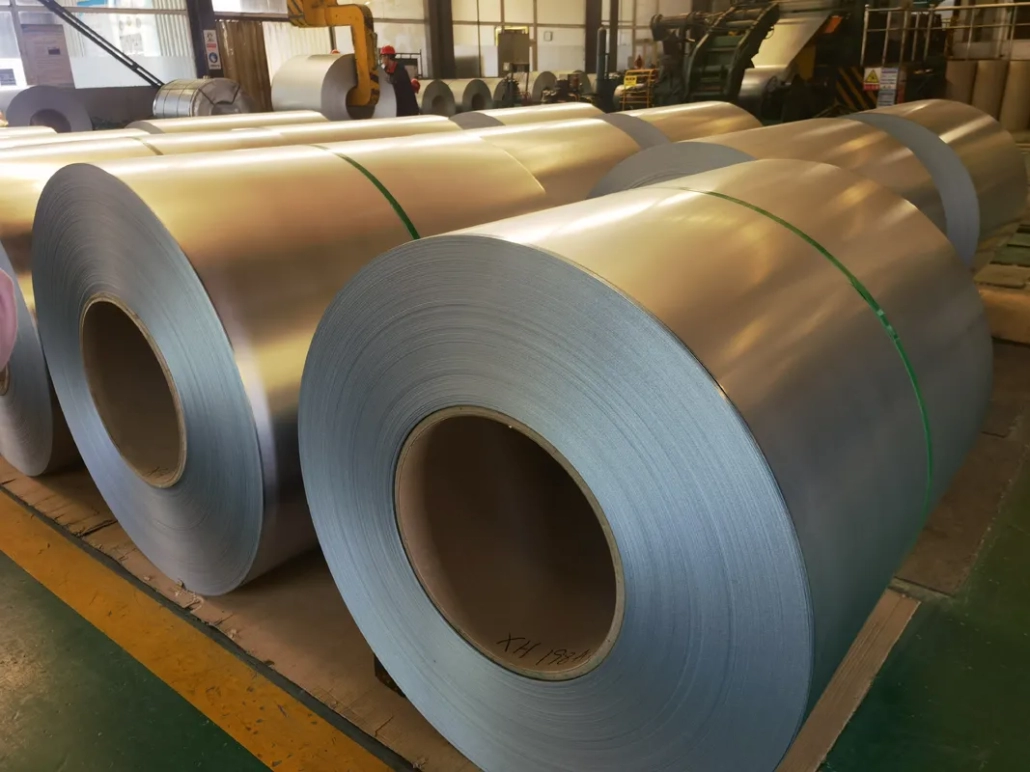
Material quality directly affects durability. If the tinplate is too thin, the packaging may dent or deform during transport. If material quality is inconsistent, large-volume orders may suffer from structural instability or uneven forming. Thickness also affects the strength, rigidity, stackability, and resistance to deformation of metal tins. Thinner structures may reduce material costs, but they also increase the risk of bending, denting, or deformation during transport and handling. The key is not to choose the thickest material, but to select the appropriate one for the specific application.
A professional tin box manufacturer should clearly explain:
Material thickness
Strength suitability
Application compatibility
For high-end metal tins, material quality also influences customer perception. Sturdy, durable packaging with fine craftsmanship immediately conveys a sense of higher value to customers.
Structure and Product Compatibility
When purchasing in bulk, we must also ensure that the metal storage containers are appropriately sized for the products.
Size is the primary consideration. If a tin can is too large, the product may shift inside. If the container is too small, filling it becomes difficult, and product protection is compromised. In either case, improper packaging leads to hidden costs.
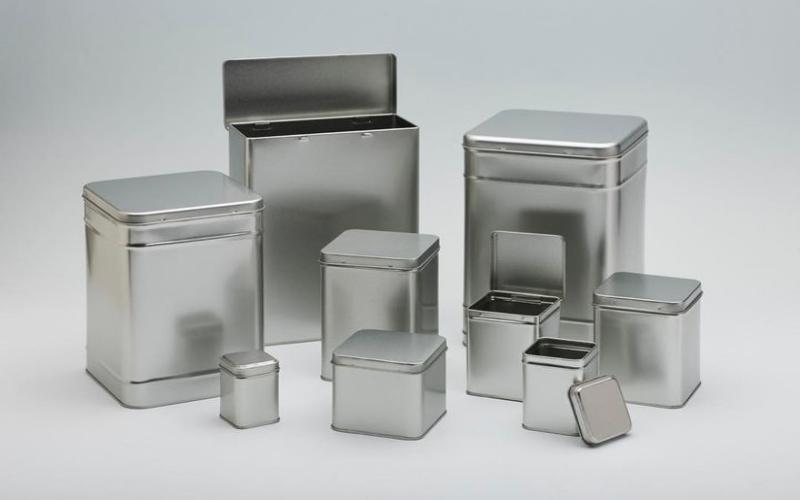
We must also carefully evaluate the shape. Round tins, rectangular metal cans, square boxes, hinged boxes, slide-lid containers, and various custom-designed tins all exhibit different characteristics during production and use.
Customers should also consider the ease of opening and closing the container. Difficult-to-open packaging provides a poor user experience. A lid that is too loose may give the impression of poor quality, while hinges that wear out too quickly reduce the likelihood of reuse. Therefore, attention must be paid to these functional details, as metal tins become an integral part of the product experience.
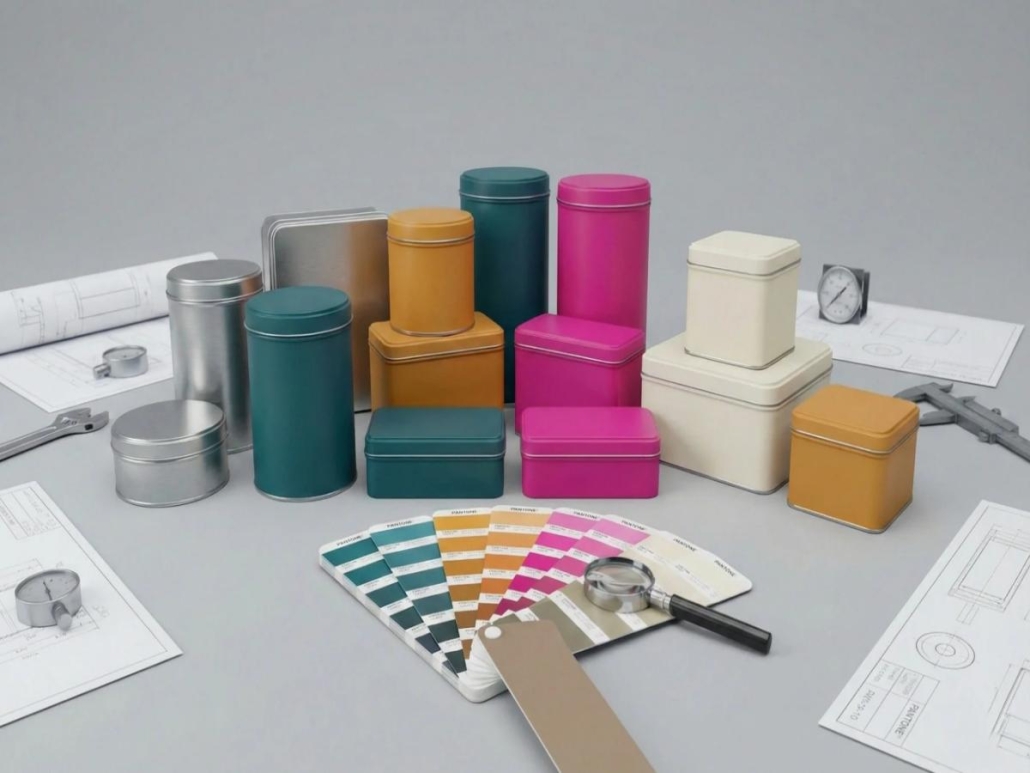
Surface Treatment, Printing, and Coating Durability
Many wholesale buyers tend to focus more on shape and price, but the quality of surface treatment often determines the overall appearance of the product packaging. For metal storage containers, surface treatment is not merely decorative; it is an integral part of the product’s performance.
Surface treatment affects how well ink and coatings adhere to the metal. If the substrate is unclean or improperly treated, the coating may crack, peel, fade, or flake off easily. This is particularly true for custom metal tins featuring printed patterns, logos, or decorative coatings.
Customers purchasing bulk metal tins also need to understand the printing methods and processes used by the tin supplier. They should inquire about pre-printing surface treatment, coating curing methods, and post-production durability testing procedures. These questions focus on practical application.
Evaluating the Tin Can Manufacturer’s Capabilities and Quality Control System
In wholesale procurement, a supplier’s capabilities are not a secondary consideration but a primary factor protecting the buyer from risk. A reliable tin can manufacturer should be able to manage the entire production chain, from material selection to printing, forming, inspection, and packaging. If there is a weak link in any of these stages, the final product will be compromised.
Can the supplier maintain consistency in bulk production?
A good sample does not guarantee the success of a large-volume order.
Wholesale buyers should verify that the supplier can maintain:
Consistent dimensions
Stable color matching
Uniform coating quality
Precise forming accuracy
Reliable assembly performance
Is there a clear quality control system in place?
Professional tin box manufacturers inspect products throughout the entire production process, rather than relying solely on final inspection.
Customers should inquire about defect monitoring methods, including:
- Dents
- Scratches
- Print misalignment
- Lid fitting issues
- Coating damage
Strict process control reduces production risks and improves overall order reliability.
How does TSING help customers source more efficiently?
As a professional tin can manufacturer, we assist customers in evaluating wholesale metal storage containers from both manufacturing and business perspectives.
Our production process focuses on:
Material reliability
Structural performance
Surface durability
Production efficiency
Our goal is not merely to produce metal cans, but to help customers select tin can packaging solutions that reduce risks, enhance product presentation, and support sustainable business growth.
 Facebook
 Twitter
 Linkedin
