
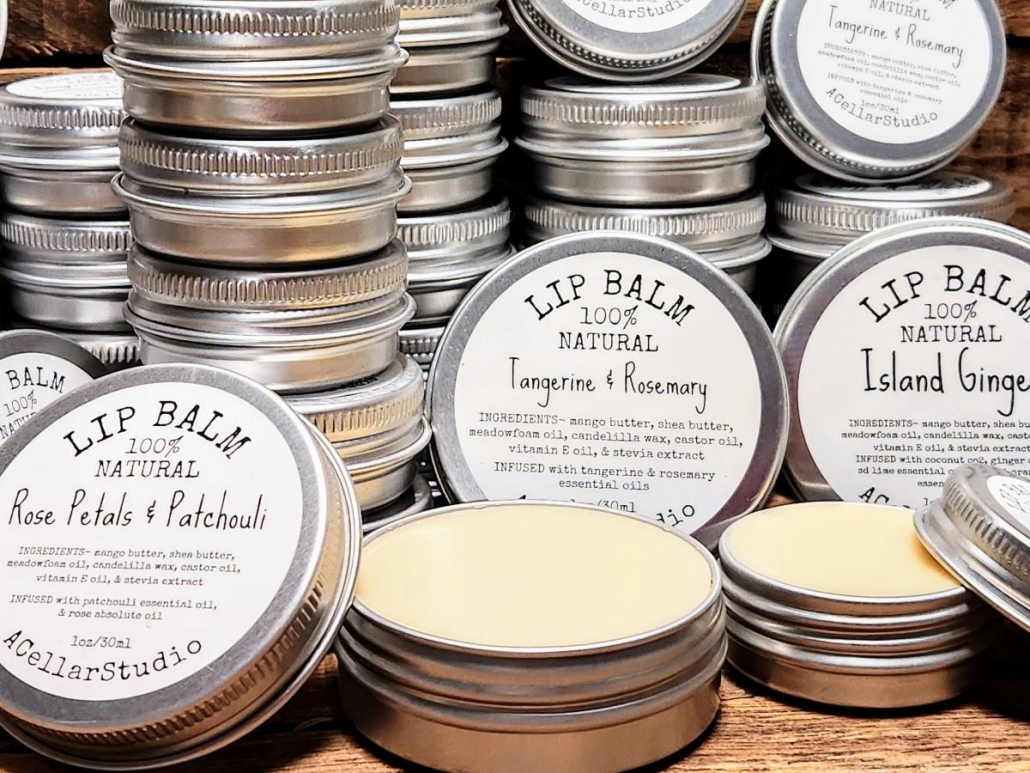
Guide to choosing lids for 10g lip balm tins: screw cap, hinged lid, sliding lid
For 10g lip balm tins, the lid is far more than just a sealing device: it determines the consumer experience, product protection, manufacturing feasibility, and brand positioning. Choosing the right lid (screw-on, hinged, or sliding) impacts the product’s shelf appeal, melt resistance, tamper-evident features, and even its sustainable end-of-life disposal. TSING, drawing on years of experience in tinplate manufacturing, will inform each user about the practical advantages and disadvantages of each lid type, the engineering and material factors affecting performance, and the testing required to ensure consistent product quality.
10g Lip Balm Tins: Screw-on Lid – Precision and Perceived Value
Screw-on lids offer a classic and tactile experience. For a 10g lip balm tin, a standard screw-on lid features shallow threads that match those on the tin body. Here’s what you should know when choosing a screw-on lid.
Benefits of Using Screw-on Lids
- Tight Mechanical Engagement: Carefully designed threads provide consistent radial compression and predictable engagement torque. This allows the cap to minimize the risk of accidental detachment during transport.
- Tamper-Evident Features: When combined with shrink bands or foil inner seals, screw-on lids can convey a message of security.
Design and Manufacturing Details
- Thread Geometry: For small diameter threads (e.g., typical diameters of 30-50 mm for a 10g tin), the thread pitch, lead, and depth must be optimized to prevent thread misalignment or stripping. Fine threads provide more turns and a more precise fit; coarse threads reduce sensitivity to dimensional variations.
- Tolerances: Screw-on lids require very tight tolerances on the lid’s outer diameter and the tin’s opening geometry. Poor tolerance control can lead to wobbling, misaligned threads, or inconsistent torque.
- Molds and Costs: Threaded molds are more complex than simple snap-on lid molds, and for lower minimum order quantities, the unit price will increase to amortize the mold costs. Therefore, we recommend choosing screw-on lids for large-volume purchases.
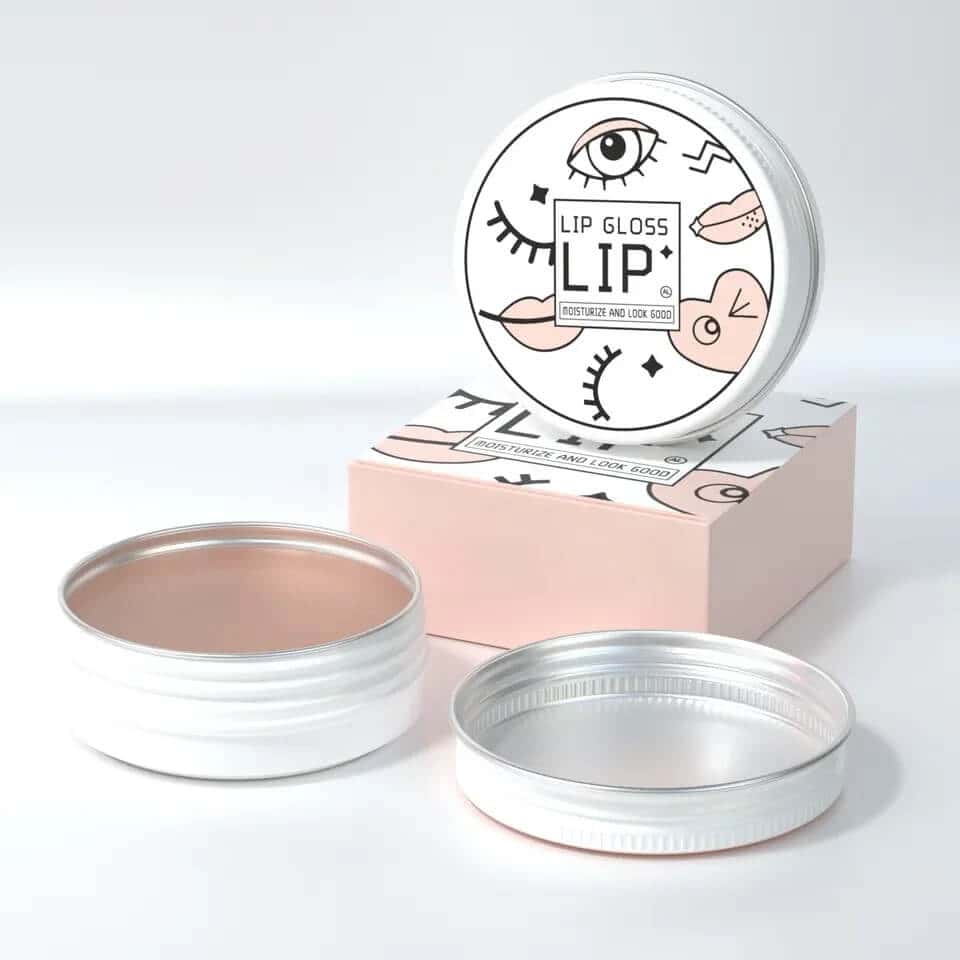
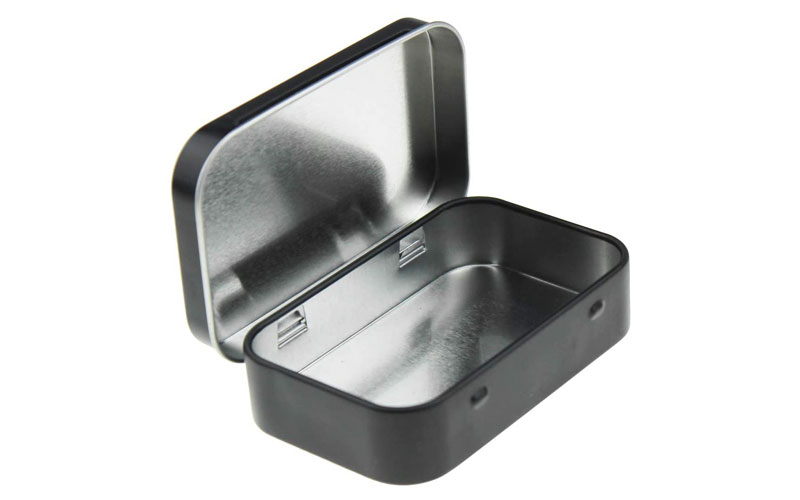
10g Lip Balm Tins: The Convenience, Portability, and Structural Advantages of a Hinged Lid
Hinged lids are particularly popular in the convenience store market. They can be opened quickly with one hand and reduce the likelihood of losing the lid—all beautiful features for everyday lip balm use.
Advantages of Hinged Lids
- One-handed operation: Users can open the lid with a simple thumb flick and immediately apply lip balm. This is a significant consumer convenience advantage.
- Integrated lid: There are no loose parts that can be easily lost; the integrated design simplifies use and improves convenience.
- Unique appearance: Hinged tins have a unique retro-mechanical aesthetic that can reinforce a handcrafted or functional brand image.
Structural Advantages
- Hinge durability: Small hinges must withstand repeated use without loosening. Hinge pin fatigue or bending can cause the hinge to loosen and reduce the lid’s sealing ability over time. Good hinge design and material fatigue testing are crucial.
- Sealing performance: Hinged lids typically rely on a snap or lip to stay closed. Compared to screw-on or crimped lids, hinged lids generally have poorer sealing performance unless supplemented with an internal seal. Therefore, hinged lids are less suitable for long-term preservation without additional sealing measures.
- Mold complexity and cost: The molding and assembly of the hinge add to the mold and process steps (e.g., crimping or rolling the hinge), thus increasing costs. However, for medium to high production volumes, hinged tins remain cost-effective.
Practical Considerations
Because hinged closures may not be completely airtight, lip balms that soften easily at moderate temperatures should include an internal seal or use a formula with a higher melting point. Additionally, the hinge plate is usually made of metal and can be recycled along with the main body, which is an advantage for mixed-material components.
When should you choose a hinged lid for 10g lip balm tins?
A hinged lid 10g lip balm tins are a good choice when the brand prioritizes consumer convenience and one-handed operation, for lip balms intended for travel or everyday carry, for products with lower long-term fragrance sensitivity, or for products that utilize an internal seal.
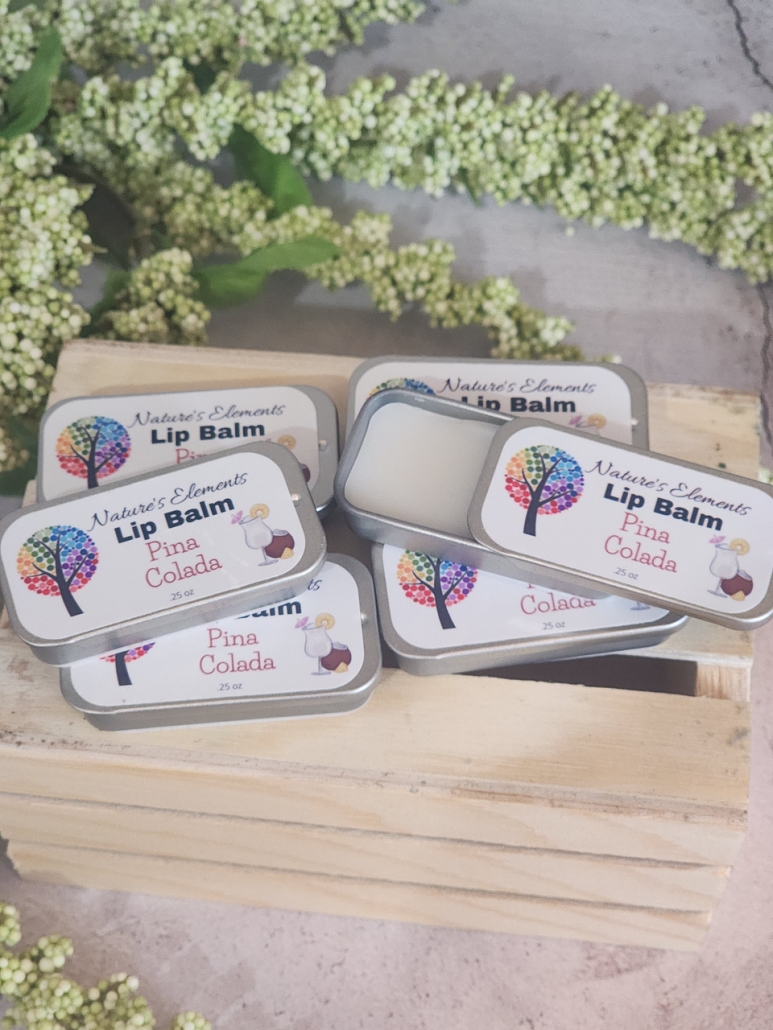
Sliding Lid: Stylish, Convenient, and with Good Sealing.
A sliding lid offers a sleek and modern experience for 10g lip balm tins. This design is commonly used on lip balm tins, where the top slides open to reveal the balm. For 10g lip balm containers, the sliding lid offers unique visual and functional advantages, but also presents some sealing challenges.
Advantages of Sliding Lids
- Unique User Experience: The sliding action creates a premium, almost electronic-like feel, making the product stand out on the shelf.
- Partial Exposure: Sliding allows for partial opening, enabling controlled access or display in sample packs.
- Low-Profile Design: The sliding lid sits flush with the container walls, allowing for integration with minimalist aesthetics to create a minimalist brand image.
Engineering and Sealing Limitations
- Sealing: Due to its design, a sliding lid typically cannot achieve the same level of sealing performance as a screw-on lid or a well-designed snap-on lid. Gaps in the sliding channel are inherent and can lead to fragrance exchange and dust ingress. Therefore, if fragrance retention is critical, a sliding lid is best paired with an additional internal seal (e.g., foil or a press-fit liner).
- Wear and Debris: The sliding channel can accumulate lint or lip balm residue, which can affect the smooth operation of the slide over time. Appropriate material selection and tolerances are crucial to minimize friction and resistance.
- Complex Manufacturing Process: Producing precise sliding channels, especially in metal, requires specialized stamping and forming. Molds must control channel width, rail fit, and lid rigidity.
Practical Use and User Considerations
In ambient-temperature markets, melting is uncommon, and for stable lip balm formulations, the sliding lid offers a strong visual advantage.
To maintain the product’s initial freshness, consider adding a thin inner lid or a removable foil seal during packaging.
When to Choose a Sliding Lid?
When a brand seeks a modern, design-led product, the unboxing experience and daily interactions are key differentiators.
In low-risk thermal distribution scenarios, or when an internal seal is part of a closed system.
Materials, Coatings, and Formulation Compatibility
The choice of materials and coatings is crucial for product safety and performance. For lip balm, tins offer compatibility that prevents flavor changes, corrosion, or coating failure. At TSING, the primary material we use for 10g lip balm tins is tinplate, which offers excellent printability and rigidity. Additionally, tinplate is recyclable and cost-effective. A food-grade, odorless varnish is used in the inner coating to prevent metal taste transfer and protect the metal from oil corrosion. For formulations containing essential oils or citrates, we use oil-resistant varnishes as needed.
If your lip balm contains a large amount of low-melting-point oils, we recommend choosing lids and seals that reduce leakage during transportation, or using waxes with a higher melting point. Screw caps and well-designed snap-on caps with liners perform better in these cases.
Differences in Manufacturing and Custom Decoration
In manufacturing, threaded, hinged, and sliding mechanisms require specialized molds. The more complex the threaded/hinged structure compared to a simple snap-on lid, the higher the mold cost. However, the unit price decreases as production volume increases. Furthermore, snap-on and screw caps can be assembled quickly on high-speed stamping machines. Hinged lids may require a secondary assembly step. Sliding lids may complicate automated filling, depending on how they are inserted or assembled.
For custom decoration, flat lid surfaces are ideal for pad printing, offset printing, hot stamping, or embossing. Choosing a lid type with a flat printing area maximizes brand visibility. Screw caps and snap-on caps typically offer the flattest surfaces. For a tactile or premium feel, we recommend using matte varnish, soft-touch coatings, or selective gloss coatings. Ensure that the decoration process does not affect the lid’s fit or friction.
Choosing the right lid truly makes a difference
Screw caps provide superior sealing and stability for heat-sensitive formulations; hinged lids prioritize convenience and portability for everyday use; and sliding lids, with an additional inner seal layer, offer a significant visual difference. Each lid type has its unique purpose, and the best choice depends on formulation characteristics, distribution conditions, and brand positioning. Thanks to Tsing’s extensive manufacturing experience, precision molds, and strict quality control, we can ensure that every lip balm container protects the product and enhances consumer trust from the first use to the last.
 Facebook
 Twitter
 Linkedin
