
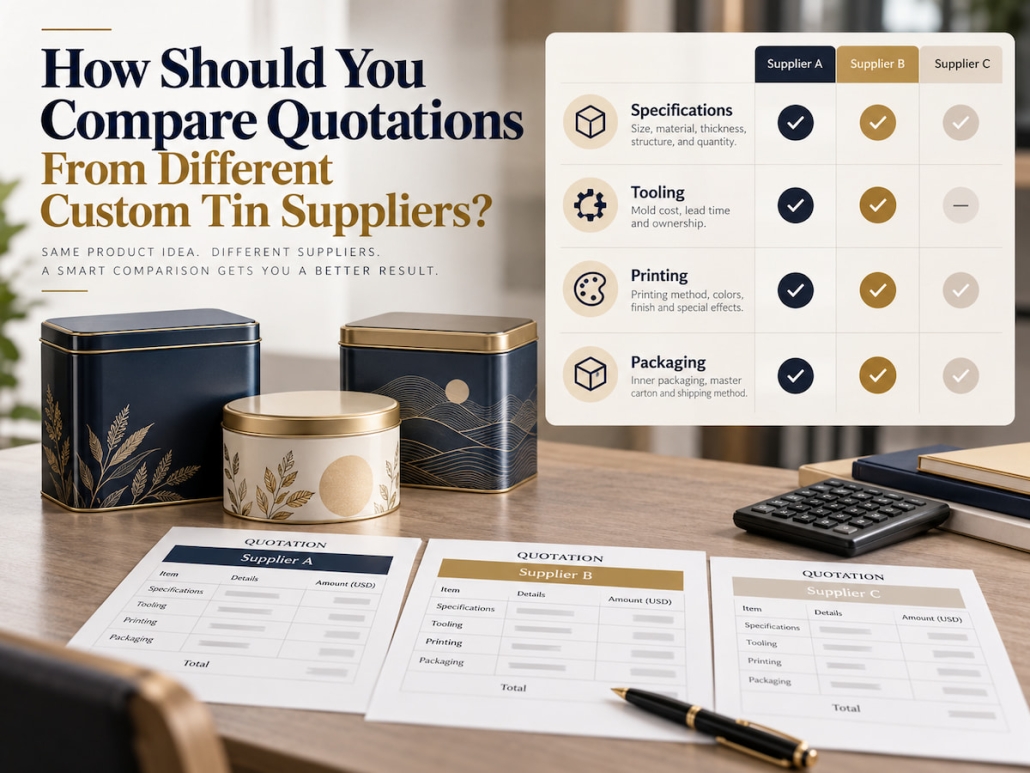
How Should You Compare Quotations From Different Custom Tins Supplier?
When comparing quotes from different custom tins supplier, buyers should first confirm that each supplier’s quote is based on the same specifications, including tin box dimensions, tinplate thickness, lid structure, printing process, surface treatment, order quantity, and packaging method. Next, they should separate one-time mold costs from regular production costs and confirm whether the quote includes printing plates, molds, liners, pallets, export cartons, and other accessories. We recommend that buyers compare quotes item by item and calculate the actual total cost based on identical finished packaging specifications. Only when technical requirements are aligned can buyers accurately determine which tin box manufacturer offers the best Value.
Comparing Custom Tins Supplier Based on Identical Technical Specifications
Price differences often stem from varying specifications, rather than simply one supplier charging more. Before evaluating mold fees, printing costs, or packaging expenses, buyers should ensure that each quote describes an identical finished tin box. Otherwise, two prices that seem directly comparable may reflect different materials, structures, surface finishes, or production requirements.
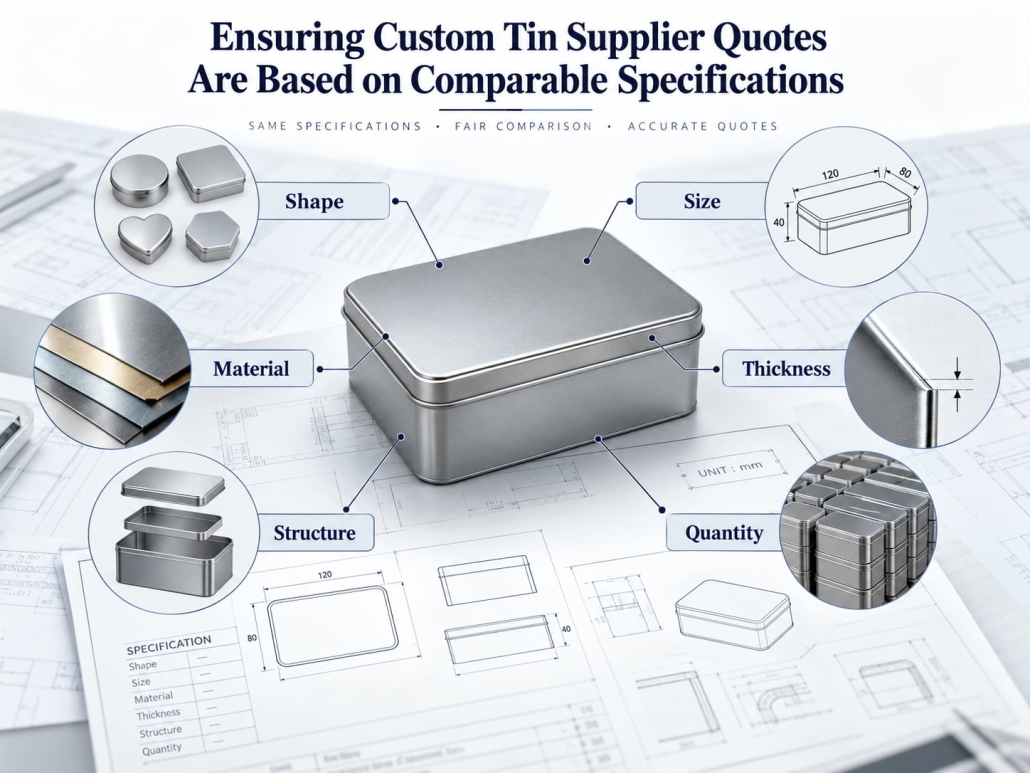
Ensuring Custom Tins Supplier Quotes Are Based on Comparable Specifications
First, compare technical specifications item by item. For each quote, verify the following information:
Finished product length, width, height, or diameter
Tinplate thickness
Tin box shape
Lid type
Body and base structure
Printing method
Surface varnish or finish
Embossed or debossed effects
Internal tray or liner
Order quantity
Unit packaging method
Outer carton dimensions
For example, one custom tin box manufacturer might quote a tin body made of 0.23-millimeter-thick tinplate, while another uses 0.28-millimeter-thick material. Deeper lids, reinforced bottoms, or more complex forming structures will also increase production costs. The same applies to printing. A simple four-color design cannot be compared to a design requiring white ink, spot colors, metallic effects, and embossing.
Therefore, buyers should develop a confirmed specification sheet and require suppliers to quote based on it.
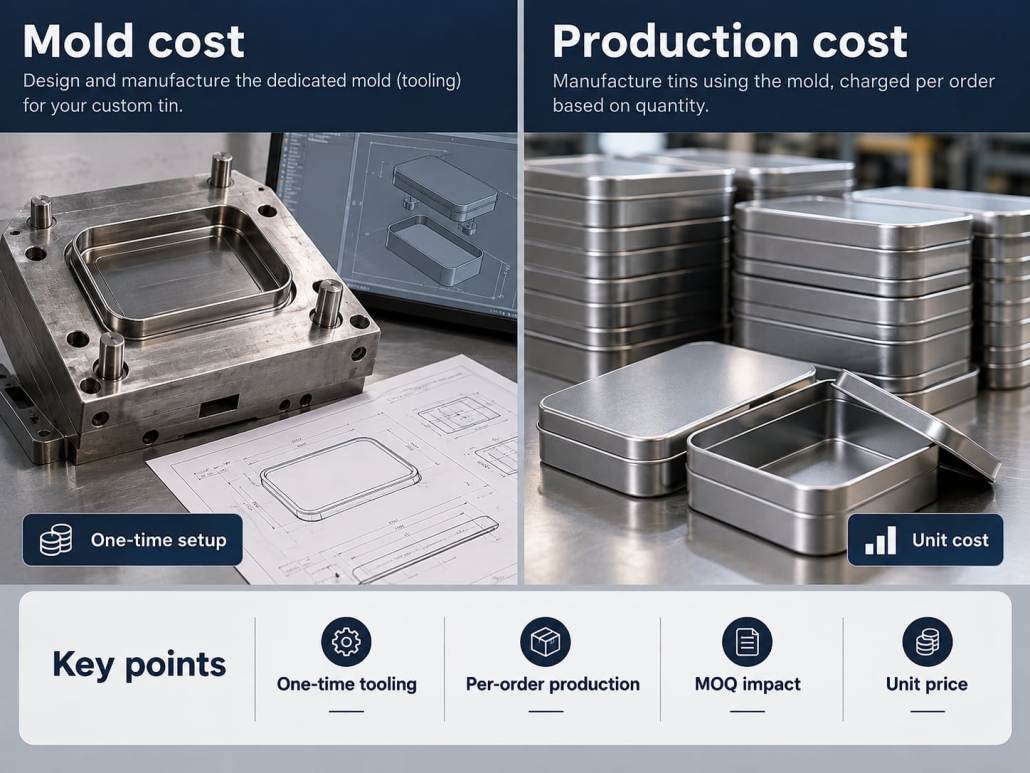
Custom Tins Supplier Should Clearly Distinguish Between Mold Costs and Production Costs
Mold costs are particularly critical when a project involves new tin box dimensions, special lid structures, custom embossing techniques, or irregular shapes. Some custom tin box suppliers may include part of the mold cost in the unit price, while others list it separately. Still, others may already have ready-made molds available, eliminating the need for additional production.
Therefore, the quotation should clearly specify the following:
Whether ready-made molds are available
Whether new production molds need to be manufactured
Whether embossing mold fees are charged separately
Whether prototype mold fees are included
Whether mold fees are a one-time charge or a recurring charge
Whether the customer can reuse the mold for subsequent repeat orders
This distinction is particularly important for customers placing repeat orders in the future.
For example, Supplier A may offer a lower unit price but charge a high fee for new molds, while Supplier B may have a suitable existing mold and not charge a new mold fee. For small initial orders, this difference can significantly affect total project cost.
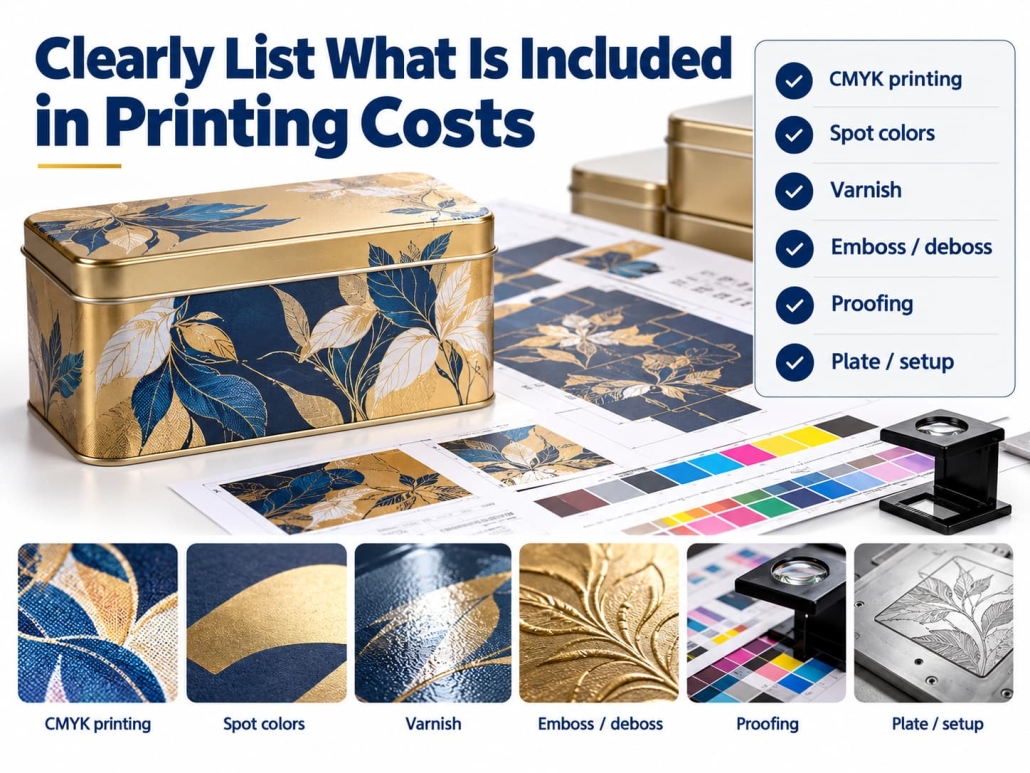
Clearly List What Is Included in Printing Costs
Printing is another area where “quotes may appear similar but actually cover different services.” Buyers should confirm whether the quote includes the following items:
Plate fees or prepress fees
CMYK four-color printing
White undercoat/base coat
Pantone spot colors
Metallic finish effects
Matte or glossy varnish
Spot varnish (spot gloss)
Embossing registration (registration printing)
For some custom tin cans, aesthetic and finishing requirements directly affect cost.
The cost of a standard printed tin with a full-surface gloss varnish differs greatly from that of a high-end candy tin featuring a matte varnish, multiple spot colors, metallic details, and precise embossing. Also consider the design’s complexity. If a supplier provides a quote before receiving the final design, the buyer should confirm whether the price may change after reviewing the printing specifications.
Consider Accessories and Overall Delivery Value When Comparing Custom Tins Supplier
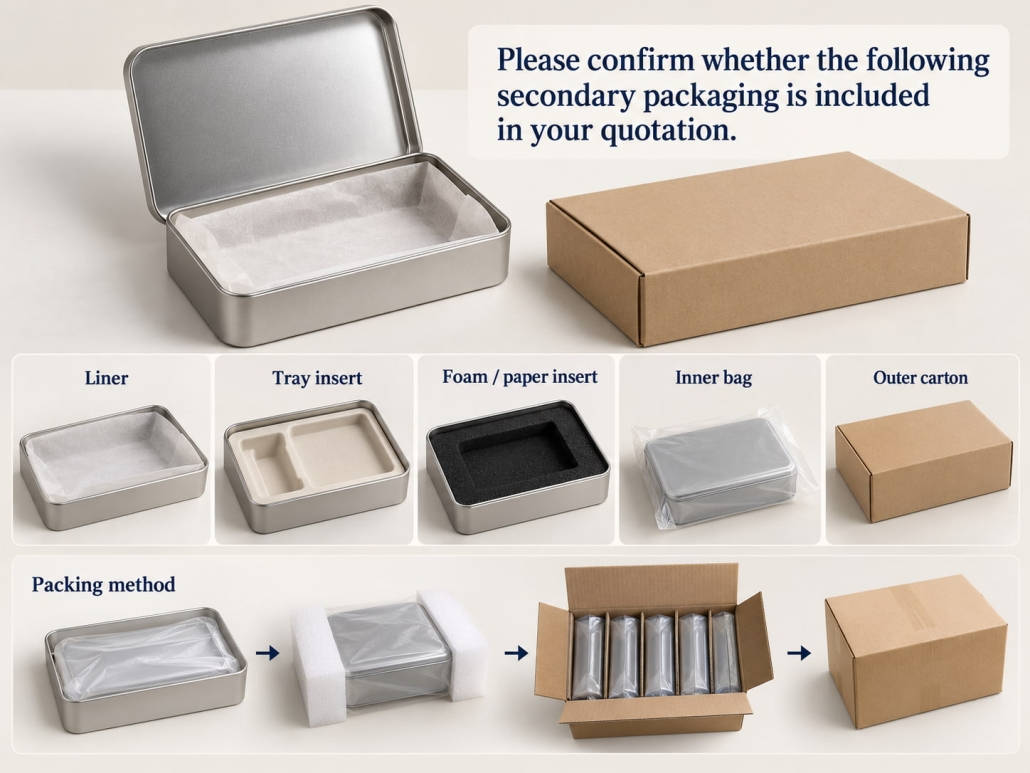
After determining tin box specifications, molds, and printing requirements, buyers should also consider the post-production process. Inner liners, trays, individual item protection, export cartons, packing quantities, and shipping preparations all affect the final procurement cost. Include these factors in the comparison, and don’t treat them as insignificant details.
Clarify Whether Liners, Inserts, and Cartons Are Included
The unit price quoted may cover only the tin itself. For projects involving food, candy, tea, cookies, or gift packaging, additional components may include plastic trays, cardboard dividers, paper cups, and other accessories. These items will impact the final cost.
For example, one supplier’s unit price for a tin box may be lower but exclude molded trays and export cartons. In contrast, another supplier’s quote, though slightly higher, may already include all of the aforementioned accessories. In comparison, the latter’s quote may actually result in a lower overall packaging cost. Buyers should also compare carton specifications, including: quantity per carton, carton dimensions, carton strength, internal dividers, export packaging methods, and so on.
This is especially important for international long-distance shipping, as improper outer packaging may cause dents, surface scratches, or warped lids on tin boxes during transit. Therefore, professional custom tin box manufacturers should clearly specify the packaging scope and not simply quote the ex-factory price of the tin box without accessories.
The Final Total Project Cost Prevails
The final cost comparison should aggregate all necessary expenses into a single, comparable total project cost. Specifically, refer to the following:
Unit price of tin boxes + Mold/tooling costs + Printing and plate-making fees + Inner trays or liners + Individual packaging + Export outer cartons + Other necessary accessories = Comparable total project cost
For repeat orders, exclude one-time mold costs and recalculate the figures. Buyers should also compare various commercial terms, such as:
MOQ
Prototyping costs
Prototyping lead time
Mass production lead time
Payment terms
Quality inspection requirements
Before selecting a custom tin box supplier, ensure that you are comparing the exact same finished tin box product. Only then can you accurately and fairly evaluate quotes from different manufacturers.
Comparing Different Custom Tin Box Suppliers to Make the Best Choice
To compare quotes from different custom tin box suppliers accurately, buyers should first ensure all suppliers quote the same finished product specifications. The comparison should cover tin box dimensions, tinplate thickness, lid construction, printing processes, surface finishes, order quantities, and packaging configurations. Next, list all one-time and additional costs separately, including mold fees, printing plate fees, inner trays or liners, individual packaging, and export cartons.
The key is to compare identical finished packaging solutions, not just unit prices. The most reliable way to compare quotes is to contrast the total cost of producing the same custom tin box under identical technical and packaging requirements.
 Facebook
 Twitter
 Linkedin
