
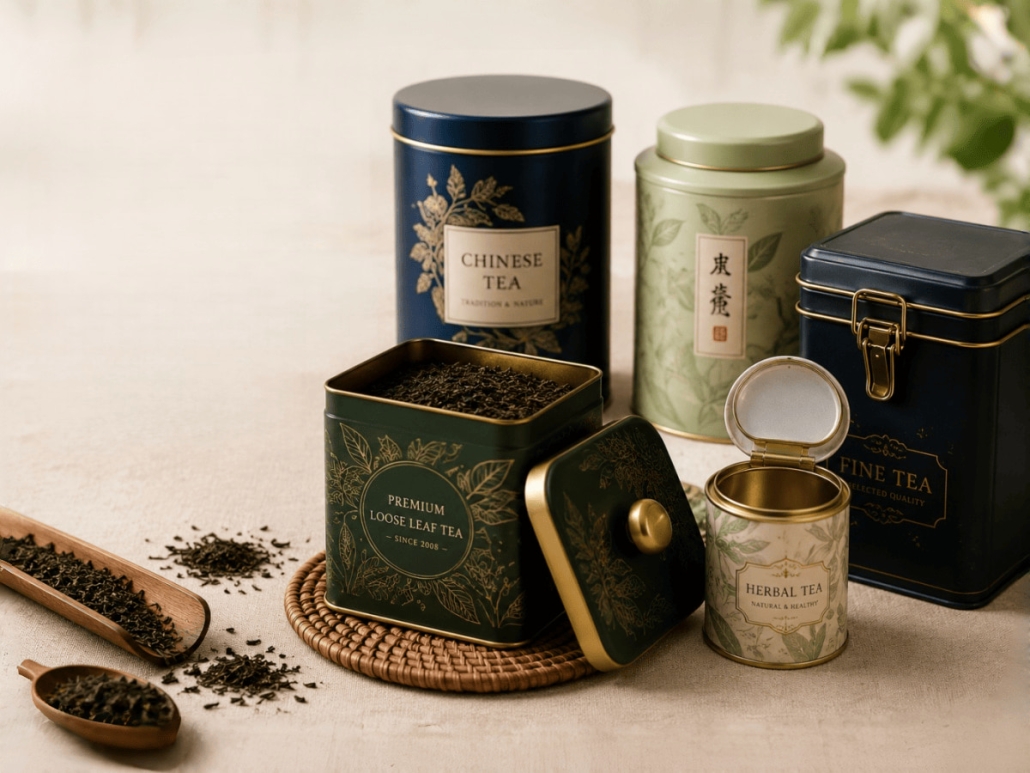
What are some suitable sealing methods for custom tea tins?
The sealing method of a tea tin directly affects the preservation of the tea’s aroma, moisture resistance, and overall quality. In custom tea tins, the lid’s design determines whether the packaging is merely aesthetically pleasing or truly functions as a professional tea tin. Therefore, an ideal sealing method must strike a balance between protection, ease of use, and visual appeal. For this reason, we do not recommend using the same sealing method for all tea products. Different teas have different requirements. Loose-leaf premium teas often require a more refined seal. Packaging for everyday tea tins may prioritize convenience. Meanwhile, gift-packaged tea tins may require a design that combines a high-end feel with reusability.
What is the purpose of a well-designed seal for a custom tea tin?
An appropriate sealing method should offer three key benefits. First, it should effectively block out air and moisture to meet product requirements. Second, it should open and close smoothly to enhance the user experience. Third, it should align with the brand positioning, whether it is high-end, practical, gift-oriented, or for everyday use. Therefore, when designing custom tea tins, we consider the type of tea, storage requirements, the customer’s opening habits, and production specifications.
This is because we understand that tea categories include loose-leaf tea, matcha, herbal tea, tea bags, roasted tea, and gift blends, among others. Each type of tea requires a different storage method. Aroma-sensitive teas need a tighter seal. Some teas require stronger antioxidant protection. Others require packaging that is convenient for daily use. Therefore, our design of the tea tin’s seal always starts with the product itself, rather than the packaging.
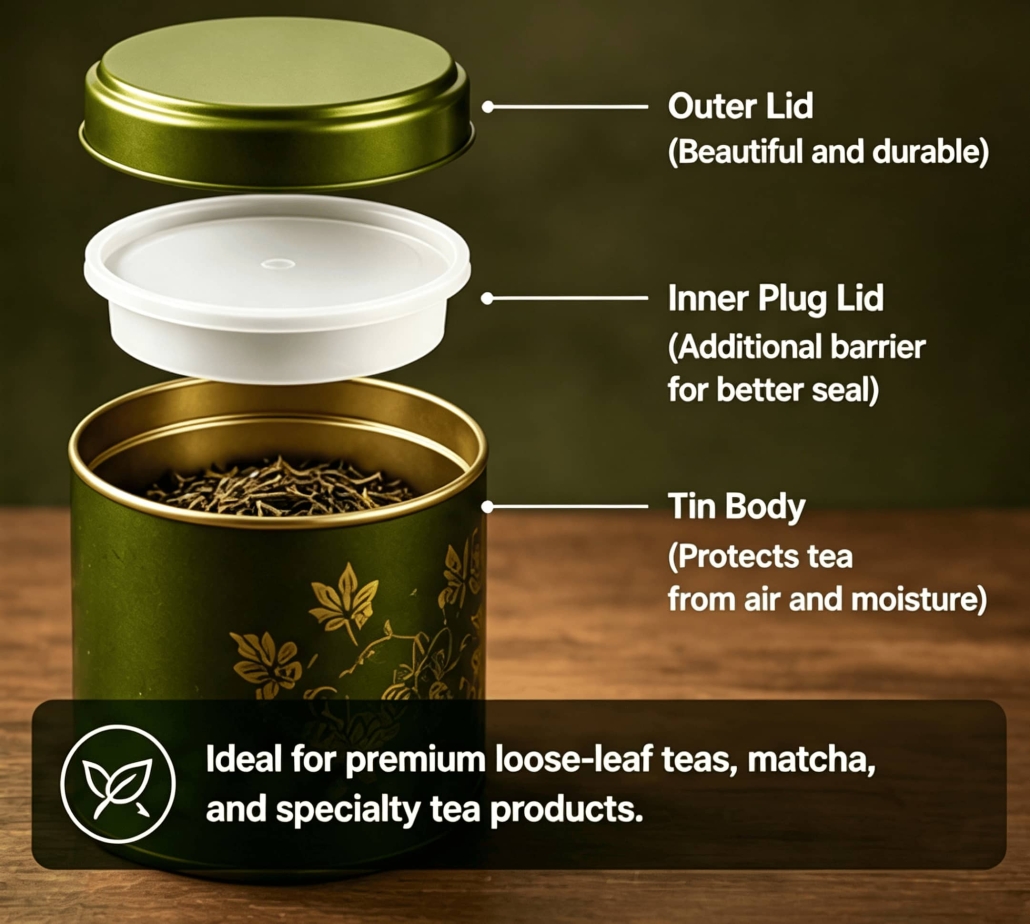
Inner Plug Lid: Enhanced Aroma Protection
Among various sealing methods, the inner-seal lid is one of the most effective ways to preserve freshness in custom tea tins. This design adds an inner layer beneath the outer lid, helping minimize contact between the tea and air and thereby better retaining aroma. The inner-seal lid is typically a plastic insert or metal cap located beneath the outer lid. When the outer lid is closed, the inner-seal lid creates an additional barrier between the tea and the surrounding air. This significantly improves the seal compared to using only the outer lid.
We generally recommend inner-seal lids for premium loose-leaf teas, matcha, and specialty tea products, as these teas typically require a more rigorous sealing structure. For high-end custom tea tins, inner-seal lids offer brands a more comprehensive, protective seal.
Points to Note
While inner-stopper lids are an effective solution, they are not always necessary. For teas that are not premium-grade, readily available, or intended for frequent use, a simpler sealing method may be more effective.
Buckle Lids: Secure and Practical
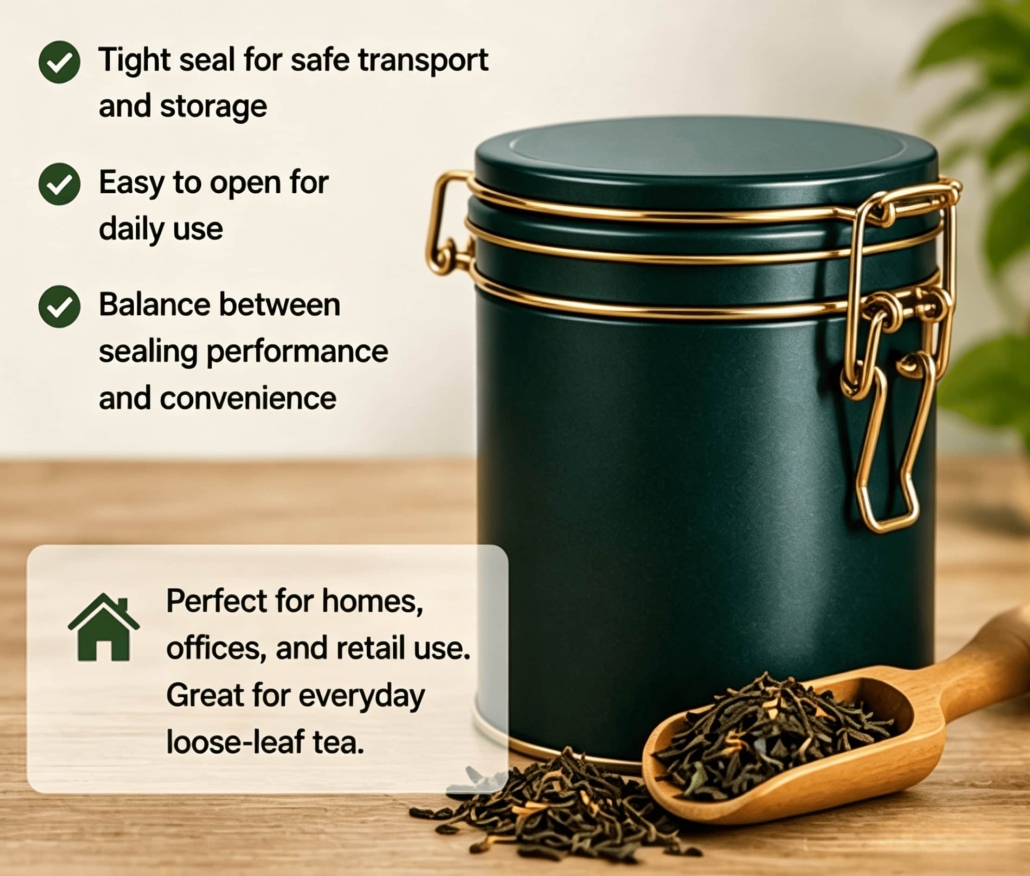
Buckle lids are another practical sealing option for a custom tea tin. They ensure a secure seal while remaining convenient for daily use. Buckle lids fit more tightly against the tin body, ensuring the package remains sealed during transport and storage while still allowing users to open it easily. In essence, they strike a balance between sealing performance and ease of access. Many customers open the can daily to brew tea. A lid that is too loose can undermine consumer confidence in the product, while one that is too tight may be inconvenient for users. Buckle lids effectively address both of these issues.
We generally recommend tea tins with snap-on lids for settings where convenience is a priority, such as homes, offices, and retail environments. This type of lid is suitable for everyday loose-leaf tea and other tea packaging formats that do not require a stronger seal.
Screw-Top Sealing: Delivering a More Controlled and Superior Sealing Experience
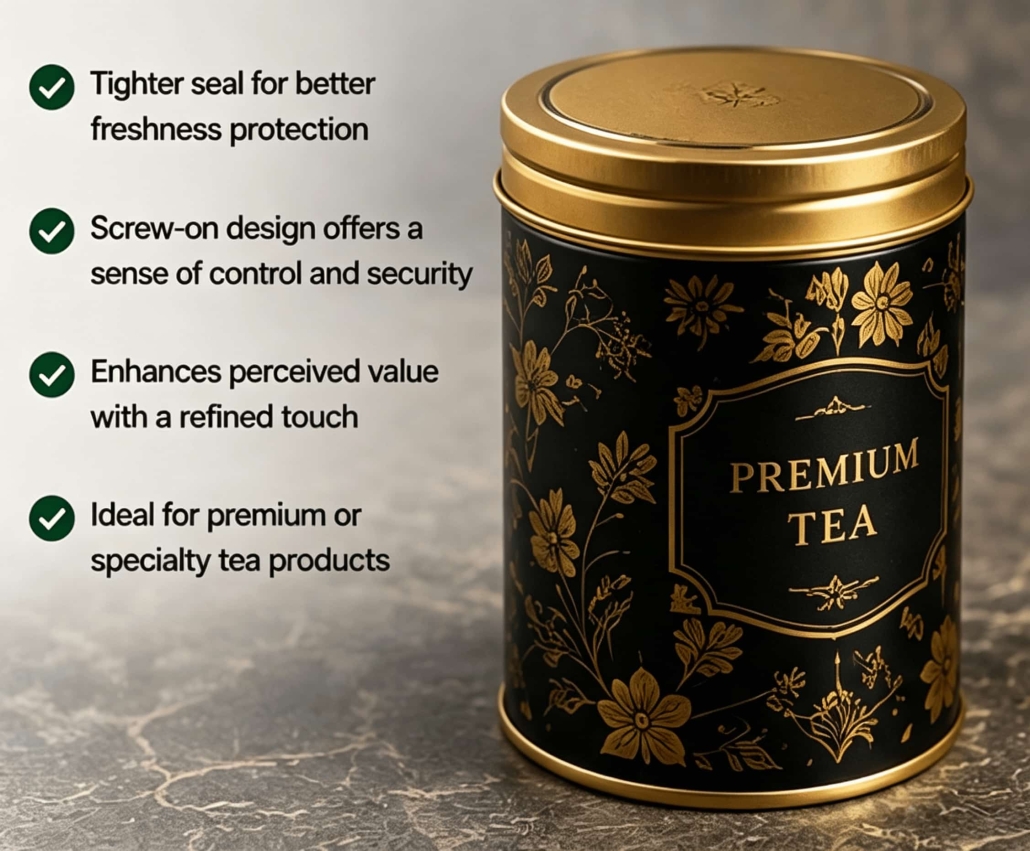
For customers seeking a tighter seal and a more solid opening experience, screw-top lids are the ideal choice for custom tea tins. They are commonly used for high-end tea products to convey a sense of control, precision, and care.
Screw-top lids secure to the tin body by being screwed on tightly, offering a superior seal compared to simple push-on designs. Users can feel the lid engaging with the can, creating a sense of security and refinement. In tea tin packaging, this controlled, tactile interaction enhances the product’s perceived value. It signals to users that the tea is carefully protected and that the packaging design prioritizes attention to detail.
This sealing method is typically suitable for the following scenarios:
1. The tea product is positioned as a premium or specialty tea.
2. The brand aims to enhance consumers’ sense of security.
3. Full opening and closing of the lid is not required.
4. The packaging should appear more refined than standard lids.
Hinged Sealing Lids: Convenient and Reusable
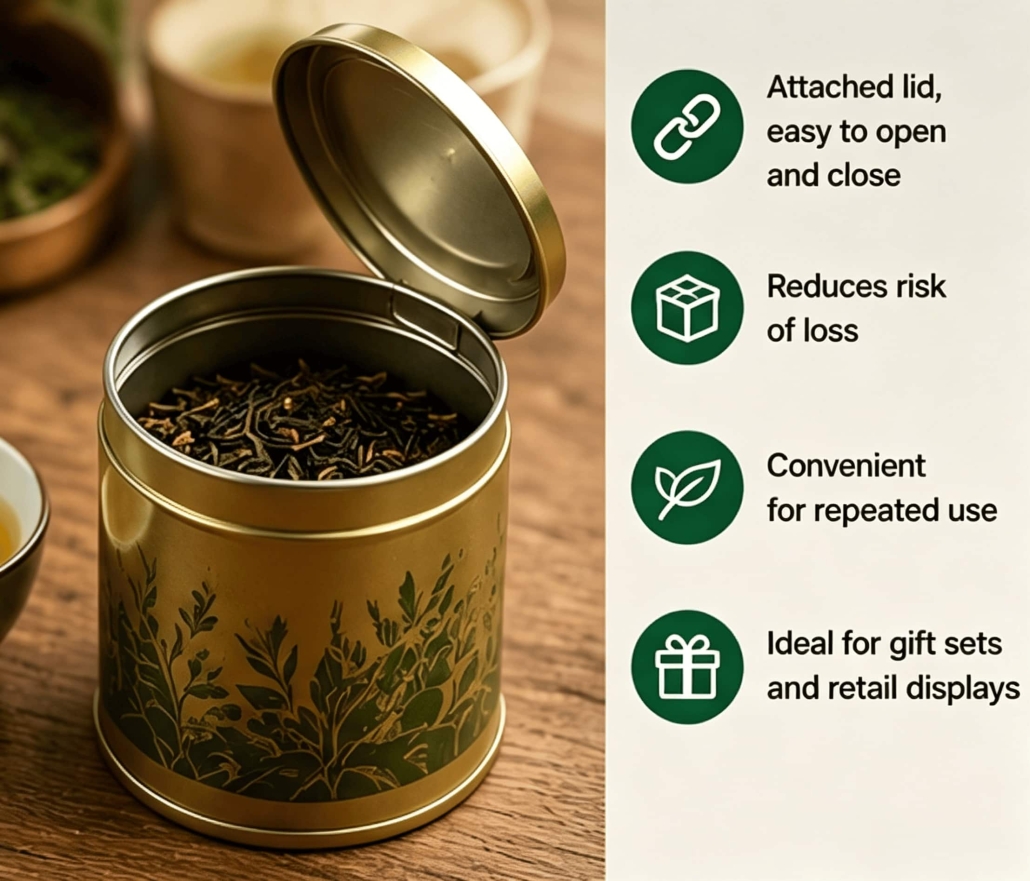
Hinged lids are one of the most common and widely used sealing methods for custom tea tins. Combining convenience with aesthetic appeal, they are particularly suitable for tea packaging that requires easy access and storage. The hinged lid is securely attached to the can body, making it easy to open and close and reducing the risk of loss. This simple advantage is significant in practical use. Customers appreciate this type of packaging for its ease of use and reliability. This design is particularly practical for tea can packaging, especially when the tea needs to be opened repeatedly. The hinged lid facilitates reuse while keeping the can neat and organized.
Many tea products are used as gifts. In such cases, the packaging must not only protect the tea but also be aesthetically pleasing. The hinged lid gives custom tea tins a clean, familiar, and premium look, making them ideal for gift sets and retail displays. One of its greatest strengths lies in its convenience for daily use. It opens and closes smoothly, is effortless to use, and conveys a sense of practicality.
How do we choose the right sealing method for each batch of custom tea tins?
When selecting the appropriate sealing method for custom tea tins, we approach the decision from the customer’s perspective, rather than solely based on design preferences. Before making recommendations, we consider the tea’s characteristics, the customer’s usage habits, market positioning, and production requirements.
First, consider the storage characteristics of the tea
The first question we ask is simple: What freshness-preservation measures does the tea require? If there are high requirements for aroma retention, we will prioritize structures with stronger sealing capabilities. If the tea is consumed daily and requires quick access, we recommend more convenient solutions. Additionally, for premium tea products, we select designs that provide longer-lasting protection.
We typically guide clients as follows:
1. If aroma retention is the top priority, choose an inner stopper lid.
2. If the brand prioritizes practical safety and daily convenience, opt for a snap-on lid.
3. If you want the packaging to convey a more refined, premium feel, choose a screw-top lid.
4. If convenience, reusability, and gift packaging are the most important considerations, please choose a hinged lid.
Selecting the Right Sealing Method to Enhance the Airtightness of Custom Tea tins
The right sealing structure can maintain tea freshness, reinforce brand positioning, and boost customer satisfaction; conversely, the wrong sealing structure may undermine all three. At TSING, we provide recommendations based on the tea’s actual characteristics, market expectations, and the project’s production requirements. Therefore, we recommend inner-seal lids for premium, aroma-sensitive teas; snap-on lids for everyday practical use; screw-top lids for more precise control over tea quality; and hinged lids for ease of use and reusability.





 Facebook
 Twitter
 Linkedin
